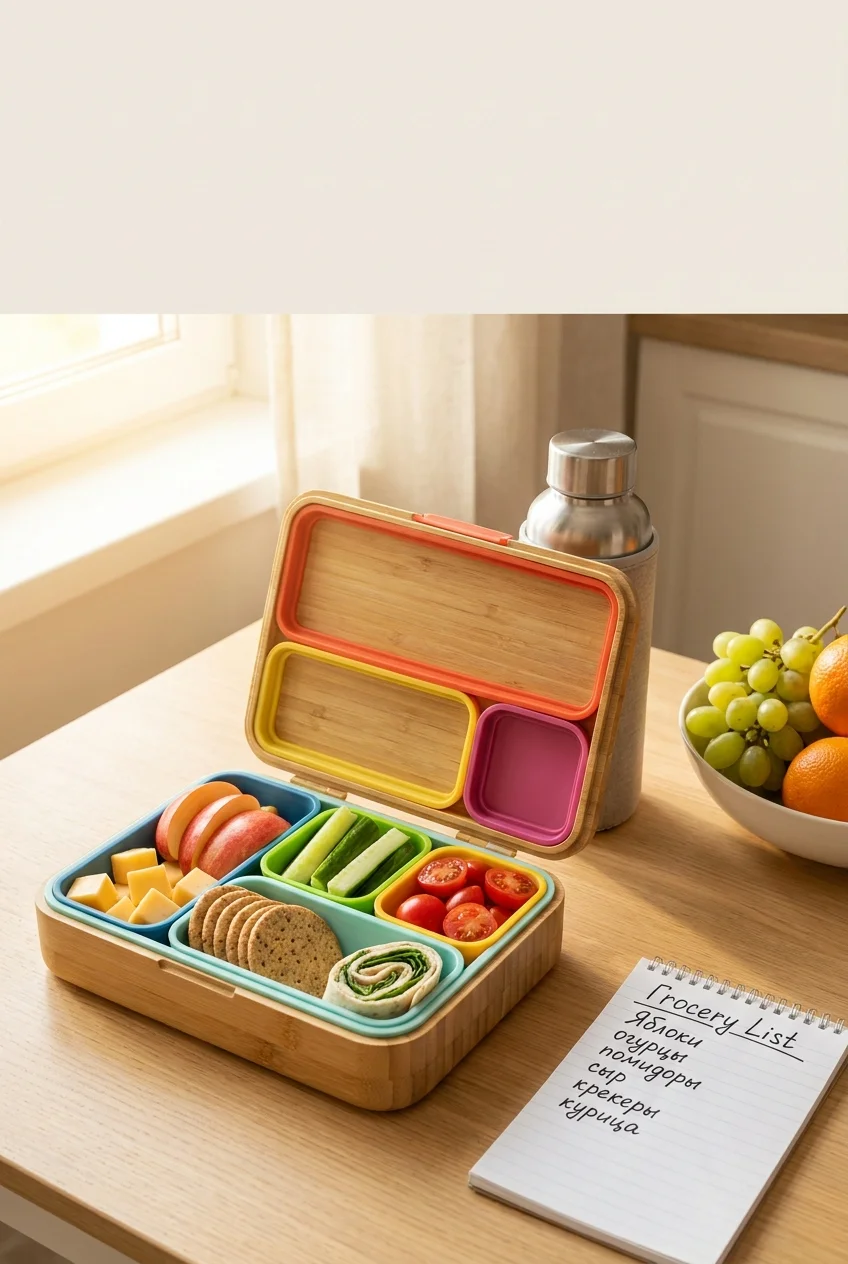
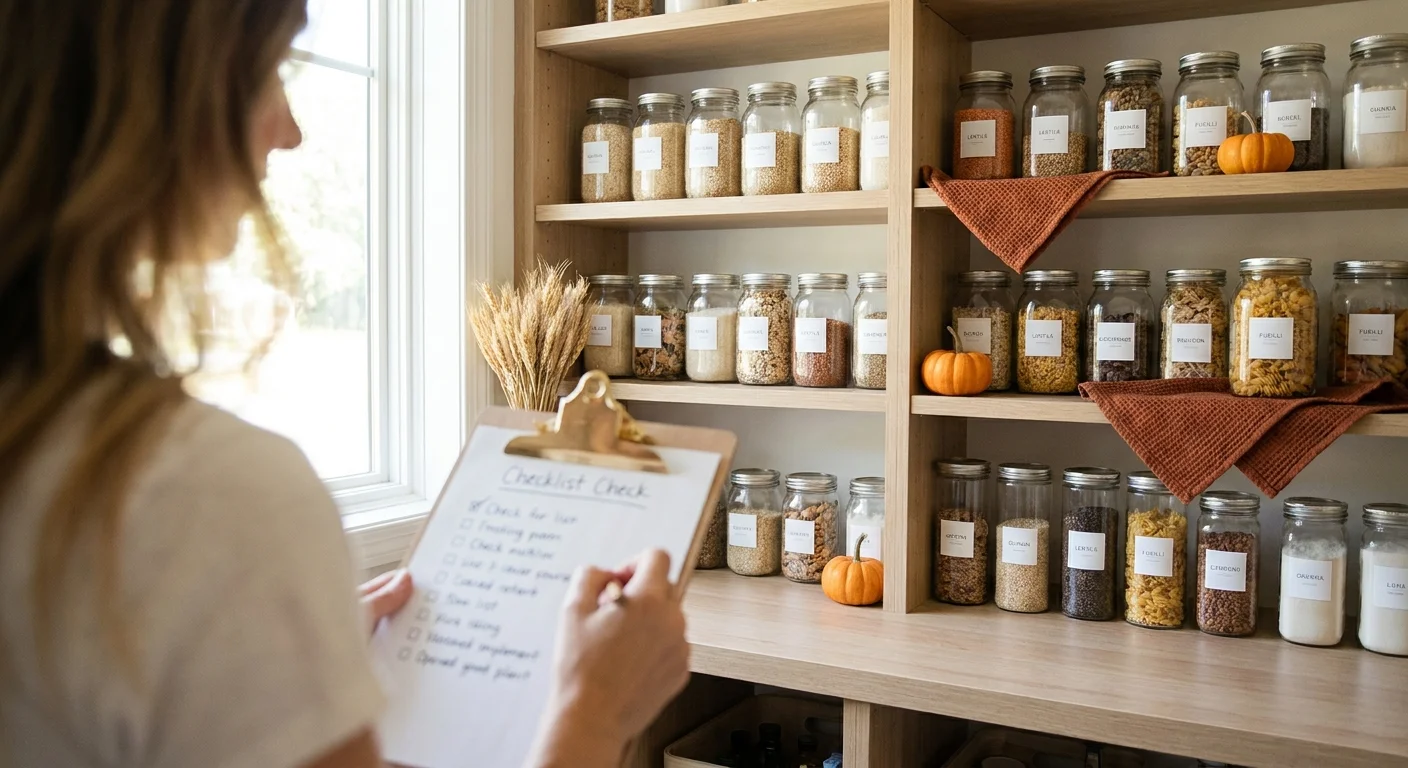
To organize your pantry and supplies before fall, just 6 steps and about 60–90 minutes are enough: quickly unload everything for a "full view," discard the excess, group by category, label and arrange by zones, assemble a basic fall set, and create a shared restocking list. This approach saves money, time, and nerves, especially during cold and flu season and a busy schedule.
Fall 2026 is the perfect time for a review: menus change, consumption of grains, tea, canned goods, and household essentials increases. Plus, in September and October, it's easier to catch sales and prepare for "unexpected" guests and chilly evenings.
-
Step 1. Prepare the Space and Review Rules (10 minutes)
This step is necessary to avoid drowning in chaos. Choose one area: a pantry, a tall kitchen cabinet, or lower drawers—and work only with that.
Place 3 bags or boxes nearby: "throw away," "donate/move," "keep." Prepare a cloth, all-purpose spray, and a marker for labels.
- Rule 1: everything you take out must either go back to its place or leave.
- Rule 2: if a product is questionable, check the expiration date/smell/packaging immediately—don't put it off.
- Rule 3: don't buy new items until you see the real picture of your supplies.
-
Step 2. Do a "Quick Inventory": Take Everything Out and Count (15–20 minutes)
To understand how to store food in the pantry efficiently, you first need to see the volume. Take everything out of the chosen area and spread it out on a table/floor in groups.
Immediately separate duplicate items: grains, pasta, canned goods, sauces, flour/sugar, tea/coffee, snacks, baby food, household chemicals.
Mini-checklist of what to notice
- Open packages without clips and dates—the main source of "invisible" losses.
- Duplicates: 3 cans of peas and 4 packs of buckwheat often appear due to the lack of a shared list.
- "Seasonal leftovers": syrups, mulled wine spices, cocoa, dried fruits—they become relevant again in fall.
-
Step 3. Check Expiration Dates and Packaging Quality (10–15 minutes)
A fall review is the best time to reduce the risk of food poisoning and get rid of stockpiles. Check not only the date but also the condition: swollen lids, rust, damaged packages—a reason to say goodbye.
Make two piles: "use within the next 2 weeks" and "can be stored longer." This is the basis of the FIFO (first in—first out) principle, which helps you understand how to organize the pantry without constant rework.
- Canned goods: don't "test" questionable cans—dispose of them.
- Grains/flour: check for rancid smell and pests; it's better to transfer them to airtight containers.
- Spices: if the aroma is gone, they take up space and don't work in cooking.
-
Step 4. Divide the Pantry into Zones and Label Everything (15–20 minutes)
Zoning is the answer to the question how to organize your pantry and supplies before fall so you don't have to search for "where's the honey" and avoid buying duplicates. The idea is simple: similar items are stored together, and frequently used ones are closer.
Example zones (adapt to your cabinet)
- Daily basics: grains, pasta, flour, sugar, oil, salt.
- Quick dinner: tomatoes/beans/tuna, noodles, sauces, bouillon cubes.
- Breakfasts and snacks: oatmeal, muesli, nuts, dried fruits, cookies.
- Fall coziness: tea, cocoa, honey, ginger, citric acid, cinnamon.
- Emergency supplies: long-lasting canned goods, water, batteries, candles (if relevant).
Label containers and jars: name and date opened. This saves time and helps all household members maintain order without instructions.
-
Step 5. Assemble a "Fall Basic Set" and a Restocking Plan (10–15 minutes)
In fall, the need for warm food, soups, and drinks increases. To avoid running to the store every other day, create a minimal set and quantity guidelines for 1–2 weeks.
Fall basic set (example)
- For soups and stews: lentils/peas, tomatoes in their own juice, beans, broth/spices.
- For breakfasts: oatmeal, nuts, honey, cocoa/coffee, tea.
- For quick dinners: pasta, rice, sauces, canned goods (tuna/sardines), frozen vegetables (if space allows).
- For baking and "cozy weekends": flour, baking powder, cinnamon, vanilla, cocoa.
- Household essentials: napkins, sponges, dish soap, trash bags.
Next—a restocking plan. Note items that regularly run out and determine a "reorder point": for example, when 30% of the package remains.
-
Step 6. Set Up a Shared List to Keep Supplies from Spreading (5–10 minutes)
The main cause of chaos is "just in case" purchases by different people. The solution is simple: one shared list and clear rules about who adds items and when.
It's convenient to keep such a list in the free mini-app in Telegram Pickt: it syncs shared shopping lists in real time between family members, couples, or roommates. You can open it via the bot @PicktBot or the link t.me/PicktBot/app.
Rules that actually work
- Add to the list as soon as a product reaches the "reorder point."
- If someone buys something, mark it on the list right at the checkout.
- Once a week (e.g., on Sunday), do a 5-minute mini-check of the pantry.
This way, you not only understand how to save on groceries in fall but also stop storing unnecessary items "just in case."
Conclusion: one evening—and the pantry is ready for fall 2026. You see your real supplies, quickly cook from what you already have, and only restock what's needed. The most important thing is to maintain the system: zones, labels, and a shared list make order sustainable, not a one-time feat.
Frequently Asked Questions
How often should I do a pantry review?
A major review is convenient to do 2–3 times a year (before fall and before spring). A 5-minute mini-check once a week helps avoid accumulating expired items and buying duplicates.
What containers are best for dry goods?
Transparent airtight containers or jars with tight lids are optimal. It's important that they are easy to wash and the volume matches your usual packages (e.g., 1–1.5 liters for grains).
What if there's little space in the pantry?
Reduce duplicates and keep a "base" for 1–2 weeks, not a month. Use vertical storage, narrow baskets, and door organizers, and place heavy items lower.
How to avoid forgetting what's already at home when multiple people shop?
You need one shared shopping list and a rule: add items as soon as they run out, and mark purchased items at the time of purchase. A shared list in Telegram format is especially convenient because it's always at hand for all participants.