September usually passes on enthusiasm: new notebooks, a routine, beautiful lunch boxes, and sandwiches that the child still eats with pleasure. But by October, the usual cheese sandwiches get boring, there's not enough time in the morning for creativity, and containers come back untouched from school.
The good news: school snacks don't require complex recipes. It's enough to think through a base once, buy groceries for the week, and rotate familiar ingredients. This way, the child gets varied food, and parents don't have to decide every evening what to put in the backpack tomorrow.
Below is a simple plan of 10 snack options, a shopping list, and storage rules. It suits both younger schoolchildren and teenagers: adjust portions based on age, appetite, schedule, and school recommendations.
The Principle of a Composed Snack: Protein + Fruit or Vegetable + "Crunchy" + Water
The most convenient format is not one big sandwich, but a small set of several products. It's easy to eat during recess, and the composition can be changed without completely restructuring the menu.
Assemble each snack using the formula: protein + fruit or vegetable + "crunchy" + water. Protein helps maintain satiety longer. Vegetables and fruits add fiber, flavor, and vitamins. The crunchy component makes the snack more interesting and often saves those kids who don't like "ordinary" food in a container.
What to Choose for the Protein Part
- pieces of baked chicken or turkey;
- hard-boiled egg;
- cheese in cubes or slices;
- cottage cheese, syrniki, or natural yogurt in an insulated bag;
- hummus, if the child likes it;
- whole-grain mini sandwich with cheese, turkey, or egg.
What to Add for Freshness and Crunch
- apple, pear, banana, tangerine, seedless grapes;
- cucumber, carrot, bell pepper, cherry tomatoes;
- whole-grain crispbreads, unsweetened crackers, mini bagels;
- popcorn without caramel and excess salt for children who already know how to eat it safely.
The drink is plain water in a labeled bottle. On days with physical education or long lessons, it's especially important to remind the child to drink regularly, not just after school.
10 Ideas by Day of the Week with Variations
You don't have to prepare ten different dishes. Many products repeat, but the combination changes—and the snack doesn't look the same.
Monday
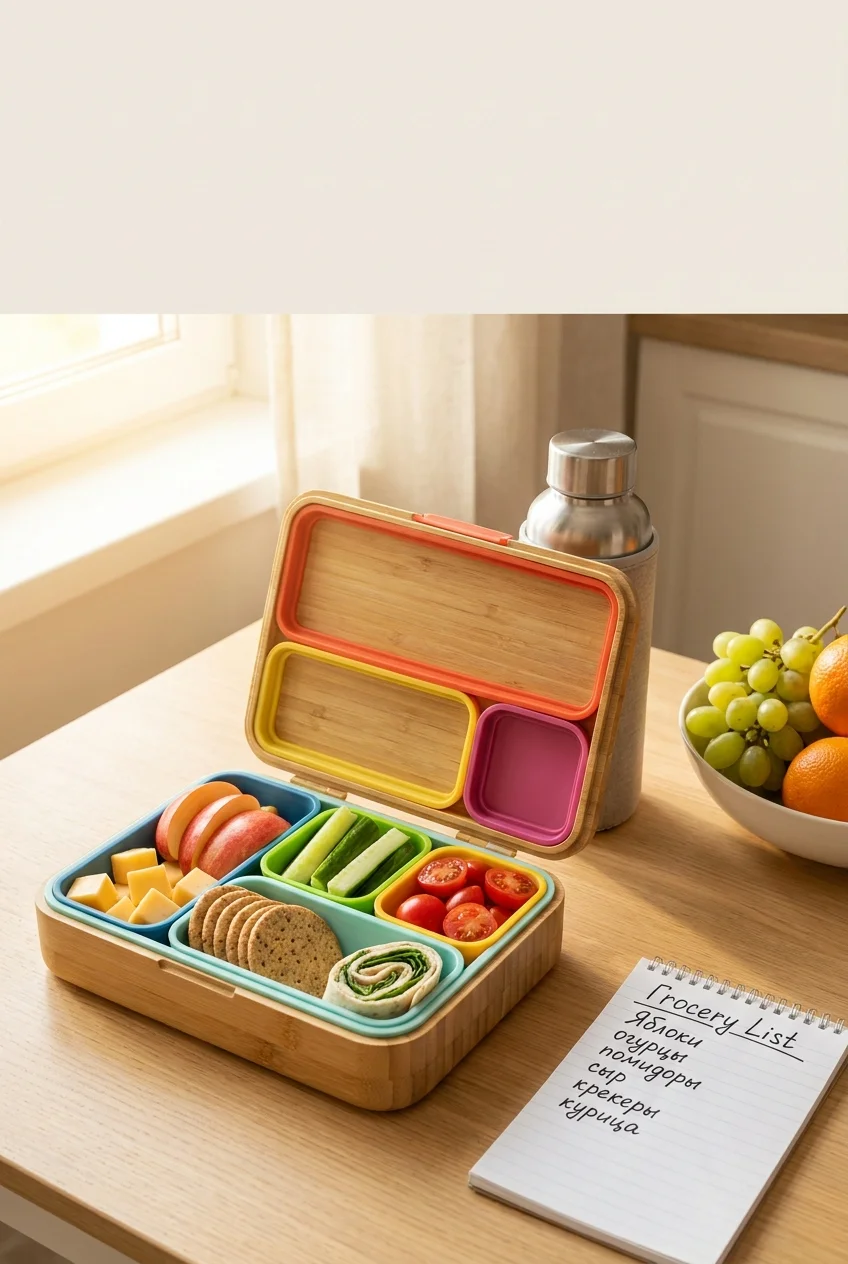
- Option 1: cheese cubes, apple slices, whole-grain crispbreads, and water.
- Option 2: mini sandwich with turkey, cucumber sticks, and a tangerine.
Tuesday
- Option 3: hard-boiled egg, cherry tomatoes, unsweetened crackers, and a pear.
- Option 4: hummus in a small container, carrot and cucumber sticks, mini pita or crispbreads.
Wednesday
- Option 5: baked chicken pieces, bell pepper, seedless grapes, and crackers.
- Option 6: syrniki without chocolate glaze, a banana, and a few cucumber slices.
Thursday
- Option 7: whole-grain tortilla roll with cream cheese and turkey, carrots, and an apple.
- Option 8: cheese cubes, a pear, crispbreads, and a small portion of natural yogurt in an insulated bag.
Friday
- Option 9: omelet cut into strips, cucumber, tangerine, and unsweetened crackers.
- Option 10: mini quesadilla with cheese and chicken, cherry tomatoes, and an apple.
If the child is a picky eater, don't try to assemble an "ideal healthy" container right away. Leave one familiar product they will definitely eat, and add a new component in small portions. For example, add two carrot sticks to their favorite cheese, not a whole handful.
What to Buy Once a Week: The Base and Fresh Additions
To avoid making a new list before every trip to the store, divide products into two categories. The base lasts longer and is bought for the week. Fresh products are better to buy once or twice more, especially if the family is large.
Weekly Shopping List for School Snacks
- whole-grain bread or tortillas—1 package;
- crispbreads or unsweetened whole-grain crackers—1–2 packages;
- hard or semi-hard cheese—300–400 g;
- sliced turkey or chicken—250–300 g;
- eggs—10 pieces;
- chicken fillet—500–700 g;
- hummus—1 package;
- natural yogurt or cottage cheese—4–5 servings;
- apples—6–8 pieces;
- pears—4–5 pieces;
- bananas—5–6 pieces;
- tangerines—6–8 pieces;
- seedless grapes—1 small package;
- cucumbers—4–5 pieces;
- carrots—1 kg;
- bell peppers—3–4 pieces;
- cherry tomatoes—1 package;
- water in small bottles or a reusable bottle for the child.
It's also convenient to include napkins, paper bags, spare water bottles, containers, and disposable spoons for yogurt in the base. These little things often run out unexpectedly exactly during the school week.
Create a permanent "School" list in Pickt and add all regular items to it. After the first purchase, you won't need to remember which crispbreads the child likes and how many eggs are usually used: repeat the list in one click every week. If parents share the shopping, the Pickt list in Telegram will help you immediately see what's already been bought and what still needs to be picked up.
Containers and Packaging
A convenient container is just as important as the menu. It's better to choose a lunch box with several compartments: so cucumbers don't get wet from fruits, crackers stay crunchy, and the child quickly understands what to eat and in what order.
For sauces, hummus, and yogurt, you need small airtight jars. Cut fruits right in the morning or sprinkle apple slices with a few drops of lemon juice to prevent browning. Cut grapes lengthwise for small children, and serve round products considering age and safe chewing skills.
Perishable products—yogurt, cottage cheese, chicken, eggs, soft cheese—are best placed with a small ice pack or in an insulated bag. Especially if the classroom is warm and the snack will only be eaten after the second or third lesson.
Typical Mistakes When Packing a School Snack
Juice Instead of Water
Even juice without added sugar doesn't replace water. It contains a lot of natural sugars, quenches thirst worse, and can become a habit of sweet drinks. Save juice for rare occasions, and choose water for everyday.
Sweets Every Day
Cookies, bars, and chocolate are convenient to put in the backpack, but they give a short burst of energy and don't replace a full snack. It's better not to ban sweets completely, but to make them an addition: for example, one small dessert a couple of times a week after proper food.
Perishable Products in Warmth
Don't send cottage cheese desserts, meat products, or yogurt to school without cooling if they'll sit in the backpack for several hours. In a doubtful situation, choose a more stable set: apple, cheese, crispbreads, cucumber, and water.
The snack plan shouldn't be a strict menu that can't be deviated from. Its task is to relieve daily pressure from parents and give the child a clear, tasty set of food. Create a permanent "School" list in Pickt, mark the family's favorite options, and change products by season. Then morning preparations will become noticeably calmer, and sandwiches won't repeat all week.