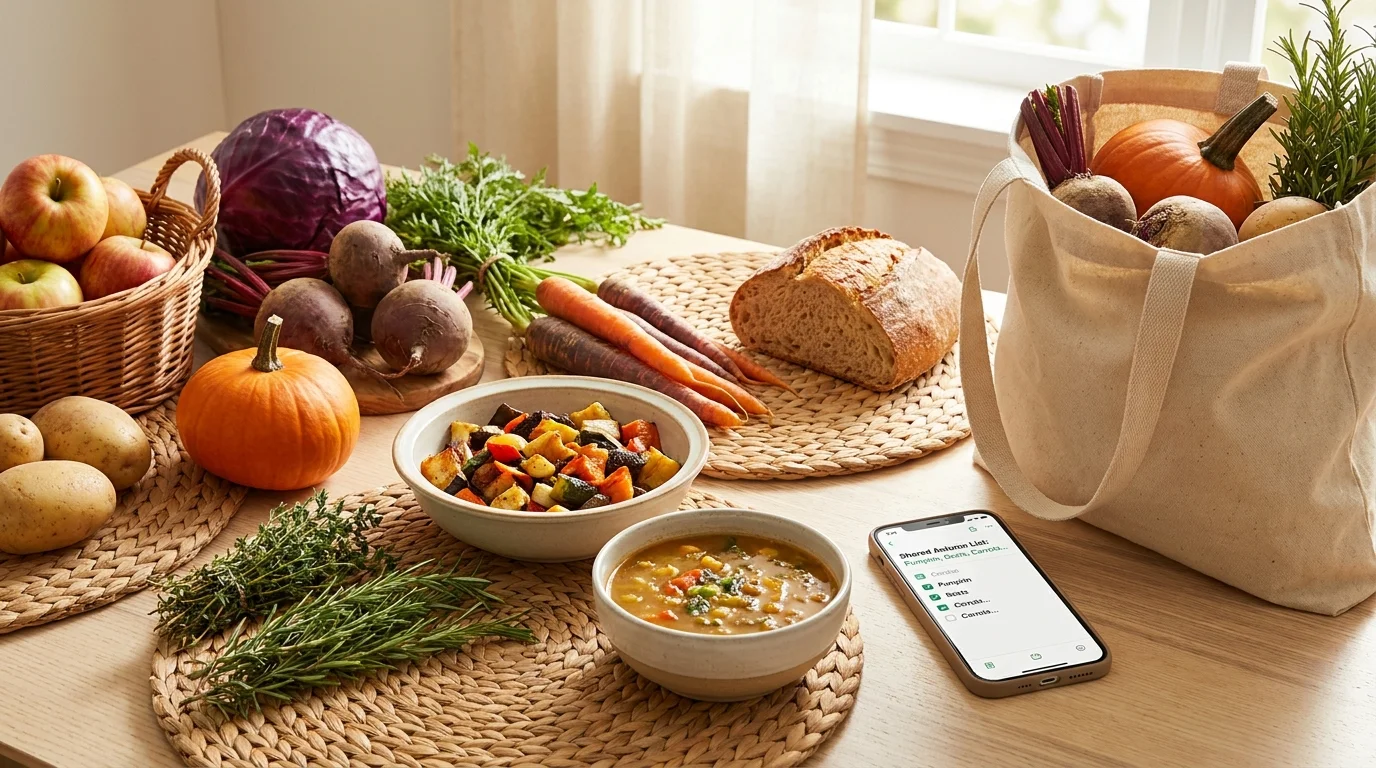
Fall is the best time to cook delicious, varied meals without overspending. The harvest of cabbage, pumpkin, beets, carrots, and apples is already in, vegetables are abundant on the shelves, and prices are usually at their lowest of the year. It would be a shame not to use this season for home dinners that are satisfying, warming, and don't require exotic ingredients.
The main secret to a budget-friendly menu is not buying new ingredients every day for a separate recipe. It's much more convenient to choose a few staple seasonal vegetables and use them in different ways: roast, stew, add to soups, salads, sides, and fillings.
This approach works especially well for a family, a couple, or roommates. Create a shared list in Pickt right in Telegram: add the week's groceries, split the shopping among participants, and check off what's already been bought. One trip to the store or market—and your dinners for the whole week are covered, with the total under control.
Menu Principle: 70% of the Basket Is Seasonal Produce
The foundation of this week is affordable fall vegetables and fruits: cabbage, pumpkin, beets, carrots, and apples. They make up about 70% of the entire basket. The rest—grains, eggs, chicken, ground meat, dairy, and spices—are needed to make the dinners complete and keep them from getting boring.
Cabbage is great not only for cabbage soup. You can quickly sauté it with ground meat, bake it with cheese, add it to a vegetable stew, or make a crunchy salad. Pumpkin turns into cream soup, a roasted side dish, and a pasta filling. Beets work well in salads, warm dishes, and spreads.
Carrots support almost every dish: they add sweetness to soup, juiciness to meatballs, and rich flavor to stews. Apples serve as a dessert after dinner, a salad component, and a base for a make-ahead batch that lasts several days.
The plan is designed for about two adults with a little extra for next-day lunches. If you're cooking for a family of four, double the meat, grains, and dairy, and increase the vegetables by about one and a half to two times.
Menu for 7 Dinners with Ingredient Cross-Utilization
Monday: Pumpkin Cream Soup with Croutons and Seeds
Roast the pumpkin with carrots, onion, and garlic, then blend the vegetables with broth or water. Add a splash of cream and serve with croutons. Set aside some of the roasted pumpkin right away: you'll need it on Wednesday.
Tuesday: Braised Cabbage with Chicken and Apple
Sauté onion, carrots, and chicken pieces, then add shredded cabbage, a little tomato paste, and a tart apple. The apple adds a fresh tang and helps you skip complex sauces. Leftover braised cabbage will become a side dish for Thursday.
Wednesday: Pasta with Pumpkin, Spinach, and Cheese
Use the reserved roasted pumpkin from Monday. Mash it with a fork, mix with cream, garlic, and grated cheese, add spinach, and combine with pasta. You'll get a quick, creamy dinner with a vibrant fall color.
Thursday: Meat Patties, Buckwheat, and Cabbage Salad
Make patties from ground meat with grated carrots and onion—they'll be juicier, and you'll need less meat. Serve with buckwheat, leftover braised cabbage, and a fresh salad of cabbage, apple, and a yogurt dressing.
Friday: Beets, Potatoes, and Herring in a Warm Salad
Roast beets, potatoes, and carrots on one baking sheet. Toss with herring pieces, red onion, herbs, and a mustard-oil dressing. This is a hearty dinner without long stovetop time, and the leftover roasted vegetables will come in handy on Sunday.
Saturday: Lazy Stuffed Cabbage Rolls in Tomato Sauce
Combine ground meat, rice, finely chopped cabbage, carrots, and onion. Shape into large patties and simmer in tomato sauce. This dish is simpler than classic stuffed cabbage rolls, but the flavor stays familiar and homey.
Sunday: Vegetable Stew with Beans and Roasted Beets
Gather all the leftovers: cabbage, carrots, pumpkin, potatoes, roasted beets, and onion. Stew them with canned beans and tomatoes. This is a flexible, zero-waste dinner, after which it's easy to prep a few make-ahead items for the new week.
Unified Shopping List with Quantities
Add this list to Pickt as one block. It's convenient to create sections like "Market," "Store," and "Already at Home," then check off items as you buy them. That way, no one grabs a second pack of buckwheat or forgets the cream for the soup.
- Vegetables and fruits: white cabbage—2 kg; pumpkin—1.8–2 kg; beets—1.2 kg; carrots—1.5 kg; potatoes—1.5 kg; onions—1 kg; red onion—2 pcs.; garlic—2 heads; tart-sweet apples—1.2 kg; spinach—150 g; fresh herbs—2 bunches.
- Meat and fish: chicken fillet or boneless thighs—700 g; mixed ground meat—1 kg; herring fillet—250–300 g.
- Grains and pantry: pasta—400 g; buckwheat—300 g; rice—250 g; canned beans—2 cans; tomatoes in their own juice—2 cans of 400 g; tomato paste—140 g; bread for croutons—1 loaf; pumpkin seeds—80 g.
- Dairy: cream 10–20%—400 ml; hard cheese—250 g; plain yogurt or sour cream—250 g.
- For dressings and flavor: vegetable oil, mustard, salt, black pepper, paprika, dried Italian herbs, bay leaf, sugar. Check these items at home before buying.
Where to Buy What: Market or Store
For the vegetable base of the menu, it's more cost-effective to go to the market, a vegetable stand, or a farm section. There, it's easier to pick a large pumpkin of the right variety, dense cabbage, sweet carrots, and undamaged beets. At the market, it's also convenient to buy vegetables by weight: you don't overpay for packaging, and the seller often advises which variety is best for roasting and which is better for soup.
Apples are also usually more affordable at the market, especially if you choose seasonal local varieties. For stewing and salads, you don't need perfect glossy fruits: firm apples with a pronounced tartness are enough.
At the supermarket, it's more convenient to buy products with a clear shelf life: cream, cheese, yogurt, canned goods, grains, pasta, tomato paste, spices, and frozen spinach. It's also easier to find herring fillet, beans without added sugar, and tomatoes in their own juice.
Choose chicken and ground meat where you're confident in quality and freshness. If you're ordering delivery, add a note in Pickt about who receives the meat and fish. This avoids a situation where one participant has already paid for groceries, and another buys the same thing on the way home.
What to Prep Ahead from Sunday's Leftovers
After the vegetable stew, you'll often have leftover roasted beets, carrots, a piece of pumpkin, apples, and herbs. Don't leave them sitting aimlessly in the fridge. In 20–30 minutes, you can prepare a base for upcoming breakfasts and dinners.
Make a spread from the roasted beets: blend them with garlic, yogurt or soft cheese, salt, and walnuts if you have them. It keeps in a container for up to three days and works for toast, lavash, and as a side to chicken.
Turn the leftover pumpkin and carrots into a vegetable purée. You can freeze it in portions and later add it to soup, pasta sauce, or pancake batter. Shred the cabbage in advance and store it in a container with a paper towel: it'll be the base for a quick salad or stir-fry.
From the apples, make a quick compote with cinnamon or create an apple filling for porridge and cottage cheese. And if there's leftover herbs, chop them with vegetable oil and freeze in an ice cube tray—you'll get a flavorful addition for soups.
Save this set in Pickt as a template called "Fall Week." Next time, just copy the list, remove what you already have at home, and update the quantities. Planning becomes faster, one trip covers the whole week, and the budget stays transparent for everyone on the shared list.