Freezing Vegetables and Berries for Winter in 2026: What and How to Stock Up
Freezing vegetables and berries for winter is done in 6 clear steps: plan the quantities, buy seasonal produce, prepare (wash/dry/chop), blanch if necessary, freeze in portions, and properly label and store. In 2026, it's most cost-effective to buy at peak season and freeze immediately – this preserves flavor, saves your budget, and gives you quick ingredients for soups, stews, smoothies, and baked goods.
Below is a step-by-step guide that can be completed in one evening for 3–6 kg of produce or over a weekend for a 'winter stash'.
Step 1. Plan Your Quantities and Shopping List (to avoid overfilling the freezer)
This step answers the main question: how much and what do you really need so that freezing vegetables and berries for winter doesn't turn into chaos with unlabeled bags. Planning takes 10–15 minutes but saves hours and money.
How to Estimate Quantities
- For soups and broths: 300–500 g of vegetable mix per pot. Multiply by the number of 'winter soups' per month.
- For side dishes and stews: 200–250 g of vegetables per serving.
- For smoothies: 150–250 g of berries/fruit per 1–2 glasses.
- For baking: 300–600 g of berries per pie/muffin (depends on the recipe).
Mini List by Category
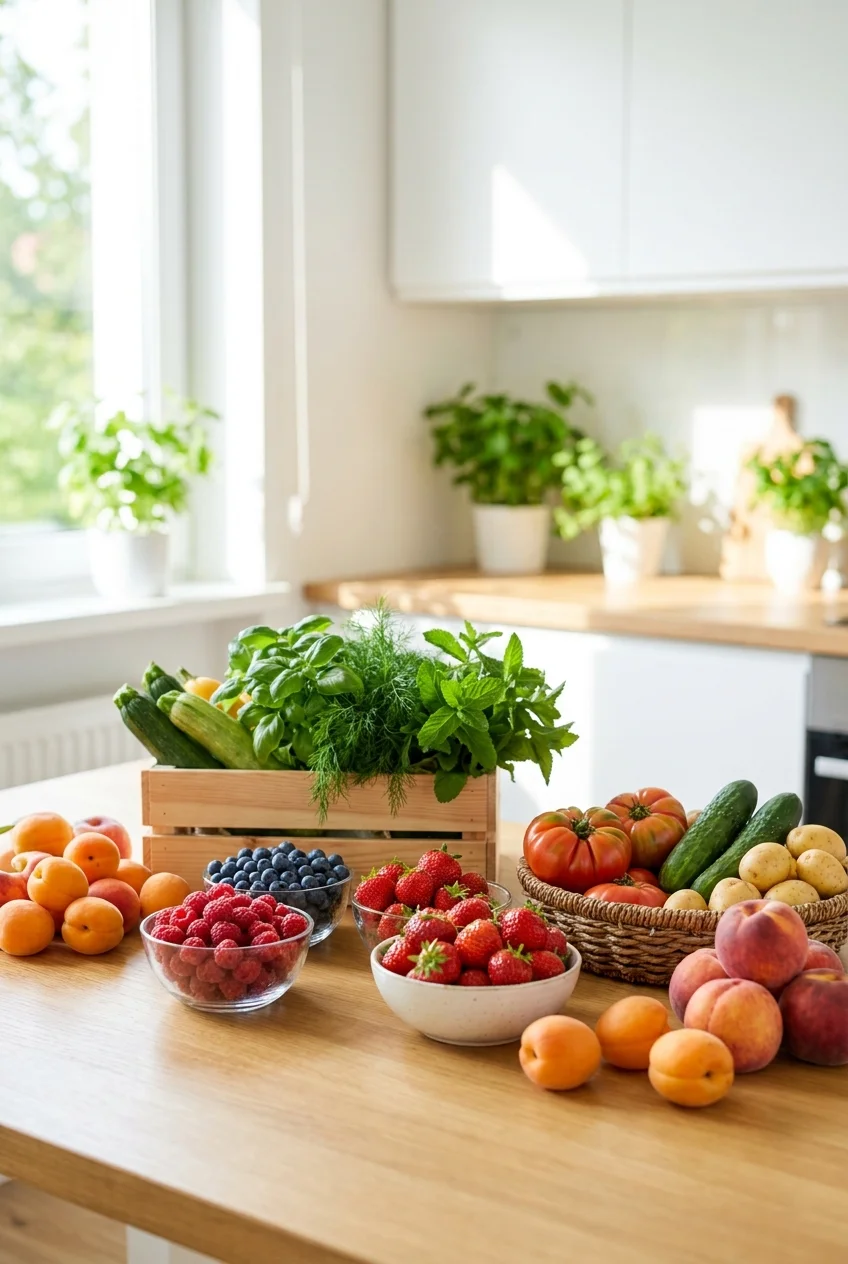
- Vegetables: broccoli, cauliflower, green beans, bell peppers, corn, green peas, zucchini, pumpkin, carrots, onions (as needed), herbs.
- Berries: strawberries, raspberries, blueberries, currants, pitted cherries, cranberries/lingonberries.
- Additional: mushrooms (if quality is assured), tomato puree in portions.
If you're not shopping alone, it's convenient to keep a shared list in the Pickt mini-app in Telegram: add items and quantities, and family members will see updates in real time. This is especially helpful when some products are bought at the market and others at the store.
Step 2. Buy Seasonal Vegetables and Berries in 2026: What to Prioritize
Seasonality is key to flavor and price. In 2026, the logic is the same: buy at peak harvest and freeze immediately after purchase – this minimizes losses and reduces 'wateriness'.
What Freezes Best
- Thick-skinned berries: currants, cranberries, lingonberries, blueberries – usually freeze 'loose' and don't turn into mush.
- Vegetables for blanching: broccoli, cauliflower, beans, peas – after a short heat treatment, they retain color and texture.
- Diced vegetables: pumpkin, zucchini, peppers – easy to portion for stews and soups.
What's Better to Freeze as Preps
- Tomatoes: usually work better as puree/sauce in portions than as pieces (less 'sogginess' after thawing).
- Herbs: better as a chopped mix or ice cubes with oil/water (for soups and sauces).
- Onions: can be frozen chopped, but the smell is strong – needs airtight packaging.
How to Choose When Shopping
- Pick ripe but not overripe berries without wet spots or mold.
- Vegetables should be firm, without cracks or signs of rot.
- If buying in bulk, plan your time: berries are best frozen on the day of purchase.
Step 3. Prepare the Produce: Washing, Drying, Chopping (this determines 80% of quality)
Proper preparation is the foundation for freezing vegetables and berries for winter without a thick layer of ice or mush. Key rules: quick, clean, as dry as possible.
Basic Preparation Rules
- Wash berries and vegetables in cool water (berries gently, preferably in a colander).
- Dry on a towel/paper in a single layer for 15–40 minutes. Moisture = ice = worse texture.
- Remove excess: stems, pits (cherries), seeds (peppers), tough parts (broccoli).
- Chop according to future dishes: 1–2 cm cubes for soups, strips for vegetable mixes, slices for roasting.
Ideas for 'Smart Chopping'
- Peppers: half into strips (for frying), half into cubes (for soups).
- Pumpkin: 2 cm cubes (for cream soup) and small cubes (for porridge/stews).
- Zucchini: cubes for stews; slices often produce more ice and hold shape worse.
A related query often searched with this topic: how to properly freeze berries. The simple answer: dry until the surface is dry, freeze first in a single layer, then package.
Step 4. Blanch Vegetables That Darken and Lose Flavor
Blanching is a short boil followed by cooling. It stops enzymes that spoil color and flavor during storage. For freezing vegetables for winter, this is especially important for cabbage, beans, and peas.
How to Blanch (Universal Method)
- Bring a large pot of water to a boil and prepare a bowl of ice water.
- Submerge vegetables in boiling water for 1–3 minutes (depending on size).
- Immediately transfer to ice water for 2–3 minutes.
- Dry thoroughly, then freeze.
Time Guidelines
- Broccoli/cauliflower: 2–3 minutes (medium florets).
- Green beans: 2–3 minutes.
- Green peas: 1–2 minutes.
- Corn (kernels): 2–3 minutes.
If you're searching for 'which vegetables can be frozen', remember the rule: most vegetables can be, but some require blanching to avoid dull color and a 'grassy' taste after a few months.
Step 5. Freeze Properly: in a Single Layer, in Portions, and Without Excess Air
This determines winter convenience: being able to take out exactly one portion without chipping off a block. Proper packaging also reduces freezer burn and drying out.
Two Effective Freezing Methods
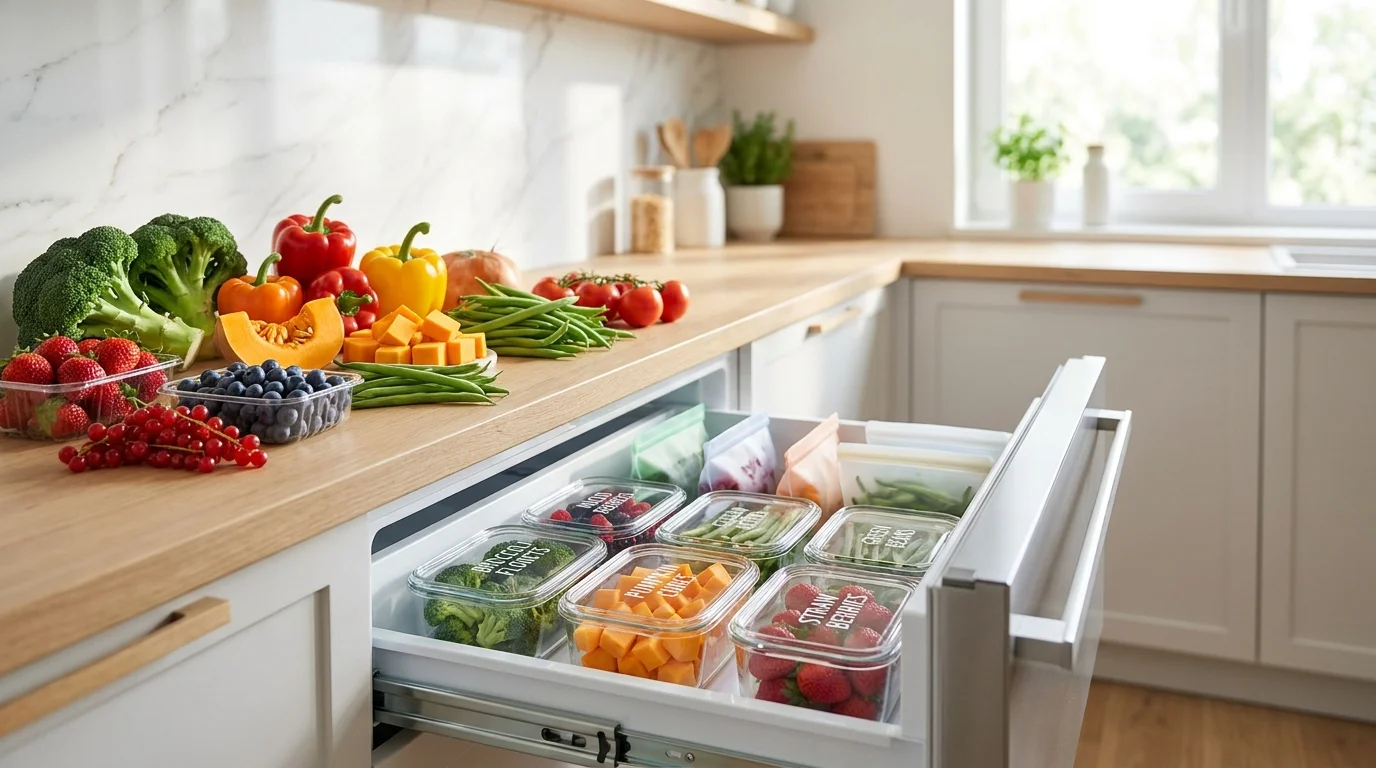
- Pre-freeze in a single layer: spread berries or vegetable pieces on a tray/board in one layer, freeze for 2–4 hours, then transfer to a bag/container. This prevents berries from sticking together.
- Freeze directly in portions: package in 200–500 g portions (per dish) and freeze in a thin layer – freezes faster, fewer ice crystals.
Packaging: What's Best
- Freezer bags with zipper: squeeze out air, make 'flat bricks'.
- Containers: good for delicate berries but take up more space.
- Silicone molds: for herbs, tomato puree, sauces (cubes).
Life Hack Against Ice
- Freeze chilled and dry products.
- Don't overload the freezer with warm batches: do it in batches to keep the temperature stable.
If you're splitting the shopping among several people, keep a shared checklist: in Pickt (bot @PicktBot, link t.me/PicktBot/app) it's easy to mark what's been bought, what's frozen, and in what quantity – without messages and duplicates.
Step 6. Label, Store, and Use Without Mistakes: Shelf Life, Temperature, Thawing
Even perfect freezing of berries and vegetables for winter can disappoint if you don't label bags and store them too long. This step is about quality control and safety.
How to Label
- Name (e.g., 'currants', 'pepper strips', 'vegetable mix for soup').
- Date of freezing (month/year, relevant for 2026).
- Portion size (e.g., 300 g) and purpose ('for smoothies', 'for stew').
Temperature and Shelf Life (Practical Guidelines)
- -18°C or lower – optimal for home freezers.
- Berries: typically 8–12 months in quality (longer is possible, but aroma weakens).
- Blanched vegetables: 8–12 months.
- Herbs: 4–6 months for vibrant aroma.
- Mushrooms (fried/stewed): 6–8 months.
How to Use Without Losing Texture
- Berries for baking: usually added frozen (without thawing), lightly tossed in starch.
- Vegetables for soup: add directly to the pot from the freezer.
- Vegetables for frying: cook over high heat in small batches so they fry, not steam in released water.
Conclusion. Freezing vegetables and berries for winter is one of the simplest ways to prepare for the cold season in 2026: buy at peak harvest, spend one evening on prep, and get dozens of quick ingredients. Focus on dryness, portions, and labeling – and your freezer will no longer be a 'black box', but your home semi-finished product workshop without extra chemicals.
Frequently Asked Questions
Can you freeze berries with sugar?
Yes. This is convenient for desserts: sprinkle with sugar to taste, let sit for 10–15 minutes, and freeze in a container. The downside is it's less suitable for smoothies and unsweetened dishes, and it takes up more space.
Why do berries become soft after freezing?
Ice crystals damage cells, especially in delicate berries (raspberries, strawberries). Fast freezing (in batches, thin layer), a dry surface, and pre-freezing in a single layer help.
Do you need to wash berries before freezing?
Usually yes, especially if from a market or garden. It's important to dry thoroughly. If berries are very delicate and perfectly clean, some freeze them without washing, but this is a compromise between safety and shape retention.
Which vegetables are least suitable for freezing?
Those with high water content and delicate structure: fresh cucumbers, salad leaves, radishes – they become limp after thawing. It's better not to freeze them and instead use other seasonal preserves.