What to Buy for Your Dacha in July 2026: A List
To understand what to buy for your dacha in July, focus on three seasonal tasks: regular watering and garden care, protection from heat and insects, and comfortable living on the plot. Below is a practical checklist for July 2026 for a family, couple, or neighbors: garden and vegetable patch, home and kitchen, relaxation, safety, and quick repairs — all organized by section so you don't forget anything.
July is the peak of plant growth and also a time when people more often stay overnight at the dacha. Therefore, the list is designed to cover both "garden" needs and household details that are usually remembered too late.
Watering and Garden Care in July: To Prevent Drying Out and Overgrowth
In July, the soil dries out faster, and plants actively gain mass. If you were looking for what to buy for the dacha in summer, start with watering and basic care — this saves your harvest and time.
- Hose 20–50 m (preferably reinforced) + set of quick-connect fittings and an adapter for your faucet/pump.
- Sprayer/nozzle with modes (jet, shower, mist) — convenient for seedlings and the greenhouse.
- Drip irrigation (tape/tubing, fittings, timer) — a must-have if you only come on weekends.
- Watering can 8–12 L and a small watering can for the greenhouse/containers.
- Mulch (straw, wood chips, landscape fabric) — retains moisture and suppresses weeds.
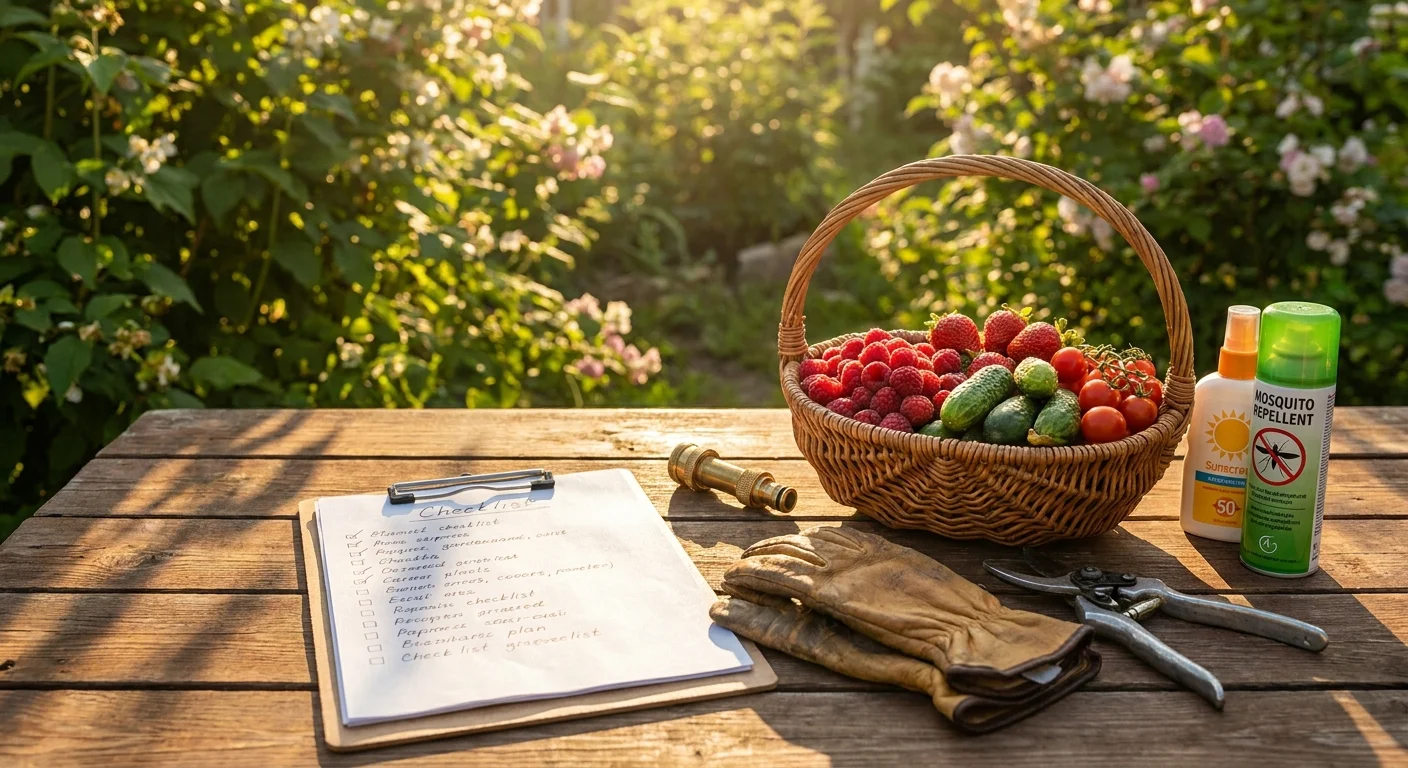
- Pruning shears + coated gloves — for suckering, pruning, and harvesting.
- Ties: twine, clips, stakes/trellis for tomatoes, cucumbers, raspberries.
- Seasonal fertilizers: potassium-phosphorus for fruiting, calcium (for blossom end rot), magnesium (for yellowing), humate/biostimulant as needed.
- Weed control tools: hoe/stirrup hoe, narrow weeder, garden knife.
Tip: In July, it's often the small items that are missing — fittings, clamps, spare connectors. Buy 2–3 extras "just in case" so you don't have to stop watering due to one cracked part.
Protection from Insects and Sun: Comfort on the Plot and in the House
Mosquitoes, midges, wasps, and intense sun are the main reasons why the dacha in July can become a challenge. This section is about what to buy for the dacha in the heat to work and relax comfortably.
- Mosquito nets for windows/doors + Velcro/magnets (quick installation).
- Vaporizer + spare tablets/liquid, and for the veranda — coils or an outdoor repellent.
- Skin repellent and after-bite gel (especially if there are children in the family).
- Wasp traps (bottle-type or ready-made) + bait; useful if there are fruit trees nearby.
- Sun protection: SPF 30–50 cream, sun hat/cap, lightweight long-sleeved shirt.
- Awning/marquee/umbrella for shade near the house, in the children's area, or by the grill.
- Hydration: thermal pitcher/thermos, water bottles, electrolytes/mineral water.
If you regularly dine outdoors, a door net and outdoor repellent are more effective than spraying every 20 minutes.
Kitchen and Food Storage: Easier Cooking, Safer Storage
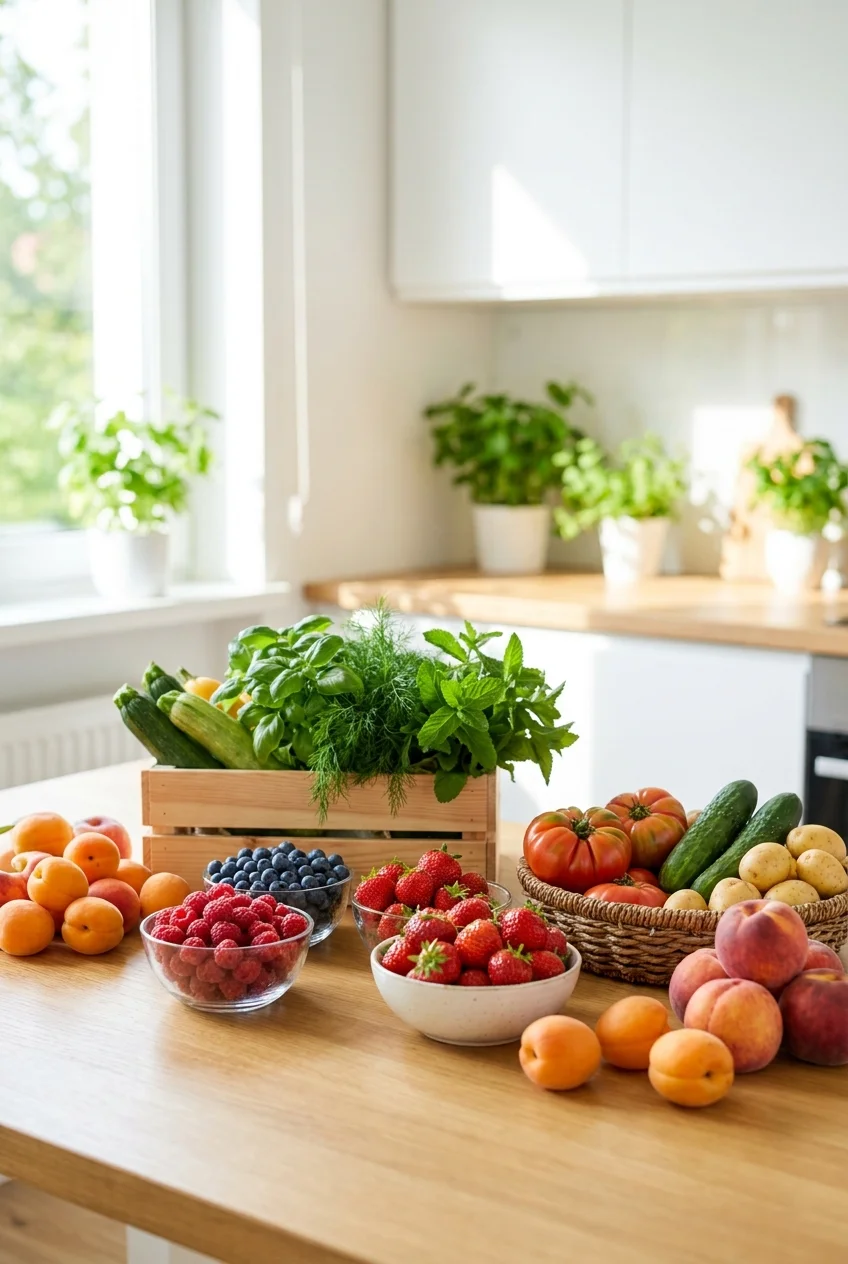
July is the season for berries, herbs, and the first "mass" harvests. To avoid losing your harvest and running to the store every day, add items to the list that solve storage and preservation needs.
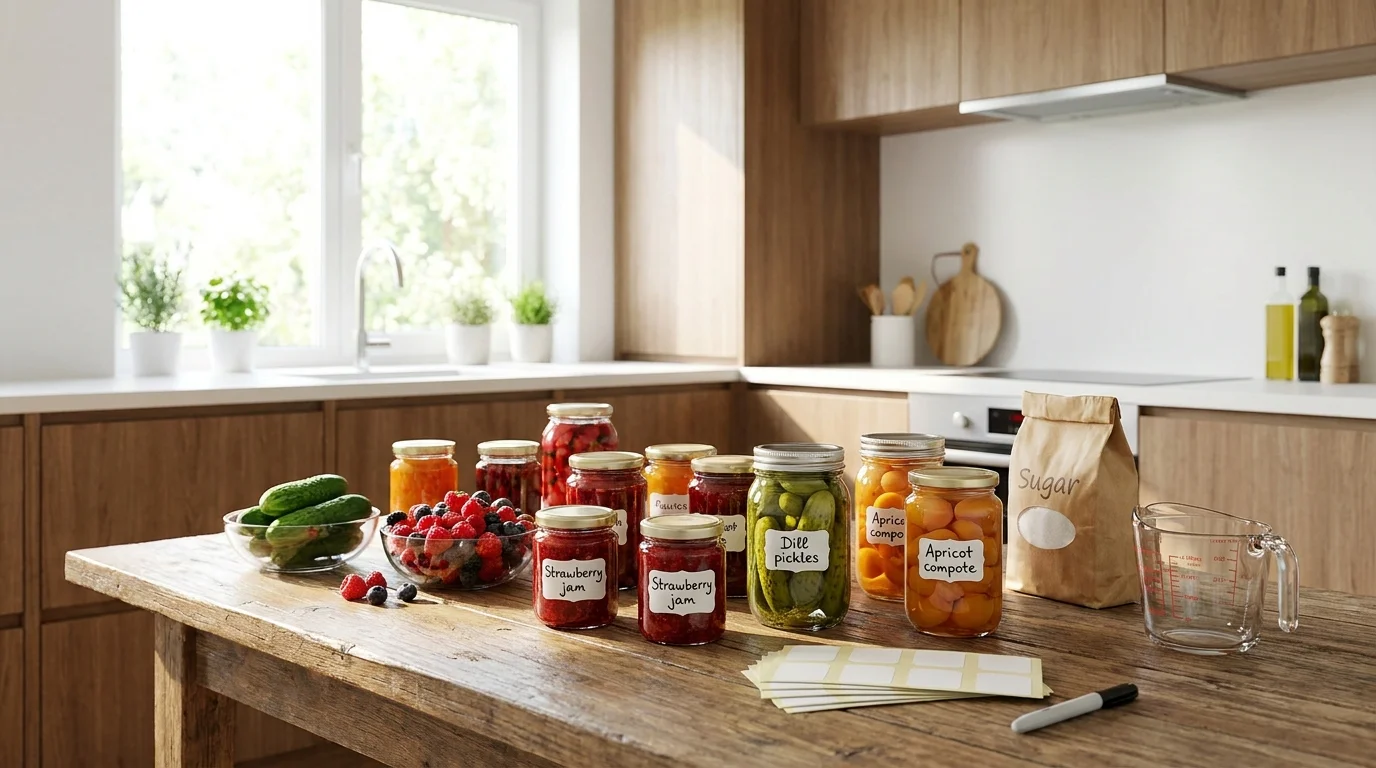
- Containers with lids of various sizes, including flat ones for berries (they don't get crushed).
- Freezer bags/sleeves, zip-lock bags, marker for labeling (date, contents).
- Cutting boards (separate for meat/fish and vegetables) + sharp knife and sharpener.
- Strainer/colander, bowls, tongs, spatula — small items that are "always somewhere at the dacha, but not here."
- Ant repellents for the kitchen/pantry (gels/traps) and airtight jars for grains.
- Disposable gloves and napkins/towels — convenient when processing berries and meat.
- Grill/grate/skewers + cleaning brush and meat thermometer (useful for chicken and steaks).
- Trash bags (heavy-duty), container for separate collection if you take everything back to the city.
For the dacha in July, airtightness and insect protection are especially important: grains, sugar, and cookies should be immediately transferred to jars with tight lids.
Tools and Minor Repairs: Handle "Five-Minute" Tasks Without Trips to the Hardware Store
Even if you don't plan any construction, small tasks often pop up in July: tighten a hinge, replace a hose, patch a fence. This mini-kit is the answer to the question what to buy for the dacha to avoid depending on the nearest store.
- Screwdriver/bit set, tape measure, level, hammer.
- Pliers, wire cutters, utility knife + spare blades.
- Electrical tape, heat shrink tubing, zip ties, extension cord 20–30 m (with grounding).
- Teflon tape, plumbing sealant, set of gaskets — for faucets and connections.
- Screws of various sizes, nails, brackets, hose clamps.
- Work gloves, safety glasses, flashlight/headlamp.
- Mold remover and wood antiseptic (if you have a veranda/terrace).
If power outages are common in July due to thunderstorms, add a power bank and a rechargeable LED lamp — they save the evening and phone charging.
Relaxation, Sleep, and Daily Life: Making the Dacha Feel Like a Vacation
In July, you want not only to work at the dacha but also to relax. This section helps quickly improve comfort without major expenses — especially if you come with children or stay for several days.
- "Dacha" bedding, lightweight blanket/throw, spare pillowcases.
- Mattress topper or air mattress (if the sleeping spots are "tired").
- Fan or compact air cooler, thick curtains/blackout blinds for the bedroom.
- Folding chairs/table, blankets for the evening, string lights/garden lights.
- First aid kit: antiseptic, band-aids, bandage, burn remedy, antihistamine, fever reducer, tweezers for splinters.
- For children: inflatable pool/water mat, chalk/board games, insect bite remedy.
- For pets (if you bring them): bowl, spare food, tick repellent, puppy pads.
In July, evenings can be cool even after a hot day: one warm blanket per person often solves the comfort issue better than "let's just tough it out."
How to Quickly Compile a Shared List and Not Forget Anything
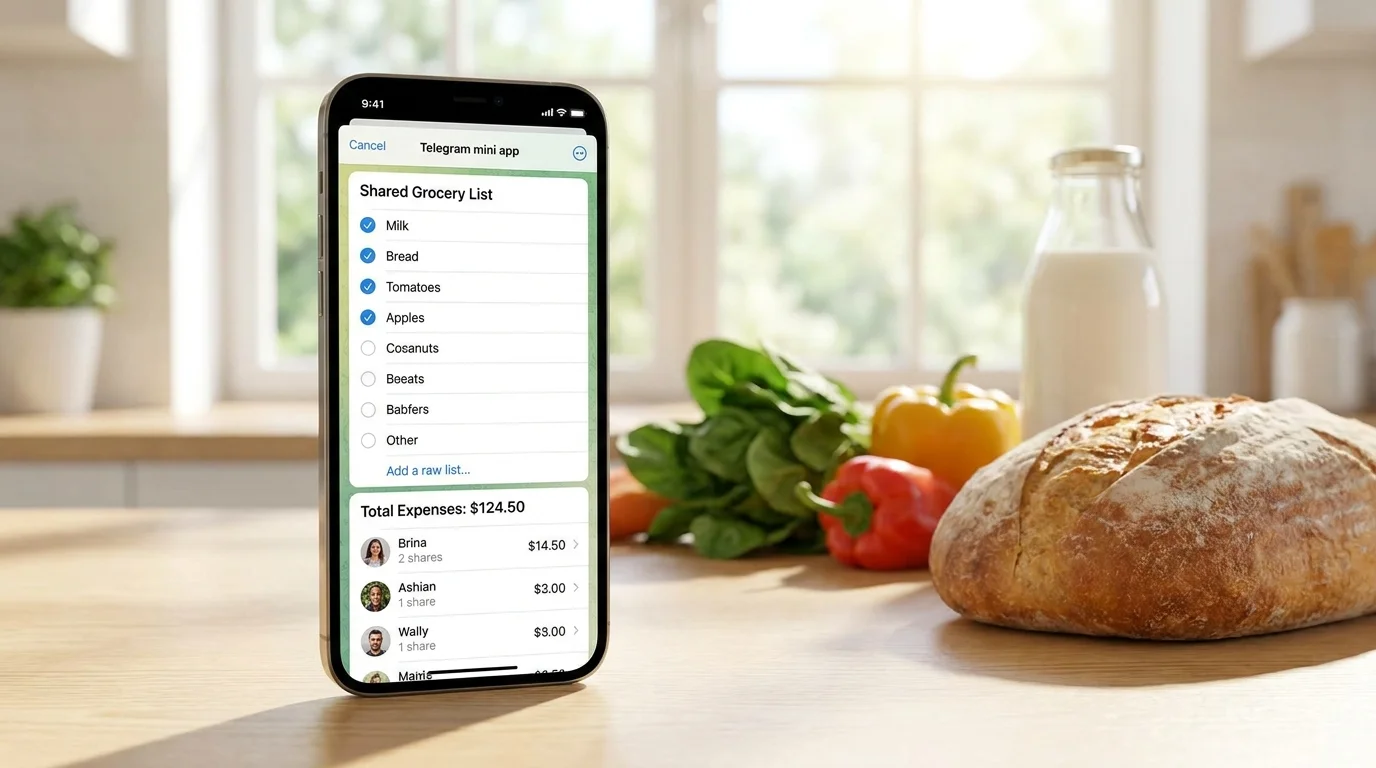
The most common problem with dacha purchases is not "what to buy," but who will buy it and what has already been bought. It's convenient to keep a shared checklist where changes are visible in real-time, especially if someone stops by the store on the way.
- Divide the list by zones: garden, house, kitchen, repairs, relaxation.
- Mark priority: "needed today," "for the weekend," "if budget allows."
- Assign responsibilities: one person takes supplies for watering, another takes the first aid kit and kitchen items.
- Record brands/sizes: hose length, fitting type, container volume, to avoid buying "the wrong thing."
For such tasks, the free mini-app Pickt in Telegram is suitable: it's convenient for keeping shared shopping lists synchronized between family members or neighbors. You can open it via the bot @PicktBot or the link t.me/PicktBot/app.
Conclusion
In short, what to buy for your dacha in July 2026 is everything that supports watering and care, protects from insects and sun, simplifies kitchen work and harvest storage, and covers minor repairs and comfortable living. Go through the sections, mark "critical" and "desirable," and you'll compile a list in 10 minutes — without forgotten fittings, nets, or band-aids.
Frequently Asked Questions
What must I buy for the dacha in July if the budget is limited?
Start with watering (hose/fittings or drip irrigation), insect protection (net, vaporizer/repellent), and a basic first aid kit. These three items provide maximum benefit during the July heat and peak mosquito activity.
What should I buy for the dacha in July in terms of food and supplies for a week?
Take water/drinks, grains and canned goods "as a backup," oil/spices, tea/coffee, and for supplies — trash bags, napkins, dish soap, containers, and zip-lock bags for berries and herbs.
What watering system should I choose if we only come on weekends?
Optimal is drip irrigation with a timer and mulch on the beds. This way, plants receive moisture regularly, and you don't spend half a day "rehydrating" dried-out soil.
How to avoid buying too much if several people are shopping?
Use one shared list with "bought" marks and comments on sizes/quantities. This avoids duplicates (e.g., three identical repellents) and helps you quickly cover priority items.