In autumn, the search for 'something for immunity' becomes especially popular again. Store shelves fill with vitamin complexes, berries with bold promises, drinks with the 'detox' prefix, and expensive superfoods. There's indeed a lot of marketing in this area: no single product creates a protective shield against colds, and nutrition doesn't replace sleep, hygiene, physical activity, or ordinary seasonal caution.
But that doesn't mean immunity foods are a pointless idea. A more sensible interpretation of this phrase is ordinary, varied food that helps the body get protein, fiber, iron, vitamins, and energy throughout the week. In autumn, it's especially useful to rely on affordable seasonal vegetables, familiar protein sources, and straightforward products that are convenient to keep at home.
Which Foods Really Support the Body in Autumn?
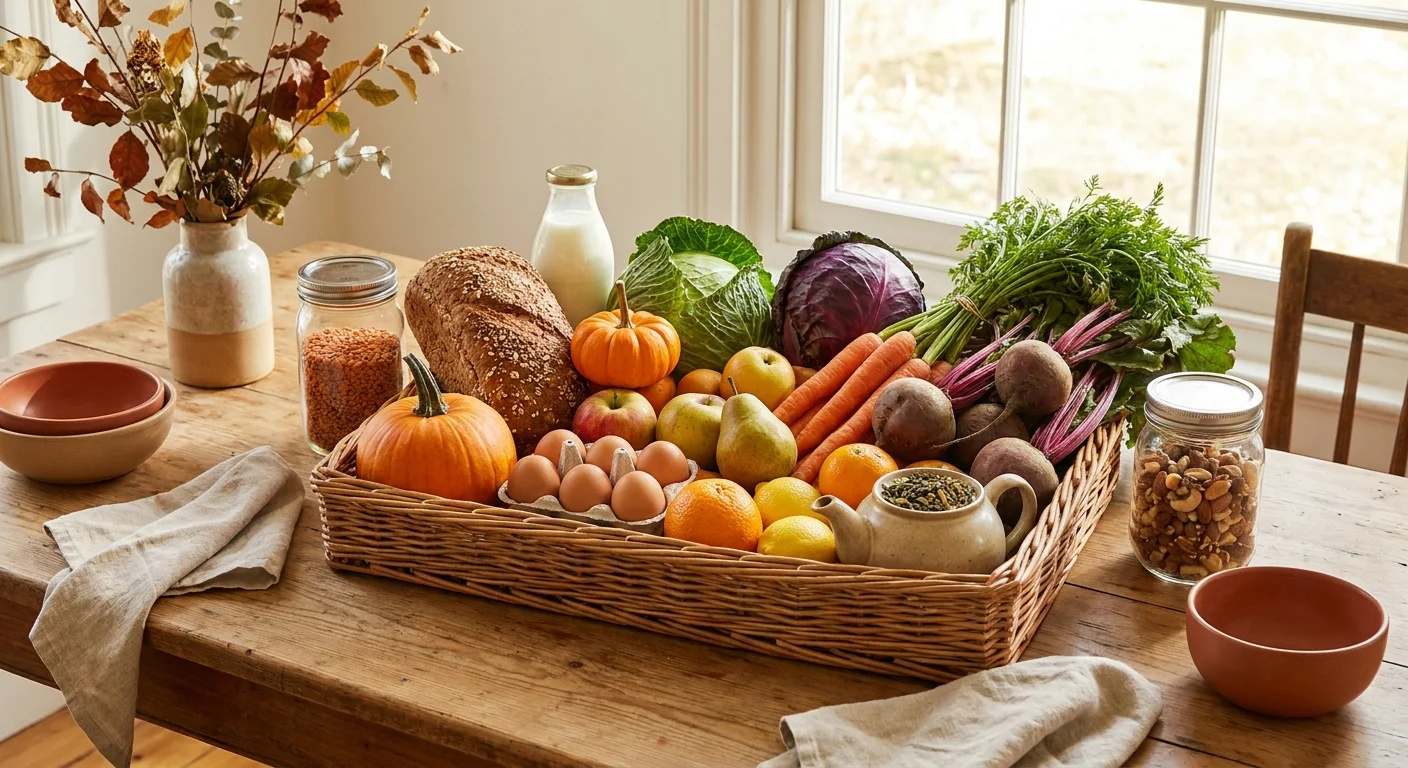
Your autumn grocery basket doesn't have to be expensive or exotic. In the off-season, it's better to build your diet around regularity and variety: vegetables and fruits, grains and legumes, protein products, fermented dairy if you tolerate them well, vegetable oils, nuts, and seeds.
The main principle is simple: don't look for one 'magic' ingredient, but assemble a plate from several food groups. For example, roasted pumpkin with chicken and buckwheat, lentil soup with vegetables, fish with potatoes and cabbage salad—these are more practical ways to support your diet than a one-off purchase of an expensive powder.
Here's a guide for your home stock:
| Food Category | Examples | How Often to Keep at Home |
|---|---|---|
| Seasonal vegetables | Cabbage, carrots, beets, pumpkin, onions, potatoes | Always, refresh once a week |
| Fruits and berries | Apples, pears, citrus fruits, frozen berries | For 5–7 days |
| Protein products | Eggs, fish, poultry, cottage cheese, legumes, meat | Plan for the week |
| Grains and whole grains | Buckwheat, oatmeal, brown rice, whole-grain bread | Stock for 2–4 weeks |
| Fermented foods | Kefir, plain yogurt, sauerkraut | In small portions several times a week |
| Useful additions to the diet | Nuts, seeds, vegetable oil, herbs | Always, as they run out |
Seasonal Vegetables in Autumn: An Affordable Base for October and November
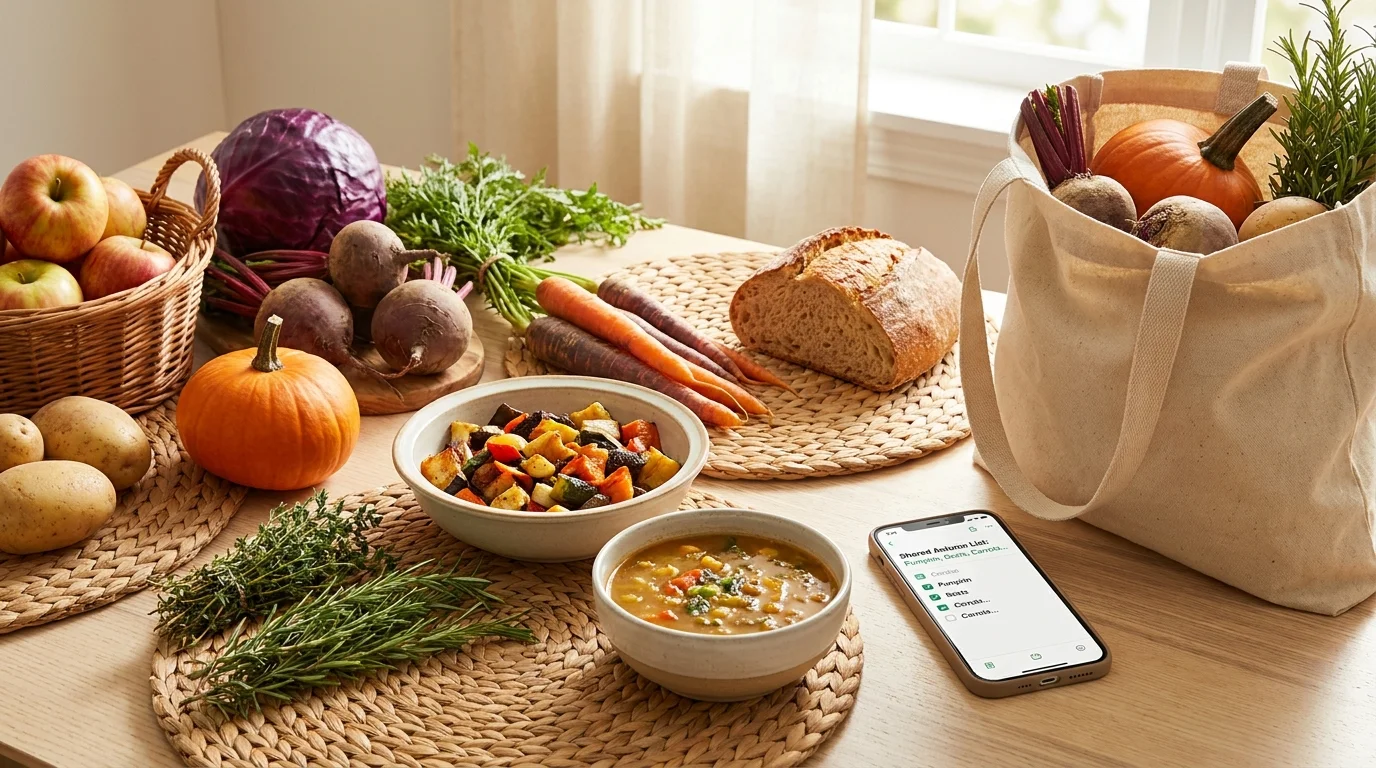
When the question of what to eat in autumn comes up, it's worth starting not with exotic items but with what stores well, is affordable, and is easy to use in various dishes. In October and November, the base can include cabbage, beets, carrots, pumpkin, potatoes, onions, garlic, radishes, apples, and pears.
White and red cabbage are great for salads, stews, and soups. Beets are convenient to roast in advance for several days: add them to salads, side dishes, hummus, or borscht. Pumpkin isn't just for cream soups—you can roast it with spices, add it to porridges, and use it in stews. Carrots, onions, and celery make a simple base for soups and sauces.
You don't have to buy everything at once. Just pick 4–5 types of vegetables for the week and prepare them in different ways: eat some fresh, roast some, and add some to hot dishes. This way, your off-season diet stays varied without extra spending or complicated recipes.
Protein and Iron: Why It's Important Not to Live on Tea and Buns in Autumn
In cool weather, you crave heartier food, and that's normal. The problem arises when regular meals are replaced by snacks of pastries, sweets, and coffee. They give quick energy but don't make your diet more complete.
Your body needs protein every day, so it's useful to plan familiar sources in advance: eggs, poultry, fish, cottage cheese, plain yogurt, legumes, meat, tofu. For convenience, you can rotate them by day rather than trying to cook something new every evening. For example, roast chicken at the start of the week, make lentil soup midweek, and have fish on the weekend.
Iron-rich foods deserve special attention: meat, liver if it's part of your family's diet, legumes, buckwheat, greens, and eggs. Don't self-diagnose based on fatigue or buy iron 'just in case': the causes of weakness can vary. If you're concerned about how you feel, it's wiser to discuss it with a doctor.
Fermented Foods and Fiber Without Extremes
The gut often appears in advertising as the center of all problems and solutions at once. The reality is calmer: a diet with enough plant-based food and regular fermented products can be a beneficial part of everyday eating, but it doesn't replace treatment and doesn't suit everyone the same way.
Fiber comes from vegetables, fruits, legumes, whole grains, seeds, and nuts. There's no need to suddenly switch to huge bowls of salad, especially if you previously ate few vegetables: it's more comfortable to increase the amount gradually and drink enough fluids.
For fermented foods, you can choose kefir, plain yogurt without excess sugar, cultured milk, or sauerkraut. It's important to check the ingredients and your own tolerance. A jar of sweet 'yogurt dessert' with flavorings isn't the same as a regular fermented dairy product, though it doesn't need to be demonized either: it's about frequency, not a single choice.
Do You Need Supplements If You Eat Well?
Supplements shouldn't be seen as a mandatory part of your autumn basket. They may be discussed with a doctor in specific situations—such as dietary restrictions, confirmed deficiencies, health conditions, or based on test results. Buying complexes at random just because November has arrived isn't the most rational way to take care of yourself.
Ordinary food doesn't always solve all medical issues, but it remains the foundation: regular meals, adequate protein, vegetables, fruits, and fluids matter more than a flashy jar promising to 'boost immunity in a week.'
Which Superfoods Are Just Marketing?
Goji berries, chia seeds, spirulina, matcha, and other trendy foods can be a tasty addition to your diet if you enjoy them and they fit your budget. But they don't have special properties unavailable in ordinary food. Frozen blackcurrants, oatmeal, buckwheat, cabbage, beans, and apples can easily hold a worthy place in your diet.
Be skeptical of products that promise to 'cleanse the body,' 'supercharge immunity,' or replace a proper meal. Your body doesn't need detox teas after a heavy dinner; it benefits more from proper sleep, water, and the next regular meal. If an expensive superfood makes breakfast more interesting—great. If it's bought out of anxiety, it's better to first check your basic basket.
Water, Warm Drinks, Sleep, and Routine
In autumn, many people unknowingly start drinking less water: the heat is gone, thirst is less noticeable, and coffee and strong tea become a common way to warm up. Warm drinks—tea, herbal infusions, water with lemon, unsweetened compote—can help maintain a comfortable fluid intake. But don't turn drinks into a source of excess sugar.
Still, food won't replace sleep and routine. If you sleep five hours a night for weeks, work without breaks, and only recover on weekends, even the most thoughtful autumn grocery list won't be the solution. It's more beneficial to aim for regular sleep times, a bit of movement during the day, and calm meal planning than to hunt for yet another 'cure-all' product.
Ready Weekly Shopping List: An 'Autumn Base' for a Family of 3–4
- Vegetables: cabbage—1 head, carrots—1 kg, beets—1 kg, pumpkin—1 small, potatoes—2 kg, onions—1 kg, garlic—2 heads.
- Fruits and berries: apples—1.5–2 kg, pears—1 kg, citrus fruits—1 kg, frozen berries—1 pack.
- Protein: eggs—20 pieces, chicken or turkey—1.5–2 kg, fish—800 g–1 kg, cottage cheese—2 packs, legumes—2 packs or cans.
- Fermented dairy: kefir or plain yogurt—2–3 packs, sauerkraut—1 jar.
- Grains and bread: oatmeal, buckwheat, rice or bulgur, whole-grain bread.
- Extras: vegetable oil, nuts or seeds, canned tomatoes, herbs, spices.
This autumn grocery list is easy to adapt to your family's tastes and can be saved as a recurring list in Pickt—shared shopping lists in Telegram are convenient when one person adds items that have run out and another goes to the store. After a week, you won't have to rebuild the base from scratch: just remove what's unnecessary and add seasonal purchases.
Quick disclaimer: This article is for informational purposes and does not replace medical advice. If you have chronic conditions, severe fatigue, digestive issues, or questions about supplements, it's best to discuss your diet with a specialist.