People often get pets on impulse: they see a photo, go to meet the animal, and already don't want to part with it. That's wonderful, but after making the decision, it's easy to swing to the other extreme: panic-buying dozens of items, half of which turn out to be inconvenient, unnecessary, or unsuitable for your particular little one.
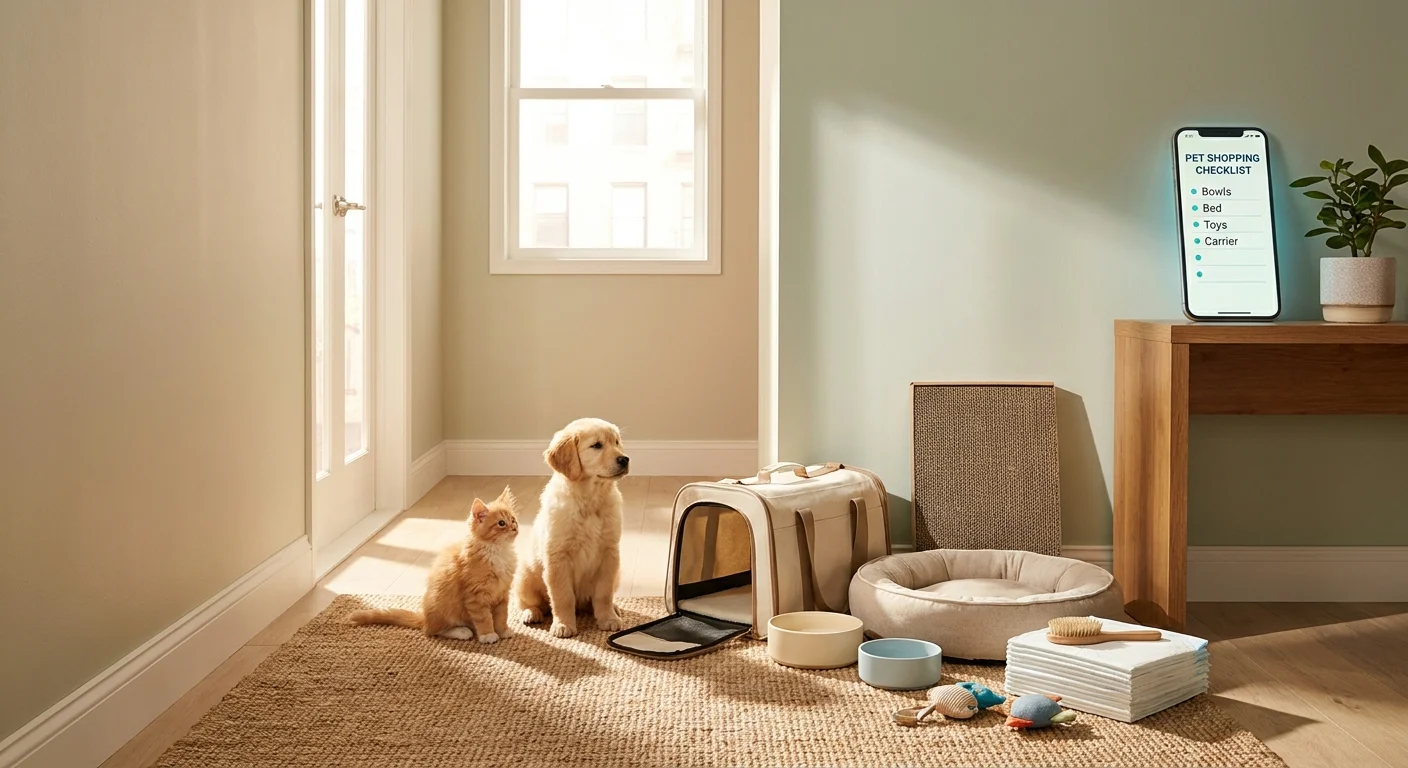
Let's do the opposite. Before the kitten or puppy arrives, prepare a calm, safe, and compact starter kit. It's enough for the first days and weeks, and everything else can be bought later once you get to know your pet's personality, size, and habits.
The easiest way to keep track of this list is in Pickt. Create a shared shopping list in Telegram, add the items from this article, assign tasks among household members, and mark off what's already been bought. That way, you won't end up with two people buying the same bowls while forgetting the carrier.
Basic Feeding Kit
To start, your pet doesn't need a whole dining setup. Two sturdy bowls are enough: one for water and one for food. It's better to choose ceramic, metal, or dense food-grade plastic without a strong smell. The bowls should be easy to wash and not slip on the floor.
For a kitten, shallow bowls are usually suitable. For a puppy, choose the size based on age and expected breed size. Don't buy an adjustable-height stand, an automatic feeder, or a set of five bowls right away: these can be chosen later once your pet's routine becomes clear.
It's best to start with a small amount of food. If the little one is coming from a breeder, shelter, or another family, ask what they were fed before. A sudden change in diet in the first days can make adaptation harder, so it's wiser to start with the familiar option.
If there's no information about the previous food, choose a product for kittens or puppies of the appropriate age from a reputable manufacturer. Check the ingredients, expiration date, packaging integrity, and age recommendations. Don't buy a large bag right away: taste preferences and food tolerance may differ.
Treats will come in handy for getting acquainted, rewarding, and gently easing the transition to a new home. Choose a small package of treats suitable for kittens or puppies. They shouldn't replace the main diet. One type is enough, not a whole collection of jars and sticks.
Feeding Essentials
- 2 sturdy bowls: one for water and one for food;
- a small package of familiar or starter food;
- one small package of treats;
- a mat under the bowls — optional, if you want to protect the floor.
Place and Sleep
From the very first day, your pet should have their own quiet corner. It doesn't have to be an expensive house with a roof and pillows. Often, a soft bed, a thick blanket, or a mattress with a removable cover is enough. The key is to place it away from drafts, foot traffic, and loud appliances.
A kitten might like a bed with raised edges, while a puppy might prefer a more open and spacious spot. But you can't guess preferences in advance: one little one will only sleep next to a person, another will choose a box or a cool floor. So, for the start, choose a simple model in the budget or mid-range.
A carrier is needed even before the pet arrives. It will be necessary for a safe trip home, vet visits, travel, and unexpected situations. For a kitten, a reliable carrier with good ventilation and a sturdy door is suitable. For a puppy, choose one that matches their current size and is safe for transport.
Don't choose a carrier just by looks. Check if it's easy to open, whether the inside can be washed, and if it's sturdy enough. Soft bags can be convenient for short trips, but a hard-shell design is often more practical for regular use.
Hygiene: Everything Needed Without Stocking Up for a Year
For a kitten, prepare a litter box, a scoop, and a small supply of litter. An open litter box with a low entrance is usually convenient for a little one. A covered option looks neater, but not all cats like it from day one. If you don't know the kitten's habits, start with a simple model.
It's better to buy a small package of litter, especially if you don't know which type the pet is used to. It's important to choose a spot for the litter box in advance: quiet, accessible, and away from food bowls. Don't move it unnecessarily in the first days.
For a puppy, prepare absorbent pads and a holder for them if needed for the chosen format. Get a moderate supply, not a huge box. The need depends on age, household routine, and how quickly they learn house rules.
A scratching post is needed for a kitten from the very beginning. The most versatile option is a sturdy vertical scratching post or a compact post. It should be tall enough for the pet to stretch out and not fall over when touched. Don't buy a large play complex right away: first, see what type of surface and position they like.
A brush is useful for both cats and dogs, but its type depends on the length and type of coat. For the start, choose a simple soft brush or a mid-range grooming glove. There's no need to assemble a professional grooming kit, buy a clipper, or several combs in advance.
Starter Hygiene Kit for a Kitten
- litter box with a low entrance;
- scoop;
- small package of litter;
- sturdy scratching post;
- soft brush;
- cleaning product safe for a home with a pet.
Starter Hygiene Kit for a Puppy
- absorbent pads;
- pad holder if needed;
- waste bags for walks;
- soft brush suitable for the coat;
- a separate towel for paws;
- cleaning product safe for a home with a pet.
Toys and Adaptation in the First Weeks
Toys help the little one settle in, shift attention, and burn energy safely. However, you don't need many toys at once. Get two or three simple, sturdy, and age-appropriate models.
For a kitten, a light ball, a soft toy without small parts, and a wand for supervised interactive play are suitable. For a puppy, a safe chew toy, a ball of appropriate size, and a soft toy without easily torn-off parts are useful.
Regularly inspect toys and remove damaged ones. Don't leave items with long ribbons, threads, small parts, or fragile fillings unattended. In the first weeks, what matters more than the number of amusements is predictability: a calm place, a familiar routine, and family attention.
It's useful to remove cords, small objects, household chemicals, fragile decor, and plants that may be unsafe for animals from the floor in advance. This isn't a purchase, but it's one of the most important steps in preparing your home.
What Not to Buy in Advance
The main rule of a budget-friendly start: don't try to buy your pet's life for several years ahead. Sizes will change, tastes are unknown, and some pretty items will remain unpacked.
- A large supply of food in one flavor or brand.
- Clothes, shoes, and accessories without knowing the pet's actual size.
- An expensive large bed, house, or play complex.
- Several types of treats and dozens of toys.
- Large collars, harnesses, and leashes bought to grow into.
- Complex automatic feeders, water fountains, and gadgets.
- Professional grooming kits.
After the first two or three weeks, you'll understand much more: where your pet likes to sleep, which toy they choose, how fast they grow, and what kind of walking or care routine suits your family. Then your purchases will be more accurate and useful.
Veterinary Basics: Only the Essentials
Before the pet arrives, it's worth finding out the contacts of the nearest veterinary clinic and checking their hours in advance. In the first days, it's also convenient to schedule an initial check-up with a specialist, especially if the little one's history is unknown to you.
Basic organizational matters include a veterinary passport, if needed in your region or for travel, as well as microchipping on the recommendation of a specialist and according to local rules. These points help identify the animal and keep their documents in order.
Don't buy medications, vitamins, parasite treatments, or medical devices in advance without a specialist's prescription. For the start, it's enough to prepare a carrier, documents, clinic contacts, and a calm plan for the first visit.
Quick Checklist: What to Buy for a Kitten
- carrier;
- 2 bowls;
- small package of food;
- small package of treats;
- bed or blanket;
- litter box, scoop, and litter;
- scratching post;
- soft brush;
- 2–3 safe toys;
- cleaning product and clinic contacts.
Quick Checklist: What to Buy for a Puppy
- carrier or safe transport option;
- 2 bowls;
- small package of food;
- small package of treats;
- bed or blanket;
- pads and a holder if needed;
- waste bags for walks;
- soft brush and a towel for paws;
- 2–3 safe toys;
- cleaning product and clinic contacts.
Transfer the checklist to Pickt and put the kit together as a team: one person picks out food and bowls, another prepares the sleeping and hygiene areas. Mark off purchases right in Telegram — and the day your new friend arrives will go smoothly without extra spending.