Every year after Halloween, a huge amount of perfectly edible pumpkin ends up in the trash. After a family evening, the kitchen usually has bowls of flesh, a handful of seeds, and the beautiful but carved lantern itself. The good news: from the flesh collected in advance, you can make a whole week of cozy dishes, and the seeds can easily become a crunchy snack. But first, it's important to figure out what can be saved and what can't.
Can you eat a pumpkin that sat with a candle?
The short and honest answer is no—a carved lantern that sat overnight at room temperature or outside is not fit for eating. Even if it looks fresh, bacteria, yeast, and mold could have multiplied inside. A candle or LED light doesn't make the flesh safer: after carving, the surface is in prolonged contact with air, hands, knives, tables, decorations, and dust.
A clear rule is this: only the flesh and seeds removed during carving and immediately refrigerated in a clean container are safe to eat. It's best to use them within 2–3 days. If the flesh sat on the kitchen counter for several hours, became slippery, smells sour, darkened, or developed spots, don't taste it—send it to the compost.
Don't "cut off the suspicious part" of a finished lantern and cook the rest: with soft, watery pumpkin, spoilage can be deeper than it appears. The question of what to do with the pumpkin after the holiday is simple: fresh preparations go to the kitchen, the carved lantern goes to compost or organic waste.
What to make with the flesh right today?
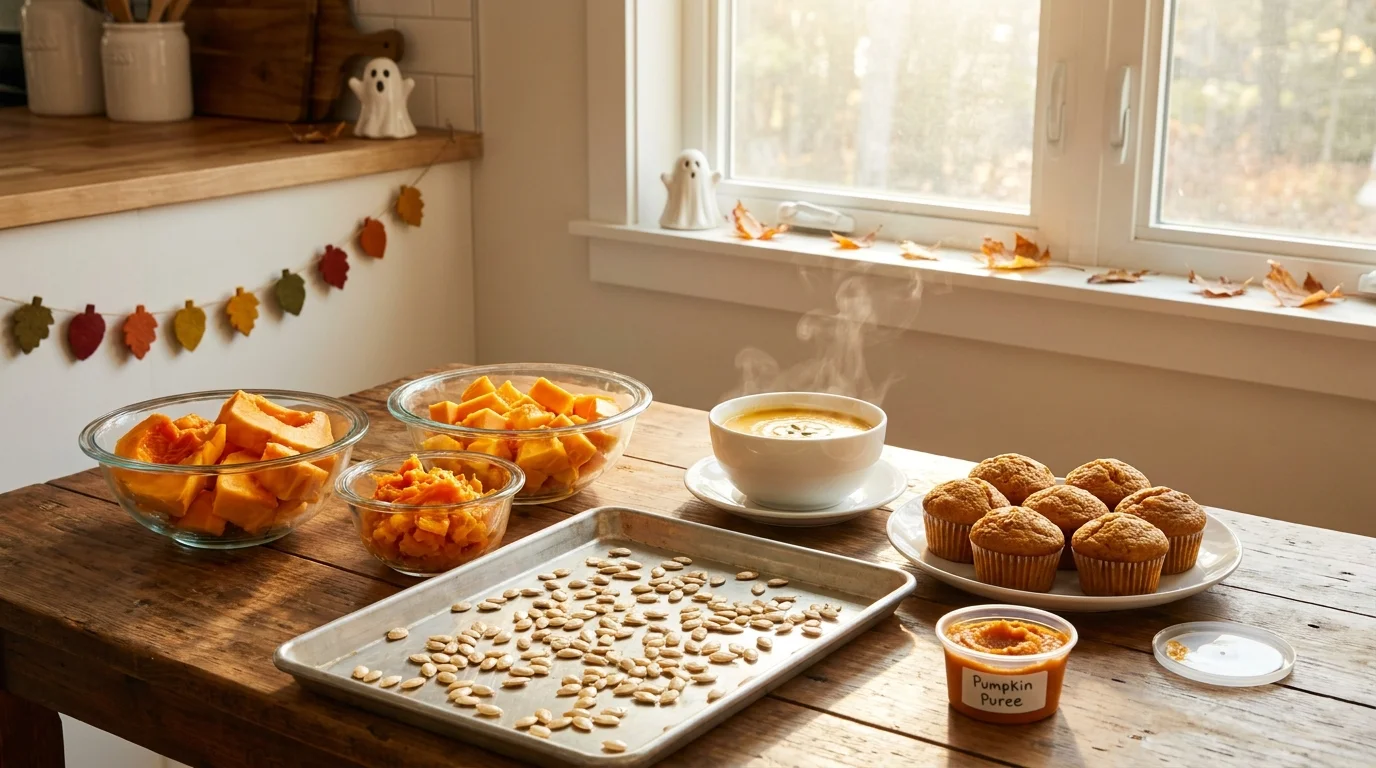
If the bowl of flesh has been in the fridge, start with a versatile base—bake or stew the pumpkin until soft and blend it. This puree will be the base for most pumpkin flesh dishes. The easiest way is to bake pieces at 190°C for about 30–40 minutes: the flavor will be richer, and the puree won't be too watery.
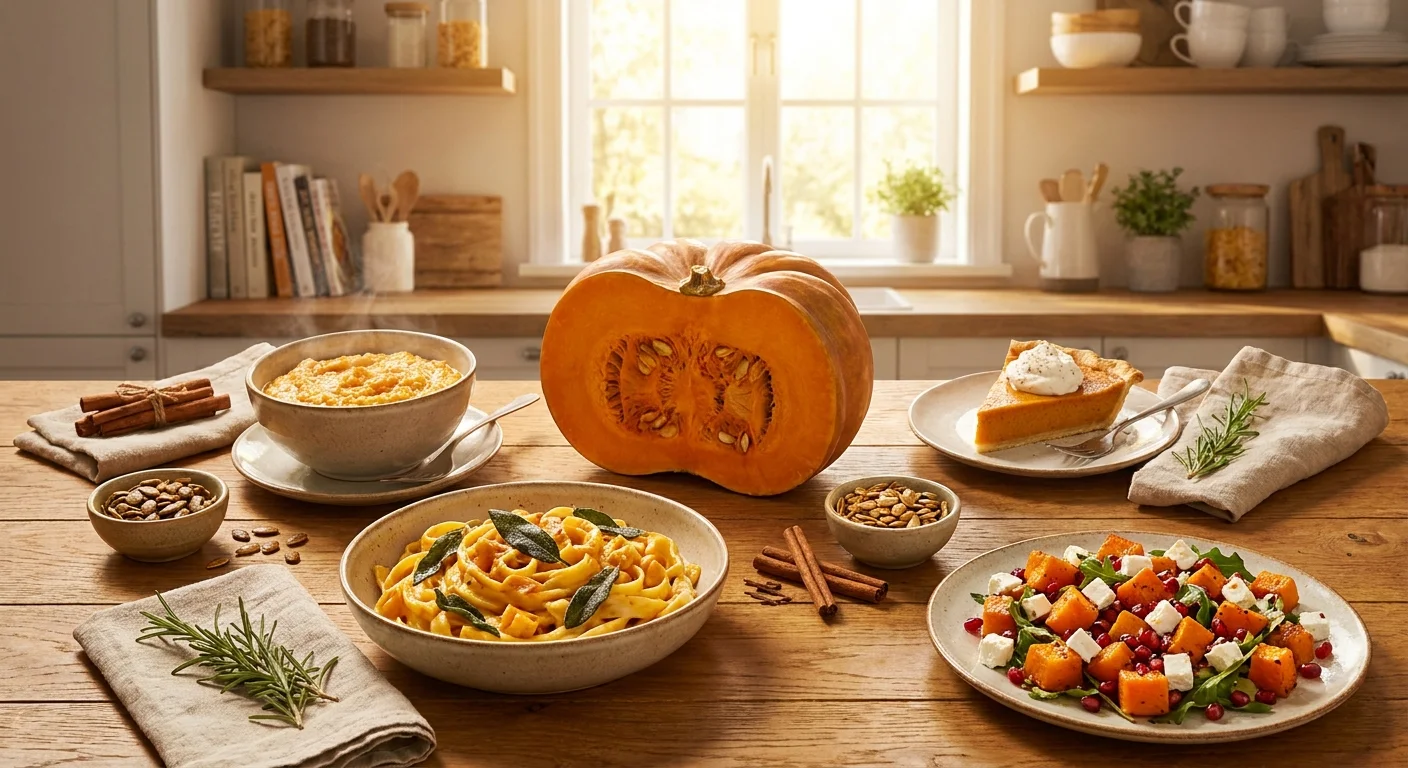
Here are eight ideas to quickly use up the harvest after the festive evening:
- Puree for freezing. Divide the cooled puree into bags or containers in portions of 250–400 g.
- Cream soup. Add sautéed onion, garlic, broth, and cream to the puree; serve with croutons.
- Pumpkin porridge. Stew pumpkin cubes with millet, rice, or oats in milk.
- Pancakes. Mix grated or pureed pumpkin with egg, flour, and a pinch of salt or cinnamon.
- Muffin. Pumpkin puree makes baked goods moist and aromatic; cinnamon, nutmeg, and cloves work especially well.
- Risotto. Add roasted pumpkin to Arborio rice, broth, Parmesan, and butter.
- Pasta sauce. Puree, cream, garlic, and grated cheese turn into a creamy sauce in 15 minutes.
- Pie filling. Mix puree with eggs, sugar, and spices, then bake in a shortcrust base.
Quick ideas table
| Dish | What you need | Time |
|---|---|---|
| Puree for freezing | Pumpkin, a little water or oil | 40–50 minutes |
| Cream soup | Puree, onion, broth, cream | 25 minutes |
| Porridge | Pumpkin, millet or rice, milk | 35 minutes |
| Pancakes | Pumpkin, egg, flour, oil | 20 minutes |
| Muffin | Puree, flour, sugar, eggs, spices | 60 minutes |
| Risotto | Pumpkin, rice, broth, cheese | 35 minutes |
| Pasta sauce | Puree, cream, garlic, cheese | 15 minutes |
| Pie filling | Puree, eggs, sugar, spices, dough | 50 minutes |
How to properly preserve the seeds?
How to cook pumpkin seeds tasty and without extra fuss? First, separate them from the fibers in a large bowl of water: the seeds will float, and the heavy fibers will sink. Rinse, dry with a towel, and leave for 20–30 minutes to remove excess moisture. Then toss with a teaspoon of oil and salt.
Roast the seeds on a baking sheet at 160–170°C for about 15–25 minutes, stirring once or twice. Don't set the temperature too high: they burn easily and turn bitter. After cooling completely, store them in a jar with a tight lid for up to a week.
For different moods, try these combinations:
- salt, smoked paprika, and garlic powder;
- curry, a pinch of turmeric, and chili;
- cinnamon, sugar, and a drop of butter;
- rosemary, black pepper, and sea salt;
- soy sauce, sesame, and ginger—first dry the seeds slightly to avoid over-salting.
Seeds are great on their own, in salads, on cream soup, in granola, and even in sandwiches with cream cheese.
Pumpkin puree: freezing without loss
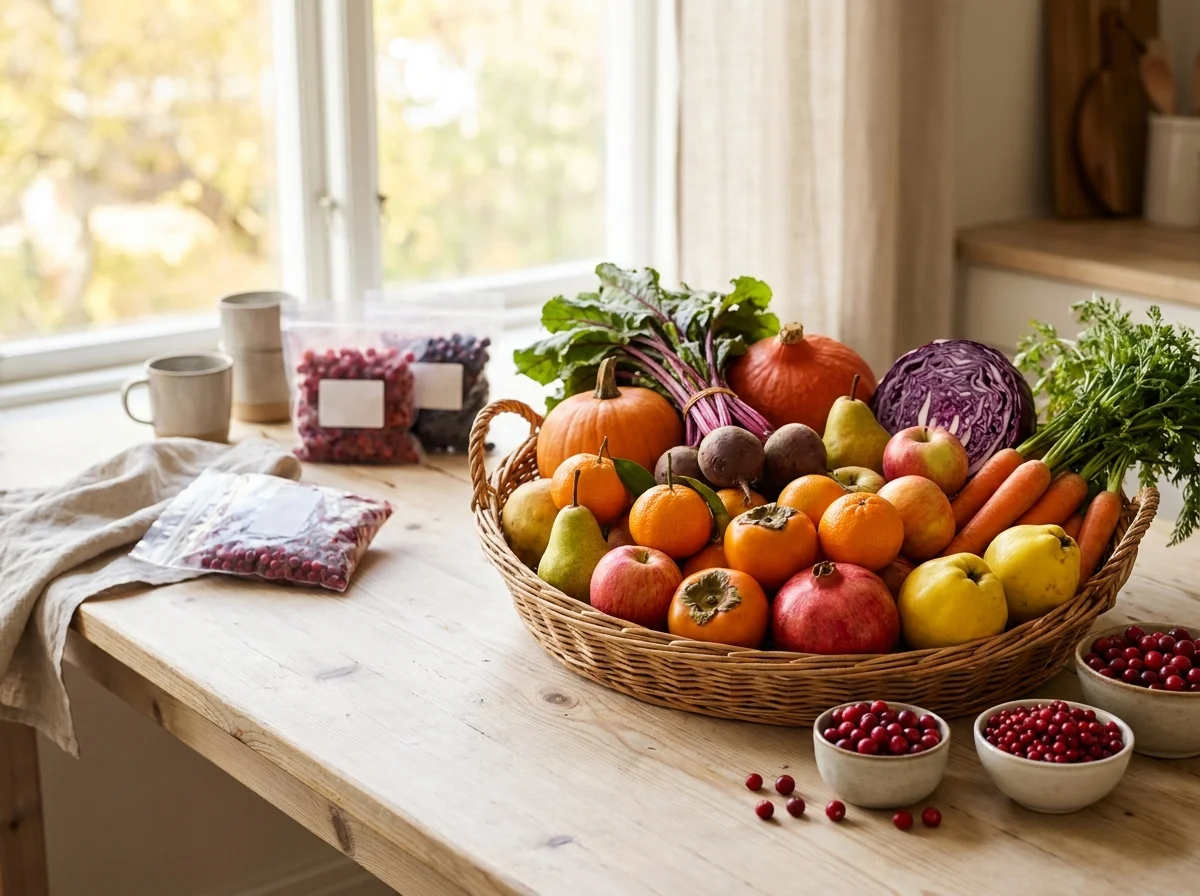
Pumpkin puree freezes well, especially if made from roasted flesh. Cool the puree, divide it into small bags in a flat layer or into ice cube trays. Portions of 250 g are convenient for pancakes and porridge, while 400–500 g portions work for soup, muffins, or pie. Label the date and weight: in winter, this saves you from guessing.
In the freezer, the puree keeps well for up to 3–4 months. Thaw it in the fridge or add it directly to soup and porridge. If water separates after thawing, simply drain it or stir it into the batter. For baking, you can briefly drain the puree in a sieve—this way, muffins and pies won't be too moist.
What to buy and how not to forget anything at the store
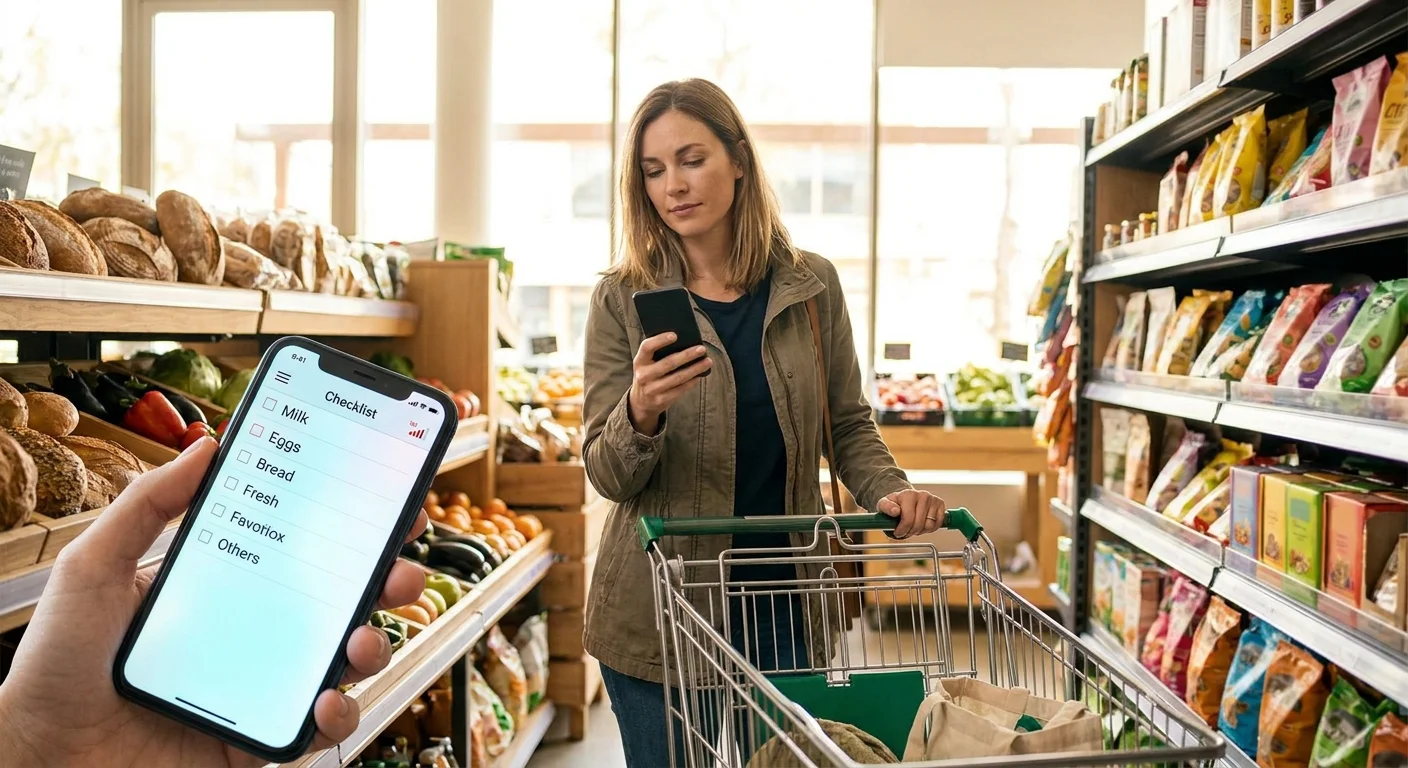
For most recipes on November 1st, five basic items are enough: cream, flour, sugar, butter, and a set of spices. The spices include cinnamon, paprika, garlic powder, nutmeg, and black pepper—you don't need to buy everything at once; choose based on your plans.
- cream 10–20%;
- flour;
- sugar;
- butter;
- spices: cinnamon, paprika, nutmeg, or garlic powder.
These are exactly five items that are easier to drop into a family chat than to call from the store and ask if there's cinnamon at home. In Pickt, you can create a shared shopping list right in Telegram: one adds cream for soup, another adds flour for muffins, and nothing gets lost along the way.
Where to put a pumpkin that's no longer edible?
If the lantern sat overnight, started to mold, or became soggy, don't use it for soup, baking, or seeds. The best solution is compost. Remove candles, foil, stickers, paint, toothpicks, and other decorations, break the pumpkin into pieces, and put it in a compost pile or organic waste bin if available in your area.
Clean, uncolored, and unspoiled flesh without salt, oil, or spices can sometimes be left for birds in small pieces. Do this only where feeding is allowed, and don't leave food near the house for long: leftovers can attract rodents. Spoiled pumpkin should not be given to birds.
So what to do with pumpkin after Halloween? Separate safe refrigerated preparations from the festive lantern, quickly cook part of the flesh, freeze the puree, and roast the seeds. It's not only economical but also truly cozy: the holiday ends, but its warm flavor stays in your kitchen for a long time.