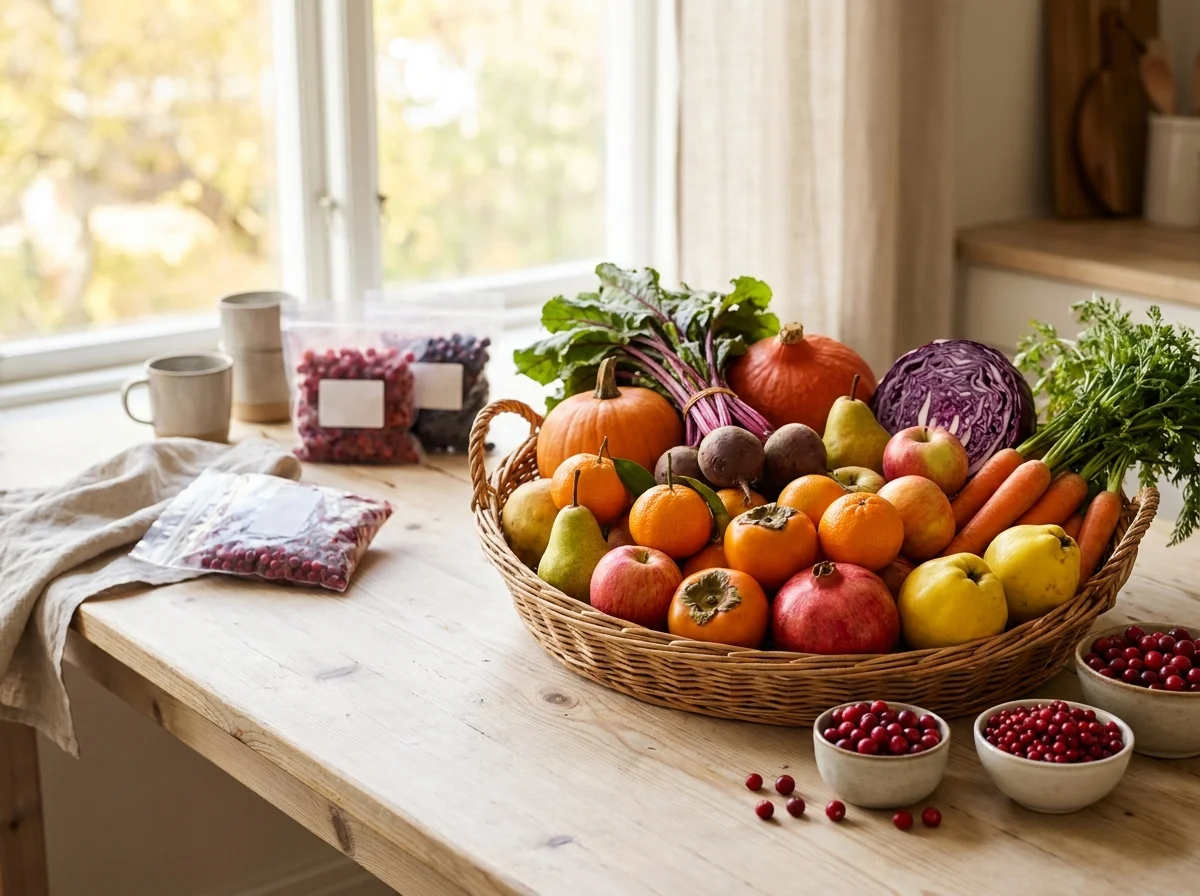
In October, pumpkins are literally everywhere: at markets, in supermarkets, and on seasonal café menus. It's perhaps the most seasonal and at the same time the most underused vegetable of October. Often it all ends the same way: you buy a beautiful big pumpkin at a great price, make one cream soup—and several kilograms of flesh are left waiting for their moment.
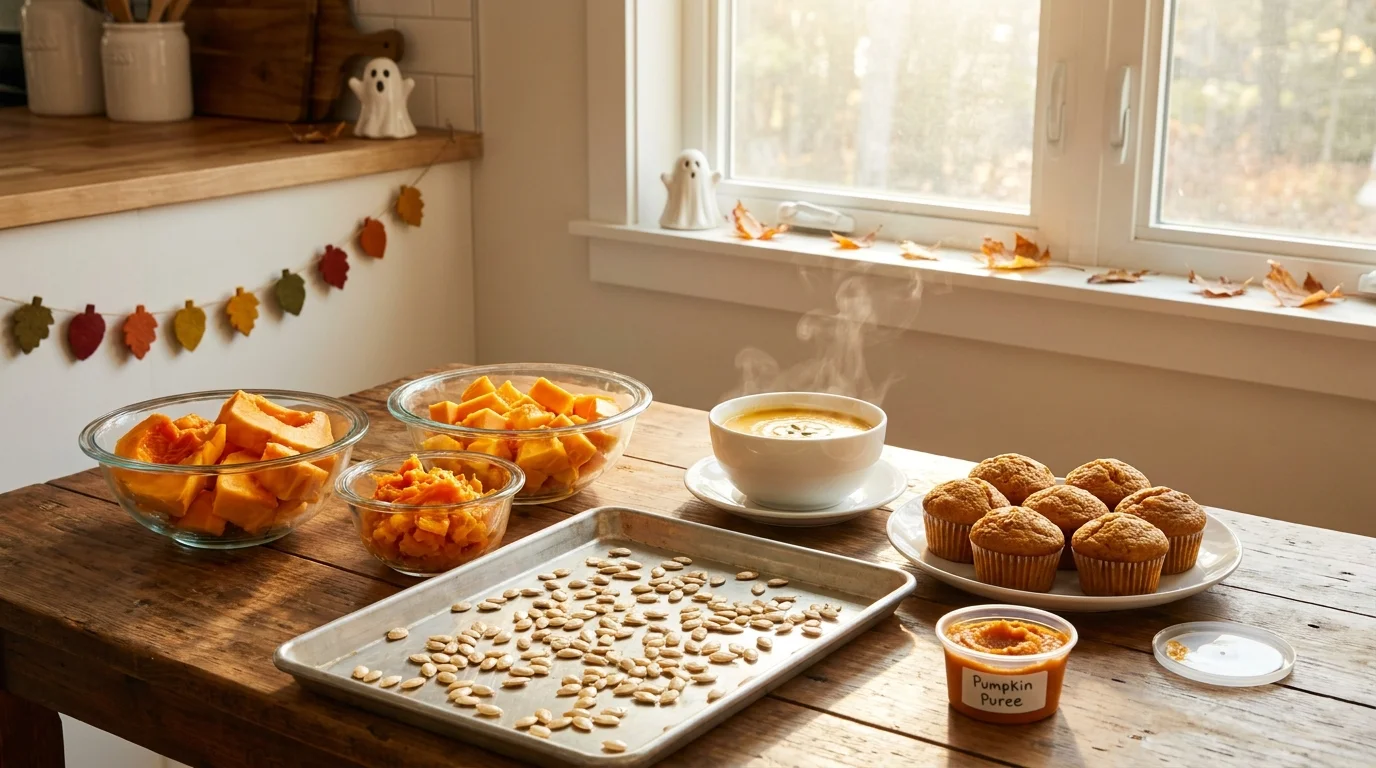
In fact, one pumpkin easily covers several meals for a week. Part can be roasted for dinner, part frozen in cubes, the puree turned into pancakes or pie, and the seeds turned into a crunchy snack. The key is to divide the harvest into convenient preparations right away and stock up on a few companion ingredients. This way, pumpkin season won't be monotonous but truly delicious.
Which pumpkin varieties are suitable for what?
For everyday cooking, you don't need to memorize dozens of names, but understanding the difference between varieties is useful. The most versatile are dense, slightly sweet, and not too watery pumpkins with bright orange flesh.
- Butternut, or nutmeg pumpkin, is great for roasting, pasta, risotto, purees, and pies. It has thin skin, few seeds, and a pronounced nutty-sweet flavor.
- Hokkaido is suitable for quick weekday dishes: it can be roasted right with the skin. It works well in salads, curries, stews, and side dishes.
- Large-fruited pumpkin is a good budget option for porridge, pancakes, pies, and freezing. Choose a fruit without soft spots, cracks, or damp patches.
- Decorative mini pumpkins are not always meant for eating, so for the kitchen, it's better to choose varieties labeled "culinary."
When buying, look for a pumpkin with a dry stem, hard skin, and a dull, hollow sound when tapped. The heavier the fruit for its size, the more juicy flesh it has. A whole pumpkin is best kept in a dry, cool place at about 10–15 °C, away from radiators and direct sunlight. This way, the question of how to store pumpkin is simple: whole, it easily lasts several weeks, sometimes even months.
How to cut a large pumpkin without struggling?
The most convenient way is not to try to peel a huge pumpkin all at once. First, wash it well and dry it. With a sharp, heavy knife, cut off the top and bottom so the fruit stands steadily on the board. Then cut the pumpkin in half, and with a spoon remove the fibers and seeds. Divide each half into large wedges, then peel and cut them into cubes.
If the skin is particularly tough, put the halves in the oven for 15–20 minutes at 180 °C. After light roasting, the flesh cuts noticeably easier, and the skin sometimes comes off almost by hand. This is especially convenient for puree: roast the halves cut-side down until soft, then simply scoop out the flesh with a spoon.
How to distribute the pumpkin over the week
- Cut about a third into cubes for roasting, pasta, porridge, and risotto.
- Roast some and blend it into a puree for pancakes, pie, lattes, and sauces.
- Freeze raw cubes in portions in bags: first spread them in a single layer on a board, and after freezing, transfer them to a container.
- Freeze puree in 200–300 g portions—this is a convenient amount for one recipe.
In the refrigerator, fresh cut pieces keep for up to 4–5 days in a container. Frozen pumpkin retains its flavor for about 6 months. Label the bags with the date: at the height of the season, it's easy to make too many preparations and forget about them until spring.
What to cook with pumpkin besides soup?
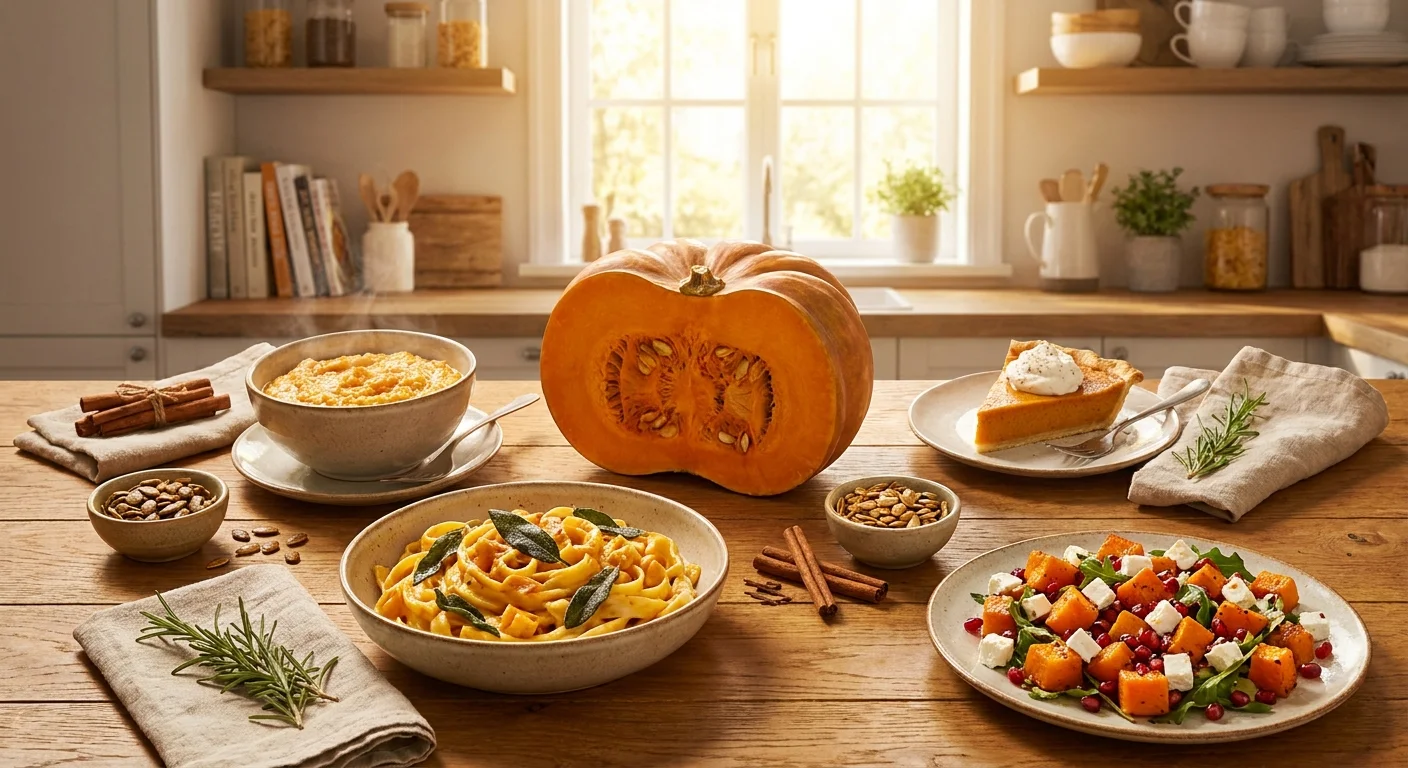
Here are ideas to help you use the flesh in different formats—from quick breakfasts to cozy dinners. Most pumpkin dishes don't require complex techniques: just an oven, a skillet, and a blender.
- Roasted pumpkin with rosemary. Toss cubes with olive oil, salt, pepper, and rosemary sprigs. Roast for 25–35 minutes at 200 °C. Serve as a side dish or add to bowls.
- Millet or rice porridge with pumpkin. Simmer pumpkin with milk or water, add the grain, butter, a pinch of cinnamon, and a little honey.
- Pasta with pumpkin and sage. Sauté roasted flesh with cream, garlic, and sage, mash with a fork or blend into a sauce. Add pasta and hard cheese.
- Pumpkin pancakes. Mix puree with egg, flour, a pinch of salt, and cinnamon. Fry in small batches and serve with sour cream or yogurt.
- Spiced pumpkin pie. Puree pairs perfectly with cinnamon, nutmeg, ginger, and a shortcrust base. It's one of the coziest desserts of October.
- Pumpkin risotto. Add small cubes to Arborio rice along with broth, and at the end stir in butter and Parmesan.
- Homemade pumpkin latte. Heat milk with a spoonful of pumpkin puree, cinnamon, ginger, and vanilla, then add espresso or strong coffee.
- Salad with roasted pumpkin. Combine warm cubes with arugula, feta or goat cheese, nuts, and balsamic dressing.
- Pumpkin curry. Simmer cubes with chickpeas, coconut milk, tomatoes, and curry paste—you'll get a hearty meatless dinner.
What to do with the seeds and skin?
Definitely don't throw away the seeds. Separate them from the fibers, rinse well in a colander, and dry with a towel. Mix with a drop of oil, salt, paprika, or dried garlic, and roast for 15–20 minutes at 160–170 °C, stirring occasionally. You'll get a crunchy snack, a salad topping, or an addition to porridge and soup.
Use the skin only from thin-skinned edible varieties, like Hokkaido: it can be roasted along with the flesh. For large pumpkins, the skin is usually too tough, so it's better to compost it. Don't try to cook it at all costs: practicality matters more than the idea of zero waste.
Spices and companion ingredients: what to stock up on in advance
Pumpkin loves contrasts: creaminess, salty cheese, spices, fresh herbs, nuts, and acidity. A basic set for pumpkin week is cinnamon, nutmeg, dried or fresh ginger, sage, rosemary, garlic, cream, hard cheese, and pumpkin seeds. Also useful are honey, lemon, feta, arugula, grains, pasta, and eggs.
It's the spices, herbs, and small extras that are most often forgotten at the store. It's convenient to gather pumpkin dishes once: the product list in the shared Pickt list in Telegram—then household members can mark who takes cream, who buys cheese, and who's responsible for sage.
Table: pumpkin dishes for every day
| Dish | What to buy extra | Cooking time |
|---|---|---|
| Roasted pumpkin with rosemary | Rosemary, olive oil | 35 minutes |
| Pumpkin porridge | Millet or rice, milk, cinnamon | 40 minutes |
| Pasta with pumpkin and sage | Pasta, cream, sage, hard cheese | 30 minutes |
| Pancakes | Eggs, flour, yogurt, cinnamon | 25 minutes |
| Pumpkin pie | Flour, butter, eggs, cream, spices | 1 hour 20 minutes |
| Risotto | Arborio rice, broth, Parmesan | 45 minutes |
| Pumpkin latte | Milk, coffee, vanilla, cinnamon | 10 minutes |
| Salad with roasted pumpkin | Arugula, feta, nuts, balsamic | 30 minutes |
| Roasted seeds | Paprika or garlic | 20 minutes |
Final shopping list for "pumpkin week"
- Cinnamon, nutmeg, ginger, paprika.
- Sage and rosemary.
- Cream, milk, butter, eggs.
- Parmesan or another hard cheese, feta.
- Pasta, Arborio rice, millet or rice for porridge.
- Arugula, garlic, lemon, balsamic vinegar.
- Coffee, vanilla, honey or sugar.
- Nuts and extra pumpkin seeds.
Save this list in Pickt if you're not shopping alone: pumpkin week becomes much easier when all the necessary little things are already checked off in the shared list. One big pumpkin then turns not into an obligation, but into a supply of cozy seasonal dishes—sweet, savory, quick, and completely different from each other.