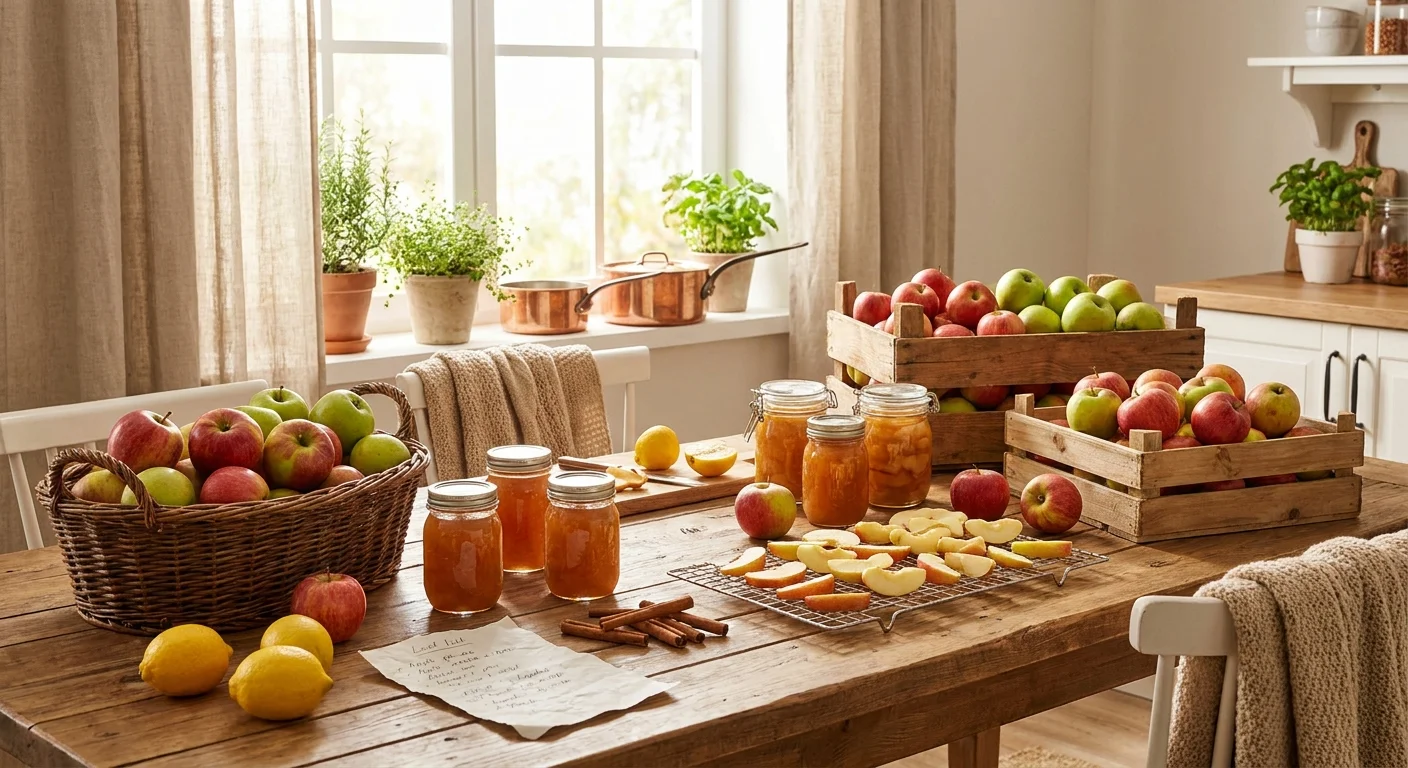
In autumn, apples get cheaper, appearing in buckets at the dacha, in parents' bags, and on sale in stores. And it quickly becomes clear: the main problem of apple season isn't where to get the fruit, but where to put it before it turns soft and spotty. The good news is that apples are easy to distribute between fresh storage, quick everyday dishes, and preserves. You don't need to spend the whole weekend at the stove: just sort the harvest first and choose a few convenient methods.
Start with sorting. Set aside firm apples without damage for storage, use beautiful and aromatic ones for eating and baking, and process soft, bruised, or slightly defective ones in the coming days. This way, no forgotten bag will appear in the fridge, and you'll always have a clear plan in the kitchen.
Which Apples Are Suitable for What?
For storage, it's better to choose late, dense, dry apples without dents or punctures. These are usually sweet-and-sour autumn and winter varieties with thick skins. Don't wash them before storing: excess moisture shortens their shelf life.
For charlotte, pies, and baking, aromatic, slightly tart apples are great: they don't make the dessert overly sweet and retain their flavor after heating. Sweet and loose fruits are better used for jam, puree, fruit leather, or juice. You can also use windfall apples, but only if the damaged parts are completely cut out and there's no mold, unpleasant odor, or signs of rot inside.
What to Do with Slightly Spoiled Apples
One soft spot isn't a reason to throw away the whole fruit. Cut off the damage with a margin of about 1–2 centimeters and immediately use the rest in compote, oatmeal, or jam. But apples with fluffy mold, wet rot, fermentation, or a musty smell are better thrown away entirely: in such fruits, the spoilage may be deeper than it appears on the outside.
What to Cook If You Have Lots of Apples and Little Time?
When you want to quickly clear out the basket, choose recipes that don't require complex preparation. Just wash the apples, remove the core, and slice them. Here are 10 ideas and a short list of what to buy additionally.
- Baked apples. Remove the core, add honey or sugar, cinnamon, and bake for 25–35 minutes at 180°C. Buy additionally: honey or sugar, cinnamon, nuts if desired.
- Charlotte. Slice the apples, pour over a batter made from eggs, sugar, and flour, and bake for about 40 minutes. Shopping list for charlotte: eggs, sugar, flour, baking powder, cinnamon.
- Oatmeal with apple. Sauté apple cubes in a pan with cinnamon for 5 minutes and add to the cooked porridge. Buy additionally: rolled oats, milk or plant-based drink, cinnamon.
- Apple salad. Mix apple, carrot, cabbage, or celery, and dress with yogurt or oil with lemon juice. Buy additionally: carrot, cabbage, lemon, yogurt.
- Apple fritters. Grate an apple into regular fritter batter and fry in small portions. Buy additionally: kefir, eggs, flour, baking powder.
- Crumble. Place apples in a dish, top with a crumble made from flour, butter, and sugar. Bake for 30 minutes. Buy additionally: butter, flour, sugar, rolled oats.
- Apple smoothie. Blend a peeled apple with banana, kefir, and a pinch of cinnamon. Buy additionally: bananas, kefir, cinnamon.
- Jam. Stew sliced apples until soft, blend, and cook down with sugar. Buy additionally: sugar, citric acid or lemon, jars and lids.
- Compote. Place apple slices in jars, pour hot syrup over them, and sterilize or use a trusted hot-fill recipe. Buy additionally: sugar, jars, lids.
- Drying. Slice apples thinly and dry in a dehydrator or oven at a low temperature until pliable. Buy additionally: parchment paper, lemon if desired.
To keep everything in mind, put together a general shopping list: sugar, lemons, cinnamon, jars, lids, flour, and eggs. In Pickt, it's convenient to create a shared shopping list in Telegram and send it to your family: one person can pick up sugar and jars on the way, another—cinnamon and lemons. This way, preserves won't be postponed because of one missing pack.
Apple Preserves for Winter: What to Choose?
If the harvest is large, it makes sense to make 2–3 different types of preserves. This way, in winter, you won't have ten identical jars of jam, but a choice for porridge, baking, drinks, and snacks.
Jam and Puree
For jam, slice the apples, add a little water, and stew under a lid until soft. Blend with an immersion blender, add sugar to taste, and cook down until thick. A drop of lemon juice will brighten the flavor. Place the hot jam into sterilized jars and seal tightly.
Compote
Slice the apples into wedges, remove the core, and fill clean jars about a third full. Pour in syrup prepared according to a reliable recipe for the jar volume, and seal. For variety, you can add pears, plums, orange zest, or a sprig of mint.
Drying and Fruit Leather
Dried apples take up little space and are great for compotes, tea, and snacks. Store them only after they've completely cooled, in a dry, tightly sealed jar. For fruit leather, prepare apple puree, spread it thinly on parchment paper, and dry in an oven at a low temperature or in a dehydrator until it becomes a flexible sheet.
Apple Cider Vinegar
From peels and unattractive but healthy apples, you can make homemade apple cider vinegar. Pour water with a small amount of sugar over the pieces, cover with cloth, and leave in a warm place, stirring daily during the initial stage. It's important to use clean utensils and not use fruits with rot. This vinegar takes time, but it helps use apples with almost no waste.
How to Keep Apples Until New Year?
If you want to eat fresh apples all autumn and part of winter, don't put the whole harvest in one bag. Select only whole, dry fruits with stems. You can wrap each one in paper or layer them in boxes, separating with cardboard. Store damaged specimens separately and eat them first.
The optimal conditions are coolness around 2–5°C, darkness, and moderate humidity. A cellar, a cold pantry, an insulated balcony without frost, or the vegetable drawer in the fridge will work. Don't store apples next to potatoes: they can transfer odors to each other, and ripening apples release ethylene, which speeds up the spoilage of other vegetables and fruits.
Check your supplies once a week. One spoiled apple can quickly ruin its neighbors, so send soft fruits straight to baking or processing. This way, the answer to how to store apples becomes simple: cool, dry, separate, and with regular checks.
Summary Table: Where to Distribute Apples
| Method | What to Buy Additionally | How Long It Lasts |
|---|---|---|
| Fresh apples in a cool place | Paper, boxes, or cardboard cartons | 1 to 4 months, depending on the variety |
| Charlotte | Eggs, sugar, flour, baking powder | 2–3 days in the fridge |
| Baked apples | Cinnamon, honey or sugar | Up to 3 days in the fridge |
| Jam | Sugar, lemon, jars, lids | Up to 12 months in a cool, dark place |
| Compote | Sugar, jars, lids | Up to 12 months |
| Drying | Parchment paper, lemon if desired | 6–12 months in a dry container |
| Fruit leather | Parchment paper, sugar if desired | Up to 6 months in a dry place |
| Apple cider vinegar | Sugar, clean glass jar, cheesecloth | Up to 1–2 years after preparation |
One-Evening Plan to Make Sure Nothing Goes to Waste
Don't try to process all the apples at once. In one evening, sort them into three groups: for storage, for upcoming dishes, and for preserves. From soft fruits, immediately cook a small pot of jam or start drying. From beautiful ones, make charlotte and baked apples for breakfasts. Place firm ones in a cool spot.
And so that purchases don't get lost among family matters, add jars, lids, sugar, and lemons to the shared Pickt list. A few simple solutions will help you get through apple season deliciously, calmly, and without throwing away bags of fruit.