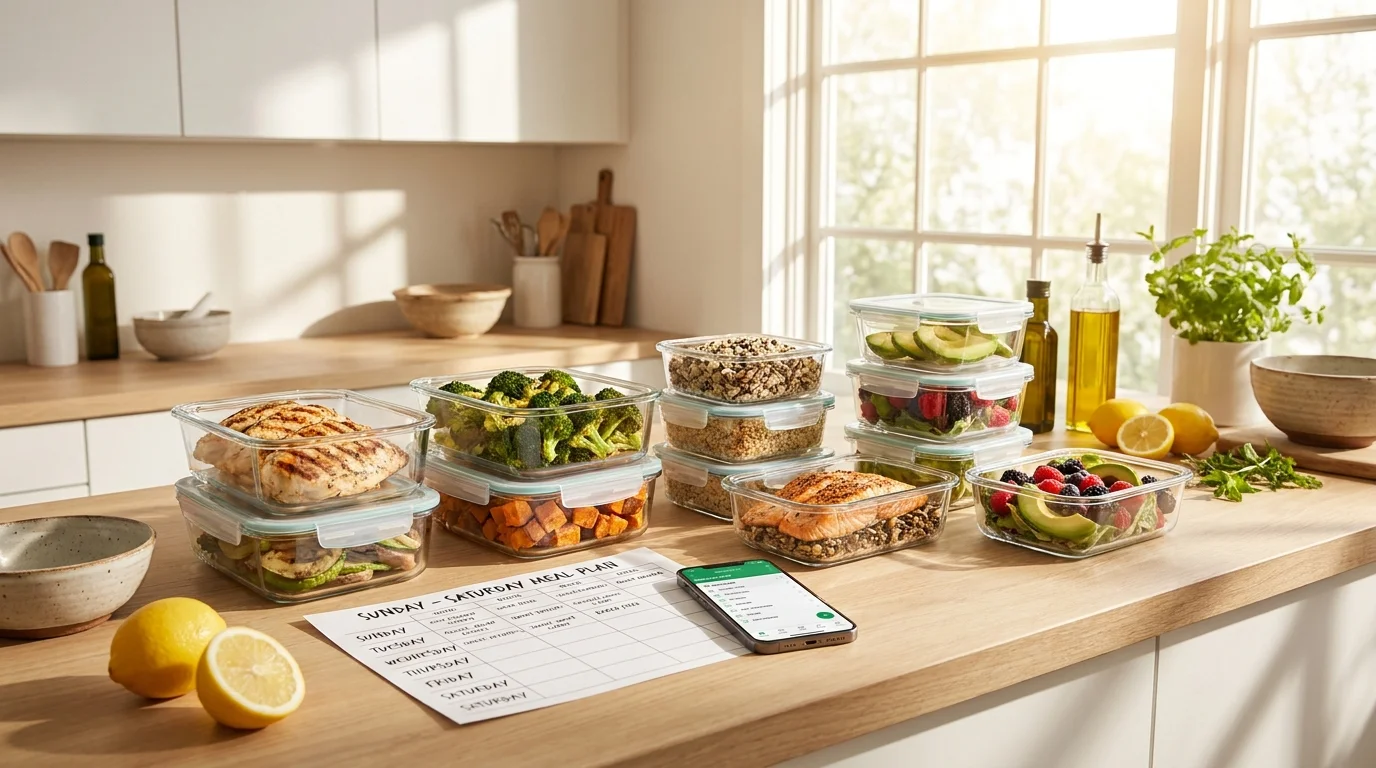
Sunday meal prep is a habit that eliminates the daily question "what to cook?" and helps you eat properly even during a very busy week. Instead of chaotic delivery orders, on-the-go snacks, and extra trips to the store, you have a clear plan: what to eat, what to cook, and what to buy.
One evening of planning saves several hours during the weekdays. You buy groceries once, prepare basic dishes in advance, and assemble lunches or dinners in minutes. It also significantly reduces costs: when the menu is planned before going to the store, fewer random items end up in your cart, and food at home spoils less often.
For a family of two, homemade meal prep often costs about $80–100 per week instead of $120–160 on regular deliveries and impulse purchases. The exact amount depends on the chosen products, but the principle is always the same: planning reduces fast food consumption and helps you use everything you buy.
Below is a ready-made scheme you can repeat every Sunday. It is designed for two adults and easily scales up: increase the amount of protein, sides, and vegetables if you cook for a larger family.
The 15-Minute Method: The "Protein + Side + Vegetables" Weekly Template
You don't need to find seven new complex recipes. The most sustainable meal prep is built on repeating basic components. In 15 minutes, choose a few protein, side, and vegetable options, then combine them in different ways.
Start with three categories:
- Protein: chicken, turkey, fish, eggs, tuna, legumes, Greek yogurt.
- Side: rice, quinoa, potatoes, whole-grain pasta, tortillas, oatmeal.
- Vegetables: broccoli, carrots, bell peppers, zucchini, salad greens, tomatoes, cucumbers.
For the week, choose two main types of protein for hot dishes, one quick protein for a backup option, and two sides. For example: baked chicken, turkey meatballs, canned tuna, rice, and potatoes. Add a large tray of roasted vegetables and fresh vegetables for salads.
Such a menu won't be monotonous if you vary sauces and serving formats. Chicken with rice and broccoli on Monday can become a tortilla with salad on Tuesday, and on Wednesday, the base for a warm bowl with quinoa and vegetables.
Immediately plan one "flexible" dinner. It could be tuna pasta, a vegetable omelet, or chicken tortillas. It will come in handy if plans change, less prepared food remains, or you want something different.
Example Weekly Plan with Breakfasts, Lunches, and Dinners
This plan uses repeating ingredients, so the grocery list stays compact. Breakfasts are as simple as possible, lunches are assembled from pre-prepared components, and dinners don't require long cooking.
Monday
- Breakfast: oatmeal with Greek yogurt, berries, and banana.
- Lunch: chicken, rice, and roasted broccoli.
- Dinner: turkey meatballs with potatoes and a cucumber-tomato salad.
Tuesday
- Breakfast: eggs with spinach and whole-grain toast.
- Lunch: chicken tortilla with salad greens, peppers, and yogurt sauce.
- Dinner: salmon, quinoa, and oven-roasted zucchini.
Wednesday
- Breakfast: Greek yogurt with berries, chia seeds, and banana.
- Lunch: bowl with turkey meatballs, rice, carrots, and broccoli.
- Dinner: tuna pasta with tomatoes, spinach, and garlic.
Thursday
- Breakfast: oatmeal with peanut butter and banana.
- Lunch: chicken salad with quinoa, cucumber, tomatoes, and avocado.
- Dinner: baked chicken with potatoes, bell peppers, and salad greens.
Friday
- Breakfast: eggs, toast, and fresh tomatoes.
- Lunch: tortilla with turkey meatballs, greens, and vegetables.
- Dinner: salmon with rice and broccoli.
Saturday
- Breakfast: yogurt with berries and chia.
- Lunch: leftover chicken or turkey in a bowl with vegetables and a side.
- Dinner: vegetable omelet with cheese and potatoes.
Sunday
- Breakfast: oatmeal with yogurt and fruit.
- Lunch: tuna salad with chickpeas, cucumber, tomatoes, and greens.
- Dinner: flexible option — pasta, tortillas, or a dish from remaining components.
You don't have to prepare every dinner fully in advance. The goal of meal prep is to prepare the base. When rice is cooked, vegetables are washed, and protein is already prepared, dinner takes 10–15 minutes instead of an hour.
How the Plan Turns into a Categorized Grocery List
First, write down the dishes, then the repeating ingredients. If chicken appears in three lunches and one dinner, don't add it to the list four times: add up the needed portions and buy the total amount. This is the simplest way to make the list accurate.
In Pickt, a meal plan quickly turns into a shared shopping list. Create categories, add ingredients with quantities, and send the list to whoever goes to the store. While shopping, check off items right in Telegram — changes are instantly visible to all list participants.
Ready-Made Grocery List for This Example Plan
- Protein and dairy: chicken fillet — 2 kg; ground turkey — 1.2 kg; salmon fillet — 600 g; canned tuna — 4 cans; chickpeas — 2 cans; eggs — 24 pcs.; Greek yogurt — 1.5 kg; hard cheese — 200 g.
- Grains, bread, and sides: rolled oats — 500 g; rice — 1 kg; quinoa — 500 g; whole-grain pasta — 500 g; potatoes — 2 kg; whole-grain bread — 1 loaf; tortillas — 1 pack.
- Vegetables and greens: broccoli — 1.2 kg; carrots — 1 kg; bell peppers — 8 pcs.; zucchini — 4 pcs.; tomatoes — 1.5 kg; cucumbers — 4 pcs.; spinach — 300 g; salad greens — 500 g; onions — 1 kg; garlic — 2 heads; avocados — 4 pcs.; lemons — 3 pcs.
- Fruits and add-ons: bananas — 7 pcs.; frozen berries — 500 g; chia seeds — 100 g; peanut butter — 300 g.
- For flavor and sauces: olive oil, salt, black pepper, paprika, dried herbs, soy sauce, mustard, tomato sauce.
Before shopping, check your kitchen supplies. Oil, spices, sauces, grains, and frozen vegetables are often already at home. In Pickt, it's convenient to leave such items in a separate "Check at home" category, then quickly remove the excess before heading out.
Sunday Cooking: Step-by-Step in 2 Hours
The main secret to quick cooking is running processes in parallel. While the oven works with vegetables and chicken, grains cook on the stove, and you assemble salads and portions for the first days of the week.
- Preheat the oven to 200°C. Wash and chop potatoes, broccoli, carrots, peppers, and zucchini.
- Start cooking rice and quinoa. At the same time, boil eggs for quick breakfasts and snacks.
- Place chicken on one baking sheet and vegetables with potatoes on another. Add olive oil, salt, pepper, paprika, and dried herbs.
- Mix ground turkey with onions, garlic, spices, and an egg. Form meatballs and bake them after the chicken or alongside it if there's room.
- While everything cooks, chop fresh vegetables, rinse salad greens, and prepare a simple sauce from Greek yogurt, lemon juice, mustard, and spices.
- Divide the cooked components into containers: several full lunches, separate portions of sides, vegetables, and protein.
- It's best to cook salmon for the next two dinners or freeze it in portions to keep it fresh.
Don't aim to pack all 21 meals. It's enough to prepare 6–8 lunches, a couple of ready dinners, and the main prep components. You'll assemble the rest from components in minutes.
Storage and Containers
Choose containers with tight lids and preferably use several sizes at once. Large ones are good for sides and roasted vegetables, medium ones for ready lunches, and small ones for sauces, berries, and chopped vegetables.
Store cooked chicken, turkey, rice, quinoa, and roasted vegetables in the refrigerator for up to 3–4 days. Portions for the second half of the week are best frozen on the day of cooking. Transfer them to the refrigerator the evening before — by lunch the next day, the food will be ready.
Store salad greens separately from dressing, and add cucumbers and tomatoes closer to serving. This keeps the texture fresh. Fish is best eaten within 1–2 days after cooking.
Label containers with the date and dish name. This takes a minute but helps you not forget about food in the far corner of the fridge. And save the list in Pickt as a template: next week, you'll copy it, change a couple of dishes, and head out shopping again with a precise plan.