Shopping List vs. Hunger: Why You Shouldn't Go to the Store Hungry
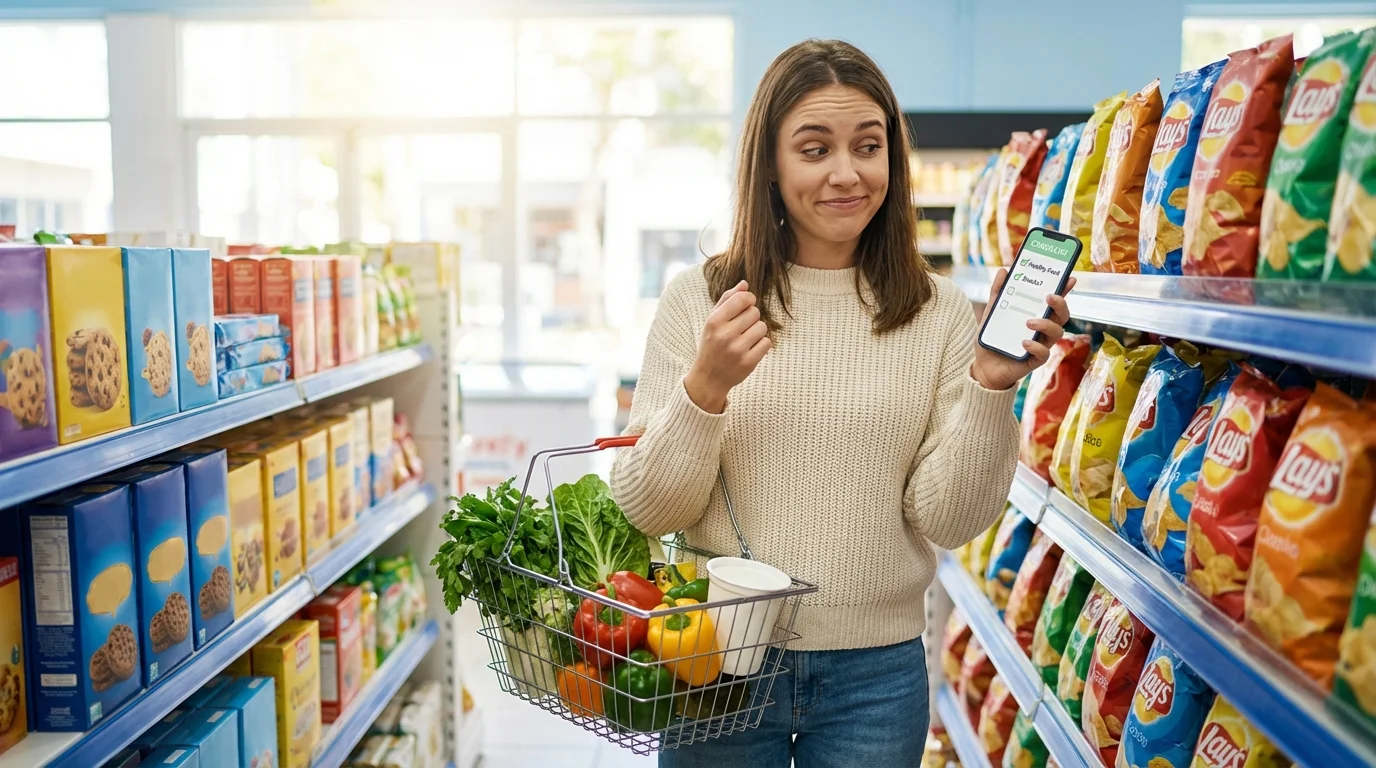
Sound familiar: you go in "for bread and milk," but come out with chips, cookies, "on-sale" cheese, and something you never planned to buy. The bag looks impressive at home, but you still can't put together a proper dinner.
That's how shopping on an empty stomach usually works. Hunger affects not only your appetite but also your decisions: you get tired faster, plan worse, and give in to impulses more easily. In the end, your budget and diet suffer.
The good news: this can be fixed with simple habits. Below is a bit of shopping psychology and a lot of practical advice: how to prepare, what to do in the store, and how to avoid turning a grocery run into a source of unnecessary spending.
Why Hunger Changes Your Decisions: A Bit of Shopping Psychology
When you're hungry, your brain switches to "foraging" mode. It's more important for it to get calories quickly than to rationally allocate the budget and plan a menu. That's why your eyes latch onto sweets, fatty foods, and ready-to-eat snacks.
There's also the "tunnel vision" effect: you assess consequences worse and are more likely to agree to compromises. For example, instead of the planned chicken and vegetables, you grab ready-made meals and dessert because it's "faster" and you "want it right now."
In shopping psychology, this is often linked to depleted self-control. When hungry, it's harder to resist bright displays, tastings, and "2 for the price of 1" signs. The result is increased unnecessary spending—and this isn't about a weak character, it's about physiology.
What You Buy on an Empty Stomach and Why It's More Expensive
Hunger provokes impulsive decisions, and impulsive decisions usually cost more. Not because you deliberately choose "premium" items, but because you buy extra things and not what meets your actual needs.
A typical "hungry shopper's" haul looks like this: quick snacks, sweets, drinks, ready-made food. These items often have a high price per serving and don't help you assemble proper meals for the week.
Another reason for extra spending is duplicates. When hunger rushes you, you buy things "just in case" and forget that you already have pasta, grains, or sauces at home. Later, some products sit unused, spoil, and essentially turn into thrown-away money.
- Snacks instead of ingredients: bars, cookies, chips.
- Ready-made food instead of planning: salads, baked goods, semi-finished products.
- Unnecessary "deals": you buy more than you can eat.
- Duplicates: you buy things you already have at home.
Preparation Before the Store: 10 Minutes That Save Money
The main way to beat shopping on an empty stomach is to come to the store with a plan and without acute hunger. This sounds trivial, but this is precisely where the difference between "grabbed something" and "bought what was needed" appears.
First, decide what you'll eat for the next 2–3 days. You don't need a complex menu: 2–3 main dishes and a couple of breakfast options are enough. Then your shopping list becomes specific, not an abstract "something for tea."
Next, check your fridge and pantry. This reduces the chance of duplicates and helps you use what you've already bought. And finally—have a small snack before leaving: yogurt, a banana, a sandwich. You don't have to rely on "willpower" at the store.
Pre-Exit Checklist
- Eat a small snack (or at least drink kefir/yogurt).
- Figure out 2–3 dishes for the coming days and write down the ingredients.
- Check what you already have at home (especially grains, oil, spices, frozen items).
- Set a limit: an approximate total amount or a maximum number of "unplanned" items.
- Take a shopping list and don't rely on memory.
How to Behave in the Store If You Are Hungry After All
Sometimes you can't avoid being hungry: you got held up at work, stopped by on the way, your workout ran long. In that case, the goal is to reduce impulsiveness right in the store.
The first rule is don't start in the ready-made food and bakery sections. It's better to walk through the "core" categories: vegetables, protein (meat/fish/legumes), grains, dairy products. When the basics are gathered, the urge to grab random things weakens.
The second rule is to keep a slow pace. Hunger rushes you, and speed increases mistakes. Stop for a minute, check your list, and ask yourself: "Is this an ingredient for a meal or just a snack?"
Third—limit triggers. Don't walk down every aisle "just to look," don't take a basket if you have few items (a cart psychologically provokes you to fill the space). If possible, use pickup or delivery: less contact with displays means fewer impulses.
Mini-Rule of 3 Questions
- Did I plan this or did I see it by chance?
- Will this help me assemble a proper meal or is it just a "craving"?
- If I wait 10 minutes, will I still want to buy this?
Shopping List as an Antidote: How to Make One That Works
A shopping list is effective not because "you have to," but because it takes some decisions off your mind. Fewer decisions means less fatigue means fewer impulsive purchases. This is especially important when hunger intensifies the desire to grab something quick and tasty.
For the list to work, make it based on tasks, not brands. For example: "breakfasts for 3 days," "dinners," "snacks," "vegetables for salad." This way you buy not random products, but sets you can actually cook from.
Another technique is to separate "must-have" and "if budget remains." This way you don't completely forbid spontaneity, but keep it within limits. It reduces the feeling of restriction and helps you splurge on unnecessary spending less often.
And finally: the list should be accessible to everyone involved in the shopping. Otherwise, one person buys milk, the second buys two more, and both forget the bread. A shared list saves money just as well as discounts.
Conclusion
Shopping on an empty stomach isn't "bad discipline," but a predictable brain reaction to an energy deficit. Hunger intensifies impulses, worsens planning, and makes marketing traps noticeably more effective. The result is extra spending and products that are hard to turn into proper meals.
The solution is simple: a small snack, a short plan for a couple of days, and a shopping list you actually open in the store. And if hunger does catch you off guard—move through the basic categories and check your purchases against the three questions.
To always have the list at hand and avoid discrepancies among household members, it's convenient to keep it in Pickt—a free mini-app in Telegram with shared lists and real-time synchronization: t.me/PicktBot/app. This makes it easier to agree on what to buy and less likely to return from the store with "tasty but unnecessary" items.