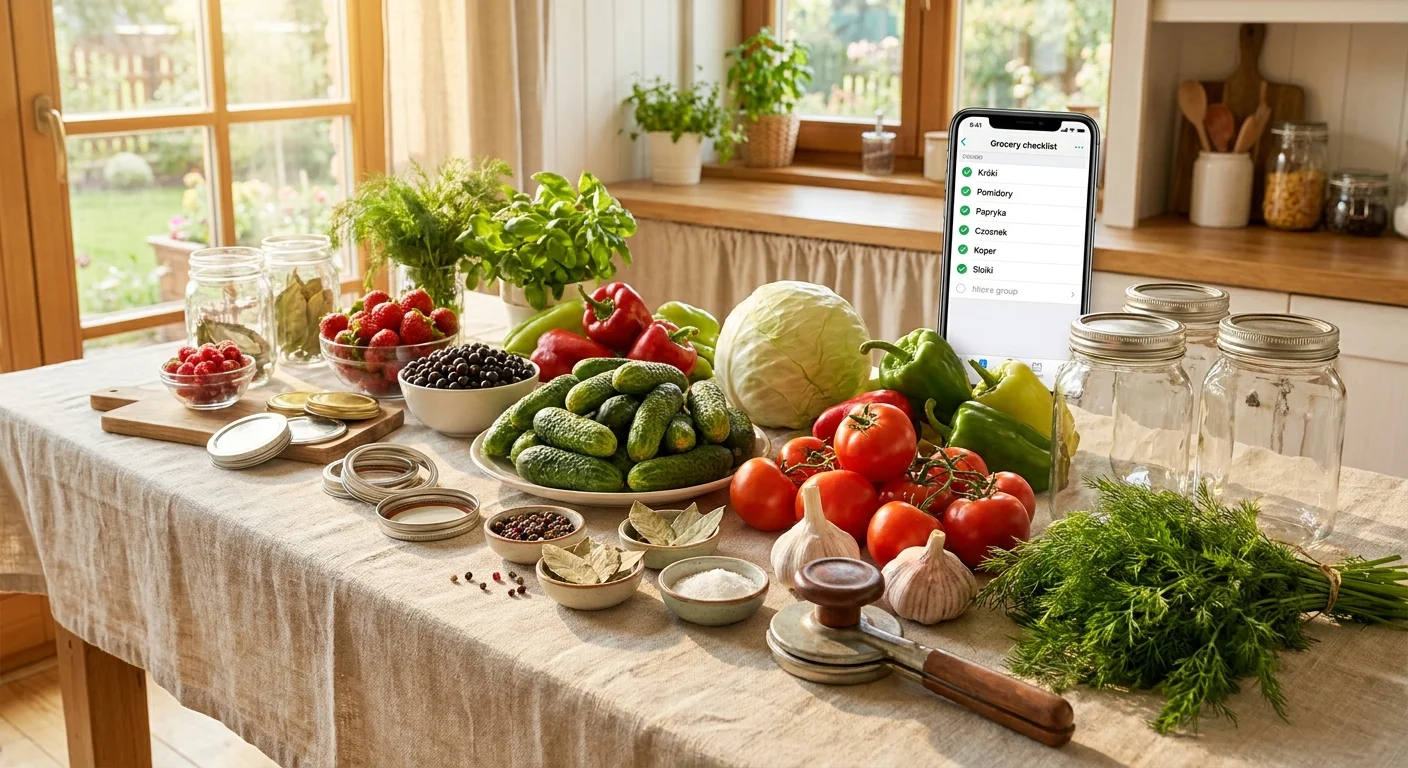
The end of summer and the beginning of autumn is the best time for home canning. Markets are full of fresh vegetables, berries, and fruits, prices gradually drop, and the flavor of seasonal produce is especially rich. A few hours in the kitchen will help you stock up on pickles, sauces, compotes, and jam for the whole winter.
To keep the preserving season from turning into chaotic trips for missing lids, vinegar, or pepper, it's worth making a list in advance. In the Pickt app, you can easily create a shared list for the market in Telegram: one person picks vegetables, another buys jars, and all participants see the quantities and check off items already purchased.
Below are ideas for popular preserves, a basic set of containers and equipment, spices, a shopping plan, and a comprehensive checklist for your shopping list.
Top 7 Preserves of the Season
1. Pickled and Salted Cucumbers
Crispy cucumbers are a classic for the winter table. For pickling, choose small, firm fruits with thin skin, without soft spots or damage. It's best to buy cucumbers in the morning at the market or prepare them on the day of purchase.
- Cucumbers — 3–5 kg;
- dill with umbels — 2–3 bunches;
- garlic — 2 heads;
- horseradish, currant, or cherry leaves;
- salt, sugar, vinegar;
- black peppercorns, bay leaves.
2. Tomatoes in Their Own Juice and Pickled Tomatoes
For jars, choose small, meaty tomatoes of the same size. For tomato juice, paste, and sauce, softer ripe fruits are also suitable — they are usually cheaper.
- Firm tomatoes — 3 kg;
- tomatoes for juice — 5 kg;
- garlic — 1–2 heads;
- salt and sugar;
- herbs, peppercorns;
- vinegar for pickled versions.
3. Lecho
Lecho turns out bright, aromatic, and goes well with meat, potatoes, grains, and pasta. The base of the recipe is sweet pepper and tomatoes. It's especially advantageous to make it in August and September when peppers become more affordable.
- Sweet red pepper — 3 kg;
- tomatoes — 2 kg;
- onions — 1 kg;
- vegetable oil — 300 ml;
- salt, sugar, vinegar;
- paprika and black pepper to taste.
4. Adjika
Homemade adjika can be spicy or mild, raw or cooked. It requires the most aromatic tomatoes, sweet and hot peppers, garlic, and herbs. Adjust the amount of hot pepper to your family's taste.
- Tomatoes — 3 kg;
- sweet pepper — 1 kg;
- hot pepper — 100–300 g;
- garlic — 300 g;
- apples or carrots — optional;
- salt, sugar, vinegar, coriander.
5. Berry and Fruit Jam
Jam is a simple way to preserve the flavor of strawberries, raspberries, currants, apricots, plums, apples, or pears. Buy fruits without mold or fermentation, but slight irregularity in shape is not critical for jam.
- Berries or fruits — 2–4 kg;
- sugar — usually 1–1.2 kg per 1 kg of raw ingredients;
- lemons or citric acid;
- vanilla, cinnamon, or star anise — optional;
- small jars and lids.
6. Compotes
Compotes are convenient to make from cherries, apples, pears, plums, apricots, and berry mixes. For a beautiful drink, choose whole ripe fruits. Jars of 2–3 liters are especially convenient for families.
- Fruits or berries — 3–5 kg;
- sugar — 1–2 kg;
- citric acid;
- water;
- three-liter jars and new lids.
7. Sauerkraut
Sauerkraut doesn't require vinegar and keeps well in a cool place. Late-season dense heads with white juicy leaves are suitable. Add carrots, caraway seeds, cranberries, or apples if you prefer a more pronounced flavor.
- White cabbage — 5 kg;
- carrots — 500 g;
- coarse salt — 100 g;
- caraway seeds, cranberries, or apples — optional;
- a bucket, container, or glass jars for fermenting.
Containers and Equipment for Canning
Jars should be free of chips, cracks, and nicks on the rim. For sauces, adjika, and jam, volumes of 250–500 ml are convenient. Cucumbers, tomatoes, and compotes are best sealed in 1–3 liter jars.
Buy only new lids for sealing: disposable metal lids cannot be reused. If you choose jars with screw threads, check that the lid fits tightly to the neck.
- 0.5 L jars — for jam, sauces, and adjika;
- 1 L jars — for vegetable salads and tomatoes;
- 2–3 L jars — for compotes and pickles;
- new lids with a 10–15% surplus;
- a canning machine for regular lids;
- a large pot or sterilizer for jars;
- tongs or a jar lifter for hot jars;
- a funnel, ladle, and slotted spoon;
- kitchen scales and a measuring cup.
You can sterilize jars over steam, in the oven, microwave, or in boiling water. Lids are usually boiled for 5–10 minutes, following the manufacturer's instructions. Before filling, the containers must be clean, without water droplets or foreign odors.
Spices and Vinegar: Basic Set
Even if you plan just a few recipes, it's more economical to buy a universal base. It will come in handy for cucumbers, tomatoes, lecho, marinades, and sauces.
- Coarse salt, preferably without additives;
- sugar;
- 9% table vinegar or apple cider vinegar;
- citric acid;
- black and allspice peppercorns;
- bay leaves;
- mustard seeds;
- coriander, caraway seeds, cloves;
- paprika and hot ground pepper;
- garlic, dill, horseradish, parsley, and celery.
Do not substitute table vinegar with essence without accurately recalculating proportions: too high a concentration can ruin the flavor and make the product unsafe. Always follow a trusted recipe for the specific type of preserve.
Shopping Plan: What to Buy at the Market When Prices Are at Their Lowest
Usually, the most favorable weeks for vegetable preserves fall in the second half of August, September, and early October — depending on the region and harvest. During this time, there is a lot of local produce at the market, and sellers are more willing to give discounts when buying a box, bucket, or several kilograms.
First, buy long-lasting items: sugar, salt, oil, vinegar, spices, jars, and lids. Then distribute vegetables across canning days. Don't buy 20 kg of tomatoes at once if you're not ready to process them within the next day.
At the market, choose produce according to its purpose. For whole pickling, you need even and firm vegetables. For lecho, adjika, juice, and jam, you can take slightly irregular but fresh and healthy fruits — this will help you save money.
List for the Market in Pickt
Create a shared list in Pickt called "Weekend Preserves" and add family members. Example items with quantities and checkboxes:
- □ Cucumbers — 5 kg
- □ Firm tomatoes — 4 kg
- □ Tomatoes for sauce — 5 kg
- □ Sweet pepper — 3 kg
- □ Late cabbage — 5 kg
- □ Carrots — 1 kg
- □ Onions — 2 kg
- □ Garlic — 4 heads
- □ Berries or fruits for jam — 3 kg
- □ Dill and horseradish — 2 bunches each
While one person picks vegetables, another can check off jars, lids, and spices bought in Pickt. Such a shared list in Telegram reduces the risk of buying two bags of bay leaves and forgetting sugar.
Comprehensive Shopping Checklist
- □ Vegetables: cucumbers, tomatoes, peppers, cabbage, carrots, onions;
- □ Fruits and berries: apples, plums, apricots, cherries, currants, or seasonal options;
- □ Herbs: dill, parsley, horseradish, currant, cherry leaves;
- □ Garlic and hot pepper;
- □ Salt, sugar, vegetable oil;
- □ Vinegar and citric acid;
- □ Peppercorns, bay leaves, mustard, coriander, paprika;
- □ Jars of the required volume;
- □ New lids;
- □ Canning machine;
- □ Funnel, ladle, tongs, kitchen scales;
- □ Labels or a marker for labeling.
Storing Home Preserves
After sealing, jars are often turned upside down and wrapped until they cool — if the recipe calls for it. Then be sure to label each jar: name, date, and, if desired, ingredients. This will help you use preserves in order and not store them for too long.
Keep preserves in a dark, dry, and cool place: a pantry, cellar, or insulated balcony without freezing. The optimal temperature is usually between +5 and +20 °C. Sauerkraut is best stored in the refrigerator, cellar, or another cool place.
Regularly inspect the jars. Bulging lids, cloudy brine, foam, unpleasant odor, or signs of mold are reasons not to taste the product and to dispose of it. Use only trusted recipes, maintain cleanliness, and do not shorten sterilization times.
The preserving season becomes easier when everything is planned in advance. Gather recipes, distribute tasks, add purchases to the shared Pickt list — and fill your shelves with delicious supplies for winter without unnecessary fuss.