Wholesale Purchases: Worth It or Not - A Practical Calculation
Wholesale purchases sound like a universal life hack: you buy more, you pay less. The price tag looks convincing, especially when the difference between 'per piece' and 'per box' is noticeable.
But in everyday life, the benefit of buying wholesale is often 'eaten up' by small things: some products spoil, there's nowhere to store something, and sometimes you just buy extra because 'it's cheaper that way'. Below is a practical breakdown of how to quickly understand if buying wholesale is profitable specifically for you.
We'll look not at promises, but at numbers and scenarios: what to buy by the box, when it's worth teaming up with friends, and how not to turn savings into overpayment.
What are wholesale purchases and where are they found
In everyday life, 'wholesale' usually means buying large packages or multiples: a box of yogurts, a sack of cereal, a block of household chemicals, a crate of fruit. Formally, this can be 'small wholesale' in hypermarkets, or buying wholesale from suppliers, farmers, or at markets.
The main idea is the same: the price per unit is lower than retail. But wholesale purchases almost always require a larger budget 'here and now' and discipline in storage and consumption.
Another common format is group buying. When one person buys wholesale and the others 'take' parts of it, you can get the wholesale price without the risk of having to eat everything yourself.
How to calculate the benefit of wholesale: a simple formula
To understand if there's a benefit to buying wholesale, it's not just the numbers on the price tag that matter. Calculate the 'real price' taking into account losses and additional costs.
Basic formula: (wholesale price + additional costs − cost of what you won't use) / number of units actually used.
Additional costs aren't just delivery. Sometimes it's containers for storage, freezer space, electricity for freezing, time spent on portioning.
A mini-checklist for calculation before buying:
- Price per unit: compare wholesale and retail in the same units (rub/kg, rub/l, rub/piece).
- Shelf life: will you manage to use the volume without losses.
- Storage: is there space and suitable conditions (dry, dark, freezer).
- Quality: will you have to throw part away due to defects or 'didn't like it'.
- Alternative: are there regular retail discounts that beat the wholesale price.
If after an honest calculation the savings are less than 5–10%, it's often easier to buy separately and not bother. Wholesale makes sense when the difference is tangible or you completely eliminate losses.
When buying wholesale is truly profitable
Wholesale purchasing works best where the risk of loss is minimal and consumption is stable. That is, you will definitely use the product, and it stores calmly.
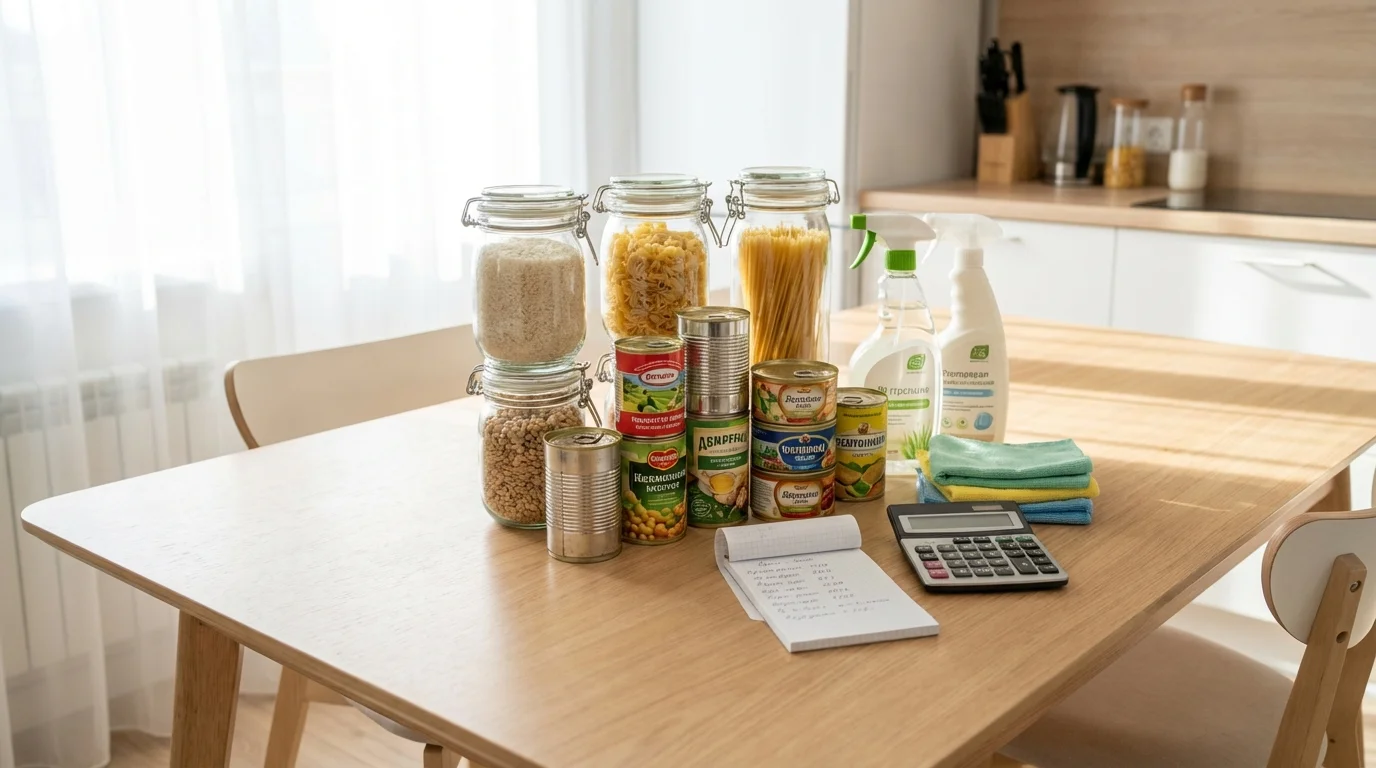
1) Long shelf life. Cereals, pasta, canned goods, tea, coffee, household chemicals, paper goods. Here, wholesale purchases often provide honest savings because nothing spoils in a week.
2) Predictable consumption. If you regularly buy the same thing (e.g., laundry pods or pet food), wholesale reduces the price per unit without surprises.
3) Freezing without loss of quality. Meat, fish, berries, some vegetables. The benefit of wholesale appears if you have freezer space and a habit of portioning.
4) Group buying. This is one of the safest options: you get the wholesale price but split the volume. Especially convenient for fruits/vegetables, cheese, coffee, sweets, seasonal products.
A practical guideline: wholesale is especially profitable when the savings outweigh the 'cost of risk'—the probability that part will spoil or turn out unnecessary.
When wholesale turns into overpayment
There are categories where wholesale purchases look profitable but end up hitting the budget. Most often this happens due to spoilage, impulsiveness, and 'hidden' costs.
1) Perishables and 'mood' products. Yogurts, greens, baked goods, ready-made meals. If you're not sure you'll eat everything on time, buying wholesale almost guarantees waste.
2) New items and goods without proven quality. Bought a box 'on sale', but didn't like the taste—savings turn into a stockpile of something no one eats.
3) Too large a package for a small discount. If the difference between wholesale and retail is 3–5%, and storage is inconvenient, the benefit of wholesale is questionable. You're paying for discomfort and frozen money.
4) Lack of a storage system. Without containers, labels, and order, part of the supplies gets forgotten and spoils. In the end, you buy again even though 'there was some somewhere'.
5) The psychological effect of 'need to finish it'. When there's a lot of food at home, you might eat more or order 'extra' more often because the meal plan doesn't match the supplies.
If you've noticed that you regularly throw away products or find expired items in the far corner of the cupboard, introduce wholesale gradually and only in 'safe' categories.
How to buy wholesale and not go broke: practical rules
Wholesale purchases become profitable when you manage the volume, not the other way around. You need simple rules that are easy to follow.
Rule 1: first the list, then the price. A discount shouldn't be the reason for a purchase. The reason is need and a plan.
Rule 2: limit the 'wholesale budget'. For example, a fixed monthly amount for wholesale purchases. This way you don't freeze too much money in supplies.
Rule 3: portion immediately. Meat and fish—into bags for one dinner; cereals—into jars; chemicals—into convenient volumes. The fewer 'lazy' actions later, the fewer losses.
Rule 4: check the real price per unit. A large package isn't always cheaper. Compare rub/kg or rub/l, not the total sum.
Rule 5: use group buying. If you doubt you can handle the volume, team up with neighbors, friends, or relatives.
A small checklist 'should I buy wholesale right now':
- I buy this at least once a month.
- I know the quality suits me.
- I have storage space and a clear usage timeline.
- The savings per unit price is at least 10% (or there are other reasons: delivery, rarity of the item).
- If the volume is large—I can split the purchase with someone.
Conclusion: Is wholesale profitable for you specifically
The benefit of wholesale is real when you buy predictable goods, know how to store supplies, and don't throw away extras. In other cases, buying wholesale may only look economical at the checkout, but at home turn into overpayment and clutter.
The optimal strategy is to start with 'safe wholesale' (long storage, stable consumption), and buy perishables and new items in small volumes. And if you want wholesale prices on large batches, the easiest way is to do it together.
To keep group wholesale purchases from turning into chaos, it's convenient to keep a shared list and mark who takes what. In Pickt—a free mini-app in Telegram for shared lists with real-time sync—you can do this right in the chat: t.me/PicktBot/app.