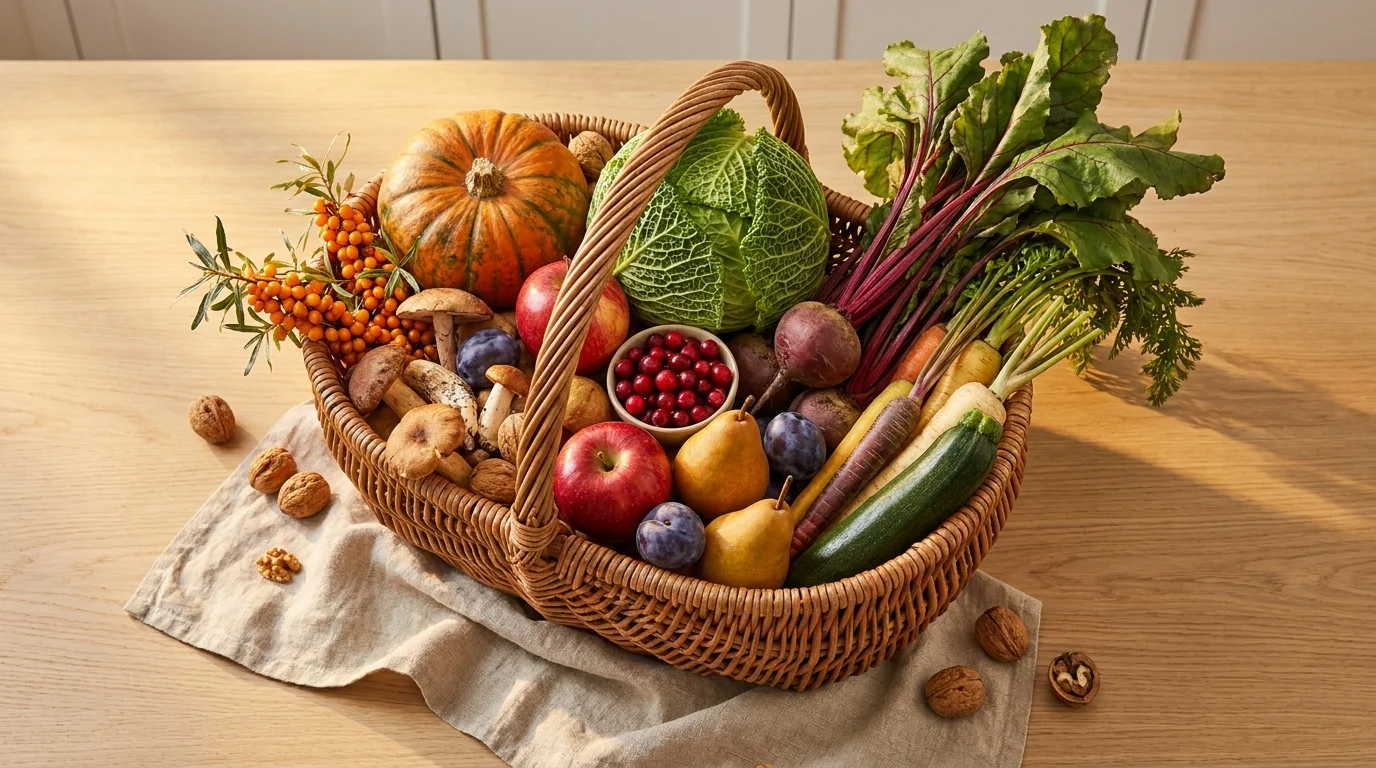
October is the peak of the autumn season. The harvest is already gathered, shelves are filled with local vegetables and fruits, and prices usually become calmer than in late summer or during the cold months. Many products can now be bought a quarter or even a third cheaper than out of season.
This is a great time to cook varied meals, stock up for winter, and plan your menu without overspending. Pumpkin becomes sweet and dense, cabbage is juicy, apples and pears are aromatic, and cranberries and sea buckthorn appear fresh.
To avoid buying too much, create a seasonal list in Pickt. Each family member can add their favorite products, and at the market or store, you can check off purchased items right in Telegram. This makes it easier to put together a weekly basket and not forget greens or apples for snacks.
October Vegetables
Pumpkin
In October, pumpkin is especially good: it has time to gain sweetness, and its flesh becomes bright and not watery. Choose a fruit with a dry stem, firm skin without soft spots, and a hollow sound when tapped.
Pumpkin can be baked in wedges, added to pureed soups, porridges, stews, fritters, and baked goods. A whole undamaged pumpkin can be stored in a cool, dry place for several months, so it's convenient to buy in bulk.
Cabbage
White cabbage in October is juicy, crunchy, and inexpensive. It's one of the most practical vegetables of the season: from one head you get salad, cabbage soup, braised cabbage, and pie filling. Late varieties keep well until winter.
Don't pass by red cabbage, cauliflower, and broccoli. Red cabbage is great in fresh salads, while cauliflower and broccoli are easy to break into florets and freeze in portions.
Beets and Root Vegetables
Beets, carrots, turnips, radishes, parsnips, and celeriac are the base of a hearty autumn menu. After the first cool nights, their flavor often becomes milder and sweeter. Root vegetables are affordable, store well, and suit almost any dish.
Beets are baked for salads and sides, carrots go into soups and stews, parsnips become a smooth puree, and celery adds aroma to broths. Buy firm vegetables without cracks, wilted tops, or damp spots.
Late Zucchini
In October, late zucchini and courgettes can still be found. They may be slightly denser than summer ones, but they hold their shape well when baked or braised. Young small fruits are good for quick dishes, while larger ones are perfect for caviar, vegetable patties, and casseroles.
If there are plenty of zucchini at the market, grab a few: in season they are usually significantly cheaper than in winter. Diced zucchini can be frozen for soups and stews.
Fruits and Berries
Apples and Pears
October apples are the main fruit of the month. Sweet, tart, crunchy, or soft varieties are great for snacking, charlotte, compotes, and baking. It's better to buy several different varieties: some to eat fresh, others to keep for pies and sauces.
Pears become especially aromatic at this time. Choose fruits without deep bruises and store them separately from apples: apples release ethylene and speed up ripening of neighboring fruits. Slightly firm pears will ripen at home in a few days.
Plums
Late plums keep their rich flavor until mid-autumn. They are good fresh, in compotes, jams, pies, and spicy meat sauces. For stocking up, choose firm fruits: soft ones are best used immediately, while firm ones can be frozen in halves without pits.
Sea Buckthorn and Cranberries
Sea buckthorn and cranberries are seasonal berries with a bright tart flavor. They aren't always cheap, but in October it's easier to find fresh berries, and the selection is usually wider. Sea buckthorn goes into fruit drinks, tea, sauces, and vitamin blends. Cranberries are great for beverages, desserts, and poultry sauce.
These berries are convenient to buy in small portions and freeze right away. After thawing, they keep their characteristic flavor and are perfect for fruit drinks. You don't have to make jam with lots of sugar: freezing helps preserve the natural tartness.
Mushrooms and Nuts
October is the time for forest mushrooms: oyster mushrooms, champignons, honey mushrooms, chanterelles, porcini, and other varieties depending on the region. Buy mushrooms only from reliable sellers if it's wild foraging. Don't take unknown mushrooms and don't taste them raw.
Fresh mushrooms are best cooked the day of purchase or at most the next day. They can be sautéed with onions, added to buckwheat, potatoes, creamy sauce, or vegetable stew. For storage, mushrooms are dried or frozen after quick frying or blanching.
Among nuts, walnuts, hazelnuts, and chestnuts (where available) are especially relevant in autumn. Nuts make the seasonal basket more nutritious: they're added to porridges, salads, baked goods, and snacks. Buy small batches because shelled kernels lose freshness faster. Store them in a tightly sealed jar in the fridge.
What to Freeze and Stock Up On
The main rule of autumn preserving is to stock up on what you actually use. There's no need to freeze dozens of containers if the family rarely cooks soups or compotes. First, plan a menu for a few weeks, then add the needed items to the shared Pickt list.
- Cut pumpkin into cubes or bake and freeze as puree for soups, porridges, and baked goods.
- Break broccoli and cauliflower into florets, blanch for 2–3 minutes, and freeze in portions.
- Slice zucchini into rounds or cubes; for fritters, grate and squeeze lightly.
- Freeze plums in halves without pits on a flat tray, then transfer to a bag.
- Rinse cranberries and sea buckthorn, dry well, and freeze loose.
- Apples are best stored fresh in a cool place, but some can be sliced and frozen for pies.
- Beets can be baked, peeled, sliced, and frozen for quick salads and soups.
Label bags with the date and contents. Freeze in small portions to avoid thawing more than needed. This saves both time and food.
Simple Weekly Dishes from the Seasonal Basket
From October products, it's easy to put together an affordable menu for the whole week. On Monday, make pumpkin puree soup with carrots and seeds. On Tuesday, bake beets, add soft cheese, nuts, and salad leaves.
On Wednesday, braise cabbage with mushrooms and serve with buckwheat. On Thursday, make a vegetable stew with zucchini, carrots, celeriac, and tomatoes. On Friday, bake chicken or chickpeas with pumpkin, apples, and spices.
For the weekend, try apple charlotte, oatmeal with pear and nuts, and cranberry or sea buckthorn fruit drink. If some vegetables are already sliced and frozen, these dishes take minimal time.
Summary Checklist for a Weekly Seasonal Shopping Trip
- Pumpkin — 1 small or half a large one.
- White cabbage — 1 head.
- Beets — 1–1.5 kg.
- Carrots — 1 kg.
- Parsnips, turnips, or celeriac — 2–3 pieces.
- Late zucchini or courgettes — 2–4 pieces.
- Apples — 1.5–2 kg.
- Pears — 0.5–1 kg.
- Plums — 0.5 kg, if still available.
- Cranberries or sea buckthorn — 300–500 g.
- Mushrooms — 400–600 g.
- Walnuts or hazelnuts — 200 g.
- Greens, onions, garlic, and favorite spices.
Add this checklist to Pickt and let your family adjust it: someone might ask for more apples, someone might add mushrooms or nuts. And while shopping, simply check off items as you fill your basket. October shopping will become clear, seasonal, and truly delicious.