Long lines, empty shelves, and impulse purchases often happen not because of "bad luck," but because you chose the wrong moment. The time and day of the week significantly affect product selection, service speed, and the likelihood of finding discounts in the store.
Below is a practical cheat sheet: when to go to the store for quick purchases, when for fresh products, and when for the best deals. Plus, a checklist on how to prepare to leave with what you need and nothing extra.
How to choose the best shopping time: your goal decides everything
There is no single correct answer to the question "when to go to the store." First, define your goal: to quickly buy basic groceries, get the freshest items, or find discounts in the store.
Focus on three factors: store traffic, delivery schedules, and the timing of price tag/promotion updates. Details vary between chains, but the general logic is similar.
- Need to be quick and avoid lines: choose "off-peak" hours — late morning or late evening.
- Need the freshest products: come close to opening time or shortly after a delivery.
- Need discounts: track the days promotions change and evening markdowns on perishables.
Best time of day: morning, afternoon, or evening?
Morning (within the first 1–2 hours after opening) — a good option if you want a calm store and neater shelves. It's often easier to find fresh baked goods, dairy, and chilled products at this time, especially in neighborhood stores.
Afternoon (approximately 11:00 AM–4:00 PM) usually has the fewest people on weekdays. This is often the best time for shopping if it's important to walk around without crowds, calmly compare prices, and not stand in line.
Evening (after 7:00 PM) — the busiest period. But it has a plus: in many stores, closer to closing time, markdowns appear on ready-made meals, salads, baked goods, and items with a short shelf life. If your goal is discounts in the store, evening sometimes wins, but be prepared for a rush and less selection.
Life hack: if you want to combine "fewer people" and "having a choice," come on weekdays around 8:30–9:30 PM (if the store is open late). The flow has already decreased, and the shelves aren't completely picked over yet.
Which day of the week to choose: weekdays vs. weekends
Monday–Thursday are most often more comfortable for regular shopping. Fewer people, checkout lines are more stable, and you're less prone to impulse buys due to lines and bustle.
Friday is a transitional day. After work, "stocking up for the weekend" begins, so stores are overloaded in the evening. If Friday is unavoidable, choose morning or midday.
Saturday is usually the busiest day in terms of traffic. You can spend twice as much time on the same shopping list in the afternoon. If speed is important to you, it's better to come at opening time.
Sunday often splits into two scenarios: relatively calm in the morning, and a wave of "topping up for Monday" in the evening. However, late Sunday evening sometimes has good markdowns, but the selection may be limited.
Summary by day: for a calm experience, choose Tuesday–Thursday; for early shopping — weekend mornings; for hunting markdowns — late evening (taking into account the risks regarding selection).
Store discounts: when it's really more profitable
Store discounts can be "scheduled" and "operational." Scheduled ones are weekly/bi-weekly promotions; operational ones are markdowns on items that need to be sold faster.
When to look for scheduled discounts: often on the day promotions change (depends on the chain) and in the first days after promo updates. During this period, the selection of promotional items is usually full, and price tags have already been updated. If you know which day promotions start in your chain, this is one of the most reliable answers to the question "when to go to the store for the best deals."
When to look for markdowns: closer to evening, especially 1–2 hours before closing. Ready-made meals, baked goods, chilled meat/fish, salads, and sliced items are most often marked down. But the rule is simple: the bigger the discount, the smaller the selection.
When not to count on discounts: during peak hours on Friday evening and Saturday afternoon. Items sell well anyway, so "tasty" deals are quickly taken, and markdowns appear later or in smaller quantities.
Checklist: how to go to the store faster and buy exactly what you need
Even if you've chosen the best shopping time, the outcome depends on preparation. A short plan helps avoid wandering the aisles and buying unnecessary items.
- Make a list by department: vegetables/fruits, dairy, meat/fish, groceries, frozen foods, household goods.
- Check your home supplies: oil, eggs, grains, pet food, household chemicals — this saves repeat trips.
- Set a limit: a budget or a number of "unplanned" items (e.g., no more than 2).
- Choose the shopping format: quick (10–15 minutes) or big (30–60 minutes) — and pick a time accordingly.
- Compare the unit price: per 100 g/1 kg/1 liter — it's easier to see what's really a better deal.
If you're not going alone, agree in advance on who buys what. This way you won't buy two of the same item or forget something important due to "I thought you'd get it."
Mini-guide by scenario: when to go to the store in your case
To avoid keeping everything in your head, here are quick tips for typical situations. Choose your scenario — and plan your time accordingly.
- Need quiet and speed: weekdays 11:00 AM–4:00 PM or late evening on weekdays.
- Need fresh products for the week: weekday morning or weekend morning (at opening).
- Need store discounts: the day promotions change + evening markdowns 1–2 hours before closing.
- Shopping "for the weekend": better Thursday evening or Friday afternoon than Saturday.
- Just need to pick up a couple of items: late evening on weekdays — fewer temptations and people.
And remember: the "perfect time" depends on the neighborhood and the specific store. If the store is near offices — the peak will be at lunchtime; if it's near a residential area — in the evening.
Conclusion. Deciding when to go to the store is easiest based on your goal: for fresh items — closer to opening; for a calm experience — midday on a weekday; for markdowns — closer to closing. And to make the trip truly quick and profitable, make a list in advance and stick to it.
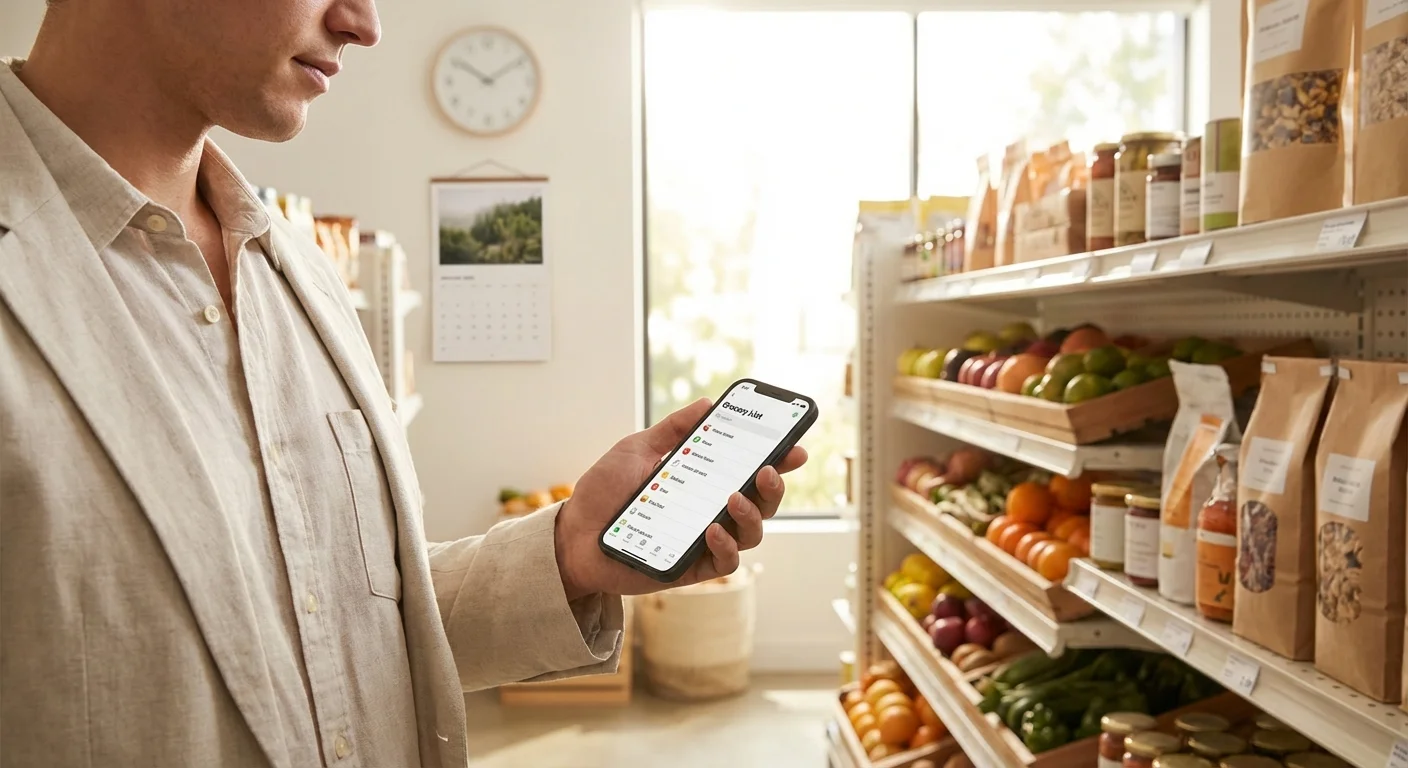
If you're shopping with a partner or neighbors, it's convenient to keep one shared list with current edits. In Pickt — a free mini-app in Telegram — the list syncs in real time, so you can quickly distribute purchases and forget nothing: t.me/PicktBot/app.