How to Create a Monthly Shopping List: A Practical Plan Without Unnecessary Spending
Monthly shopping might sound like something from the world of perfect planning, but in practice, it's simply a way to run to the store less often, reduce last-minute 'small' purchases, and better control your budget. This is especially true if you don't live alone (family, roommates, couple) and shopping items constantly 'pop up' in conversations.
The main challenge isn't buying a lot, but buying what you need: considering habits, existing supplies, expiration dates, and your actual meal plan. Below is a clear algorithm that helps you create a monthly shopping list in 30–60 minutes and then calmly adjust it.
In this article, we'll break down how to link monthly planning with your menu and supplies, how to categorize purchases, and what's beneficial to buy in bulk versus what's better to top up weekly.
1) Preparation: Supplies, Budget, and the Format of Your Monthly Shopping
Start with an inventory. This is the most 'boring' step, but it saves the most money: you stop buying what you already have and see what you're actually missing.
Go through three zones: the refrigerator, freezer, dry goods (cereals, canned goods, spices), as well as household chemicals and hygiene products. Separately note items that need to be used within the next 7–10 days.
Next, define your framework: how much you're willing to spend and how your monthly shopping will be structured. A convenient scheme for most is one large shopping trip (the foundation) and 3–4 small top-ups for fresh items.
- Large shopping trip: cereals, frozen goods, canned goods, drinks, household items, pet food, 'long-lasting' products.
- Weekly top-ups: vegetables, fruits, bread, dairy, greens.
If you already have preferred brands and quantities, note them down immediately. Monthly planning works better when the list isn't abstract ('cheese') but specific ('hard cheese 400g, 2 pcs').
2) Menu as the Foundation of the List: To Avoid Buying Unnecessary Items
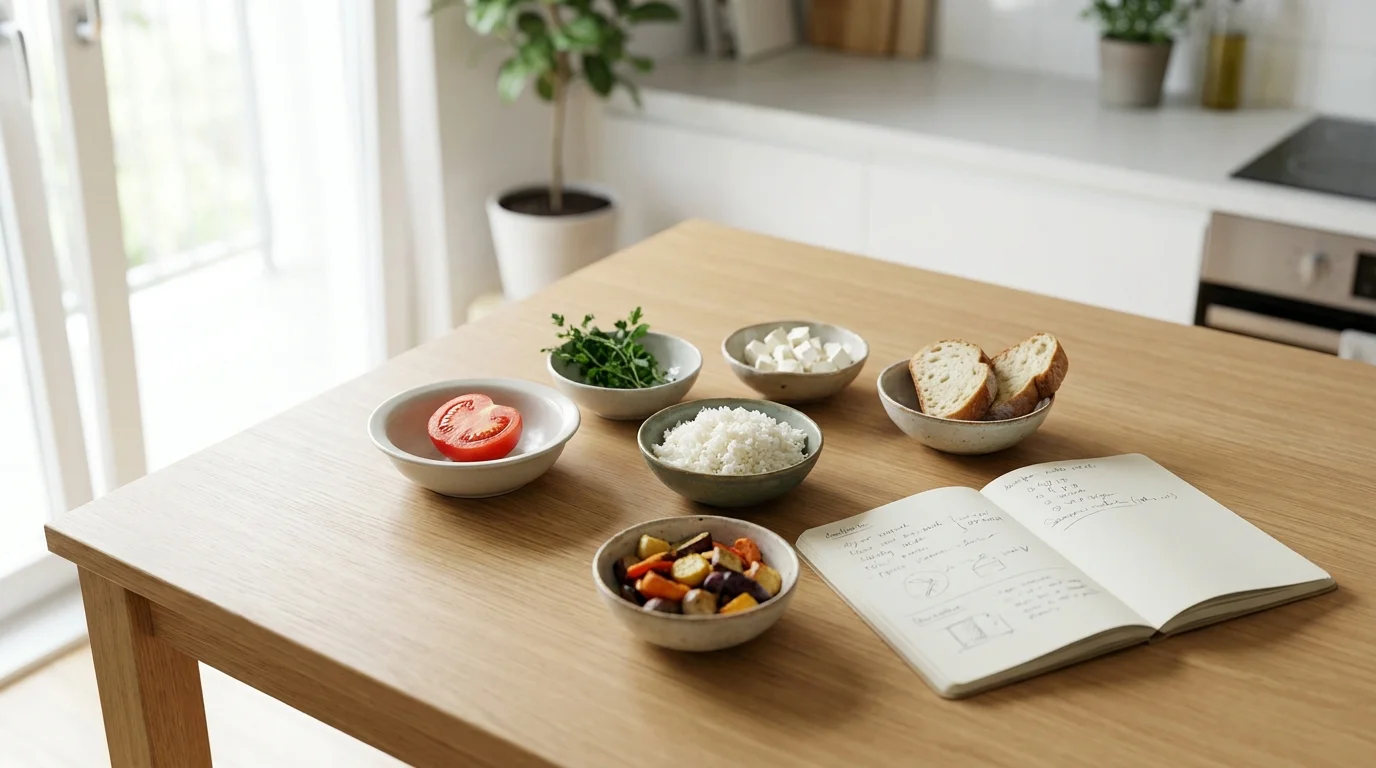
The fastest way to create a list is to start from your menu. You don't need to plan elaborate dishes: just understand what breakfasts, lunches, and dinners you actually cook.
Create a 'skeleton' for the month: 8–10 main hot dishes you repeat, and a set of quick options for busy days. Then translate these dishes into ingredients and group them.
A practical approach: plan not by each day, but in blocks. For example, 2–3 soups/stews for the month, 6–8 side dish options, 6–8 protein options (chicken, fish, legumes), plus snacks.
A mini-checklist for a monthly menu:
- Breakfasts: 3–5 options (porridge, eggs, cottage cheese, granola, sandwiches).
- Lunches: 2–3 main dishes (soup, stew, pasta/rice with sauce).
- Dinners: 6–8 quick combinations (fish + vegetables, chicken + grain, salad + protein).
- Snacks: fruits, nuts, yogurts, bread/crackers.
- 'Backup plan': frozen goods or good-quality semi-finished products for 2–4 occasions.
This way you avoid the typical mistake: monthly shopping turns into a set of random products that don't combine well into meals. The menu links purchases into a system.
3) Categories and List Template: A Universal Structure
To prevent your list from growing chaotically, use categories. This makes it easier to assemble your cart, check supplies faster, and delegate shopping.
Below is a working template. You can copy it and fill in quantities for your family.
Monthly Shopping List Template (Foundation)
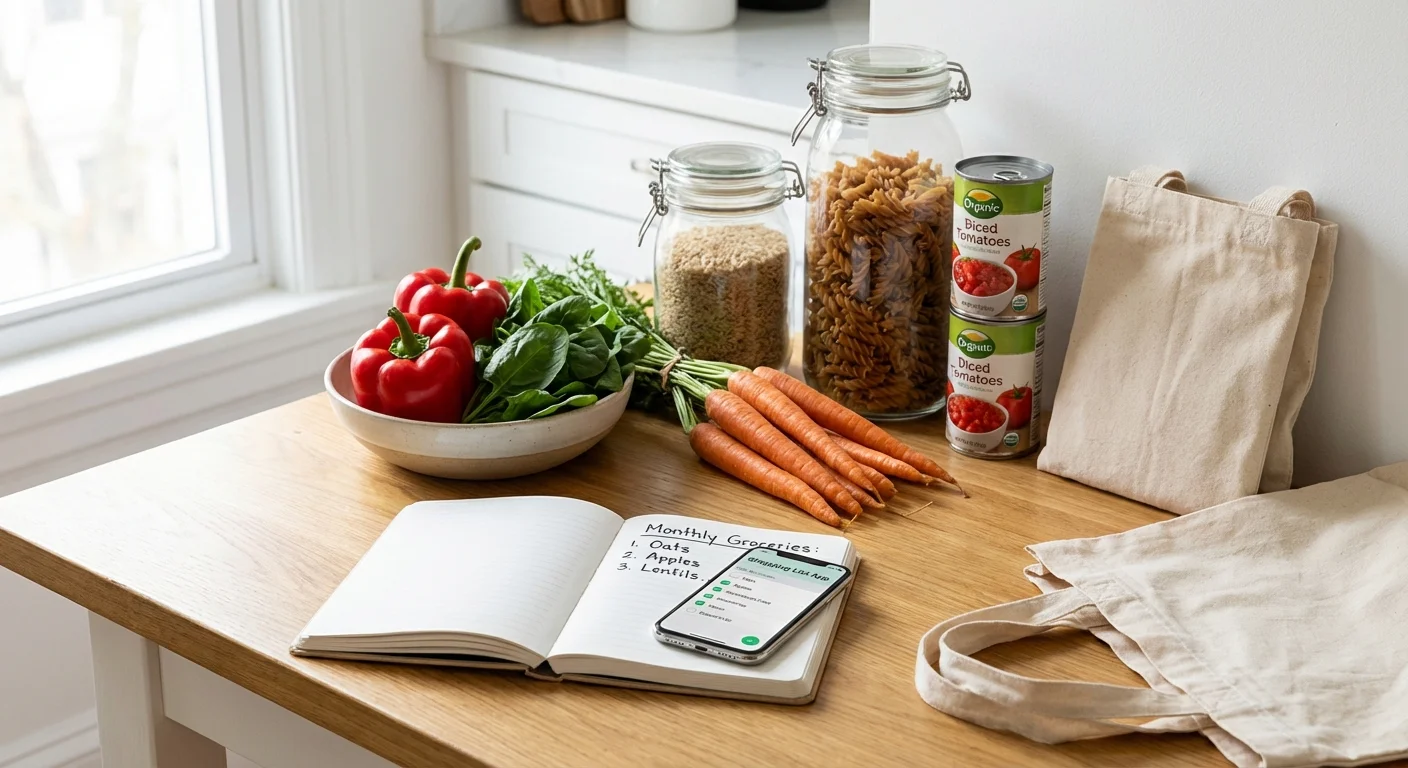
- Cereals and Pasta: rice, buckwheat, oatmeal, pasta, bulgur/couscous.
- Legumes and Canned Goods: beans/chickpeas, tomatoes in their own juice, tuna, corn, peas.
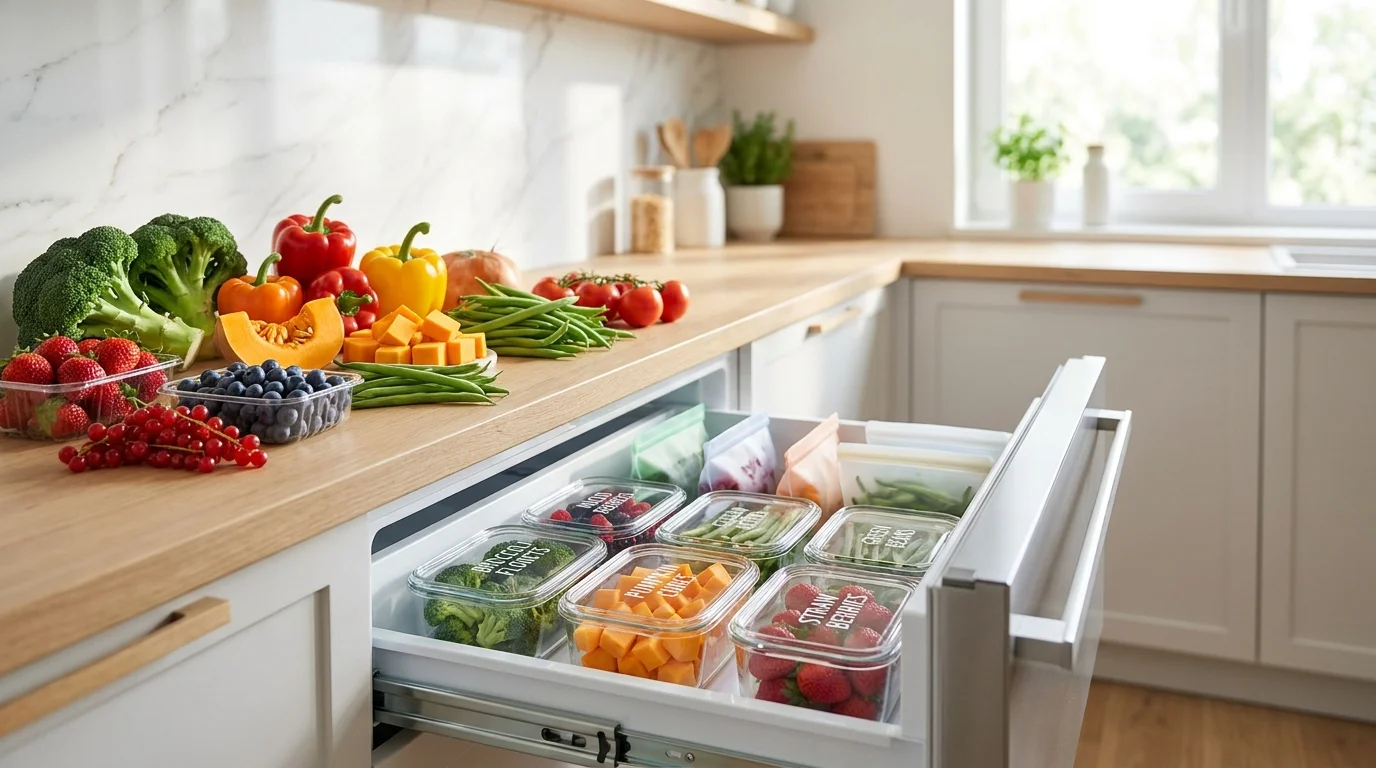
- Frozen Goods: vegetable mixes, berries, fish/seafood, dumplings/pierogi (optional).
- Meat/Poultry/Fish: portioned and/or for meal prep.
- Dairy: milk, kefir, yogurt, cheese, butter.
- 'Long-lasting' Vegetables: potatoes, carrots, onions, cabbage, garlic.
- 'Long-lasting' Fruits: apples, citrus fruits (part for the week).
- Sauces and Basic Ingredients: vegetable oil, vinegar/soy sauce, spices, flour, sugar/honey.
- Beverages: tea, coffee, water.
- Snacks and 'Treats': chocolate, cookies, nuts (in reasonable amounts).
- Household Chemicals: dish soap, laundry detergent, cleaning supplies, sponges/bags.
- Hygiene: toilet paper, shampoo, toothpaste, personal care items.
- For Pets: food, litter, etc.
Separately, create a 'weekly fresh items' block to avoid buying too much at once. Dairy, greens, and soft fruits are often more cost-effective and tastier when bought in small batches.
4) What's Worth Buying in Bulk, and What's Not
Bulk purchases can indeed help you save, but only if you consider expiration dates and your actual consumption rate. Otherwise, 'savings' turn into overpayment and wasted food.
Good candidates for bulk purchases in monthly planning:
- Cereals, pasta, flour — store for a long time, easy to forecast.
- Canned goods — convenient to keep a stock for quick meals.
- Frozen goods — berries, vegetables, fish (if you have freezer space).
- Household chemicals and hygiene products — stable consumption, infrequent purchases.
- Coffee/tea — if you know exactly how much you use.
Be cautious with buying these 'in bulk':
- Dairy products — better to split into 2–4 shopping trips.
- Bread and baked goods — only if you freeze them and will definitely use them.
- Vegetables and fruits — some can be bought for the month (potatoes, onions), but soft ones are better to top up.
Another life hack: buy 'in bulk' not just volume, but also prepped items. For example, buying a large pack of chicken, immediately dividing it into portions, and freezing it saves time and reduces the likelihood of extra food orders.
5) Final Check: How Not to Forget Important Items and Avoid Buying Unnecessary Ones
Before paying for a large cart, do a final check. It takes 5 minutes but saves you from repeat trips to the store.
Pre-monthly-shopping control checklist:
- Checked expiration dates of what you already have (especially sauces, spices, cereals).
- Cross-referenced the list with your menu: key ingredients are present for each dish.
- Separated purchases into 'large shopping trip' and 'fresh items for the week'.
- Accounted for breakfasts and snacks (these are usually forgotten).
- Added household and hygiene items (often remembered at the last minute).
- Checked storage space: freezer, cabinets, storage containers.
And one more thing: leave 5–10% of your budget for flexibility. Monthly planning shouldn't be rigid — sometimes guests appear, schedules change, or you crave seasonal products.
Conclusion
A monthly shopping list isn't about perfect discipline, but about a clear system: inventory check, simple menu, categories, and splitting into a large shopping trip and fresh items. This way you spend less time shopping, make impulse purchases less often, and keep your budget under control more easily.
If you're not managing the list alone, it's convenient to collect it in one place with synchronization: in Pickt — a free mini-app in Telegram for shared shopping lists — you can add items with your whole family in real time. You can open it here: t.me/PicktBot/app.