How to Create a Shopping List from a Meal Plan in 10 Minutes
To understand how to create a shopping list from a meal plan in 10 minutes, follow a simple 5-step algorithm: choose dishes for the period, gather ingredients into one list, calculate quantities, cross out what you already have at home, and group purchases by store departments. On average, this takes 8–10 minutes if you keep the meal plan and kitchen supplies in front of you.
Below is a practical step-by-step guide that helps you quickly create a weekly grocery list, reduce unnecessary purchases, and not forget the little things.
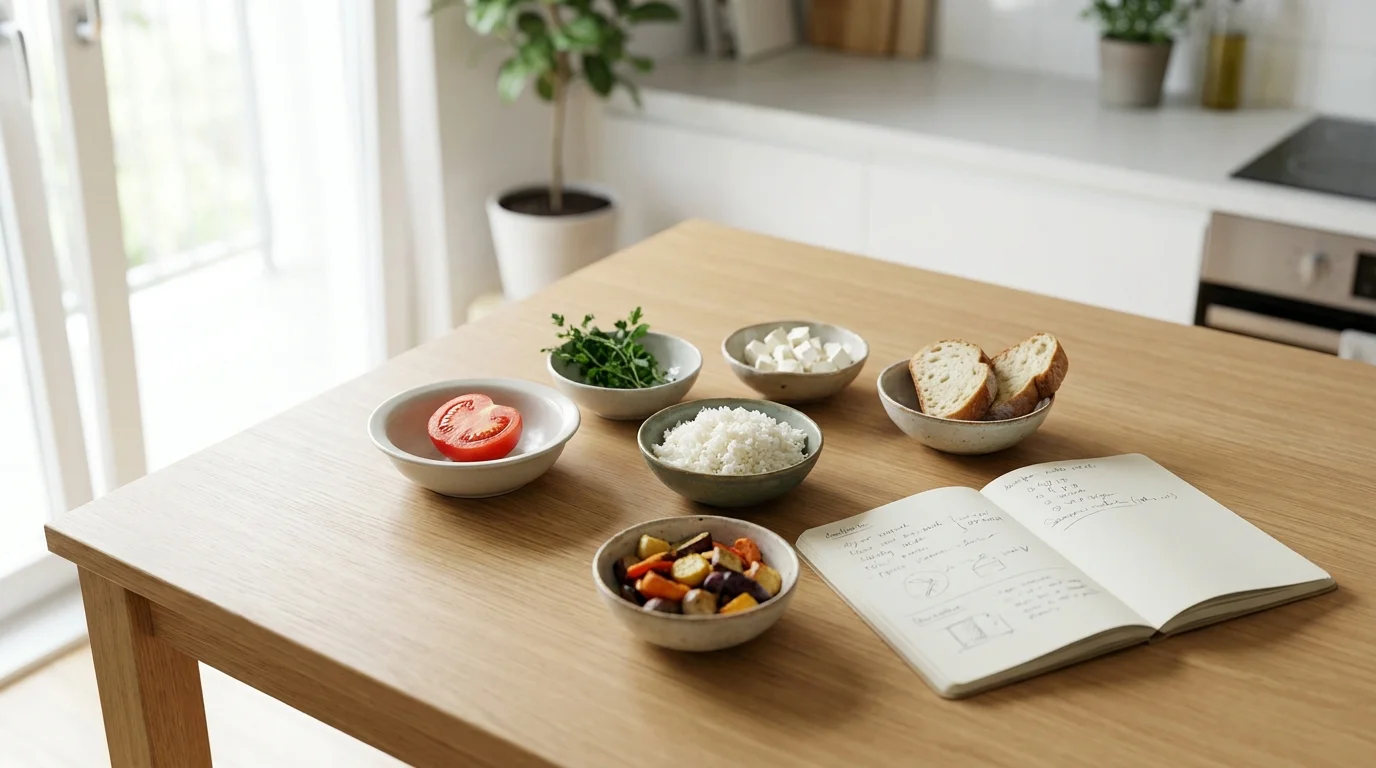
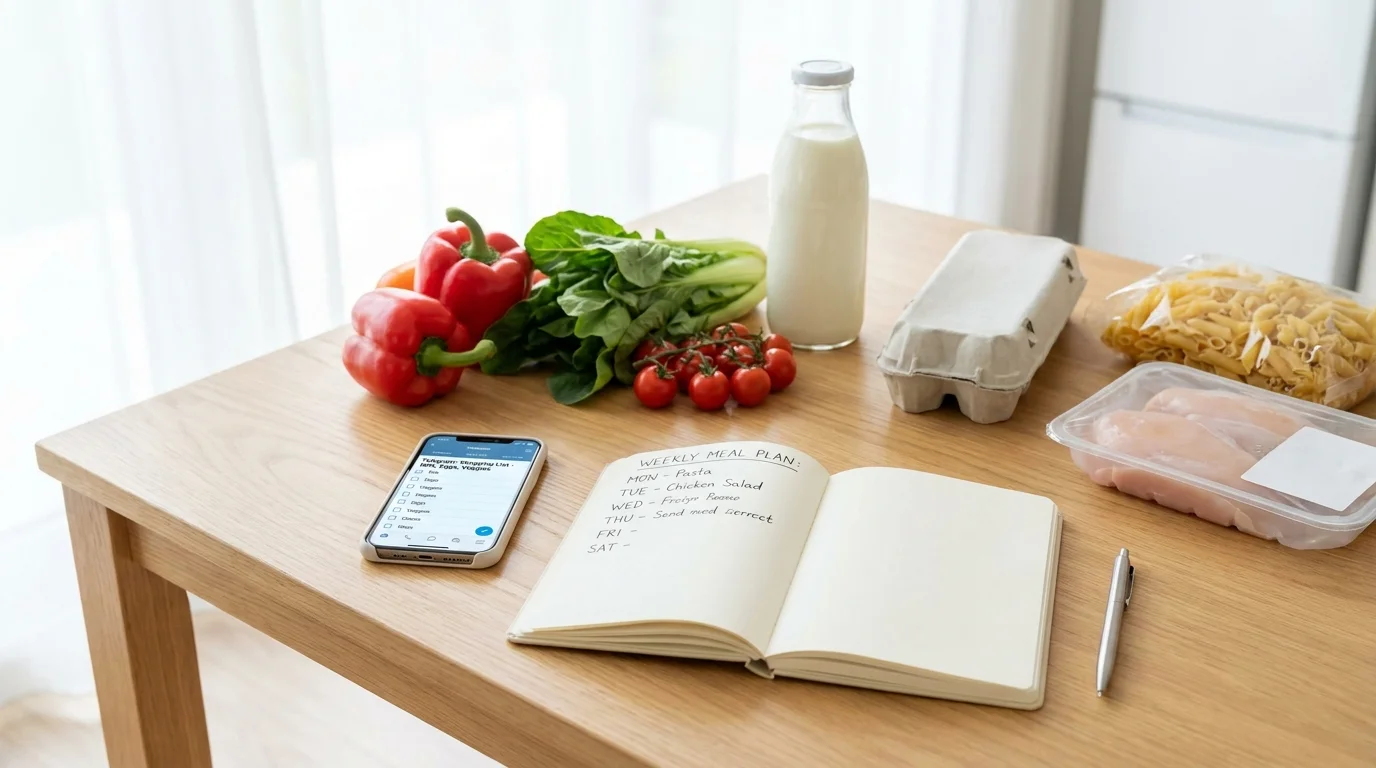
Step 1. In 2 minutes, write down the meal plan and portions
This step is necessary to make the shopping list accurate: the quantity of products always depends on portions and dish repetitions. Even a perfect recipe won't help if you haven't specified how many times you're cooking and for how many people.
Determine the period: 3–4 days or a week. For a start, 4–5 days is more convenient, as it's easier to account for fresh products.
Write down 6–10 dishes: breakfasts/lunches/dinners, plus 1–2 "backup" quick options (pasta, omelet, salad).
Specify portions: for example, "dinners for 2 adults + 1 child", or "lunches in containers for 3 days".
Mini life hack: if a dish is repeated twice, mark it immediately. This will speed up calculations in the next step and reduce the risk of buying too much.
Step 2. In 2 minutes, write down ingredients "in bulk" without calculations
The goal is to quickly create a draft. At this stage, don't count grams and don't think about brands: simply transfer ingredients from the menu to a common list.
Open the recipes (or recall basic compositions) and write down the ingredients of each dish in one line.
Immediately combine identical items: "tomatoes" should not appear five times in different places.
Separately mark "optional": herbs, sauces, spices, lemon. This way you won't forget them, but also won't overload the mandatory part.
If you are keeping the list together with a partner or roommates, it's convenient to do this in a shared list with synchronization. For example, in the free Telegram Mini App Pickt, you can create a draft, and another person can simultaneously add what is running out at home.
Step 3. In 3 minutes, calculate quantities and convert to uniform measures
This is where the draft turns into a working list. The main task is to avoid duplicates and "floating" measures like "a little" or "a pack".
Go through key categories: proteins (meat/fish/legumes), side dishes (grains/pasta), vegetables/fruits, dairy, bread/pastries.
Sum up repeating ingredients. Example: if two dishes each require 2 onions, the final list will be "onions — 4 pcs".
Convert to one measure: grams/kilograms, milliliters/liters, pieces. For "packages", specify the size: "yogurt 4×120 g" or "cheese 300 g".
Estimate "borderline" products: herbs, lemons, garlic. It's better to specify a minimum (e.g., "garlic — 1 head") to avoid buying too much.
Quick conversion cheat sheet
Grains: 80–100 g of dry grain per adult serving (depending on the dish).
Pasta: 80–100 g of dry pasta per serving.
Chicken/meat: 150–200 g per serving for the main dish.
Vegetables for salad: 200–300 g per person if it's a separate dish.
If your goal is to make how to make a shopping list from a menu as accurate as possible, don't overcomplicate: just round to convenient package sizes (500 g, 1 kg, 1 L) to avoid getting stuck on math.
Step 4. In 2 minutes, cross out what you already have at home (and save your budget)
The most common cause of "extra bags" is buying what is already in the cupboard or freezer. A quick inventory saves money and time at the shelf.
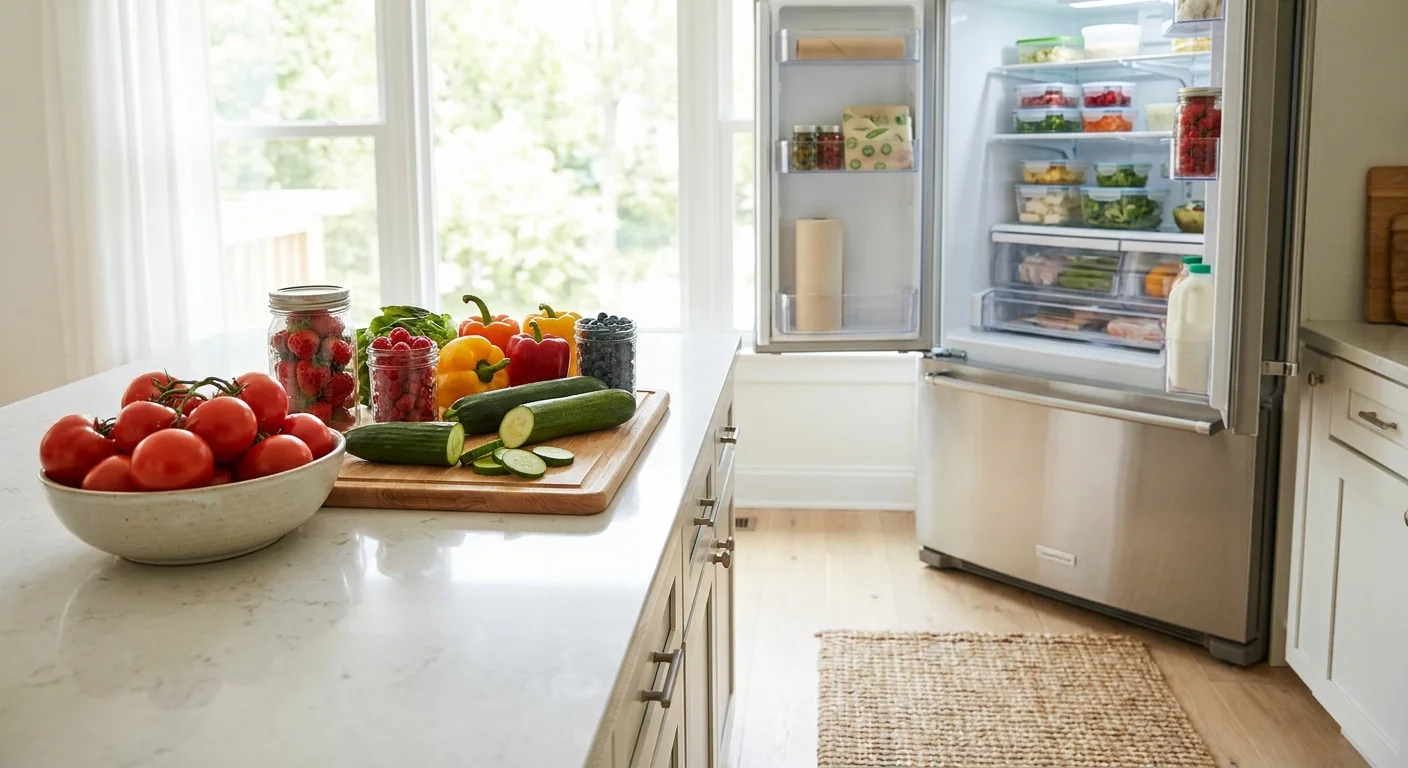
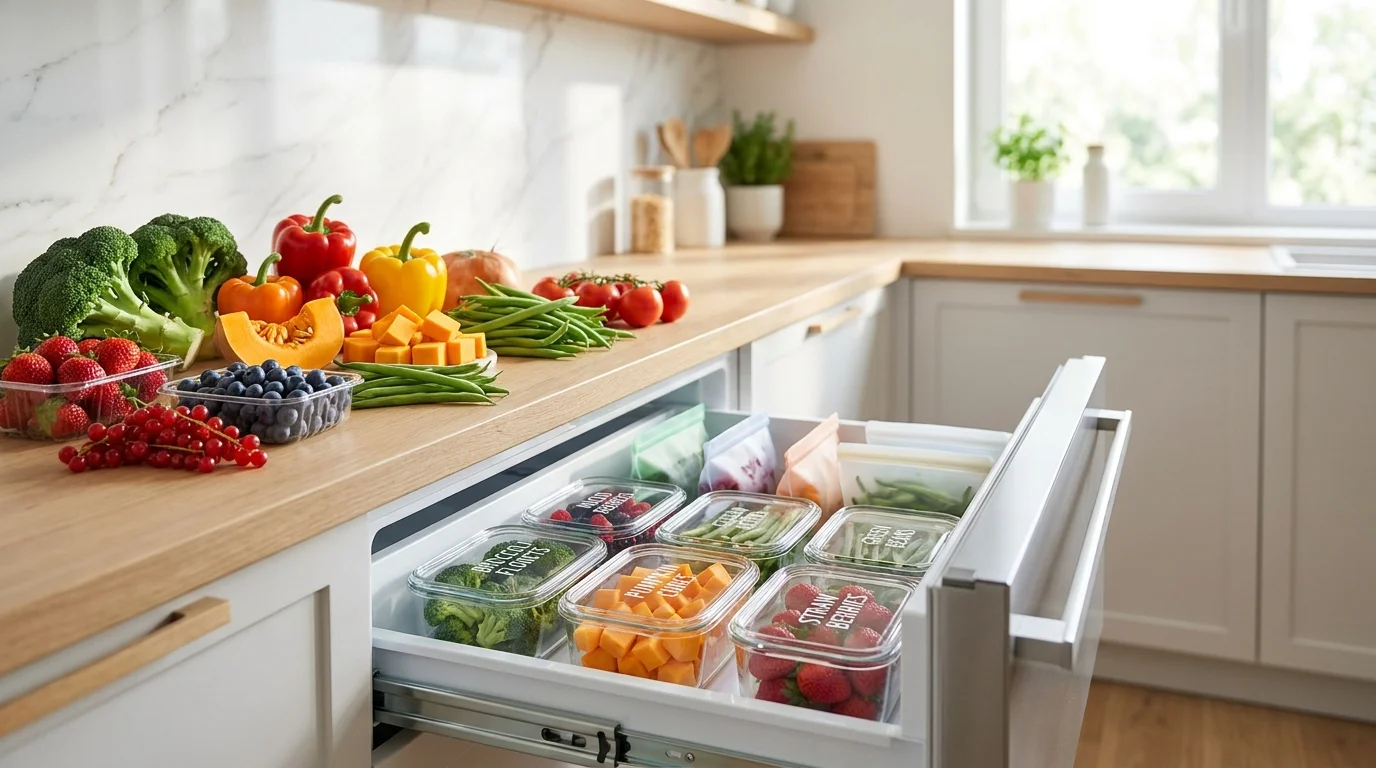
Check three zones: refrigerator, freezer, dry supplies (grains, canned goods, oil, spices).
In the list, mark "have at home" and reduce the quantity. Example: need 1 liter of milk, have 400 ml at home — buy 1 L or 0.6–1 L depending on the packaging.
Separately mark borderline products: "cream — just a little left". If in doubt, it's better to add it, but with a quantity note.
For shared purchases, it's useful to have one list for everyone that updates in real time: then no one will buy a second pack of rice "just in case". In Pickt, this is convenient to do directly in Telegram when you are at the cupboard and your partner is already in the store.
Step 5. In 1 minute, group the list by store departments and add a "safety net"
Grouping is not about aesthetics, but about speed. When the list is organized by departments, you run around the store less and forget items less often.
Divide the list into blocks: Vegetables/Fruits, Meat/Fish, Dairy/Eggs, Groceries, Frozen, Bread, Sauces/Spices, Household.
Add a "safety net" for 1–2 quick meals: eggs, bread, cottage cheese, frozen vegetables, or a ready-made salad mix.
Specify priorities: what is needed today without fail, and what can be postponed. This helps if you can't find a product or the price has increased.
If you often search for how to create a weekly shopping list and not spend half an hour in the store, this step usually gives the most noticeable effect.
Step 6 (optional). In 30 seconds, check the list against "checkpoints"
A final check protects against typical failures: bought everything for pasta — forgot the cheese; got vegetables — no oil; planned soup — no broth or spices.
Is there a base? oil, salt, pepper, onion/garlic (if used), grain/pasta for a side dish.
Is there protein for each dinner? chicken/fish/mince/legumes/cheese.
Is there a "flavor glue"? lemon, tomato paste, soy sauce, mustard, vinegar — at least 1–2 items for your dishes.
Are snacks accounted for? fruits, yogurt, nuts, rice cakes — according to your routine.
This mini-check is especially useful if you practice meal planning and shopping list for several days in advance and want fewer spontaneous trips "for one little thing".
Conclusion. Creating a shopping list from a meal plan is realistic in 10 minutes if you break the task into short steps: menu and portions → common draft → calculation and uniform measures → crossing out supplies → grouping by departments → quick check. With this approach, you buy exactly what you need for the dishes and spend less time in the store.
Frequently Asked Questions
How to create a shopping list from a meal plan in 10 minutes if the recipes are different and complex?
Simplify: write down the ingredients without grams, then calculate only the key products (meat, vegetables, grains, dairy). Add spices and sauces as a "base check" at the end to avoid getting bogged down in details.
What to do if the menu has many fresh products and they spoil?
Divide the shopping into 2 parts: main (groceries, frozen, meat) and "fresh" for days 2–3 (herbs, berries, some vegetables). In the list, mark what is bought later.
How to avoid duplicates when two people are keeping the list?
You need one shared list where changes are visible immediately. This reduces the risk of buying "another" sour cream or pasta. In shared lists with real-time synchronization, it's easier to agree on who takes what.
How to know how much to buy if I don't know the exact gram measurements?
Focus on portions and packaging: round to the nearest convenient packages and use basic norms (pasta 80–100 g per serving, meat 150–200 g). Over time, you will adjust the numbers to your family and favorite dishes.