How to Create the Perfect Weekly Shopping List: A Practical Plan Without Unnecessary Spending
A good weekly shopping list isn't just a list of products. It's a short plan that helps you eat properly, avoid daily trips to the store, and prevents you from throwing away spoiled food.
If you regularly find yourself forgetting milk, buying a third pack of pasta, or not having an idea for tomorrow's dinner—the problem usually isn't a lack of discipline. More often, it's the absence of a clear system: what we eat, what we already have at home, and what we need to buy.
Below is a practical method for creating a grocery list quickly and effectively so it works for the entire week. No fluff, only what you can apply immediately.
Step 1. Define the Week's Framework: How Many Meals and for Whom
Start simple: for how many days are you planning purchases, and how many people will be eating at home? This affects volume, packaging, and the frequency of buying fresh items.
Next, decide how many meals you realistically prepare. For example: breakfast at home every day, some lunches out, dinners—5 times a week. This is already half the battle in planning your shopping.
To keep it simple, use a basic weekly matrix: 5–7 breakfasts, 3–5 lunches, 5 dinners, and 2–3 snacks. Adjust it to your needs and don't try to make it "perfect" the first time.
Step 2. Create a Menu Skeleton: 7–10 Dishes That Repeat
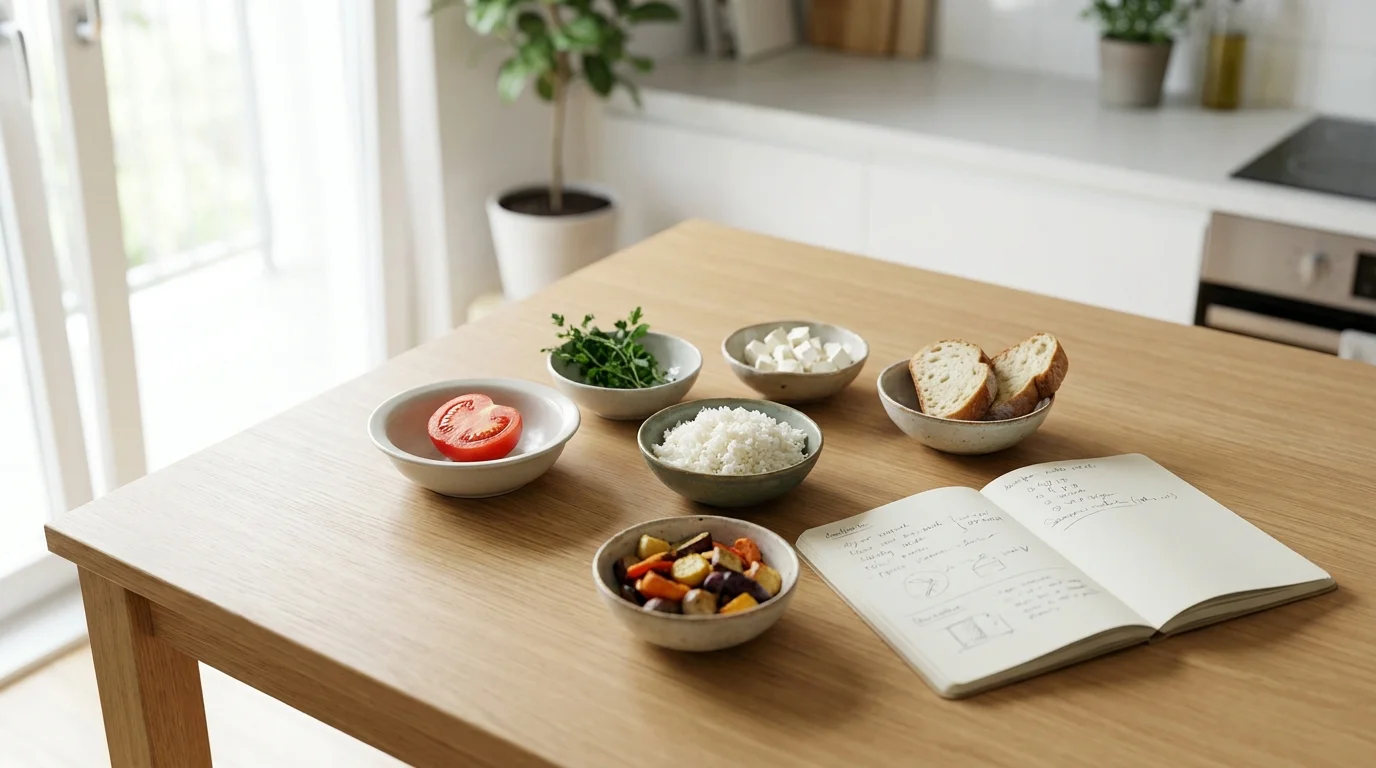
The fastest way to create a shopping list is not to invent something new each time. Make a "menu skeleton" from familiar dishes you cook often and confidently.
Optimally, choose 7–10 options for the week: some quick (15–20 minutes), some "for two days," some from prepped ingredients. Repetition is normal: it saves time and reduces unnecessary purchases.
Example of an easily scalable set of dishes: omelet/porridge/cottage cheese for breakfast, soup or grains with protein for lunch, pasta/casserole/fish with a side for dinner. Add 1–2 "rescue" options like dumplings, canned tuna, or frozen vegetables.
Step 3. Check Your Home Supplies and Note What's Left
Before writing your weekly shopping list, do a quick inventory: refrigerator, freezer, grains, spices, canned goods. This takes 5–7 minutes but saves money and space.
The main idea: the list should contain only what's missing for the menu and basic needs. Items often duplicated include grains, sauces, oil, flour, tea, and "snacks."
A handy trick is to mark leftovers as "have" and "running low." This way, you don't buy extra but also don't run out of basics mid-week.
Step 4. Organize the List by Categories, Not Randomly
Categorization is the key to making shopping planning quick. When the list is structured, you wander less in the store and forget important items less often.
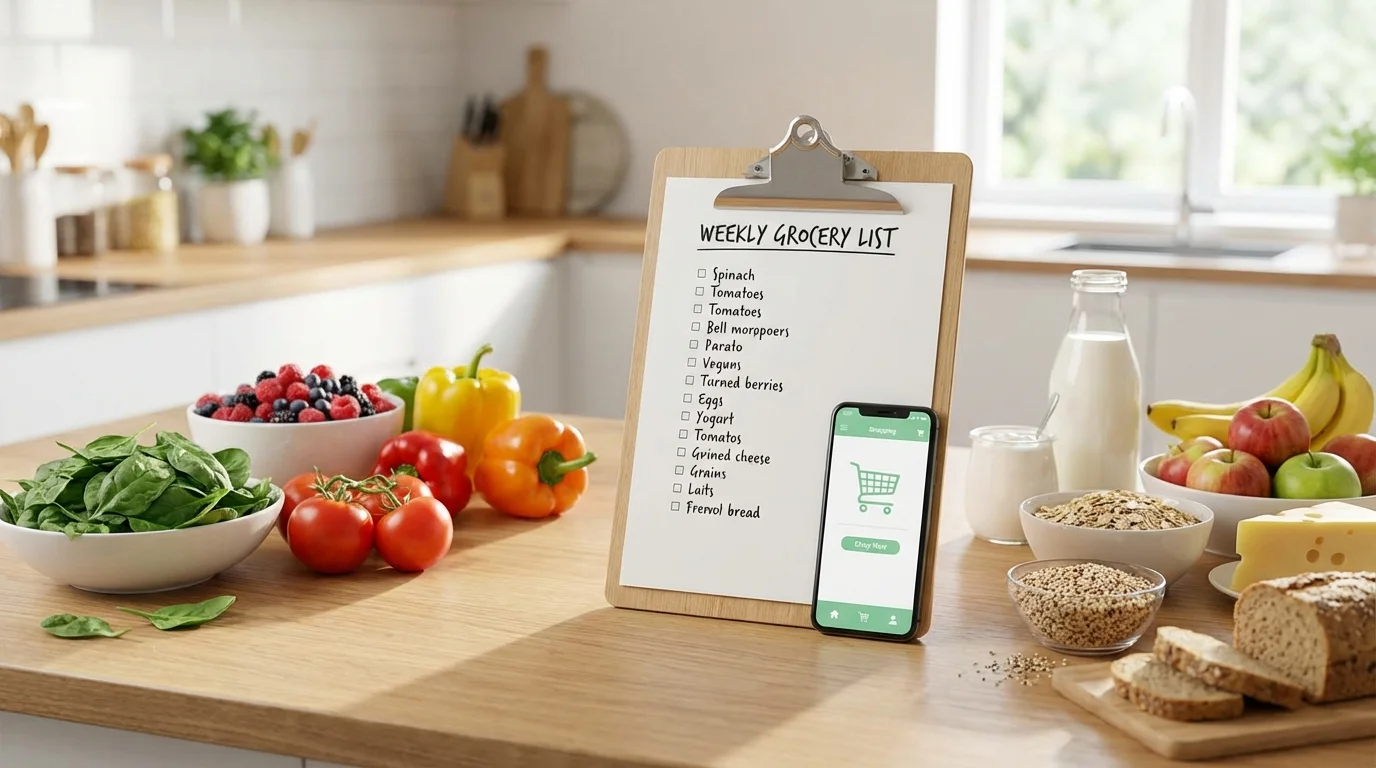
Break the list into 6–8 clear blocks. You can do this in notes, a table, or any list that's easy to mark off as you shop.
Category Checklist for a Weekly Shopping List:
- Vegetables and Greens: cucumbers, tomatoes, lettuce, onions, garlic, carrots, potatoes, lemon
- Fruits and Berries: apples/bananas, seasonal fruits, berries (fresh or frozen)
- Protein: chicken/turkey, fish, eggs, legumes, cheese/cottage cheese, yogurt
- Sides and Bread: rice/buckwheat/pasta, bread/pita, breakfast cereals
- Dairy and Alternatives: milk, kefir, cream (if needed for dishes)
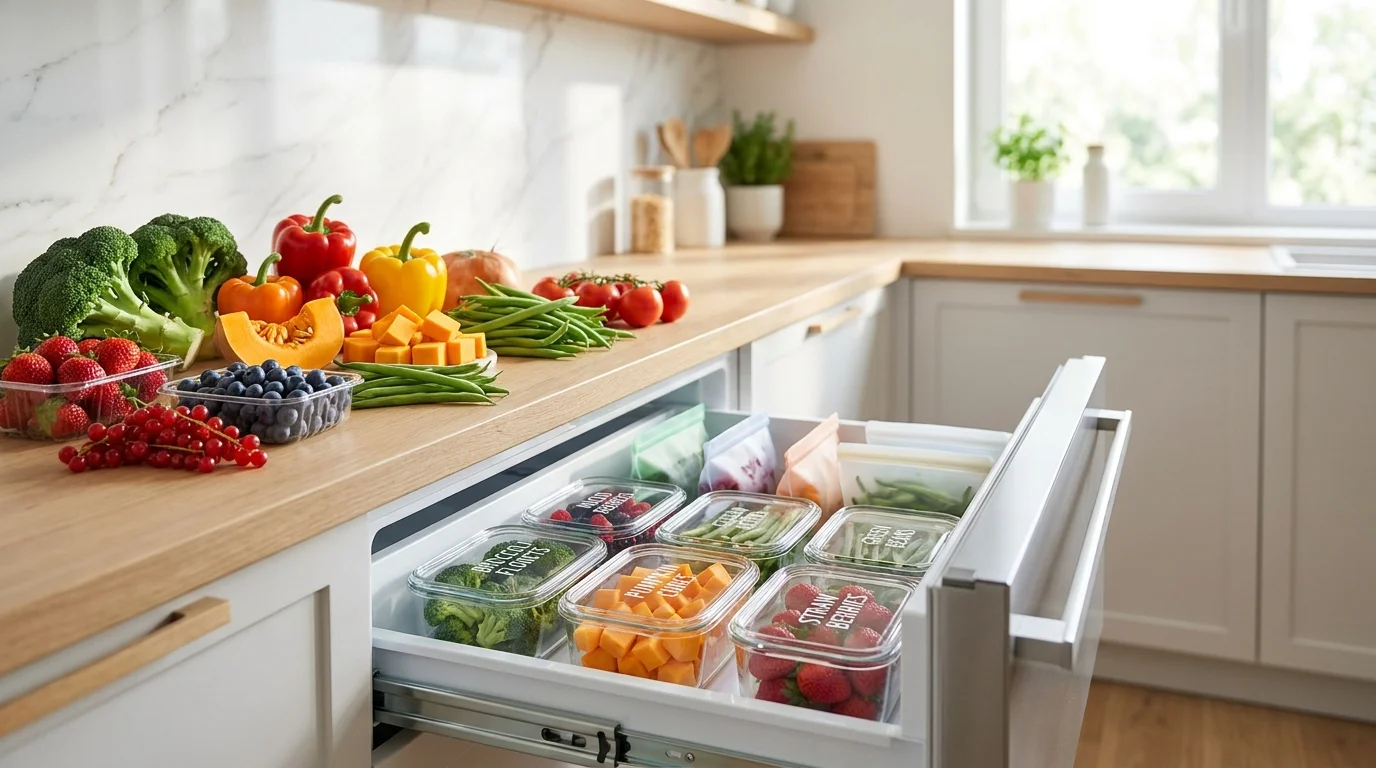
- Frozen: vegetable mixes, berries, convenience foods "just in case"
- Pantry and Sauces: oil, tomatoes/paste, soy sauce, spices, nuts
- Household: paper towels, dish soap, bags, pet food
If you shop at the same store, adjust the category order to match your route: entrance → vegetables → dairy → meat → checkout. This reduces time in the store and impulse purchases.
Step 5. Add "Smart Rules" to Make the List Always Work
The perfect shopping list isn't just "what to buy" but also "how to buy." A few simple rules make the list resilient even during busy weeks.
1) Plan 1–2 dishes from leftovers. For example, leftover vegetables go into soup, stew, or a casserole. This reduces waste and helps avoid throwing food away.
2) Create a buffer for the unexpected. Add 2–3 versatile items: eggs, frozen vegetables, a can of chickpeas/beans, cheese. They save the day when plans change.
3) Separate purchases into "basics" and "for the menu." Basics are what you regularly restock (milk, bread, eggs). "For the menu" are ingredients for specific dishes. This helps you quickly see what can be cut.
4) Specify quantity and format. Not "chicken," but "chicken breast 1 kg" or "thighs 1.2 kg." Not "yogurt," but "plain yogurt 4 units." This reduces the risk of buying the wrong thing or amount.
5) Mark priorities immediately. Label 5–7 items as essential, the rest—depending on budget. This way, even short on time, you'll buy the most important things.
Mini-checklist before heading to the store:
- Weekly menu sketched out (at least dinners)
- Home inventory checked
- List broken into categories
- Quantities specified
- 2–3 "buffer" items included
Common Shopping List Mistakes (and How to Avoid Them)
Even a good weekly shopping list can fail due to small details. Below are the most frequent mistakes and quick solutions.
Mistake 1: Overly ambitious menu. If you plan 7 complex dinners, reality usually wins. Solution: 2 complex dishes, 3 simple ones, 2 "quick/rescue" options.
Mistake 2: No snacks or "small items." This leads to unplanned store trips. Solution: add fruits, nuts, yogurt, crackers, or what you actually eat beforehand.
Mistake 3: Sauces and spices not accounted for. The dish is planned, but ingredients for flavor are missing. Solution: keep a basic set and check it weekly.
Mistake 4: List without quantities. This leads to extra purchases or shortages. Solution: specify weight/units at least for meat, dairy, vegetables, and grains.
Conclusion
The perfect weekly shopping list is built on three things: a clear menu, checking supplies, and a category structure. When you repeat this cycle 2–3 weeks in a row, shopping planning becomes almost automatic and takes just minutes.
If you don't shop alone, it's convenient to maintain one shared list with real-time updates. Pickt helps with this—a free mini-app in Telegram for shared shopping lists: you can quickly add items and immediately see what's already been bought. Link: t.me/PicktBot/app.