How to Prepare for a Baby's Arrival: A Shopping Checklist Without Unnecessary Spending
Preparing for a baby's arrival often turns into a marathon: advice from chat groups, lists of 'must-haves', store displays with cute items. In the end, it's easy to buy too much and forget the essentials. To avoid this, it's more convenient to go by category and gather purchases for your newborn according to a clear plan.
Below is a practical checklist for your baby: what to buy for your child before the hospital and for the first 1–2 months at home. It's not tied to brands and suits most families. You can adapt it to the season and your circumstances (e.g., elevator access, home space, plans for breastfeeding).
The main rule: safety and basic comfort first, 'cute stuff' later. Many items can be purchased after birth when it becomes clear what you really need.
How to Avoid Drowning in Purchases: Basic Principles
Start simple: divide purchases into 'needed from day one' and 'can wait'. This reduces stress and helps stay within budget. It's also useful to decide in advance what you're willing to get second-hand (e.g., a bathtub or bouncer) and what's better to buy new (nipples, bottles, hygiene products).
Keep the season and home temperature in mind. Winter requires more warm layers, summer calls for light bodysuits and thin blankets. And don't buy too much clothing in one size: babies grow fast, and sizes vary between brands.
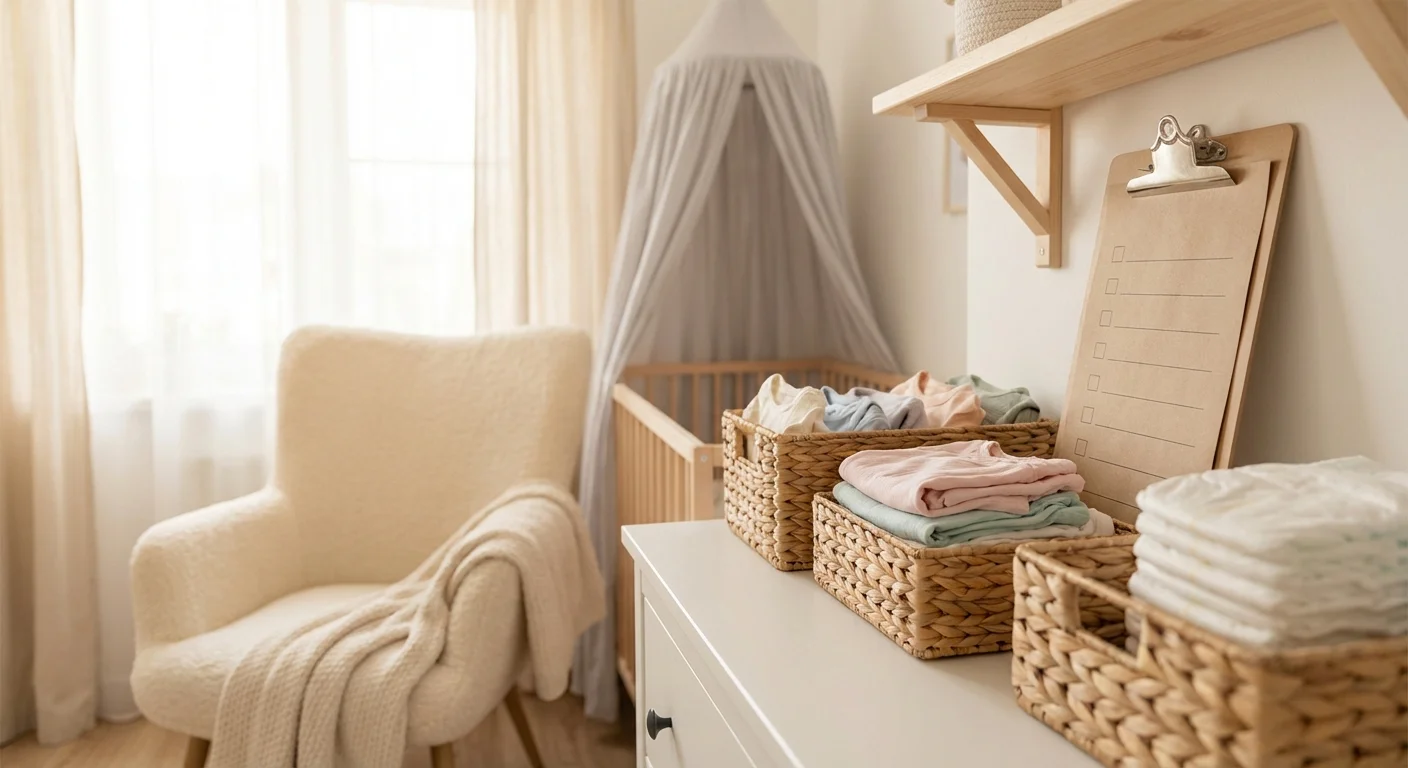
Finally, consider logistics: where the changing table will be, where to store diapers, where to dry clothes. Sometimes one storage basket solves more problems than a tenth 'smart' purchase.
Clothing and Textiles: The Minimum That Actually Gets Worn
You might want to buy a lot of clothes for a newborn, but in the first weeks, convenience is more important: easy to change, easy to wash, nothing that chafes. Choose soft fabrics, flat seams, and simple fasteners.
Optimally, assemble a capsule wardrobe for 7–10 days, accounting for laundry. If it's warm at home, don't overheat the baby: several thin layers are better than one very warm one.
Baby Checklist: Clothing and Textiles
- Long-sleeve bodysuits: 4–6 pcs.
- Short-sleeve bodysuits (seasonal): 3–5 pcs.
- Sleepsuits/footed pajamas: 4–6 pcs.
- Pants or leggings: 2–4 pcs. (if not using only sleepsuit)
- Socks: 4–6 pairs
- Thin hats: 1–2 pcs.
- Mittens: 1–2 pairs (or sleepsuit with closed sleeves)
- Blanket: 1–2 pcs. (one thin, one warmer)
- Cloth diapers/swaddles: 4–8 pcs. (as a mat, towel, 'just in case')
- Hooded towel: 1 pc.
For size, 56–62 is often enough to start. If the baby is born large, size 56 might become tight quickly, so it's wise to have some items in size 62.
Hygiene and Care: What's Needed from Day One
The 'care' category seems endless, but for a newborn, the set is quite compact. You need diapers, basic skincare products, and a few small items that simplify daily routines.
For skin, the principle is 'less is more'. Don't buy a lot of creams and powders right away: babies react differently. Start with neutral products and add as needed.
Shopping List for a Newborn: Hygiene
- Diapers size NB/1: 1–2 small packs (to try)
- Fragrance-free wet wipes: 2–3 packs
- Disposable changing pads: 1–2 packs
- Diaper rash cream (if needed): 1 pc.
- Gentle baby wash 0+: 1 pc.
- Cotton pads and cotton swabs with a safety tip
- Saline solution/sterile wipes for nose care (as recommended by a doctor)
- Baby nail scissors or clippers with safe edges
- Thermometer (preferably digital)
- Baby bathtub or bath support/insert (if convenient)
If you plan to bathe in a regular tub, you can skip the baby bathtub. But a thermometer and nail scissors are usually needed by everyone—and quite quickly.
Sleep and Home Setup: Safety Over 'Cuteness'
Sleep is one of the main topics of the first months. The most important things: a flat surface, a suitable mattress, and minimal extras in the crib. Pillows, bumpers, and large soft toys are better postponed: they're not needed for a newborn and can be unsafe.
Prepare a place for changing. This could be a changing dresser, a changing pad on a dresser, or simply a stable table with a changing mat—the main thing is to have everything you need within reach.
- Crib/bassinet or safe sleep space
- Properly sized mattress + 2 waterproof mattress protectors
- Fitted sheets: 2–3 pcs.
- Night light with soft light (handy for nighttime diaper changes)
- Changing pad/mat
- Organizer/basket for diapers and wipes nearby
If unsure what to buy for your child's sleep, focus on simplicity. It's better to invest in a good mattress and convenient organization than in a dozen decorative items.
Feeding: For Breastfeeding, Formula Feeding, and 'Just in Case'
Even if you plan to breastfeed, it's useful to prepare basic items that won't be in the way. For example, having a couple of bottles 'just in case' is fine, but you don't need to buy a whole set in advance.
For breastfeeding, a comfortable bra and nursing pads often come in handy. For formula feeding, you'll need more: formula, bottles, nipples, and a cleaning brush. In any case, start with the minimum and add more once you understand the routine.
- Bibs/muslin cloths: 4–8 pcs.
- 2 small-volume bottles (if needed)
- 1–2 nipples with appropriate flow (age-appropriate)
- Bottle brush
- Sterilizer—optional (you can boil items)
- Breast pump—as needed (often can be gotten later)
- Nursing pads and nipple cream/lanolin (if planning to breastfeed)
Important: the choice of formula and nipples is best discussed with a pediatrician if issues arise. Don't buy 'three months' worth' right away—your baby's needs may change.
Walks and Trips: What to Buy for Your Child to Leave the House
It's easy to go overboard with this category because there are so many options. Base your choices on your lifestyle: will you often travel by car, are there stairs without an elevator, do you plan trips.
The stroller should suit you in weight, size, and maneuverability. A car seat is not an 'option' but a necessity if you travel by car or taxi.
- Stroller (bassinet/2-in-1) or a convenient alternative for your routine
- Group 0+ car seat (if traveling by car)
- Sling/baby carrier—optional (often helpful at home and on walks)
- Rain cover/mosquito net (seasonal and depending on stroller)
- Warm bunting bag or demi-season blanket (seasonal)
If you rarely travel by car, still think about how you'll get home from the hospital. This is a case where it's better to decide in advance.
What You Don't Need to Buy in Advance (and Can Save On)
Some items are convenient to buy after birth when it becomes clear what suits your baby. This reduces the risk of 'emotional purchases' and frees up space at home.
Here's what can often be postponed: many 0+ toys, a large stock of one diaper brand, several types of bottles and nipples, complex sleep gadgets, 'full first-aid kits' without a doctor's recommendation. First, gather the basic baby checklist, then add the rest as needed.
Conclusion. Preparing for a baby's birth becomes easier if you act by category and focus on the first month. Save this newborn shopping checklist, mark what you already have, and leave room for flexibility—your baby will quickly show you what suits them.
To avoid keeping everything in your head and to easily share purchases with a partner or relatives, you can maintain a shared list in Pickt—a free mini-app in Telegram with real-time sync: t.me/PicktBot/app. This makes it easier to agree on what to buy for your child and avoid duplicating the same items.