How to Stop Buying Unnecessary Things at the Store: Practical Steps Without Stress
Sound familiar: you went in "for milk and bread," but came out with a bag of snacks, an extra sauce, and a second pack of something you already have at home. Impulse purchases don't happen because you "lack willpower," but because the store is designed to make you buy more.
The good news: to start saving at the store, you don't need to turn grocery shopping into strict discipline. A couple of simple rules and a clear system are enough — then the question of "how to avoid buying unnecessary things" solves itself.
Below are practical steps that help reduce unnecessary items in your cart, keep your budget in check, and still buy exactly what you need.
1) Understand What Exactly Triggers Impulse Purchases
Unnecessary items are most often bought not "by accident," but according to a recurring script. If you catch the triggers, it will be easier to avoid them.
The most common causes of impulse purchases: hunger, fatigue, rushing, and lack of a plan. When the brain is overloaded, it chooses quick solutions: "I'll take it just in case" or "oh, a discount — gotta get it."
Another trigger is in-store marketing: bright price tags, checkout displays, "2 for the price of 1." This isn't evil, but it's important to remember: a promotion is only beneficial when you actually need the product and will definitely use it.
2) Preparation at Home: List, Budget, and "Checking the Cabinets"
The most reliable way to avoid buying unnecessary things is to come to the store already having decided what exactly you're getting. Then you react less to the shelves and follow the plan more.
Start with a quick stock check: refrigerator, pantry staples, household chemicals. Often, unnecessary items are bought simply because we don't remember what we already have.
Next — the list. But not an abstract "something for tea," but a specific one: cookies/yogurt/fruit. Specificity reduces the chance of impulse purchases and helps with saving at the store.
Mini checklist before leaving:
- Ate or took a snack (to avoid shopping on an empty stomach).
- Checked supplies: what's definitely there, what's run out.
- Made a list by categories (vegetables, dairy, meat, groceries).
- Set a spending limit (at least "roughly up to N").
If the budget "slips away," try a simple technique: decide in advance how much you're willing to spend on "treats" (sweets, snacks, drinks). For example, 200–300 rubles. Then impulse purchases won't disappear completely, but they become manageable.
3) In-Store Rules: How to Avoid Buying Unnecessary Things in the Moment
When you're already in the store, it's important not to "fight" yourself, but to set simple limits. They work even on days when you don't have the energy to control every little thing.
Rule 1: Start with basic products. Follow the route: vegetables/fruits → protein → grains → dairy. Leave sweets and snacks for the very end. This way you reduce the chance that impulse purchases will take up half the cart.
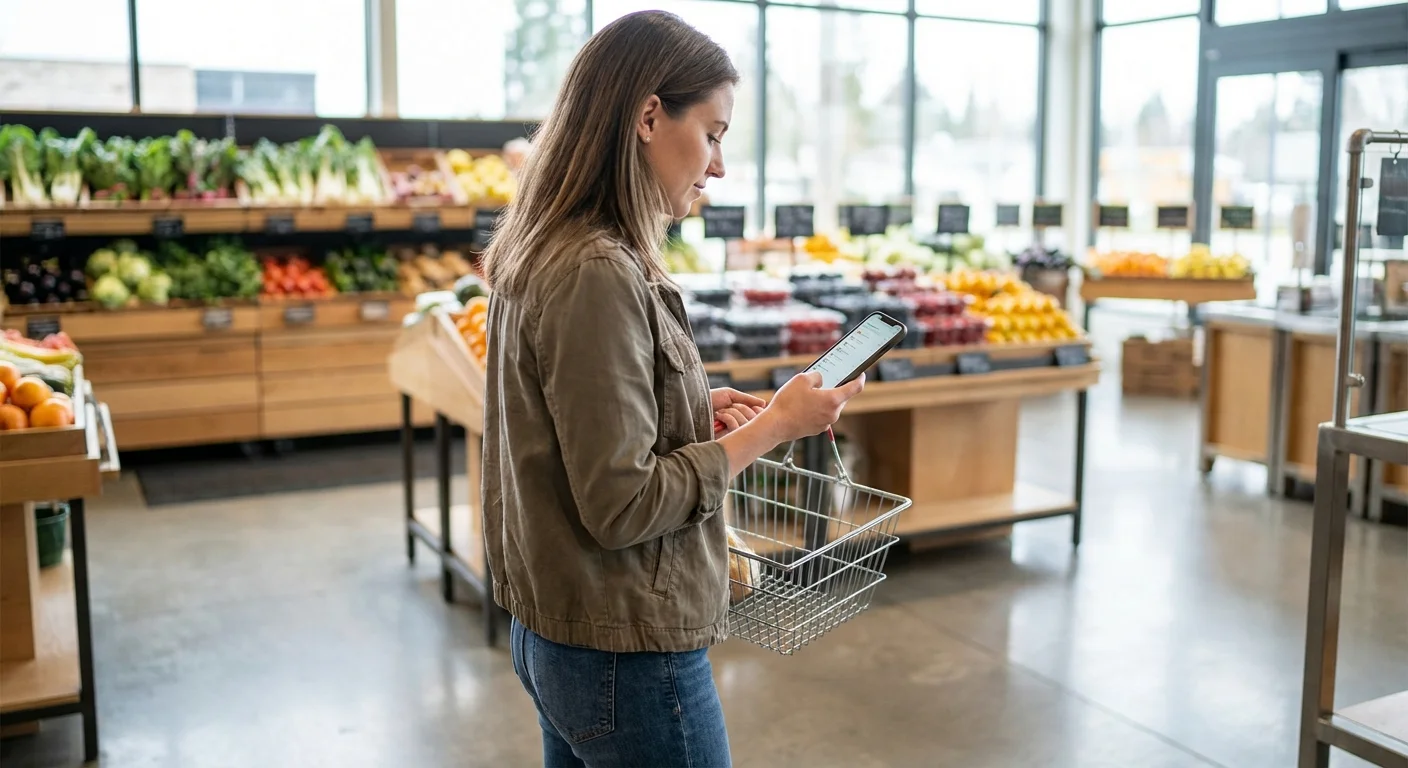
Rule 2: Don't take a basket "with extra space." If you have few items, take a small basket, not a cart. A cart psychologically asks to be filled — and this directly hurts your savings at the store.
Rule 3: "10-second pause" for unplanned items. If you see something not on the list — stop and ask yourself two questions: "Will I definitely use this this week?" and "What from the list am I willing to remove in exchange?" If there are no answers — the item goes back on the shelf.
Rule 4: Be cautious with discounts. A discount is not a reason to buy. It's a reason to check: would you take this without the discount? If not, it's most likely an impulse purchase.
4) Smart Substitutions: Saving at the Store Without Feeling "Deprived"
Often, unnecessary things are bought because you want "something tasty" or "for variety." Bans usually lead to breakdowns, so it's better to work through substitutions.
Instead of completely removing "joys," plan them. For example: one dessert per week or one type of snack. Then you control the quantity and don't feel like saving at the store is a punishment.
Another technique — choose "versatile" products. Chicken/turkey, eggs, vegetables, yogurt, grains — it's easy to make different dishes from them. The more versatility, the less you want to grab unnecessary things "just in case."
List of quick substitutions that reduce impulse purchases:
- Snacks at the checkout → nuts/fruits bought according to the list.
- Ready-made sweets "as an add-on" → one planned dessert.
- "New sauce/spread" → spices or a basic sauce you'll definitely use.
- Soda/energy drinks → water/tea bought in advance.
The main idea: not "can't," but "I choose in advance." This reduces emotional purchases and helps you understand how to avoid buying unnecessary things without constant self-control.
5) Shopping Together: How to Avoid Buying Unnecessary Things When Shopping for the Family
If you're shopping not just for yourself, unnecessary items appear even faster. One wants "something for tea," another remembers "that tasty cheese," a third asks for chips — and the cart grows.
A simple rule helps here: a shared list + specifics. Let everyone add details: not "yogurts," but "Greek yogurt 2 pcs." Not "fruit," but "bananas 6 pcs, apples 1 kg."
It's also useful to agree on a format: for example, "anything not on the list, we only buy after a message/call." This works especially well when you're alone in the store but shopping for several people.
And lastly: get into the habit of marking purchased items immediately. This way you won't take a second pack "because you're not sure you already put it in" — and savings at the store will become more noticeable.
Conclusion
Stopping unnecessary purchases is possible if you replace "willpower" with a system: eat before leaving, check supplies, make a specific list, and keep simple rules in the store. Impulse purchases won't disappear completely, but they'll stop controlling your receipt.
To always have the list at hand and not lose it, it's convenient to keep it in one place and update it with loved ones. Pickt helps with this — a free mini-app in Telegram for shared shopping lists with real-time synchronization: you can quickly add items and see changes immediately in the store: t.me/PicktBot/app.