Food is one of the most noticeable items in family expenses. At the same time, money often "leaks" on groceries: spontaneous purchases, duplicates in the cart, trips to the store without a list, on-the-go snacks.
The good news: you can get your food budget under control without complex spreadsheets and total austerity. It's enough to agree on rules, set clear limits, and establish budget planning that works in real life.
Below is a step-by-step system: from calculating the monthly amount to habits that help stick to the plan while eating normally.
1) Determine the Real Amount: How Much Your Family Spends on Food Now
Before setting a limit, it's important to understand the starting point. A common mistake is to set a "nice" figure that doesn't match reality, then constantly break it and get disappointed.
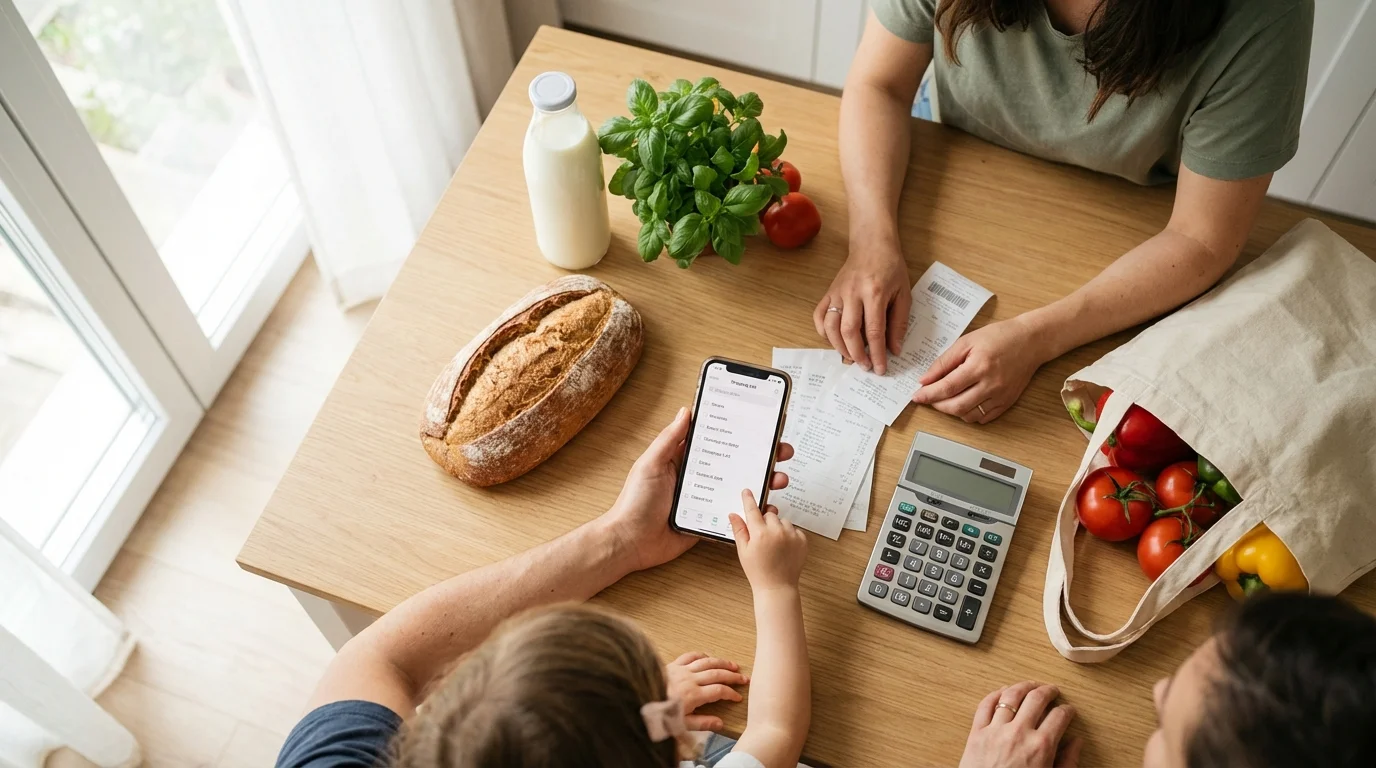
Gather data for at least 2–4 weeks. Bank statements, receipts in store apps, or notes will work. If some purchases are paid in cash, record them separately.
Then divide expenses into 3 categories — it's easier to see where there's room for savings:
- Essentials: grains, meat/fish, vegetables, dairy, eggs, bread, water.
- Add-ons: sweets, snacks, sauces, drinks, takeout coffee.
- Unplanned: delivery, "ran in for one thing", buying in bulk unnecessarily.
After that, calculate the weekly average and multiply by 4–4.3 (the average number of weeks in a month). This will be your current food budget.
2) Set Budget Rules: Limit, Reserve, and Family Roles
To prevent budget planning from turning into constant arguments, agree on rules in advance. A food budget isn't just an amount; it's clear agreements: what counts as "food", who buys, and how decisions are made.
Start with three simple elements:
- Monthly limit — the amount you're willing to spend on food and small kitchen household items (if you decide to include them).
- Weekly guideline — the monthly limit divided by 4. This makes it easier to control family expenses during the month.
- 5–10% reserve — for birthdays, guests, sudden price hikes, or "wanting watermelon in February".
Next, define roles. For example: one person is responsible for the meal plan and list, another for price comparison and buying "heavy" items, a third for monitoring supplies. It's important not to "assign blame" but to distribute responsibility.
Also: decide in advance what falls into the "food" category. A convenient option is to include food and basic kitchen cleaning supplies (sponges, dish soap), while everything else is a separate line item. This keeps the numbers more honest.
3) Weekly Planning: Menu, List, and Supplies
The strongest lever for saving is not discounts, but a plan. When you have an approximate menu and list, there are fewer impulse buys and almost no duplicates.
You don't need to schedule meals by the minute. A set of 5–7 dinners for the week and ideas for repeating breakfasts/snacks is enough.
A practical 20–30 minute routine once a week:
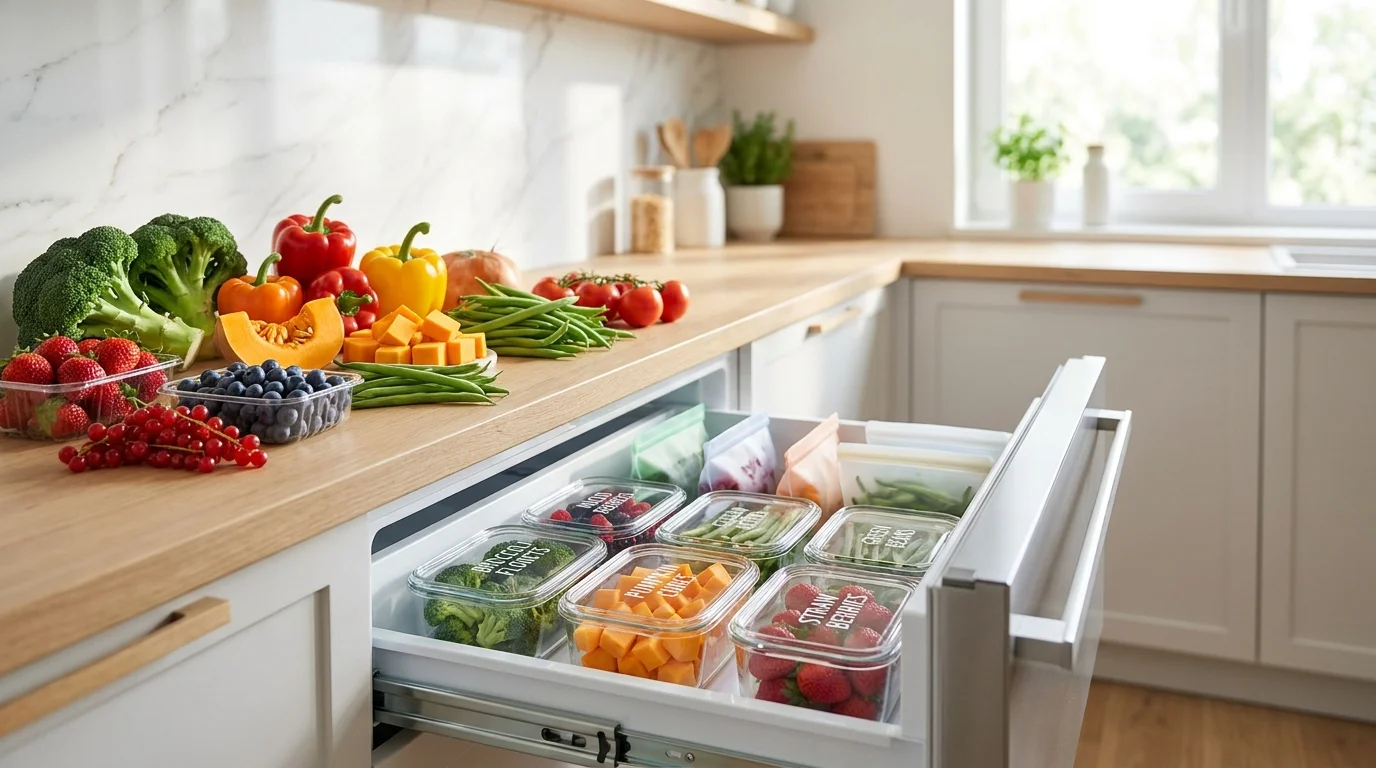
- Check supplies in the fridge and cabinets (what needs to be "rescued" first).
- Assemble a menu for 5–7 dinners: 2 quick, 2 from prepped items, 1 "special", 1 "from leftovers".
- Create a shopping list strictly based on the menu + essential items.
- Plan one big shopping trip and 1–2 small top-up trips (bread, milk, fruit).
The rule "use first, buy later" helps separately. If you have rice and pasta at home, only buy new ones when there's less than one package left. This disciplines and frees up money in the food budget.
4) How to Reduce Family Expenses Without Feeling the Pinch
Cutting costs is easier when you're not "slashing everything" but changing habits. Here are several methods that show results in the first month.
1. Plan purchases by product type. Buy expensive items (meat, fish, cheese, coffee) less often, but consciously. Buy vegetables, fruit, and dairy more often, in small batches, to waste less.
2. Use "anchor dishes". 2–3 dishes the family loves and that are inexpensive (e.g., soup, pasta with vegetables, baked chicken). They balance the budget if there were extra expenses during the week.
3. Limit delivery with a clear rule. For example: no more than once a week or only from the "entertainment" budget. Delivery often quietly inflates family expenses, even if the bill "isn't that big".
4. Sweets and snacks — a separate line. Allocate a fixed amount for "treats". This way you don't ban them, but keep control over what most often derails budget planning.
5. Follow the list, not the discounts. A discount is only beneficial if you were going to buy that product anyway. Otherwise, it's just an extra purchase eating into the food budget.
5) Checklist: How to Maintain Your Food Budget Every Month
For the system to work, regularity is key. Small actions repeated every week yield more stable results than rare "financial feats".
Save this checklist and go through it at the end of the week:
- Compared actual expenses with the weekly guideline.
- Checked supplies and created a menu for 5–7 dinners.
- Updated the shopping list and removed duplicates.
- Planned one big shopping trip and one top-up trip.
- Noted 1–2 "budget eaters" (delivery, coffee, snacks) and chose one improvement for the next week.
If you exceeded the limit, don't try to "punish" yourself with sudden cuts. It's better to analyze the reason: too optimistic a limit, too much unplanned spending, underestimating snacks, or not accounting for guests. Adjustment is part of normal budget planning.
Conclusion. Organizing a family food budget is possible if you rely on facts, plan weekly, and agree on rules. Start by tracking current expenses, set a clear limit with a reserve, and create a list based on your menu — this way family expenses become predictable, and shopping stops being chaotic.
To keep a shared, up-to-date shopping list, it's convenient to use Pickt — a free mini-app in Telegram for shared lists with real-time sync. You can open t.me/PicktBot/app and add items with the whole family to avoid buying extras and keep your food budget on track.