How to Organize the Perfect Picnic: A Checklist
A picnic seems simple: grab a blanket, a couple of snacks — and off you go. But in practice, it's the little things that decide whether it will be a cozy rest or a frantic search for a corkscrew, napkins, and trash bags.
Below is a clear plan for organizing a picnic: from choosing a location to packing up. Plus — a picnic checklist you can use as a ready-made 'what to bring on a picnic' list for a group, couple, or family.
Tip: it's better to gather everything in advance and sort it by category. This way you won't buy three packs of chips and forget the water.
1) Plan: Location, Time, and Picnic Format
Start with three questions: where, what time, and in what format. Everything depends on this — from the amount of water to the clothing set.
For a short picnic in the park, light snacks and a minimum of items will do. For a trip out of town, you'll need more substantial food, a supply of drinks, and well-thought-out logistics.
- Location: park, embankment, forest, beach, dacha. Check the rules: whether fires are allowed, if there are designated barbecue areas.
- Weather: check not only the temperature but also wind/precipitation. Wind on the shore can make '+22°C' feel not at all summery.
- Duration: 2–3 hours or a whole day. The longer it is, the more important water, snacks, and sun protection become.
- Group composition: children, elderly, allergies, vegetarians. This affects the menu and first-aid kit.
If you're going with a group, assign roles in advance: who is responsible for food, who for drinks, who for utensils and trash. This way, organizing the picnic won't turn into last-minute chaos.
2) Hassle-Free Menu: What Food and Drinks to Bring on a Picnic
The ideal picnic food is what's easy to transport, doesn't leak, and doesn't require complex serving. Focus on simple combinations: something filling + fresh vegetables/fruits + something for tea.
Consider temperature and storage. In hot weather, choose products that are safe in a cooler bag, and bring more ice/cooling elements.
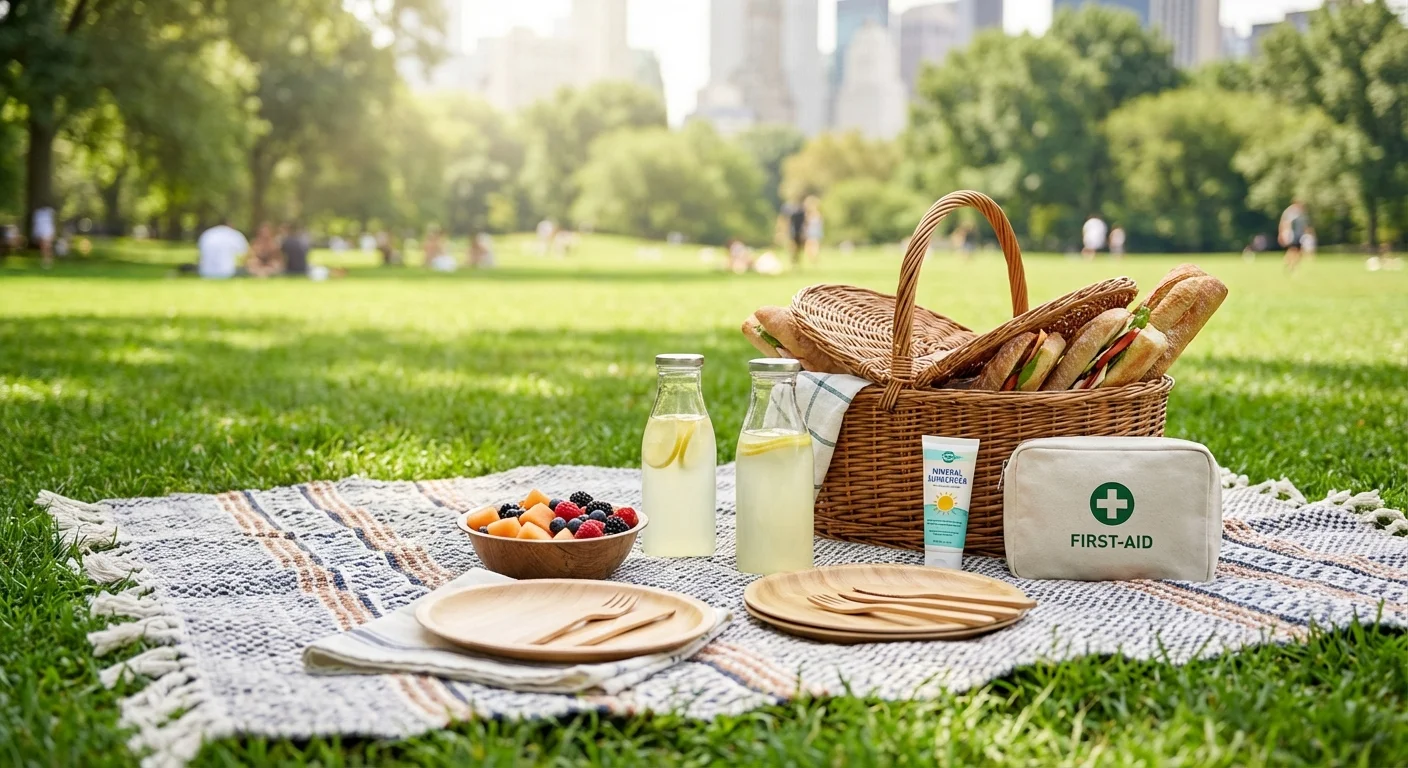
- Filling base: sandwiches/wraps, pita with filling, pies, pasta salad, roasted chicken, hummus with pita.
- Vegetables and snacks: cucumbers, cherry tomatoes, bell peppers, carrot sticks, olives, cheese cubes.
- Fruit and dessert: apples, grapes (in a container), berries, cookies/brownies.
- Drinks: water (the foundation), lemonade/tea in a thermos, juice. In hot weather — more water than seems necessary.
To forget nothing, create a 'what to bring on a picnic' list by categories in advance and mark what needs to be bought and what you already have at home. This saves time and reduces the risk of unnecessary purchases.
Mini-portion tip: for an adult, 300–500g of food is usually enough for a few hours (depending on activity) and 1–1.5 liters of drinks on a warm day. If games and long walks are planned — bring more water and snacks.
3) Comfort on Site: Blanket, Shade, Utensils, and 'Little Things'
Comfort is not a luxury, but a way to make a picnic truly relaxing. A couple of the right items replace a dozen 'just in case' ones.
Think about the surface (grass can be damp), shade, and eating convenience. And definitely — about trash: a good picnic ends with a clean spot.
- Foundation: blanket/mat, waterproof underlay if necessary.
- Shade and protection: cap/hat, sunscreen, light cover-up, insect repellent spray.
- Utensils: plates, cups, cutlery, knife, cutting board, bottle opener/corkscrew.
- Serving: napkins, wet wipes, paper towels, bags/containers for leftovers.
- Cleanliness: trash bags (better 2–3), a small bag for organic waste, gloves optional.
If you're bringing sauces or sliced items, use airtight containers. And it's better to pour drinks into bottles/thermoses to avoid dealing with glass.
4) Safety and Weather: First-Aid Kit, Food Storage, Plan B
Safety is not about anxiety, but about peace of mind. A mini first-aid kit and a plan for rain will help you avoid cutting the rest short.
Thinking about food storage is especially important. In hot weather, foods with mayonnaise, cream, and fish/meat without cooling quickly become risky.
- Mini first-aid kit: band-aids, antiseptic, bite relief, antihistamine (if relevant), pain reliever.
- Cooling: cooler bag, cooling elements, a separate bag for ice.
- Plan B: nearest cafe/shelter, change of location, raincoat/umbrella.
If there are children in the group, add extra water, hats, and snacks that don't crumble or dirty hands. This noticeably simplifies picnic organization.
5) Ready-Made Picnic Checklist: Pack Your Bags in 10 Minutes
Below is a universal picnic checklist. Go through it before heading out and mark what's needed for your format (park/forest/beach, 2 hours or all day).
Checklist: What to Bring on a Picnic
- Food: main course (sandwiches/pita/pie), snacks (vegetables/cheese), fruit, dessert
- Drinks: water, tea/lemonade, optionally — coffee in a thermos
- Utensils and tools: plates, cups, cutlery, knife, board, bottle opener/corkscrew
- Comfort: blanket/mat, underlay, napkins, wet wipes, towels
- Protection: SPF cream, headwear, repellent, light sweater
- Cleanliness: trash bags, containers/bags for leftovers
- Safety: mini first-aid kit, antiseptic, band-aids
- Extras: speaker/cards, ball/badminton, charger/power bank
To make packing even easier, divide items into 2 bags: 'food and cold' (cooler bag) and 'everything else'. This way you'll find what you need faster and won't crush anything.
Conclusion. The perfect picnic is not a complicated script, but well-thought-out details: water, shade, cleanliness, and a clear shopping list. Use this picnic checklist as a base, adapt it to the weather and company — and the rest will be truly easy.
If you're not going alone, it's convenient to keep a shared 'what to bring on a picnic' list right in Telegram, so everyone can add their items and nothing gets duplicated. For this, Pickt is suitable — a free mini-app for shared shopping lists with real-time sync: t.me/PicktBot/app.