When days get shorter and rain and dusk become more frequent outside, you especially want to make your home warm and calm. The Danish philosophy of hygge is exactly about that: not about a designer interior from a magazine or dozens of new purchases, but about a sense of security, simple pleasures, and time with loved ones.
You can create hygge even in a rented apartment, a small studio, or a single room. It's enough to change a few details: add soft light, take out a blanket, pick your favorite mug, and make room for a quiet evening.
The main rule is not to buy everything in one shopping trip. Create a list in Pickt and add items gradually: for example, one purchase per week. This way, the budget stays comfortable, and each new detail truly brings joy.
Light: Candles, Fairy Lights, and Warm Bulbs—The Main Tool of Hygge
In a Scandinavian home, light matters more than most decorative accessories. During the dark season, it's what creates a feeling of warmth, even if it's gray, windy, and gets dark early outside.
Start with warm-spectrum bulbs—around 2200–2700 K. They give a soft golden glow that doesn't remind you of office lighting. Cold white light is better left for the work area, while in the living room and bedroom, choose floor lamps, table lamps, or wall sconces with warm bulbs.
Candles are a hygge classic. Simple white, cream, or natural wax candles without a strong scent work well. If you have children, pets, or don't want to watch over an open flame, use quality LED candles: in the evening, they create almost the same effect.
A small string of warm lights looks great not only on the Christmas tree. Put it in a glass vase, run it along a bookshelf, or place it by the window. Just one such light source can make a room noticeably cozier.
Don't try to light the whole room with one bright chandelier. Hygge loves several local lighting scenarios: a lamp by the reading chair, a candle on the table, fairy lights on the shelf, and soft light in the kitchen.
Textiles: Blankets, Socks, and Cushions
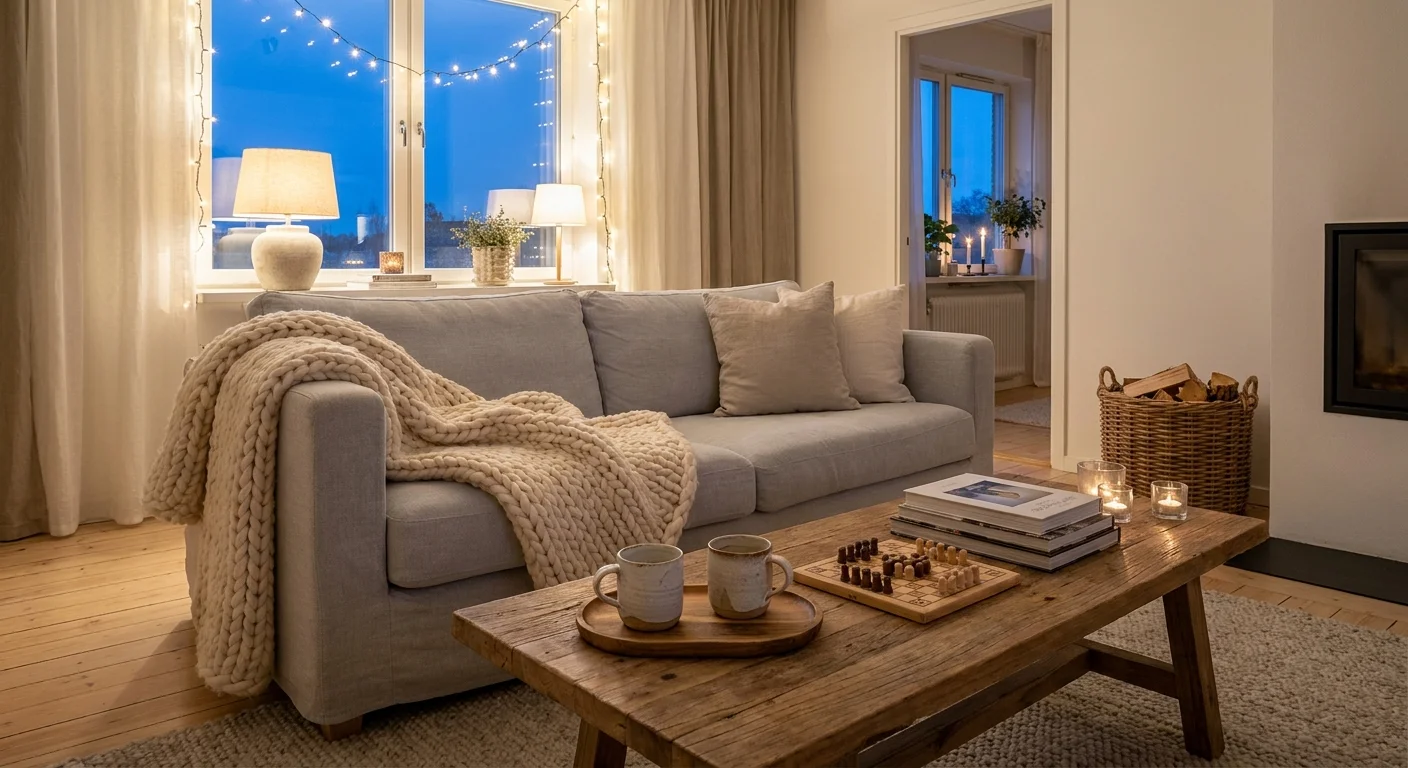
Textiles make the interior visually and physically warmer. Even a neutral room starts to look lived-in when a textured throw appears on the sofa and a soft cushion on the armchair.
For the dark season, choose materials you want to touch: cotton, wool, fleece, bouclé, knitted fabrics. You don't have to buy expensive cashmere. A good cotton throw or blended wool often lasts long and costs reasonably.
One blanket for the sofa and one for the bedroom or work chair already change your usual evening routine. Add a couple of pillowcases in calm shades: milky, gray, terracotta, dark green, or muted blue. You don't need to match everything perfectly: an interior where items vary slightly in texture looks cozier.
Warm socks are a small purchase with a big effect. Keep one pair near the sofa or in a bedside basket. It's a simple detail that helps you switch faster from work mode to rest mode.
The Cozy Kitchen: Mugs, a Tray, and a Basket for Baked Goods
The kitchen and dining table are the natural center of home hygge. You don't need to update furniture or buy a dinner set for twelve. What matters more is creating a pleasant ritual: brew tea, put pastries on the table, invite loved ones, or sit quietly alone.
Choose one or two favorite mugs that feel good in your hands. Ceramics with matte glaze, simple shapes, calm colors, and slight irregularities look especially homey. A good mug might cost €6–12, but you'll use it every day.
A small tray helps gather tea, a candle, a jar of cookies, and napkins into one composition. It's easy to carry from the kitchen to the sofa or bedroom, and it makes even a regular tea break feel more put together.
A basket for bread, buns, or fruit adds warmth to the kitchen without extra decor. Choose a woven, fabric, or metal model—the key is that it's practical and easy to clean.
Evening Zone: Books, Board Games, and a Basket for Odds and Ends
Hygge is not just about objects but also about space for habits. Pick a small corner at home where you can read, talk, listen to music, or play board games.
Place a small table next to the armchair or sofa, or use a tray. It can hold a book, glasses, a mug, and a candle. If there's no separate spot, just clear part of the coffee table.
Add one good board game: a card game, cooperative game, or compact trivia. You don't need to buy a whole collection at once—one game that actually gets played is worth more than five boxes on a shelf.
A basket for odds and ends helps maintain a sense of order. You can put away a blanket, magazines, chargers, remotes, and kids' toys before bed. Coziness doesn't require sterility, but visual clutter prevents relaxation.
Anti-List: What Not to Buy for Hygge
Hygge is not about shopping for the sake of shopping. If an item doesn't make your evening more comfortable, doesn't solve a practical task, and doesn't bring joy, it doesn't need to be in your home.
- Don't buy dozens of identical candles if you rarely light them.
- Don't get air fresheners with strong scents: they can quickly become annoying or cause headaches.
- Don't replace work furniture with "cozy" items if they're uncomfortable and impractical.
- Don't buy decorative cushions that have no place on the sofa.
- Don't collect random figurines or signs about coziness: the atmosphere is created by light and habits, not by the amount of decor.
- Don't choose items just because they're popular on social media. Your hygge should fit your home and lifestyle.
Compact Checklist: 15 Purchases for a Cozy Home
- Warm LED bulb 2200–2700 K—€5–8.
- Table lamp or small light fixture—€15–30.
- Warm fairy lights—€8–15.
- Set of simple candles—€5–10.
- Candle holder or glass lantern—€6–15.
- Cotton or blended wool throw—€20–45.
- Warm house socks—€5–12.
- Two pillowcases for decorative cushions—€10–20.
- One or two ceramic mugs—€12–24.
- Tea or cocoa for the evening ritual—€5–12.
- Small tray—€10–20.
- Basket for baked goods or fruit—€8–18.
- Basket for blankets and odds and ends—€12–25.
- Book for autumn evenings—€10–18.
- Compact board game—€12–25.
The approximate budget for the entire list is €163–297, but you don't need to buy everything at once. Break it down over several weeks: first light, then a blanket, then mugs and kitchen items.
Save the checklist in a shared Pickt list in Telegram. This way, you can mark what's already bought, discuss options with your partner, neighbors, or family, and gradually prepare your home for the dark season. In the end, you'll get not a perfect picture, but a real place you want to return to.