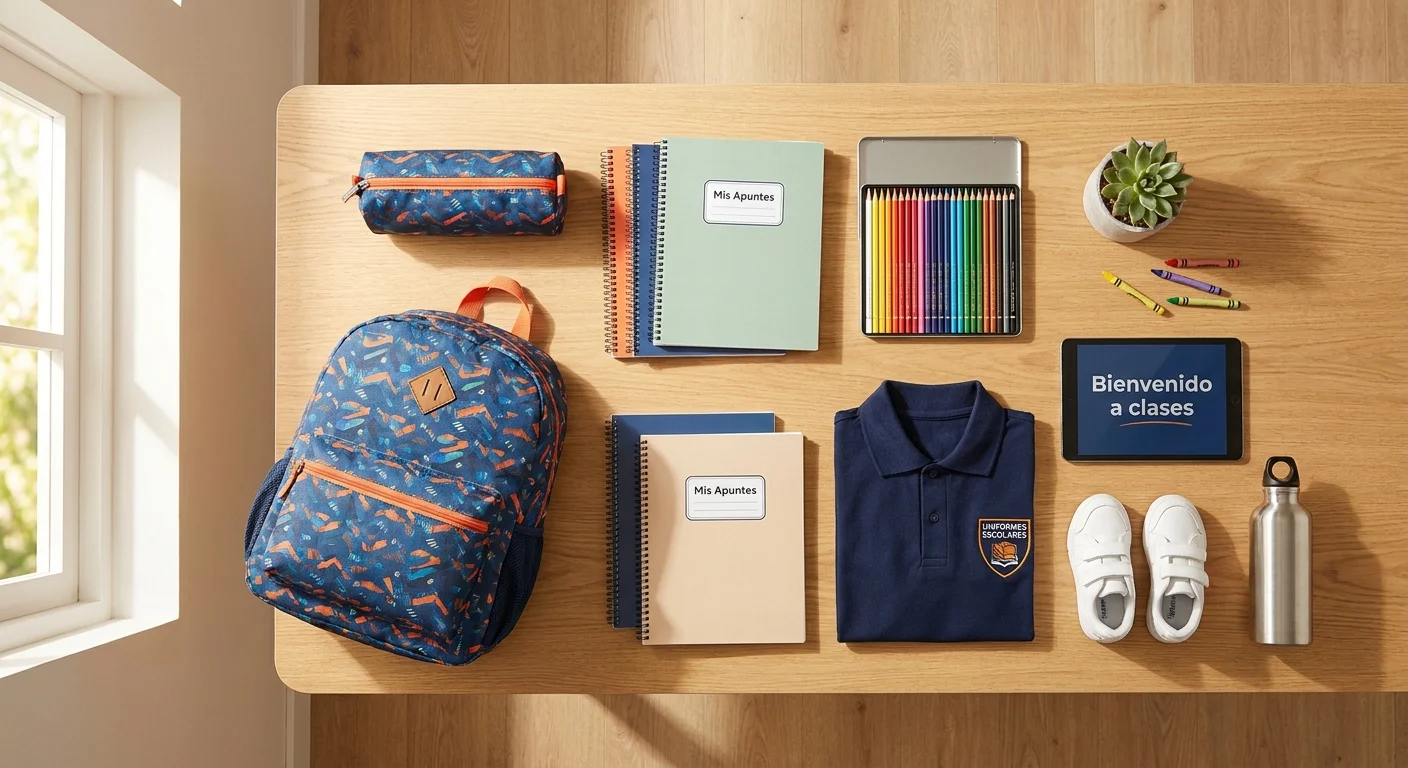
The back to school season—returning to school after the holidays—almost always happens at a fast pace. You need to check the school's list, try on the uniform, choose a backpack, buy notebooks, and not forget dozens of little things: from glue to a water bottle.
To avoid going to the store several times and buying unnecessary items, it's convenient to divide the preparation into categories. First, get the essential items for the first few weeks, and buy specialized materials and expensive tech gear after classes start.
The tips below are suitable for families from Spain, Mexico, Argentina, Colombia, Chile, and other Spanish-speaking countries. School subject names and requirements may vary, so always check with the school or teacher's message.
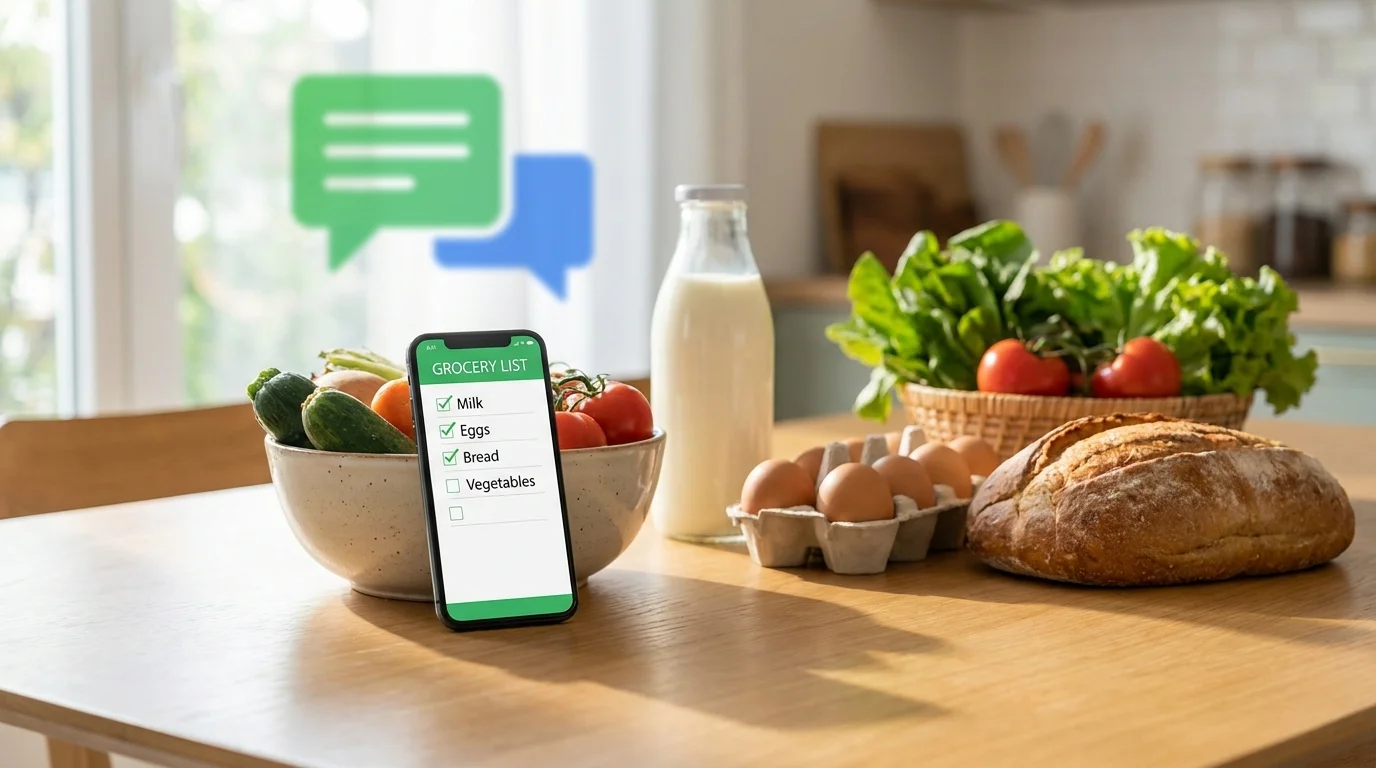
And so that parents, children, and other relatives don't buy the same things, keep a list together in Pickt—free and right in Telegram. Each participant can mark already purchased items and add new ones.
Stationery: A Complete List for School
Stationery is the foundation of a school kit. Don't immediately buy ten notebooks of each type: some schools use cuadernos by subject, while others prefer folders with loose sheets or require a specific ruling.
For elementary school, simple and durable items that the child can use independently are usually needed. For secondary school and high school, folders, dividers, and spare pens are more useful: there are more subjects and notes become more extensive.
Basic Stationery Checklist
- Notebooks cuadernos: squared, ruled, or with the required ruling.
- Folders carpetas in A4 format and transparent sheet protectors.
- A4 paper for notes, homework, and printing.
- Subject dividers, stickers, and bookmarks.
- Pencil case estuche with multiple compartments.
- Blue and black pens, plus red and green if needed.
- HB pencils, a sharpener with a container, and an eraser.
- Colored pencils and markers.
- Ruler 15–30 cm, set square, and protractor for older grades.
- Scissors with safe rounded tips for younger children.
- Glue stick and, if the school asks, liquid glue.
- Highlighters for older students.
- Whiteboard markers, if specified in the school list.
- Covers for textbooks and notebooks.
- Name labels for books, clothing, and supplies.
- Paints, brushes, modeling clay, colored paper, and cardboard—only as required by the class.
Check the quality of pens and glue before paying. Very cheap sets sometimes run out quickly or leak in the pencil case. At the same time, you don't have to choose licensed products with cartoon characters: neutral models are often noticeably cheaper.
Uniform and Clothing
Many schools in Spain and Latin America require a uniform: shirt or polo, trousers, skirt, sweater, sports uniform. In public schools, rules may be more relaxed, but there are usually requirements for color and neat appearance.
Buy the uniform with a small allowance for height, but not too big. The child should be comfortable sitting, running, and fastening clothes independently. For active activities, it's better to choose fabrics that are easy to wash and dry quickly.
- Everyday school uniform: polos, shirts, trousers, skirts, or pinafore dresses.
- Warm layer: cardigan, sweatshirt, or school sweater.
- Sports uniform chándal and t-shirts for physical education.
- Shorts or leggings for sports, if allowed.
- Socks and underwear with a week's supply.
- Jacket or raincoat according to the season and regional climate.
- Cap or sun hat for schools with outdoor activities.
- Bag for a change of clothes and sports uniform.
- Name labels or a marker for labeling items.
A practical minimum is two sets of the main uniform and two sets of sports clothing. This will reduce the number of urgent washes. If the school has an official supplier, compare their prices with offers from parents in chats: sometimes almost new items are sold significantly cheaper.
Backpack and Shoes: What to Look For
The backpack should fit the child's height, not just appeal by design. A too-large backpack overloads the back, while a too-small one won't fit a folder, lunch, and textbooks. For younger grades, a firm back panel and wide adjustable straps are especially important.
- Ergonomic or padded back panel.
- Wide soft straps that don't dig into shoulders.
- Chest strap for even weight distribution.
- Compartment for an A4 folder or textbooks.
- Side pocket for a water bottle.
- Durable zippers and reflective elements.
- Lightweight backpack itself.
- Rain cover, if autumn is rainy.
Wheeled backpacks are popular in some schools, but first check the rules: they are inconvenient to carry up stairs and may block aisles in small classrooms.
For shoes, choose a pair with a flexible non-slip sole, good heel support, and about 0.5–1 cm of extra length. Don't buy sports sneakers 'to grow into' several sizes: this increases the risk of chafing and falls. A separate pair for physical education will help preserve everyday shoes longer.
Tech Gear for Older Grades
In secondary school, high school, and university, digital tools are increasingly needed. However, don't buy a laptop before the school announces requirements. Sometimes a browser and documents are enough, but sometimes programs for design, programming, or video editing are needed.
- Laptop or tablet with keyboard—if confirmed necessary.
- Protective case and charger.
- Headphones with a microphone for online lessons.
- USB flash drive or external storage for backups.
- Mouse, if the child finds the touchpad uncomfortable.
- Simple calculator or scientific calculator according to the math curriculum.
- Extension cord or compact power adapter for home.
A basic Chromebook or budget laptop can cost around €250–450, and in Latin America—about $300–600. For texts, presentations, and video calls, you don't need to buy a premium model. The main things are good battery life, sufficient memory, and reliable service.
How to Save: Purchase Order and What to Buy Later
The main rule for a reasonable budget is not to buy everything in August or right before the school year starts. During this period, prices for popular items are often higher, and some teacher requirements are only announced in the first days of classes.
First, buy what's needed for 2–3 weeks: backpack, pencil case, basic notebooks, pens, pencils, uniform, shoes, and a water bottle. Then wait for the exact list by subject. For art, specific brushes may be needed, and for math, a specific calculator.
Compare prices in supermarkets, stationery stores, and online shops. Sets are usually more economical for pens, pencils, and paper, but only if you'll definitely use everything in them. Expensive backpacks, school uniforms, and tech gear are worth looking for during seasonal sales or on second-hand platforms.
Create a shared list in Pickt on Telegram: add categories, an approximate budget, and who's responsible for each purchase. One parent can buy the uniform, another—stationery, and the child can mark the chosen pencil case color. This makes back-to-school preparation calmer and more transparent.
List at a Glance
- Backpack, water bottle, lunch box, and bag for a change of clothes.
- Pencil case, pens, pencils, eraser, sharpener, and ruler.
- Notebooks, folders, A4 paper, dividers, and covers.
- Colored pencils, markers, scissors, and glue.
- Uniform, sports clothing, socks, and outerwear.
- Everyday shoes and sneakers for physical education.
- Name labels for uniform, books, and supplies.
- Paints, cardboard, modeling clay, and other materials—after the teacher's list.
- Calculator, headphones, and computer equipment—if necessary.
- A shared shopping list in Pickt to avoid buying anything twice.
Save this checklist, adapt it to your child's age and school requirements. A few minutes of planning will help start the school year without chaos, overspending, or forgotten purchases.