When a family discusses its budget, food usually comes first. But non-food purchases can quietly eat up another large portion of money. Shampoo, laundry detergent, clothing, transportation, mobile service, gifts, school notebooks, home medicine cabinet supplies—individually, these are small amounts. Over a year, they add up to a significant expense item.
For a family of 3–4 people, regular spending on everything except groceries, rent, utilities, and major medical expenses typically amounts to about 28–40% of the total budget. In families with children, a car, or frequent trips, this share can be higher.
The problem is that these purchases are rarely planned as a whole. Something runs out unexpectedly, something is bought "along the way," and seasonal expenses like school uniforms, gifts, or repairs are only remembered at the moment of payment. A shared list helps you see the picture in advance and avoid buying a second bottle of shampoo when the first one is still at home.
8 Categories of Regular Non-Food Spending and Their Annual Weight
1. Household Chemicals and Hygiene—3–6% of the Budget
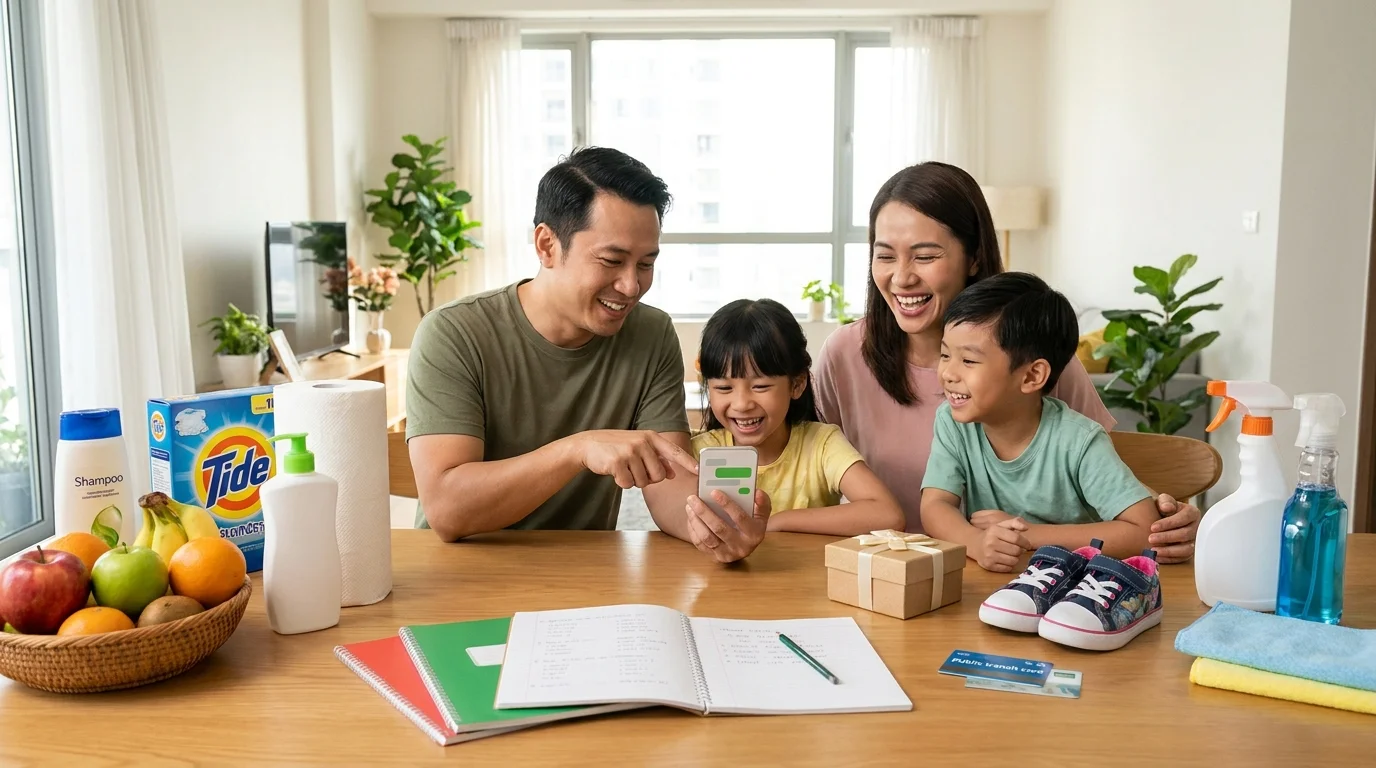
This includes laundry detergents, dishwashing and cleaning products, paper goods, toothpaste, shampoo, soap, personal care items, diapers, and wipes. The category seems inexpensive, but purchases repeat every month.
Spending grows especially if there are young children, pets, or a large living space. It's more convenient to save not on quality but on planning: track remaining stock and buy fast-moving items in suitable large packages.
2. Clothing and Footwear—4–8% of the Budget
This includes not only festive items. The annual calculation covers seasonal clothing, footwear, underwear, school clothes, sports uniforms, bags, and minor repairs of items. Spending is uneven: several months may be nearly empty, while before a season or the school year, it can spike sharply.
It's useful to set aside a small portion of the budget monthly in advance. Then buying a jacket or children's shoes doesn't disrupt the family plan.
3. Home and Minor Repairs—3–7% of the Budget
Light bulbs, batteries, filters, containers, towels, dishes, small hardware, repair consumables, replacing a broken faucet or lock—all these belong to the home. Major renovations are better counted separately, but small regular updates should be included in the regular budget.
The main source of extra spending here is spontaneous purchases for the home. Before ordering, it's useful to ask: does this item truly replace something necessary, or does it just look useful?
4. Children and School—4–10% of the Budget
School supplies, books, extracurricular activities, art materials, sports gear, pocket money, gifts for friends' birthdays—this category depends heavily on the children's ages and local conditions.
During the year, the most spending usually occurs at the start of the school period, seasonal changes, and holiday months. It's easier for a family if a list of school and children's purchases is maintained constantly rather than compiled at the last minute.
5. Communication and Subscriptions—2–5% of the Budget
Mobile service, home internet, cloud storage, video services, music, apps, gaming subscriptions, and other digital services easily turn into recurring payments. Small automatic charges are especially unnoticeable.
Once a quarter, check what the family actually uses. A subscription that hasn't been opened in several months is not a necessary expense.
6. Transportation and Fuel—5–12% of the Budget
This category includes public transport, fuel, parking, taxi rides, bicycle or scooter maintenance, car washes, and small automotive consumables. For a family without a personal vehicle, the share is often lower. For a family that regularly travels far, it's significantly higher.
It's useful to record transportation costs not only for large payments. Small daily trips over a month can turn out to be more significant than one noticeable purchase.
7. Gifts and Holidays—2–5% of the Budget
Birthdays, family gatherings, national holidays, gifts for colleagues and children, wrapping, decorations, and small treats often don't make it into the plan. But almost all these dates are known in advance.
Create a calendar of events for the year and set aside a small amount monthly. This reduces the risk of buying gifts in a hurry and at inflated prices.
8. Health and Home Medicine Cabinet—1–4% of the Budget
This refers to basic items: bandages, a thermometer, first-aid essentials, care products, and other habitual purchases for the home. Medical decisions and treatments always require a separate approach and consultation with a specialist.
For the budget, it's important to regularly check expiration dates and avoid duplicating items already in the medicine cabinet.
Summary Table: Per Month and Per Year for a Family of 3–4 People
Below is a guideline in shares of the total family budget. Percentages do not replace personal tracking: proportions will differ across cities, families, and lifestyles.
| Category | Average per Month | Per Year |
|---|---|---|
| Household chemicals and hygiene | 0.25–0.5% | 3–6% |
| Clothing and footwear | 0.3–0.7% | 4–8% |
| Home and minor repairs | 0.25–0.6% | 3–7% |
| Children and school | 0.3–0.8% | 4–10% |
| Communication and subscriptions | 0.15–0.4% | 2–5% |
| Transportation and fuel | 0.4–1% | 5–12% |
| Gifts and holidays | 0.15–0.4% | 2–5% |
| Medicine cabinet and health items | 0.1–0.3% | 1–4% |
| Total | 2.3–4.7% | 28–40% and above |
The monthly share is an average. Real spending will be uneven: clothing, school items, gifts, and repairs are often bought seasonally.
How to Calculate Your Own Numbers in 15 Minutes
You don't need to immediately maintain a complex spreadsheet for the whole year. Start with one month and your card statement, e-wallet, or banking app.
- Open your spending history for the last 30 days and list all purchases that are not from grocery categories.
- Divide them into eight groups: home, hygiene, clothing, children, communication, transportation, gifts, medicine cabinet.
- Note rare but predictable expenses: school season, holidays, subscription renewals, seasonal footwear, vehicle maintenance.
Then ask yourself three questions.
- Which purchases repeat every month?
- What do we buy in a hurry because an item unexpectedly ran out?
- Which expenses occur once a quarter or season but are a surprise every time?
Multiply a typical month by 12 and add expected seasonal purchases. This gives you not a perfect but a useful annual estimate.
Where People Usually Overpay and What to Buy in Bulk Once a Quarter
Overpaying usually arises not from one expensive item but from the absence of a list. A family buys the same things in different stores, picks the first package they see, or forgets that there's already a stock at home.
Once a quarter, it's convenient to buy items with a clear shelf life and consistent usage:
- laundry detergents, dishwashing and cleaning products;
- toilet paper, wipes, garbage bags;
- toothpaste, soap, shampoo, and other regularly used products;
- batteries, light bulbs, filters, and basic household essentials;
- stationery, if children or adults use it frequently.
Don't buy too large a stock just because of a discount. If the item takes up space, spoils, doesn't suit the family, or encourages overuse, the savings disappear.
Checklist for Monthly and Quarterly Non-Food Purchases
Check Every Month
- Shampoo, soap, toothpaste, personal care products.
- Laundry detergent or other washing products, dish soap, cleaning supplies, and garbage bags.
- Paper goods, wipes, sponges, and gloves.
- Transport balance, fuel, parking, and regular trips.
- Mobile service, internet, and active subscriptions.
- Basic items for children, school, extracurricular activities, and hobbies.
Check Once a Quarter
- Seasonal clothing and footwear for all family members.
- Home medicine cabinet and expiration dates of items.
- Stocks of household chemicals and hygiene products.
- Light bulbs, batteries, filters, small household items.
- List of gifts and upcoming holidays.
- Unnecessary subscriptions and recurring digital payments.
How to Manage Non-Food Purchases with One Shared Family List
The simplest way to stay in control is to create a shared "Home and Household" list in Pickt. Each family member adds an item as soon as it runs out: noticed the last package of detergent, empty shampoo, or a burnt-out light bulb—add it to the list.
You can shop once a week, checking against the shared list in Telegram. This way, one person doesn't go for toothpaste while another has already ordered it online. And children can add school essentials without sending separate messages to the family chat.
For convenience, use simple labels: "urgent," "buy this month," "quarterly stock," "check price." A shared list turns chaotic small expenses into a clear family process.
Regular tracking doesn't mean giving up all enjoyable purchases. Its goal is to understand in advance how much money the family needs not only for food but also for everyday life: home, children, commuting, communication, and small reasons for joy.