October is a great time to calmly assemble and refresh your home medicine cabinet. Children return to school and extracurricular activities, adults spend more time in offices and on public transport, the weather changes, and seasonal infections gradually pick up pace. Preparing for the cold and flu season doesn't guarantee that no one will get sick, but it helps you handle a typical cold situation calmly: the necessary household supplies are already at home, the thermometer works, and you don't have to run to the pharmacy late in the evening for important little things.
A ready-made home medicine cabinet list is also useful for your budget. When purchases are planned in advance, it's easier to compare prices, choose familiar formats, avoid accidental duplicates, and not forget consumables. Save this medicine cabinet checklist in your notes or in a shared shopping list. For example, in Pickt, you can maintain a joint list in Telegram: one person marks what's run out, while another buys the missing items on the way home.
Brief disclaimer: This article is a list of categories for shopping and organizing supplies, not a treatment guide. The choice of medications, their compatibility, contraindications, and vaccination should be discussed with a doctor; for children, it's especially important to follow the pediatrician's recommendations.
What Should Be in the Medicine Cabinet Before the Season Starts?
A basic medicine cabinet for a family with children is built not around a large number of packages, but around clear categories. The contents will vary slightly from family to family: some need medications agreed upon with a doctor for chronic conditions, while others need extra consumables for a small child. Start by taking inventory of what you already have, then use the table as a shopping checklist.
| Group | What to Check or Buy | What to Consider When Buying |
|---|---|---|
| Antipyretics | Medications to reduce fever in a form familiar to your family; separate options for adults and children if needed. | Check age restrictions, dosage form, and expiration date. Don't buy multiple identical medications unnecessarily. |
| Sore throat and runny nose remedies | Local throat care products, saline solutions for the nose, paper tissues, decongestants—only those suitable for your family and approved by a specialist. | Read the instructions, pay attention to restrictions, and don't mix similar products without consulting a doctor or pharmacist. |
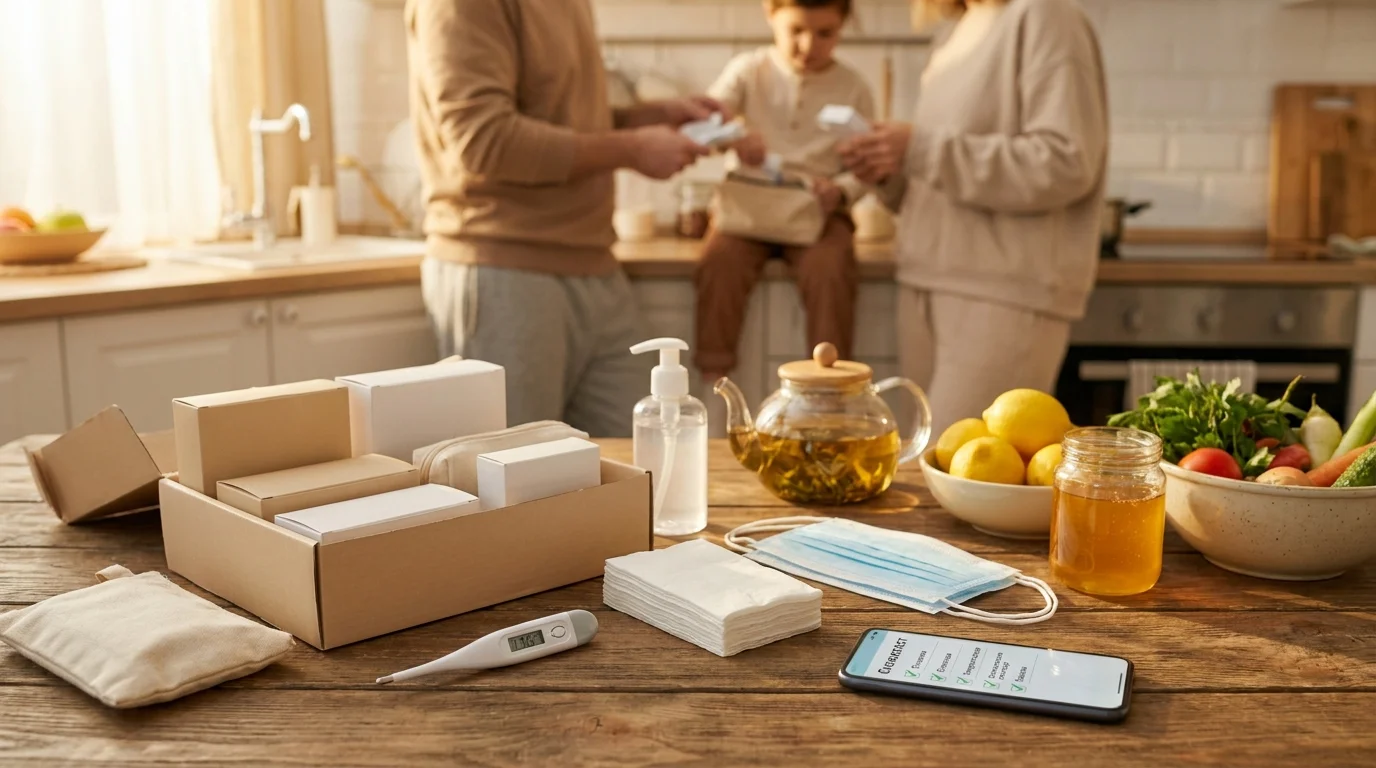
| Thermometer and consumables | A working thermometer, spare batteries, disposable wipes, cotton pads, band-aids, sterile wipes, gloves. | Check if the thermometer turns on and has clear instructions. Store consumables in a separate container. |
| Rehydration and drinks | Products for fluid replacement, regular drinking water, convenient bottles or cups, straws for children. | Choose products with clear labeling and follow doctor's recommendations, especially for young children. |
| Hygiene | Masks of appropriate size, hand sanitizer, liquid soap, wet and dry wipes. | Check the integrity of packaging and the expiration date of the sanitizer. It's convenient to keep some supplies by the front door. |
| Home supplies for sick days | Broth or ingredients for it, lemons, honey, tea, frozen berries, simple food, napkins, trash bags. | Consider allergies and dietary restrictions. Honey is not suitable for children under one year old. |
Don't try to fill the cabinet with dozens of medications "just in case." It's more rational to have a small, clear supply that the family actually uses and to refresh it in a timely manner. Keep medications prescribed by a doctor for a specific person separately; they shouldn't be mixed with general supplies.
How Does a Children's Medicine Cabinet Differ from an Adult One?
The main difference lies in attention to age, dosage form, and safe storage. Many products from the adult medicine cabinet are not suitable for children, even if the names seem similar. Therefore, it's convenient to divide baskets or containers: "General," "Children's," and "Individual as prescribed by a doctor." You can attach a card with the pediatrician's contacts, insurance company, and the nearest 24-hour pharmacy to the children's container.
For a child, soft wipes, nasal rinsing solutions, a convenient thermometer, a small supply of drinks, simple food, and comfort items like a favorite mug, blanket, or nightlight are especially useful. If there are several children of different ages in the family, don't combine everything into one unmarked box. Label the packages and keep instructions nearby so you don't have to search for them when needed.
All medications and potentially dangerous products should be stored out of children's reach, preferably in a lockable cabinet. Don't transfer pills to unlabeled jars and don't store medications near food. Original packaging helps avoid confusion with names, expiration dates, and important warnings.
How to Check Expiration Dates and What to Do with Expired Items?
Set aside 20–30 minutes at the beginning of October to review your medicine cabinet and repeat the check at the end of winter. Take out all the boxes, sort them by category, and check the date on each package, including drops, syrups, antiseptics, and products in your travel bag. Some products have a separate shelf life after opening—it's important to mark it directly on the package with a marker.
- Make a list of items that will expire within the next three to six months.
- Set aside packages with unreadable labels, damaged integrity, or changed appearance.
- Check the batteries in the electronic thermometer and flashlight, if stored near the medicine cabinet.
- Don't use expired medications and don't give them to others.
- Check the disposal rules at your pharmacy, clinic, or local collection point: not all products should be thrown away the same way.
After the review, immediately add the needed items to the shared list. If your family uses Pickt, you can add expiration dates in the comments to products and assign the purchase to someone who will be near a pharmacy or supermarket. This approach reduces the risk of buying a third pack of wipes and forgetting the thermometer.
How to Divide the Medicine Cabinet into Home and Travel Sets?
The home medicine cabinet is meant for storage and is kept in one permanent, dry place out of children's reach. It's convenient to keep consumables, a thermometer, hygiene products, and items with a longer shelf life there. The travel medicine cabinet is more compact: it's needed for walks, trips to relatives, business trips, and vacations.
The travel kit usually contains the minimum that might be needed outside the home: wipes, antiseptic, masks, band-aids, a small supply of drinking water, a thermometer for long trips, and individual medications agreed upon with a doctor in advance. It's important not to leave such a bag in the car in extreme heat or cold: storage conditions can spoil the contents.
A useful trick is to pack the travel medicine cabinet in a transparent case and attach a short list of contents. When you return from a trip, immediately check what was used and put the kit back in place. This way, the travel bag won't become a "black hole" for wipes, band-aids, and batteries.
What Else to Buy for the Cold Season Besides Pharmacy Products?
Good preparation for the cold and flu season includes not just a shelf with a medicine cabinet. On sick days, simple things that save energy are especially valued: a supply of drinking water, tea, lemons, honey (if no contraindications), broth or ingredients for a quick soup, frozen vegetables, cereals, crackers, and other neutral foods familiar to the family. Add paper towels, soft wipes, hand soap, clean bed linen, and trash bags.
Think through the household side in advance: who can pick up the child from school, where the documents are, what doctor's contacts are saved in your phone, and whether there's a phone charger at home. This isn't a reason for alarm, but just normal household organization. If you feel unwell, symptoms are severe, or they concern a child, don't rely only on the contents of the cabinet—seek medical help.
Final Checklist Before October Purchases
- Review the home medicine cabinet and check expiration dates.
- Make sure the thermometer works and spare batteries are available.
- Divide general, children's, and individual medications into labeled containers.
- Restock hygiene consumables, wipes, masks, and antiseptic.
- Assemble a compact travel medicine cabinet.
- Add food and household essentials for sick days to the supermarket list.
- Discuss suitable medications and vaccination questions with your doctor.
A medicine cabinet prepared in advance for a family with children is not a drug warehouse, but a convenient system where everything is found quickly and clearly. One evening in October, a clear medicine cabinet checklist, and a shared shopping list will help you meet the cool season in an organized way and without unnecessary fuss.