Every week the scenario repeats: you need to buy groceries, household chemicals, something for the kids, pet food, medicine, or home goods. But instead of a ready-made plan, you have to remember what's run out, open the fridge, check the cupboards, and still come back from the store without a couple of important items.
The solution is simpler than it seems: don't write a list from scratch, but put together a grocery list template once. Most of a family's purchases repeat week after week. Only individual dishes, seasonal products, weekend plans, and urgent needs change. If you separate the permanent base from temporary additions, trips to the store become faster, calmer, and noticeably more economical.
The working principle looks like this: a basic grocery list plus weekly additions. The base holds regular items, while the additions include everything needed right now: ingredients for dinner with guests, garden supplies, gifts, school supplies, or products for a specific recipe.
Why You Shouldn't Write a List from Scratch Every Time
A hastily made list depends on memory. It usually includes the most obvious products: bread, milk, eggs, vegetables. But less noticeable things are remembered at home: dishwasher tablets, toothpaste, trash bags, paper towels, or your favorite tea have run out.
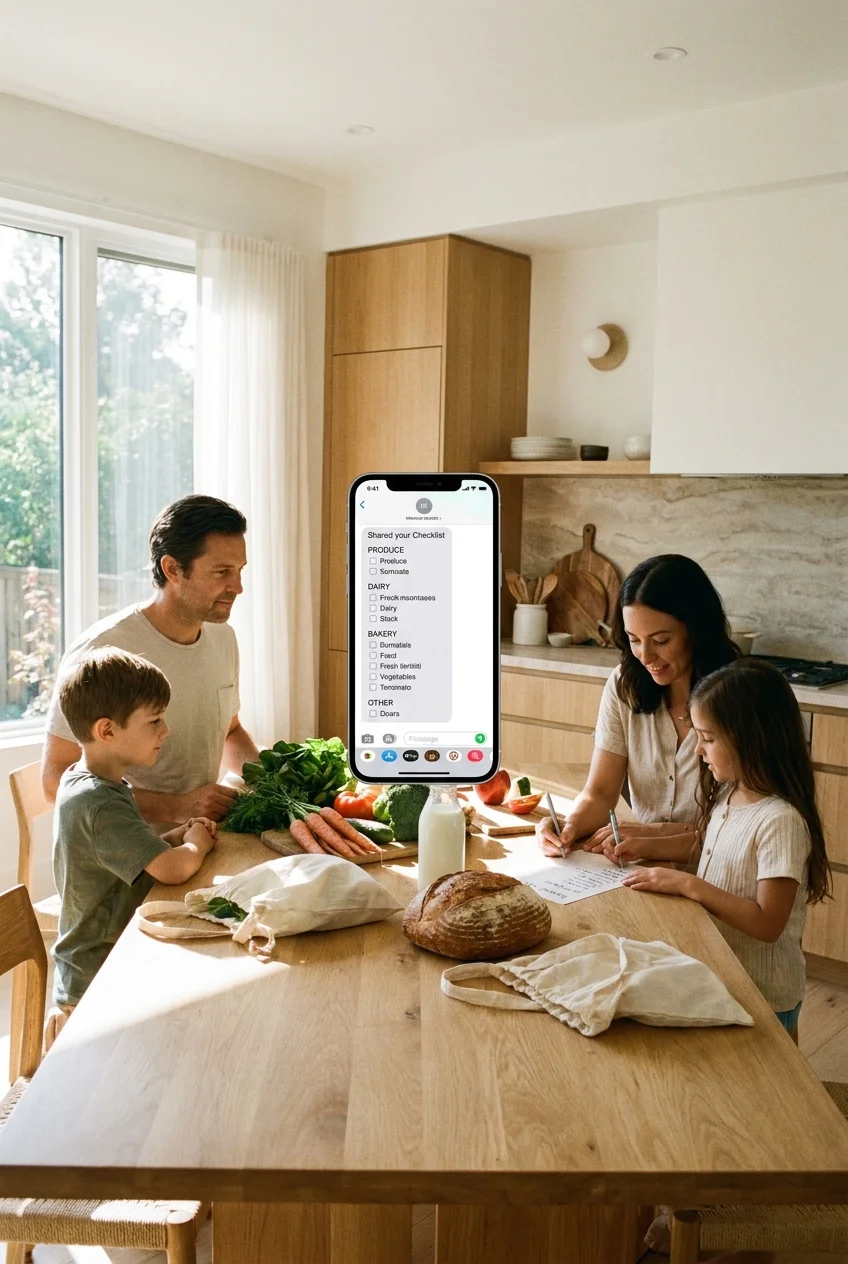
A recurring grocery list takes this burden off your mind. You don't need to keep dozens of small items in your head. Just open the ready-made template, mark what needs replenishing, and add a few items for the current week. It's especially convenient when different family members handle the shopping: one notices the rice is gone, another adds cat food, a third picks out dinner ingredients.
The template doesn't have to be long and unchanging. Its job is to reflect the family's real life, not to create a perfect list 'just in case.' So it's better to start with a clear base and gradually adjust it.
What Templates Does an Ordinary Family Need?
One universal list is usually not enough. Groceries are bought every week, household chemicals every few weeks, and items for a trip or holiday are needed rarely but require special attention. It's more convenient to have several templates for different situations.
| Template | How Often Used | Number of Items |
|---|---|---|
| Weekly grocery base | Once a week | 25–45 |
| Household goods and chemicals | 1–2 times a month | 15–25 |
| Home first aid kit | Every 1–3 months and as needed | 10–20 |
| School or kindergarten | Before the season starts and as items run out | 15–35 |
| Garden or trip | Before each trip | 20–40 |
| Holiday or guests | Per event | 15–50 |
The main template is the weekly base: groceries for regular breakfasts, snacks, and simple home dinners. It's also useful to keep a separate template for household goods: napkins, cleaning products, detergent, sponges, batteries, and bags. It's better to keep the first aid kit as a separate list so you can regularly check expiration dates and not search for something when you already need it.
Seasonal templates also save effort. For example, a 'Garden' list might include water, charcoal, insect repellent, gloves, dish soap, and road snacks. A 'School' template might include notebooks, pens, paper, book covers, modeling clay, and change of shoes. Such lists aren't needed constantly, but at the right moment they help you not miss anything.
How to Put Together Your Own Basic List in One Evening?
The most accurate way is not to try to come up with an ideal basket, but to look at your own receipts from the last month. Open your bank's e-receipts, store app receipts, or paper receipts and write down items that appeared two or more times. That will be your real basic grocery list, not an abstract set from the internet.
Step 1: Collect Recurring Items
Write down everything you buy regularly: dairy products, grains, bread, fruits, vegetables, meat or fish, tea, coffee, water. Don't forget non-food items: toilet paper, dish soap, pet food, baby diapers.
Step 2: Divide Purchases by Department
A grocery list by department cuts down time in the store: you don't walk back and forth between aisles and rarely return for forgotten items. Arrange categories in the order you usually go through a particular store: vegetables, bread, dairy, meat, pantry, frozen foods, household chemicals.
Step 3: Separate the Essential from the Variable
Add to the base only what the family actually buys often. Ingredients for rare dishes, holiday items, and seasonal fruits are better left in the 'Weekly Additions' block. This keeps the template compact and prevents it from turning into a list of a hundred items.
Step 4: Make the List Shared
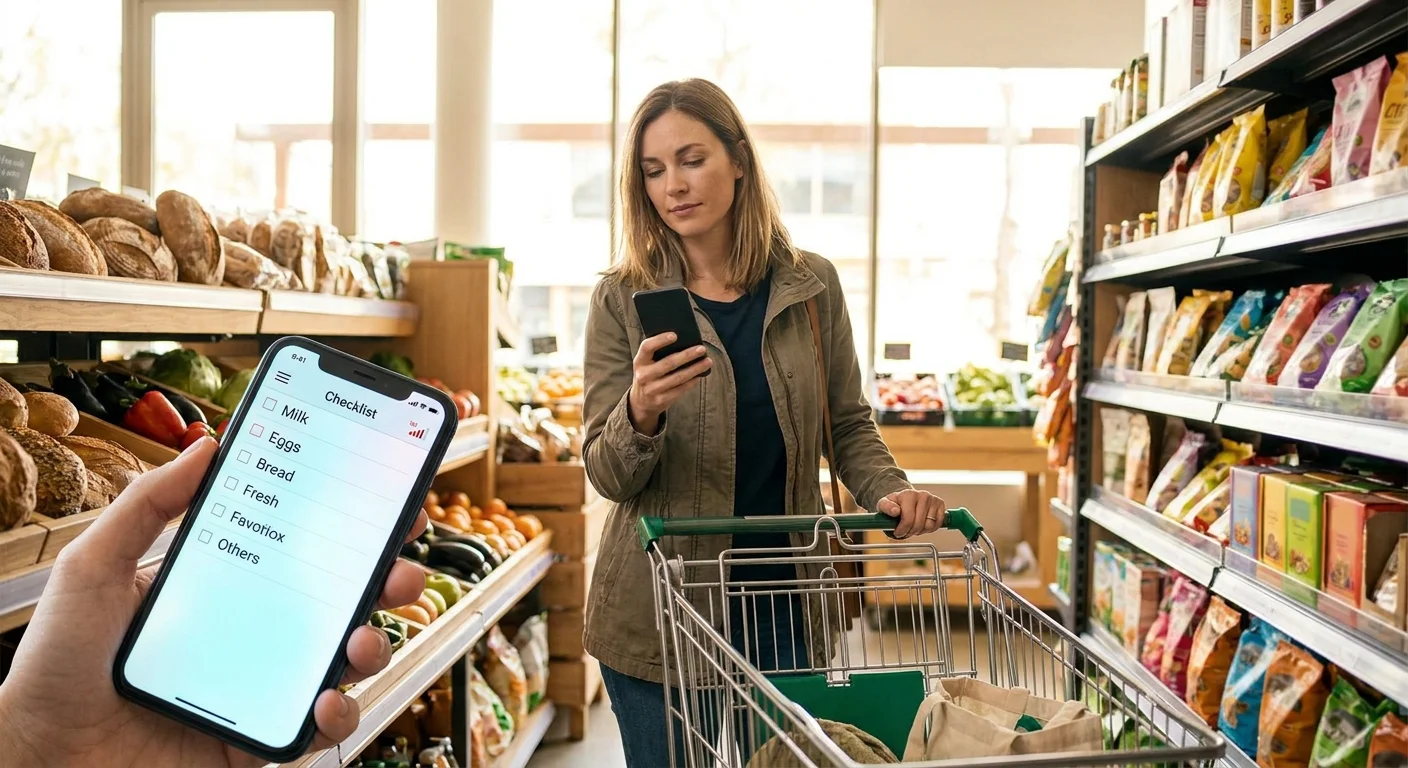
It's important that the template is accessible to everyone involved in shopping. For example, in Pickt, shared grocery lists live right in Telegram: the template can be reused, shared with family, and added to without installing a separate app. One person adds an item that's run out, and another sees the update before heading to the store.
Example: A Ready-Made Basic Template for a Family of 3–4
Below is an example base for a week. The quantity and composition should be adapted to your diet, children's ages, pets, and usual shopping frequency.
Vegetables, Fruits, and Herbs
- Potatoes
- Onions and carrots
- Cucumbers and tomatoes
- Cabbage or salad greens
- Bell peppers
- Apples
- Bananas
- Lemons
- Herbs: dill, parsley, or spinach
Bread and Baked Goods
- Bread
- Pita bread or tortillas
- Crispbread
- Buns or cookies for tea
Dairy Products and Eggs
- Milk
- Kefir or yogurt
- Cottage cheese
- Cheese
- Butter
- Eggs
Meat, Fish, and Frozen Foods
- Chicken or turkey
- Ground meat
- Fish
- Dumplings or another quick meal for the freezer
- Frozen vegetables
- Berries for porridge or smoothies
Pantry and Drinks
- Rice, buckwheat, or bulgur
- Pasta
- Oatmeal
- Flour
- Vegetable oil
- Tomato sauce
- Tea and coffee
- Sugar or honey
- Drinking water
Household Items
- Toilet paper
- Paper towels
- Trash bags
- Dish soap
- Sponges and napkins
- Laundry detergent pods or powder
- Pet food, if you have a pet
You don't need to buy every item each week. The template is not a mandatory basket but a checklist. Before ordering or heading to the store, go through it and mark only what's actually running out.
Why Does a Template Save Not Only Time but Also Money?
The main financial benefit of a template is fewer spontaneous and duplicate purchases. When you already have three packs of pasta at home but they're not marked in your inventory, it's easy to buy a fourth 'just in case.' When the list doesn't include dinners for several days, ready-made meals, snacks, and random expensive products end up in the basket more often.
A template helps you see shopping as a system. Before adding an item, you check whether it's already at home, how much is left, and whether you really need it for the coming week. This reduces the risk of food spoiling in the fridge and household chemicals sitting in the cupboard for years.
A separate list also lets you plan promotions wisely. If there's a discount on an item that's part of your regular base and definitely gets used, you can buy extra. But a sale on a random product isn't a reason to spend money: if it's not in your eating pattern, you don't need it just because it's cheaper.
How to Keep the Template Up to Date
Once a quarter, set aside 15–20 minutes for a cleanup. Remove items you haven't bought in the last two to three months, replace products you're tired of, and add new regular items. Check the first aid kit and household block: maybe some items are better bought less often but in larger quantities.
It's useful to leave a short 'Check at Home' section in the template: oil, salt, spices, batteries, medicine, pet food, laundry detergent. These things are used unevenly, so they shouldn't always be bought automatically, but they're easy to forget to check.
If the family uses a shared list, agree on a simple rule: if you notice an item is running out, add it right away. In Pickt, you can do this in a shared list in Telegram, so information doesn't get lost in personal notes or stay 'in the head' of one person.
Understanding how to make a grocery list quickly comes not from a perfect memory but from a ready-made structure. A template put together once removes the weekly routine: you just mark what you need, add the week's plans, and go to the store with a clear route. As a result, the house has everything you need, the basket has fewer random items, and your mind has fewer small tasks.