Food storage times depend on temperature, packaging, and whether the product is raw or already cooked. Below is a convenient table: it will tell you how long to keep meat, fish, dairy, eggs, vegetables, ready meals, and canned goods in the refrigerator (0…+4 °C), freezer (−18 °C), and at room temperature. Use it as a quick checklist: check the purchase/cooking date, storage conditions, and choose a safe period.
How to use the table: 1) find the product, 2) choose the right storage location, 3) rely on the “safe period” (this is a conservative estimate), 4) if the package is opened or the product has been left in warmth — shorten the period. For a family, it’s convenient to record dates right in a shared list: for example, in the free mini-app Pickt in Telegram (t.me/PicktBot/app), you can keep track of purchases and notes like “opened/cooked” and see them for all participants in real time.
Main Table: Food Storage Times (Refrigerator, Freezer, Pantry)
Temperature guidelines: refrigerator 0…+4 °C (warmer on the door), freezer −18 °C, “room” +18…+22 °C. If your refrigerator is at +6…+8 °C, food storage times are reduced by about 20–40%.
Meat, Poultry, Fish, Seafood
| Product | Refrigerator (0…+4 °C) | Freezer (−18 °C) | Notes |
|---|---|---|---|
| Beef/Pork/Lamb (raw, piece) | 3–5 days | 6–12 months | Ground meat lasts less. Keep on the bottom shelf in a container. |
| Ground meat (raw) | 1–2 days | 3–4 months | Better to freeze in thin portions. |
| Poultry (chicken/turkey, raw) | 1–2 days | 9–12 months (whole), 6–9 months (parts) | Raw juices are a source of cross-contamination. |
| Fresh fish | 1–2 days | 2–3 months (fatty), 6 months (lean) | The fattier the fish, the faster it oxidizes in the freezer. |
| Cooked fish/seafood | 3–4 days | 2–3 months | Cool within 2 hours after cooking. |
| Cooked sausage (opened) | 3–5 days | 1–2 months | Store tightly wrapped to prevent drying out. |
| Ham/deli slices (opened) | 3–5 days | 1–2 months | Sliced products spoil faster due to large air contact area. |
Dairy Products and Eggs
| Product | Refrigerator (0…+4 °C) | Freezer (−18 °C) | Notes |
|---|---|---|---|
| Pasteurized milk (opened) | 3–5 days | 1–3 months | May separate after freezing — shake; better for porridge/baking. |
| Kefir/drinking yogurt (opened) | 3–5 days | 1–2 months | Taste changes, but fine for smoothies and baking. |
| Sour cream (opened) | 5–7 days | Not recommended | Often separates after thawing. |
| Cottage cheese | 3–5 days | 2–3 months | Freeze in portions, thaw in the refrigerator. |
| Hard cheese (after opening) | 3–4 weeks | 2–3 months | Texture changes in the freezer — better for baking. |
| Soft cheese (brie, camembert, etc.) | 5–7 days | Not recommended | Sensitive to temperature and humidity fluctuations. |
| Eggs in shell | 3–5 weeks | Do not freeze in shell | Store in the carton on a shelf, not on the door. |
| Boiled eggs | up to 7 days | Not recommended | Cracks in the shell — shorter period. |
Ready Meals, Soups, Salads
| Product | Refrigerator (0…+4 °C) | Freezer (−18 °C) | Notes |
|---|---|---|---|
| Soup/broth | 3–4 days | 2–3 months | Cool quickly: divide into containers. |
| Stewed/baked dishes (meat, poultry, vegetables) | 3–4 days | 2–3 months | Reheat to piping hot throughout. |
| Pasta/rice/buckwheat (cooked) | 3–4 days | 1–2 months | Store in shallow containers. |
| Salads with mayonnaise/sauces | 12–24 hours | Not recommended | Especially sensitive if cold chain is broken. |
| Salads without mayonnaise (vegetable) | 1–2 days | Not recommended | Better to add dressing before serving. |
| Pizza/baked goods with filling | 3–4 days | 1–2 months | Cool and pack airtight to prevent drying out. |
Vegetables, Fruits, Herbs, Mushrooms
| Product | Refrigerator (0…+4 °C) | Room/Pantry | Notes |
|---|---|---|---|
| Leafy greens (lettuce, spinach) | 3–5 days | — | Dry container + paper towel extend freshness. |
| Cucumbers | 5–7 days | 1–2 days | Do not keep near apples/bananas (ethylene speeds up spoilage). |
| Tomatoes | 3–5 days | 3–7 days | For flavor, room temperature is better, but storage time is shorter. |
| Carrots | 2–4 weeks | — | In a bag/container with holes, without excess moisture. |
| Potatoes | Not recommended | 2–8 weeks | Dark, cool place, not near onions. |
| Onions | — | 2–4 weeks | Dry, ventilated place. |
| Apples | 3–6 weeks | 1–2 weeks | Emit ethylene — keep separate from sensitive vegetables. |
| Bananas | 1–2 days (will darken) | 2–5 days | For smoothies, you can freeze peeled slices for up to 2–3 months. |
| Fresh mushrooms | 2–3 days | — | Better a paper bag, not airtight plastic. |
Bread, Grains, Canned Goods, Sauces
| Product | Refrigerator | Room/Pantry | Notes |
|---|---|---|---|
| Bread | Not the best option (stales faster) | 2–4 days | For long storage — freezer for 1–3 months (in portions). |
| Grains, pasta (dry) | — | 6–12 months | Airtight container protects from moisture and pests. |
| Canned goods (unopened) | — | until expiration date | Store in a cool, dark place; do not use bulging cans. |
| Canned goods (opened, transfer to container) | 2–4 days | — | Do not store in an open tin can. |
| Tomato sauce/paste (opened) | 5–7 days | — | Watch for mold around the rim. |
| Mayonnaise (after opening) | 1–2 months | — | Always use a clean spoon, do not leave on the counter. |
How to Quickly Tell If It’s Safe to Eat: 5 Safety Rules
Even precise food storage times don’t replace common sense: kitchen conditions vary. These rules help you decide in a minute.
- The 2-hour rule: anything perishable left at room temperature for more than 2 hours (or more than 1 hour in heat) is better not stored “for later.”
- When in doubt, throw it out: especially fish, ground meat, salads with mayonnaise, and cream-based dishes.
- Smell and gas are red flags: sour, “yeasty,” or ammonia-like smell, bubbling, or bulging packaging — a reason to discard.
- Mold isn’t always “cut it off and forget it”: in soft products (cottage cheese, soft cheese, jam), mold often penetrates deeper than visible.
- Clean spoon and airtight container: dirty utensils and loose lids shorten storage times significantly.
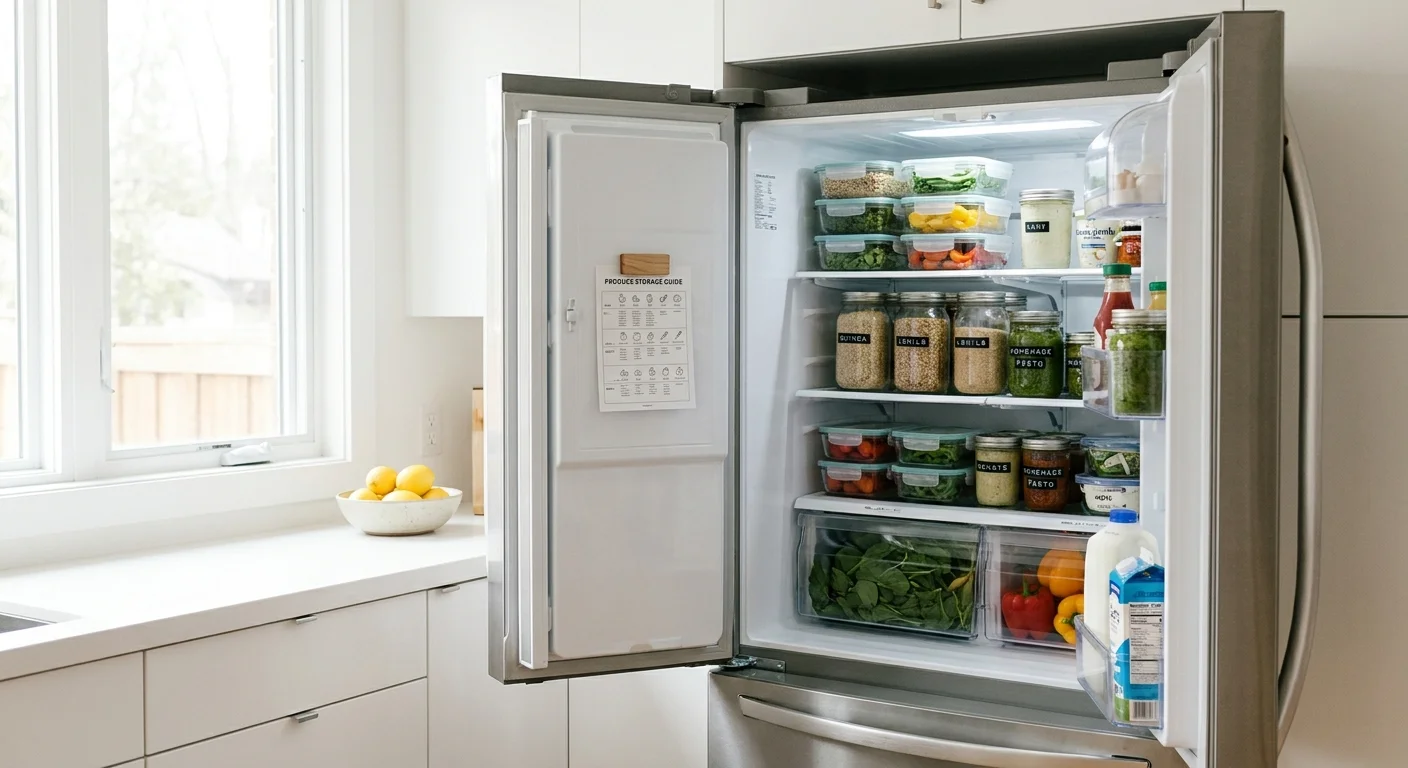
Where to Store in the Refrigerator: Shelves Matter More Than You Think
The same purchase date doesn’t mean the same safety: the door is warmer, and the back wall is colder. Proper placement extends food storage times without “magic.”
- Bottom shelf: raw meat/poultry/fish in a closed container (so juices don’t drip onto other foods).
- Middle shelves: dairy products, ready meals, sausages.
- Top shelf: products less sensitive to temperature fluctuations (e.g., drinks), but still don’t store raw meat there.
- Door: sauces, jams, drinks; not the best place for milk and eggs due to temperature changes.
- Crisper drawers: vegetables/fruits — preferably separate (some fruits emit ethylene).
Labeling and Planning: How Not to Throw Away Food
Most often, products spoil not because they’re “bad,” but because they’re forgotten. Simple labeling reduces waste and helps plan menus.
- Label the opening date: milk, yogurt, sauces, deli slices. The date on the package is for the unopened product.
- The FIFO rule: “first in, first out.” Put new purchases in the back, older ones in front.
- Cool properly: don’t put a large pot of hot soup in the refrigerator — divide into containers.
- Freeze in portions: ground meat, broth, bread, berries. Thin bags/flat containers freeze faster and are easier to track.
If you shop for a family or live with roommates, it’s convenient to keep “what we bought and what needs to be eaten first” in one place. In Pickt (t.me/PicktBot/app), you can maintain a shared shopping list and add notes like “cottage cheese opened on Wednesday” so everyone sees up-to-date information.
Special Cases: Vacuum, Delivery, Sliced Products, and Thawing
The same product can store differently due to processing and packaging. These cases most often raise questions about expiration dates and food storage times.
- Vacuum packaging: usually extends freshness of the unopened product, but after opening, the period is often the same as for regular (rely on 3–5 days for deli slices and 1–2 days for fish).
- Ready meal delivery: if the dish arrived warm and you’re not eating immediately — cool within 2 hours and store for 2–3 days (soups/hot dishes) or 12–24 hours (salads with sauces).
- Sliced products spoil faster: cheese, sausage, fruits, and vegetables in slices lose moisture and get contaminated by microflora faster — reduce the period by 20–50%.
- Thawing: the safest way is in the refrigerator. Thawed raw meat/fish should not be refrozen without heat treatment.
Conclusion
This cheat sheet helps you quickly assess food storage times and reduce the risk of food poisoning and unnecessary waste. Keep your refrigerator in the range of 0…+4 °C, label the date of opening and cooking, and don’t “save” questionable products. Save the table and use it when planning menus and shopping — it’s easier to eat on time and spend less.
Frequently Asked Questions
Can I eat a product after its expiration date?
The expiration date on the package refers to the unopened product and the storage conditions specified by the manufacturer. If the date has passed, especially for perishables (meat, fish, dairy), it’s safer not to risk it. For long-lasting products (grains, canned goods), the integrity of the packaging, smell, and absence of spoilage signs matter more.
What’s the difference between “expiration date” and “storage time”?
The expiration date is a legally established period during which the product is safe under specified conditions. Storage time in everyday life is a practical estimate of how long a product usually remains good after purchase or opening. After opening, a shorter storage time almost always applies.
How long does cooked food last in the refrigerator?
On average, 3–4 days for soups, hot dishes, side dishes, and baked products at 0…+4 °C. Salads with mayonnaise and dishes with sauces are best eaten within 12–24 hours. If food has been on the table for more than 2 hours, the period shortens or the product should be discarded.
How to tell if a product has spoiled if the date hasn’t passed yet?
Look for signs of spoilage: unpleasant or unusual smell, slime, color change, gas formation, bulging packaging, mold. When in doubt, don’t “just try a little,” especially for fish, ground meat, and dairy products.