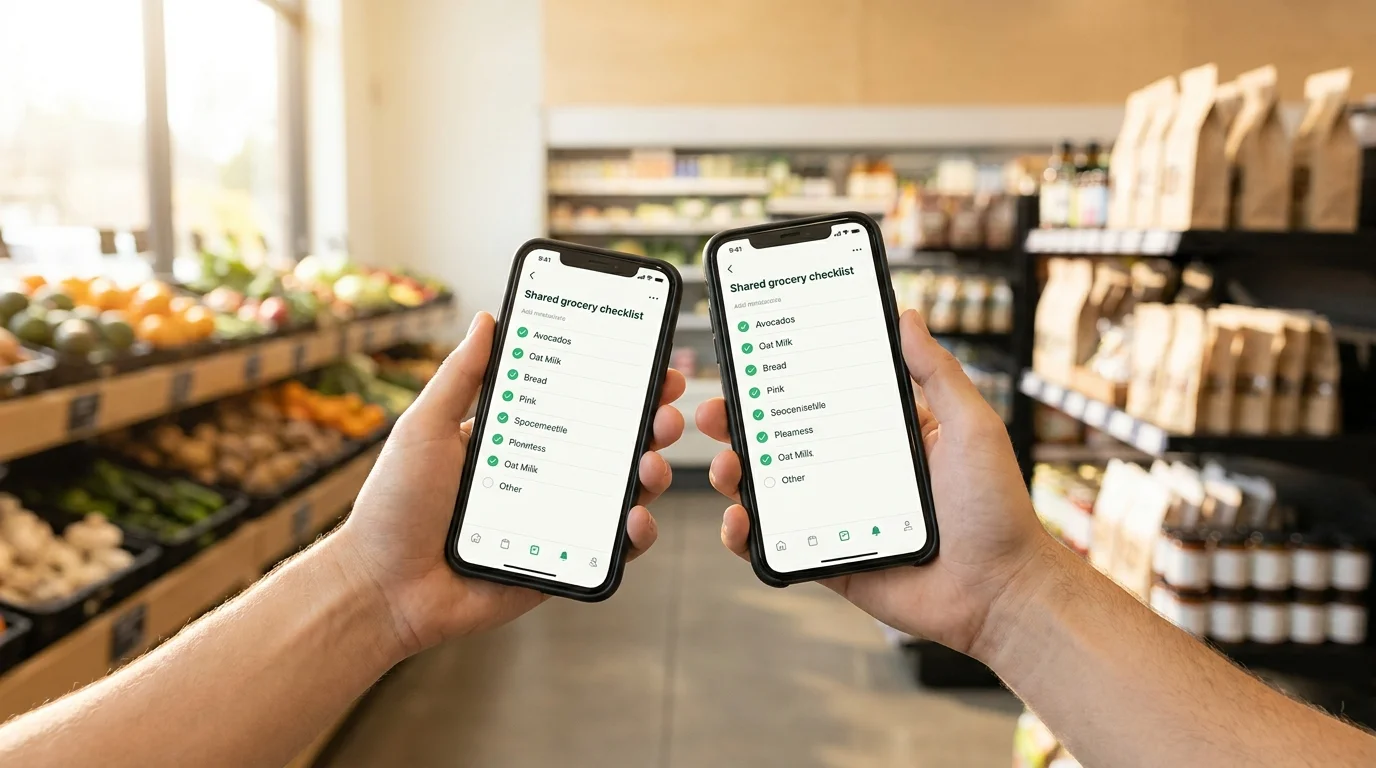

FAQ: Everything About Shared Shopping Lists
A shared shopping list is a single common list of items that several people edit to avoid forgetting what's needed and prevent duplicate purchases. It helps distribute responsibilities, specify particular brands and quantities, and see changes in real time. Below is everything about shared shopping lists in a Q&A format with short, practical answers: how to organize, synchronize, avoid conflicts, and speed up your trip to the store.
What is a shared shopping list and how is it better than phone notes?
A shared shopping list is a common document accessible to multiple participants, where each person can add, check off, and clarify items. Unlike regular notes, good lists offer synchronization, 'bought/needed' statuses, and a single up-to-date version without forwarding or copies. This reduces the risk of buying the same thing twice and saves time on coordination.
Who are shared shopping lists suitable for: families, couples, roommates?
They are suitable for anyone who shares a household: families with children, couples, roommates, and even colleagues for joint office purchases. The main benefit is transparency: you can see what has been added, what has been bought, and what is still needed. This is especially convenient when people go shopping at different times.
How to organize a shared list: basic rules to make it work?
Agree on simple rules: add items immediately, specify quantities and important details (e.g., 'milk 2.5%'). Keep the list short and clear: 15 specific items are better than 'groceries for the week'. Another effective principle is one list per 'purpose' (daily shopping separate from 'home repairs/household goods').
What data is important to include in items: quantity, brands, alternatives?
At a minimum, include the name and quantity (e.g., 'eggs — 20 pcs.') so the shopper doesn't have to guess. If the brand is critical, specify it and an acceptable substitute: 'coffee Lavazza, any Arabica 1 kg is fine'. For fresh products, clarifications like 'bananas — 6 pcs., green' or 'bread — whole wheat, no sugar' are helpful.
How does real-time synchronization work and why is it needed?
Real-time synchronization means that changes are instantly visible to all participants: someone adds 'cheese', and another person sees it immediately. This reduces the likelihood of duplicates and helps quickly check off items right in the store. If you're looking for a convenient way to maintain such a list in Telegram, you can use the Pickt mini-app (@PicktBot) with shared synchronization between participants.
How to avoid duplicates and chaos in a shared list?
Use a consistent naming style (e.g., 'milk', not a mix of 'milk/milk 1L/milk') and add quantities. If an item already exists, it's better to edit it than to create a new line. Another helpful habit: quickly scan the list before adding, or use the search function if available.
How to distribute roles: who adds, who buys, who checks off?
The simplest scheme is 'whoever notices adds, whoever is on the way buys, whoever bought checks off'. This keeps the list alive and up-to-date without extra messages in the chat. If misunderstandings often arise, agree that the buyer marks 'bought' right at the checkout, not at home.
What categories and list structure speed up shopping?
Categories by store departments save time: 'vegetables/fruits', 'dairy', 'meat/fish', 'dry goods', 'frozen foods', 'household chemicals'. When the list is sorted by route, you backtrack less and forget small items less often. If you shop at different places, you can maintain separate lists: 'supermarket', 'pharmacy', 'pet store'.
- Food: dairy, vegetables, meat, dry goods, beverages.
- Home: cleaning, laundry, paper products, light bulbs.
- Regular: items that repeat every week.
How to plan weekly shopping and manage recurring items?
A weekly list is best compiled from two parts: 'basics' (what you buy regularly) and 'add-ons' based on the menu/plans. This way, you don't forget essentials and don't overload the list with extras. For recurring items, it's convenient to keep a template: it saves time and helps keep the budget under control.
What to do if participants argue: how to reduce conflicts in a shared list?
Most disputes arise from uncertainty: 'which exact item?' and 'who was supposed to buy it?'. The solution is specificity in items and short comments on important points. Also helpful is the rule 'whoever added it clarifies it', and purchases 'to taste' are best agreed upon in advance (e.g., coffee brand or pet food).
How safe is it to share a list: who sees the data and how to restrict access?
A shared list usually contains no sensitive data, but access should still be given only to those who are actually involved in the household. Do not publish the list link in open chats and periodically check the list of participants. If you use a service within Telegram, it's convenient that access is tied to the account, not to forwarded files.
What mistakes do beginners most often make and how to quickly fix them?
Typical mistakes include writing too vaguely ('vegetables', 'something for tea'), not specifying quantities, and not checking off purchased items. The fix is simple: specify items, add numbers, and agree to mark purchases immediately. If you want to keep 'everything about shared shopping lists' in one place without forwarding and confusion, it's convenient to maintain a shared list in a mini-app format, such as Pickt: t.me/PicktBot/app.
What checklist will help you start using a shared list today?
Start with a minimal set of rules and gradually improve the structure — this way the habit will stick faster. It's important not to overcomplicate: the list should save time, not turn into a project. Here's a short starter checklist.
- Create one shared list and add participants.
- Divide it into 5–7 categories by store departments.
- Write the name + quantity + important clarifications.
- The buyer marks 'bought' immediately after purchase.
- Once a week, clean up the list and move regular items.
Conclusion: Shared shopping lists are a simple tool that reduces duplicates, saves money, and minimizes household misunderstandings. Just agree on the rules, be specific, and keep the list up-to-date. Then the shared list will become a familiar 'single source of truth' for a family, couple, or roommates.