Batch Cooking: One List, One Week of Meals
Batch cooking is a method of preparing food for 5–7 days in one session: you plan a menu, compile a single shopping list, and spend 2–3 hours making preps and base dishes that can be quickly turned into different dinners. This approach reduces daily cooking to 10–15 minutes, saves money, and helps you eat more consistently. Below is a step-by-step 5-step plan you can repeat every week.
Step 1: Determine Your Week's Format: How Many Dinners and What 'Assemblies' You Want
In batch cooking, it's more important to build a kit of base components than to 'cook pots of food.' This way, from one batch of grains, protein, and vegetables, you get different dishes rather than the same thing three days in a row.
First, decide how many days you're cooking for: most often it's 5 workdays or 7 days for the whole week. Then choose 2–3 flavor directions (e.g., Mediterranean, Asian, home-style) — this makes it easier to vary sauces and spices.
Mini Weekly Template
- 2 proteins: chicken/turkey + fish/legumes.
- 2 sides: rice/buckwheat + potatoes/pasta/couscous.
- 2–3 vegetable bases: roasted vegetables + fresh salad + soup base.
- 2 sauces: tomato + yogurt/sesame/pesto.
Related queries worth keeping in mind: weekly meal planning, meal prep, food prepping. It's the same task area: less chaos, more predictability.
Step 2: Compile a 'Single' Shopping List: Ingredients That Work in Multiple Dishes
The secret to saving time is one shopping list where each ingredient is used in at least 2–3 recipes. This way, you waste less, shop faster, and don't forget small items like lemons or herbs.
It's easiest to organize the list by blocks: protein, vegetables, grains/bread, dairy, sauces/spices, frozen items. If you're shopping for a family or with roommates, the list should be shared and synchronized — to avoid buying two packs of cheese and forgetting eggs. For this, use Pickt — a free mini-app in Telegram for shared lists with real-time updates: @PicktBot (t.me/PicktBot/app).
Basic Batch Cooking Shopping List for 5 Days (Example)
- Protein: Chicken thighs/fillets 1.2–1.5 kg; eggs 10 pcs; canned chickpeas/beans 2 cans; fish (optional) 500–700 g.
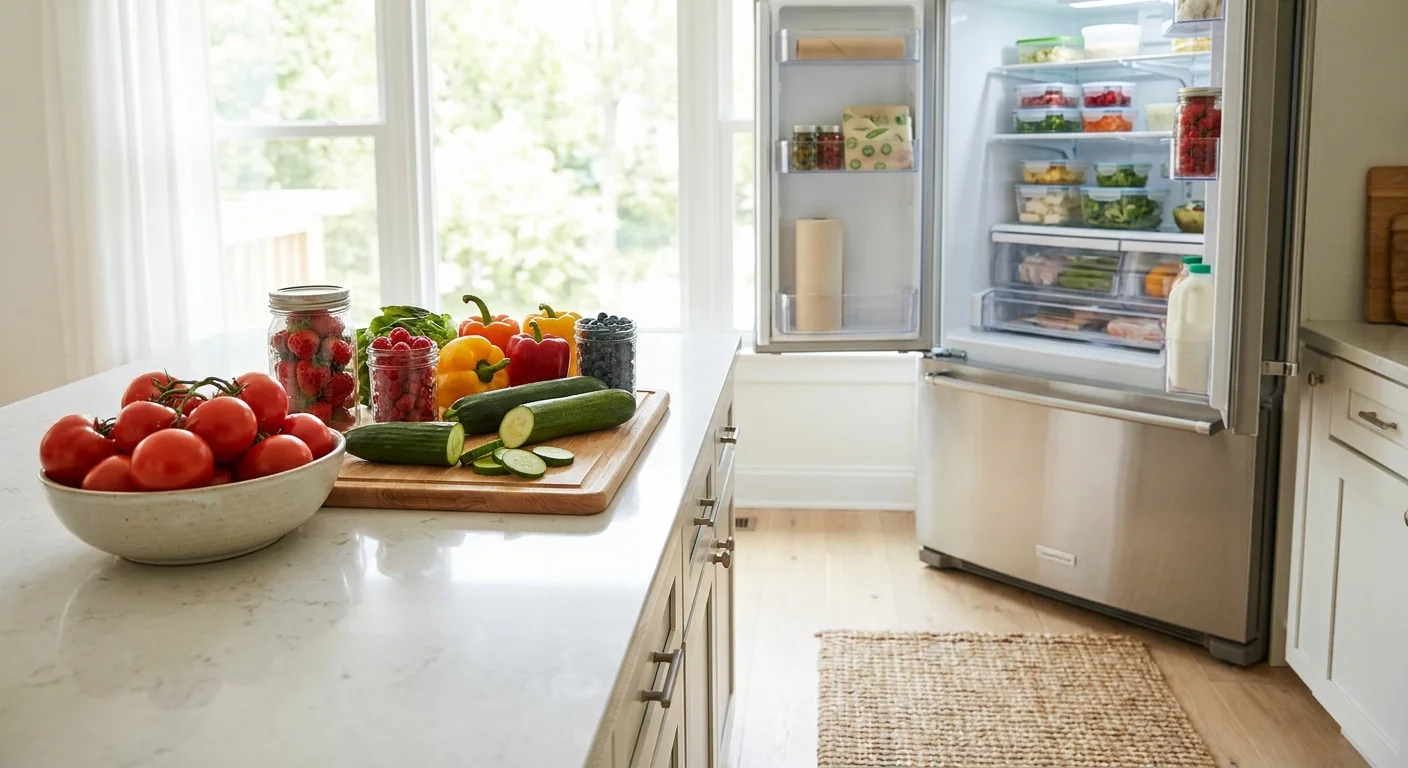
- Vegetables: Carrots 1 kg; onions 1 kg; bell peppers 3–4 pcs; zucchini 2 pcs; broccoli/cauliflower 1–2 heads; tomatoes/cherry tomatoes; cucumbers; lettuce/spinach; garlic; lemons.
- Sides: Rice/buckwheat 500 g; pasta or couscous 400–500 g; potatoes 1.5–2 kg.
- Dairy: Yogurt/sour cream; cheese (feta/mozzarella/hard cheese); milk (as needed).
- Sauces and Dressings: Canned tomatoes/passata; soy sauce; mustard; honey/sugar; vinegar; olive oil.
- Spices: Paprika; curry/garam masala; Italian herbs; chili; black pepper; salt.
Quality check for the list: if you remove one ingredient, will 2–3 dishes fall apart? If yes, it's truly 'key' and worth keeping.
Step 3: Prepare Your Kitchen and Timing: 2–3 Hours Without Rush
Batch cooking wins through parallel processes. While the oven roasts vegetables, grains cook on the stove, and salad base is chopped on the cutting board. It's important to plan the order in advance to avoid running between cabinets.
What to Prepare Before Starting
- Containers 8–12 pcs (some small for sauces), marker/stickers.
- Two cutting boards (for meat and vegetables), sharp knife.
- Foil/parchment paper, baking sheets, colander.
Timing for 2–3 Hours (Universal)
- 0–10 min: Preheat oven to 200–220°C, put water on for grains/eggs, take out containers.
- 10–35 min: Chop vegetables for roasting, mix with oil/salt/spices, place in oven for 25–35 minutes.
- 20–50 min: Cook grains and eggs; simultaneously marinate chicken (paprika + garlic + oil + lemon/vinegar).
- 35–80 min: Roast/sauté protein; assemble sauces (tomato and yogurt) in small containers.
- 80–120 min: Make 'fresh base' (chop cucumbers/tomatoes, herbs), cool and portion into containers.
Safety rule: Cool hot food to room temperature for 20–30 minutes before refrigerating. Don't leave food at room temperature for hours — spread it in a thin layer to cool faster.
Step 4: Prepare 5 Base Components from Which Different Dishes Are Assembled
If you're new to batch cooking, don't try to make 7 different dishes at once. It's much more reliable to make 4–6 components and combine them. Below is a working set that covers most weekday scenarios.
Component 1: Roasted Vegetables
Mix peppers, zucchini, broccoli, carrots, and onions on a baking sheet. Add oil, salt, paprika/Italian herbs. Roast for 25–35 minutes at 210°C, stirring once.
Component 2: Protein (Chicken or Turkey)
Marinade for 1–1.5 kg: 2 tbsp oil, 1 tbsp lemon juice/vinegar, 2 tsp paprika, garlic, salt, pepper. Roast for 20–30 minutes (depending on the cut) or sauté in batches. Cut into pieces for salads/bowls.
Component 3: Grains or Pasta
Cook rice/buckwheat for 3–4 servings, pasta for 2–3 servings. Some grains can be mixed with herbs and lemon for a 'base side' that works with different flavors.
Component 4: Tomato Sauce
Quick version: passata/tomatoes + sautéed onion + garlic + salt + a pinch of sugar. This is a base for pasta, shakshuka, stewed vegetables, and even soup.
Component 5: Yogurt Sauce (Universal Dressing)
Yogurt/sour cream + garlic + lemon + salt + herbs. Works with chicken, vegetables, potatoes, and as a sauce for lavash/pita.
Optional: Boil 8–10 eggs or make a jar of 'quick beans' (canned beans + spices + lemon). This covers the week if plans change.
Step 5: Portion, Label, and Assemble a 'Menu Kit' for the Week
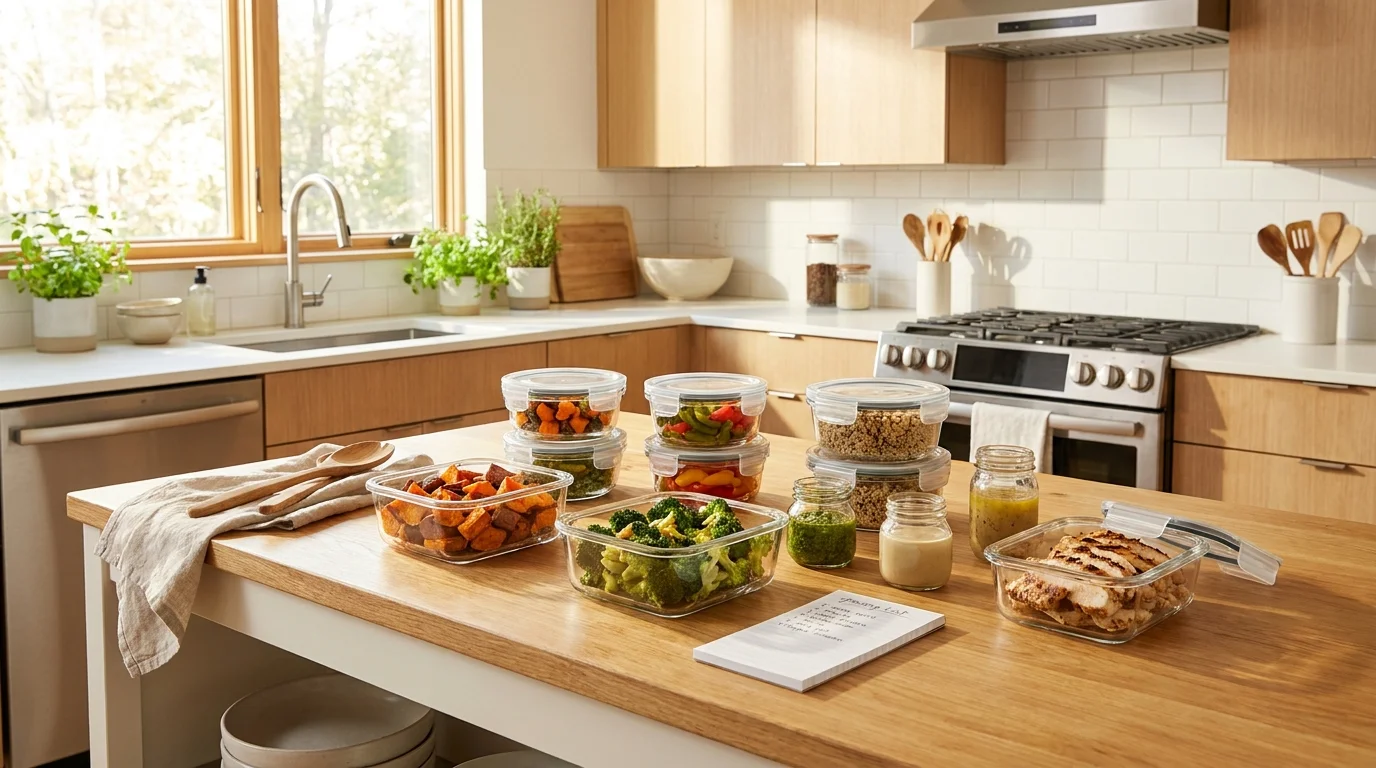
The final part of batch cooking is packaging. It determines whether the food looks appetizing and how quickly you can assemble dinner. Focus on modularity: components separate, sauces separate.
How to Portion
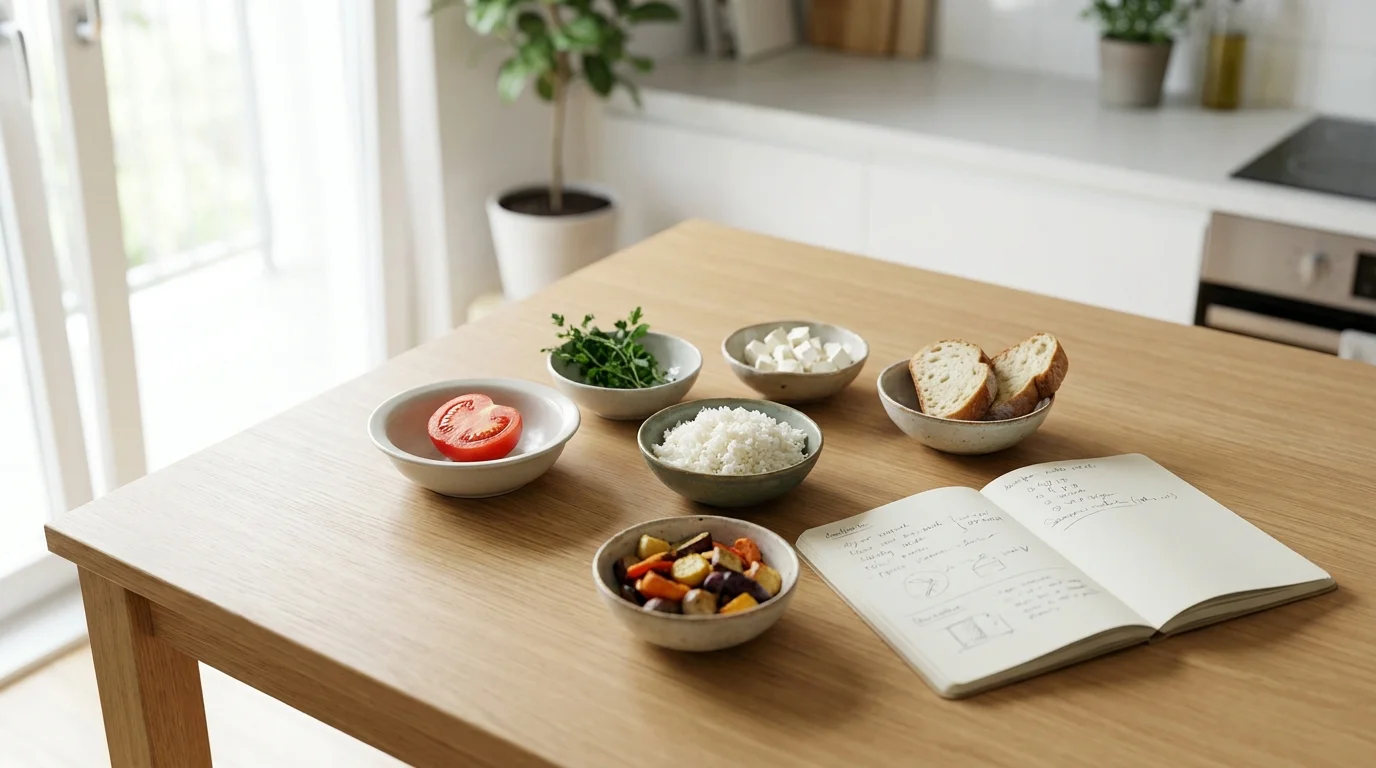
- Separately: Grains, protein, roasted vegetables, fresh vegetables, sauces.
- In portions: 2–3 containers of 'ready meals' (grains + protein + vegetables) for the busiest days.
- Labels: What's inside and the preparation date. This reduces food waste.
Examples of Quick Dinners in 10–15 Minutes
- Bowl: Rice + chicken + roasted vegetables + yogurt sauce.
- Pasta: Pasta + tomato sauce + roasted vegetables + cheese.
- Warm salad: Chickpeas + vegetables + herbs + lemon + a spoonful of yogurt.
- Light shakshuka: Tomato sauce + eggs (10 minutes under a lid) + bread.
To make the 'single list' work next week, note what ran out fastest and what was left over after the first assembly. In shared households, it's convenient when the list updates for everyone at once: someone adds eggs — another sees it in the store. In Pickt, this happens automatically in one Telegram window.
Step 6: Set Up Storage and Repeatability: So the System Lasts for Months
Batch cooking becomes truly convenient when it turns into a routine: one shopping day, one prep day, clear storage rules. Then you spend less willpower and rely more on 'autopilot.'
Storage Times (Guidelines)
- Cooked chicken/meat: 3–4 days in the refrigerator.
- Grains and pasta: 3–5 days.
- Roasted vegetables: 3–4 days.
- Sauces: Tomato 4–5 days, yogurt 2–3 days.
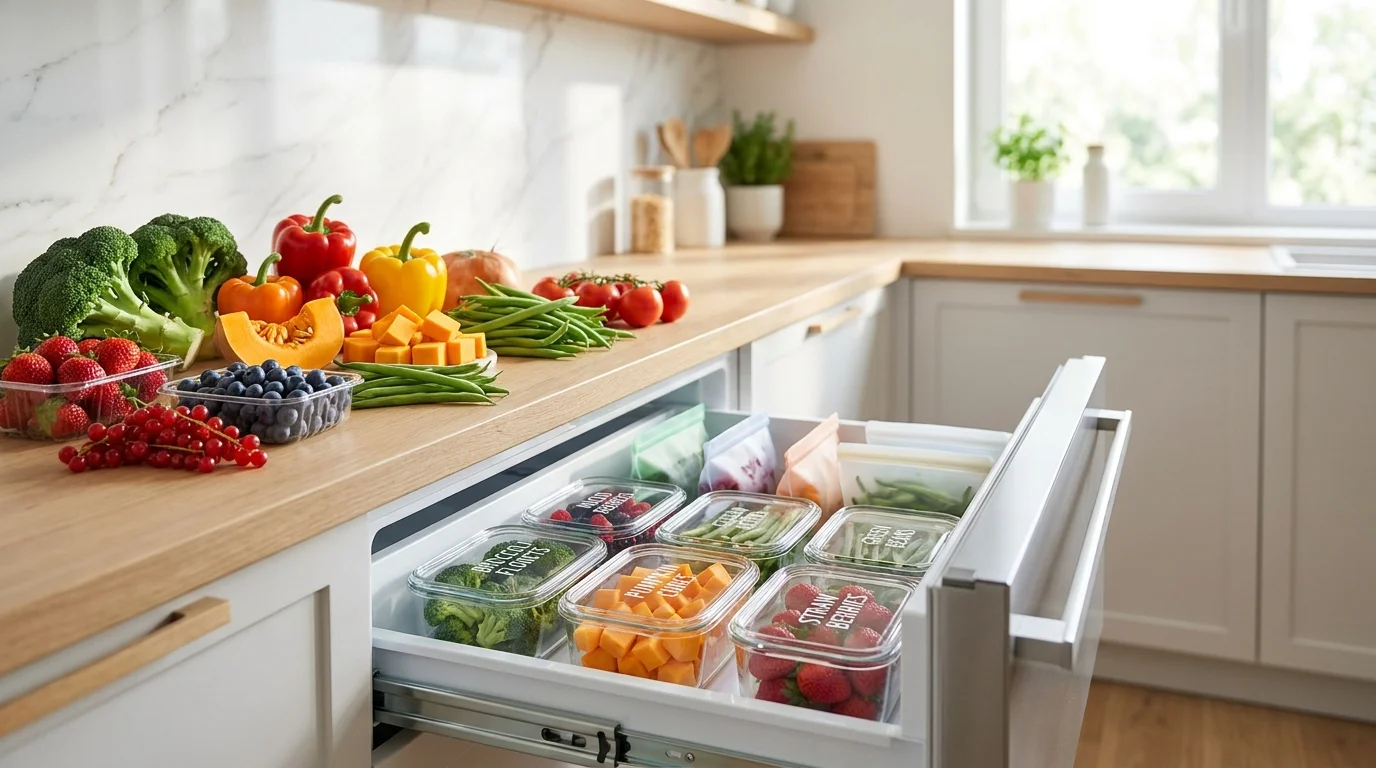
If cooking for 7 days, freeze some portions on the day of preparation (especially protein and tomato sauce). This preserves flavor and reduces the risk of food 'tiring' by the end of the week.
How to Make the System Repeatable
- Keep 70% of the list stable (grains, eggs, basic vegetables), change 30% (new protein, different sauce).
- Have a 'Plan B' for busy times: frozen vegetables, dumplings/ravioli, canned tuna.
- Every 2–3 weeks, update your spice/sauce selection — it's the cheapest way to add variety.
Conclusion. Batch cooking isn't about perfect containers; it's about simple logic: one shopping list, 2–3 hours of prep, and a week of quick assemblies. Start with 4–5 base components, refine your timing, then add variety with sauces and spices. Within 2–3 weeks, you'll notice that cooking no longer 'eats up' your evenings, and your eating becomes more predictable.
Frequently Asked Questions
Question: How is batch cooking different from meal prep?
Answer: Meal prep often means 'immediately portion out ready meals into containers.' Batch cooking emphasizes prepping components from which you assemble different dishes throughout the week.
Question: How much time does a beginner really need?
Answer: The first time, allocate 3–3.5 hours (due to chopping and organization). After 2–3 repetitions, many people fit into 2–2.5 hours thanks to a clear workflow.
Question: How to avoid getting bored with the same food?
Answer: Cook neutral bases (chicken, grains, vegetables) and change the 'character' of the dish with sauces: tomato, yogurt, soy with honey, pesto. Also alternate serving styles: bowl, pasta, salad, lavash.
Question: How to organize a shared shopping list for a family?
Answer: Make one list with categories and mark items as purchased right in the store. In Telegram, it's convenient to manage this through the mini-app Pickt (@PicktBot): changes sync for everyone, reducing the chance of buying too much or forgetting something important.