August preserves are a list of seasonal vegetables, fruits, herbs, and 'consumables' that are most advantageous to buy right now for freezing, drying, jam, pickles, and ferments. Below is a practical checklist for a family, couple, or neighbors: what to get, in what form is most convenient, and what to look for when choosing in August 2026.
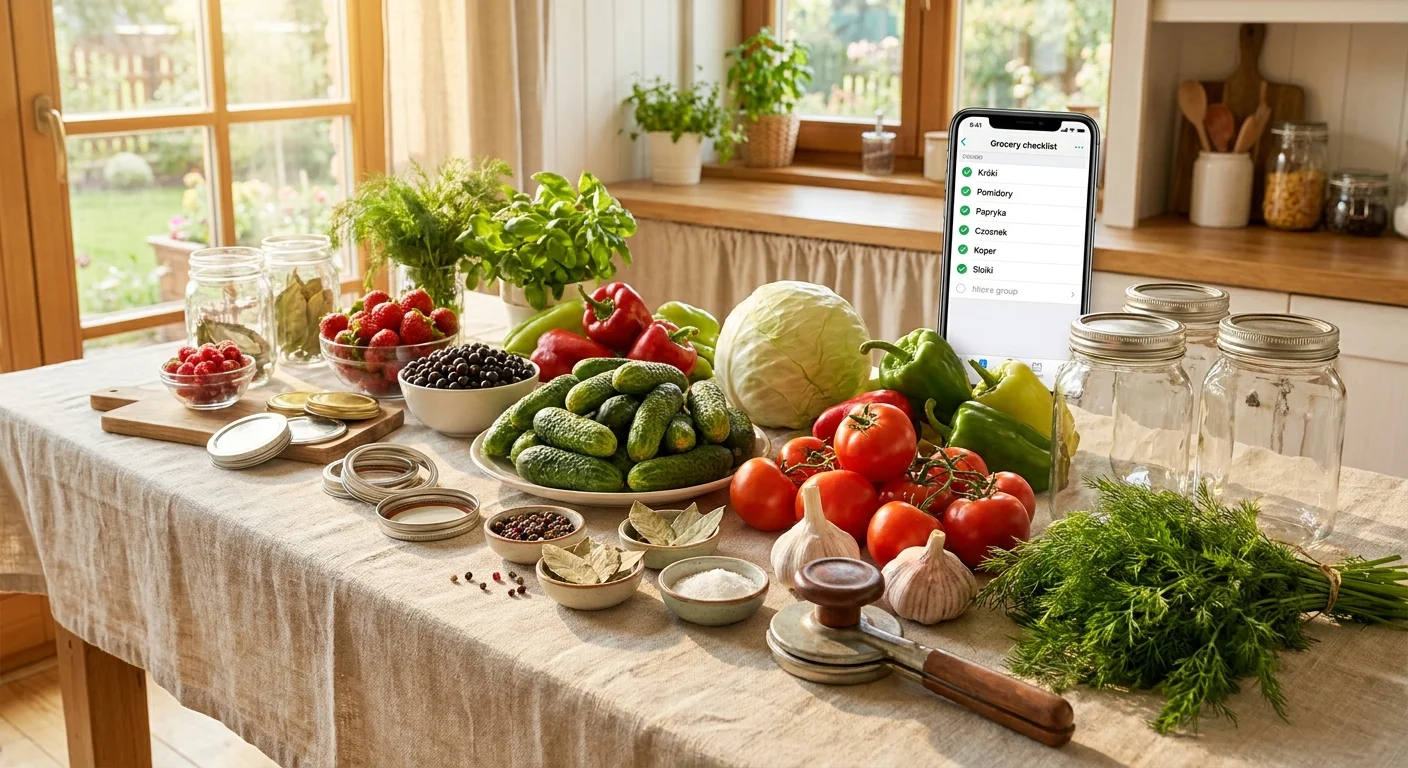
August is the peak of the harvest and the 'cheapest' month for many items. If you are doing joint shopping, it is convenient to keep a shared list in the Pickt mini-app on Telegram (t.me/PicktBot/app): mark who has already bought what, and avoid buying too much.
1) Vegetables for Canning and Pickling: The Base for 'Jar' Season
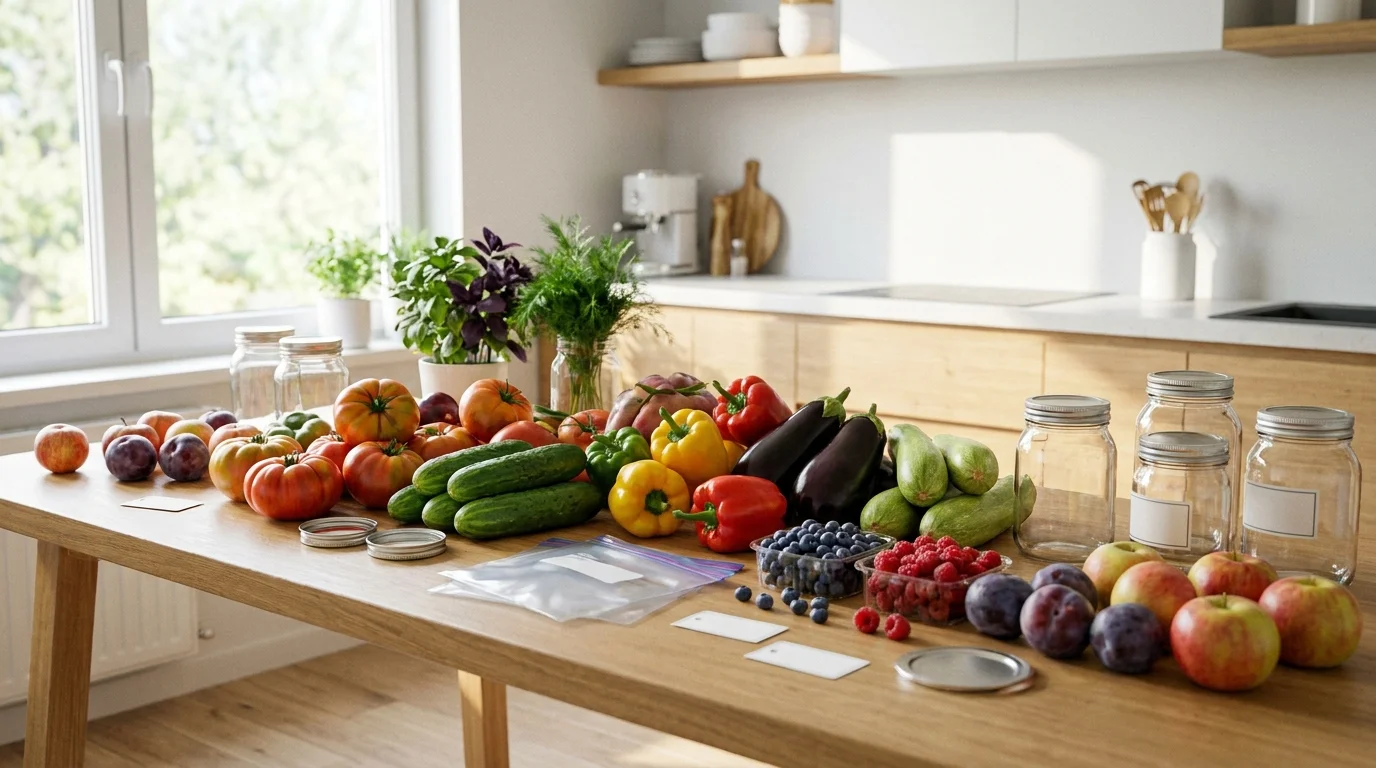
This section is about vegetables that are especially good in August for lecho, adjika, caviar, pickled salads, and dressings. Choose ripe but firm fruits without cracks: they hold their texture better.
- Tomatoes: for juice/sauce – the ripest and meatiest; for pickling – plum and firm varieties. Check the skin: no 'glass' cracks.
- Cucumbers: for pickling – short, bumpy, firm; do not take overgrown ones with large seeds.
- Bell peppers: for lecho and freezing – thick-walled, heavy, without soft spots.
- Eggplants: for caviar and freezing – small/medium, with glossy skin; overripe ones can be bitter.
- Zucchini: young – for caviar and freezing in cubes; large – for fritters/puree (remove seeds).
- Onions: choose dry, 'rustling' heads; soft onions store worse.
- Garlic: fresh August garlic is more aromatic; choose firm heads without sprouts.
- Carrots and Beets: for borscht dressings and salads; root vegetables should be hard, not limp.
Related queries this list covers: 'what to buy for canning in August', 'vegetables for winter preserves'.
2) Fruits and Berries: Jam, Compotes, Freezing, and Fruit Leather
In August 2026, it is easiest to put together a 'fruit set' for winter: some in jars, some in the freezer, some for drying. Focus on aroma and ripeness: for jam you need sweetness, for freezing – firm flesh.
- Apples (early and mid-season): for jam, puree, fruit leather, and drying. For drying, choose ones without bruises – they will darken more.
- Pears: compotes and slices in syrup; it is better to take slightly underripe ones so they don't 'fall apart'.
- Plums: jam, sauces (like tkemali), freezing in halves. The pit should separate easily in suitable varieties.
- Peaches/Nectarines: compotes and freezing in slices; choose aromatic but firm ones.
- Blackberries and Raspberries: freezing in a single layer, jam. For freezing – dry berries without juice at the bottom of the tray.
- Currants (black/red): freezing, jelly, fruit drinks; black currant is the leader in aroma and vitamin C.
- Watermelon rinds (if you like): candied fruit or jam – a great way for 'zero-waste' preserves.
- For freezing: take firm berries/fruits, wash, dry, freeze on a tray, and only then transfer to bags.
- For jam and preserves: choose the most aromatic and ripe fruits; slightly bruised ones are also fine if processed on the day of purchase.
- For compotes: slightly underripe fruits are better – they keep their shape and don't cloud the syrup.
Related queries: 'what to freeze in August', 'fruits for winter preserves'.
3) Herbs, Mushrooms, and 'Quick' Preserves: Maximum Flavor in Minimum Time
This section helps quickly replenish flavor stocks: green mixes, dressings, and mushroom semi-finished products. In August, herbs are often cheaper and more aromatic than in September.
- Dill: freezing in a single layer, 'green butter', dill salt.
- Parsley: frozen chopped, paste with garlic and oil.
- Basil: pesto (can be frozen in portions), drying in the shade for aroma.
- Cilantro (if you use it): better to freeze than dry – the flavor is brighter.
- Green onions: chopped for the freezer; convenient to add to omelets and soups.
- Mushrooms (by region and season): for freezing, it is better to pre-fry or blanch; not all types freeze well raw.
Mini-checklist for 'quick processing': wash, dry thoroughly (moisture = ice and mush), chop, label the bag with date and weight. If you are making a shared stock for the family, it is convenient in Pickt to record how many bags are already in the freezer and what portion sizes.
4) For Pickling, Brining, and Fermentation: Crunch and Health Benefits
Fermentation is one of the most 'reliable' methods of preserving in August: less sugar, bright flavor, long shelf life. Freshness and the right varieties are important here.
- Cabbage: for sauerkraut, late varieties are more often used (their peak is closer to autumn), but in August you can start with early batches for 'quick' fermentation in small volumes.
- Cucumbers for pickling: small and firm; buy extra for both 'cold' and 'hot' methods.
- Tomatoes: green/brown – for pickling, red firm – for marinating.
- Sweet peppers: for pickled snacks and assorted.
- Carrots: for cabbage and kimchi-style variations.
- Hot peppers: for fermented sauces; choose ones without skin damage.
What else to buy for pickling vegetables
- Coarse non-iodized salt (important for fermentation).
- Leaves/spices: bay leaf, peppercorns, mustard seeds, coriander.
- 'Aromatics': garlic, dill umbels, horseradish/currant leaves (by tradition and availability).
5) 'Consumables' and Containers: Without Them, August Preserves Won't Take Off
A common reason for plans falling through is not the vegetables, but the little things: running out of lids, bags, vinegar, or sugar. This section is a separate shopping list that saves time in the middle of the season.
- Jars (0.5 / 1 / 2–3 L): check the rim for chips.
- Lids: screw (Twist-Off) or for sealing; better to buy extra and of one type.
- Freezer bags/containers: sturdy zip bags, portion containers, vacuum bags (if you use them).
- Labels and marker: to write the date, contents, and volume.
- Sugar: for jam, syrups, fruit leather.
- Vinegar (9% or apple cider), citric acid: for marinades and compotes.
- Vegetable oil: for vegetable caviar, sauces, dressings.
- Spices: paprika, coriander, cloves, cinnamon (for compotes/jam), pickling spice mix.
- Sieve/cheesecloth, funnel, jar tongs (if you need to replace them).
If you are shopping with several people, separate 'consumables' into a dedicated block in the shared list – it makes it easier to see what has already been bought and what is critical to buy before the weekend.
6) How to Shop Profitably and Without Excess in August: A Short Weekly Plan
This section helps turn August preserves into a manageable process: fewer spontaneous purchases, more results. Suitable if you are making winter preserves in an apartment and don't want to run a 12-hour marathon.
- Choose 2–3 preserve formats for the week: for example, 'freezing berries', 'lecho', 'pickling cucumbers'. Don't try to do everything at once.
- Buy containers and consumables first, then the products. Jars and lids are easier to buy in advance than to look for in the evening.
- Buy in batches: 3–5 kg of tomatoes for sauce, 2–3 kg of peppers for lecho, 2 kg of apples for drying – this makes it easier to process on the day of purchase.
- Check ripeness: for freezing – firmer, for sauces – riper. Don't mix 'for everything' in one batch.
- Immediately portion into bags/containers and label. A label saying 'plum 08.2026, 400 g' saves time in winter.
- Keep a shared checklist (especially if you are shopping for the family): in Pickt, it is convenient to mark purchases in real-time to avoid buying lids or sugar twice.
Conclusion: in August 2026, it is most advantageous to stock up on tomatoes, cucumbers, peppers, eggplants, zucchini, seasonal berries and fruits, as well as herbs – and simultaneously address the issue of containers, lids, and freezer bags. Use the checklist by section, buy in batches, and choose the preserve format based on the product's ripeness – this way 'August preserves' will be quick, tasty, and without unnecessary expenses.
Frequently Asked Questions
What should I definitely freeze in August if I have little time?
The quickest set: berries (currants, raspberries, blackberries), herbs (dill, parsley), bell peppers (strips), zucchini (cubes). This requires minimal cooking and sterilization.
Which vegetables are better not to buy 'in bulk' for a kitchen without a cellar?
Overripe tomatoes, soft peaches/nectarines, and herbs without refrigeration do not store well in warmth. Only buy these for processing on the day of purchase. For storage, choose onions, garlic, and firm root vegetables.
How much sugar and salt should I put on the list in advance?
If you plan to make jam and compotes, sugar often runs out the fastest: plan for 1–3 kg of sugar for every 2–4 kg of fruit (depending on the recipes). For pickling and fermentation, it is convenient to have 1–2 kg of coarse non-iodized salt in reserve.
How not to buy too much if you are making preserves together?
Divide the list into blocks 'vegetables/fruits', 'consumables', 'spices' and assign responsibilities. A shared list with real-time marks (for example, in Pickt) helps to see what has already been bought and keep volumes under control.