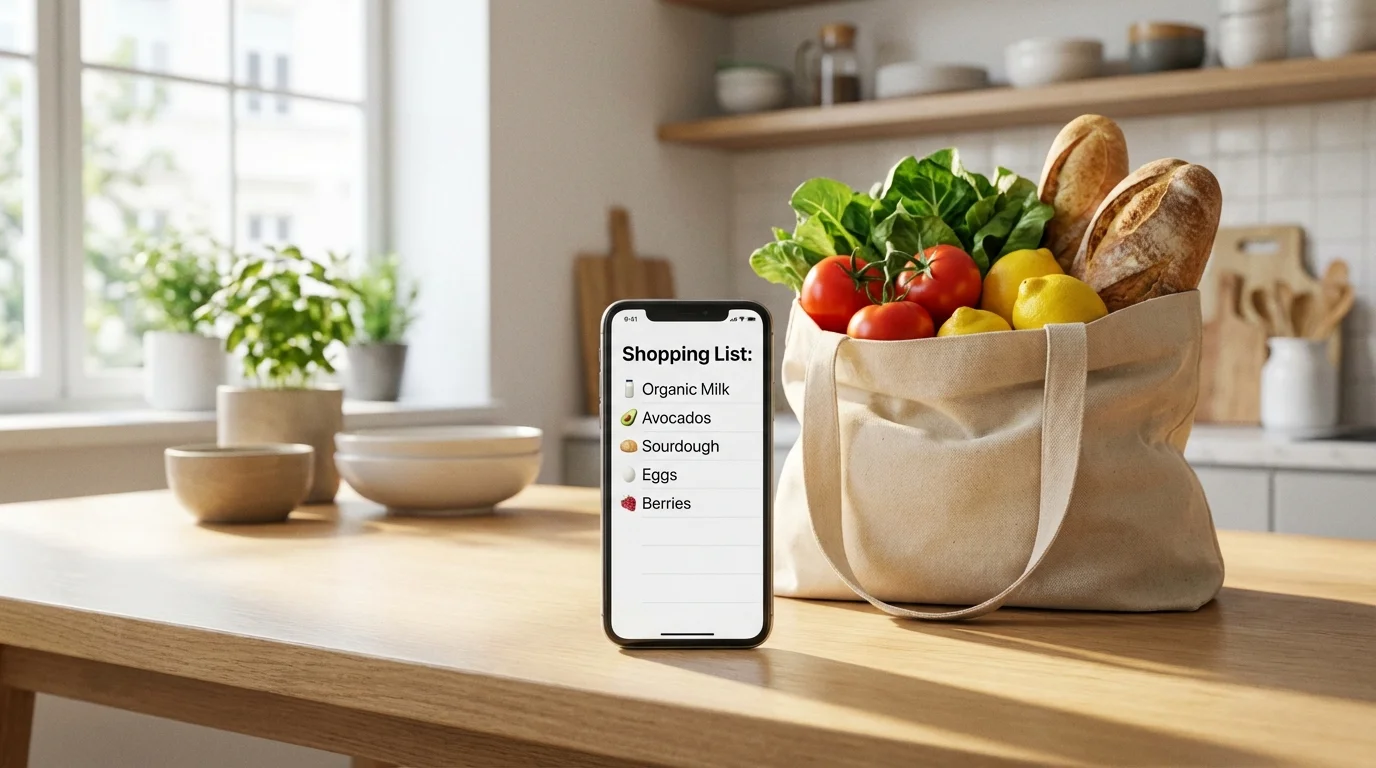
A shopping list seems like a simple thing: you jot down a couple of items and head to the store. But in practice, it's precisely the little things that cause us to return home without something important, buy extras, and spend twice as much time in the supermarket.
If you're familiar with "forgot the milk," "bought two packs of pasta when I needed one," or "bought everything except what I came for," the problem likely isn't your memory. Often, the culprits are mistakes in the shopping list—typical and recurring ones.
Below are the 5 most common slip-ups and clear ways to fix them. This isn't theory, but practical techniques you can apply on your very next shopping trip.
Mistake 1. Making the list at the last minute (or in your head)
When a list is born on the way to the store, it reflects not your real needs, but whatever first popped into your head. As a result, you forget "invisible" items: salt, paper towels, pet food, batteries.
And a "list in your head" almost always turns into impulse purchases. Your brain gets overloaded with choices, and you grab what's easier and more eye-catching, not what you need.
How to fix it: Develop a habit of maintaining a list constantly and adding to it as things run out. It takes just 10 seconds—you see the cereal is running low, you add it right away.
A mini-checklist to avoid last-minute lists:
- Add items as soon as you notice a product is running out.
- Before shopping, quickly scan the kitchen and bathroom: that's where forgotten little things most often "surface."
- Check it against your meal plan for the next 2–3 meals.
Mistake 2. Writing too vaguely: "vegetables," "dairy," "something for tea"
Vague wording is one of the main sources of unnecessary spending. In the store, they turn into long deliberations and "well, let's just get this," and at home—into products that don't fit your plans.
For example, "dairy" can mean milk, yogurt, cottage cheese, and cheese all at once. And "vegetables"—that's cucumbers, broccoli, potatoes, and greens. Without specifics, you either buy extra or forget what you need.
How to make a list correctly: Specify details and minimum selection parameters. You don't need to turn the list into a novel, but 1–2 clarifications save time and money.
- Instead of "bread" — "whole grain bread, 1 loaf."
- Instead of "cheese" — "hard cheese for sandwiches, 200–300 g."
- Instead of "vegetables" — "tomatoes 500 g, cucumbers 2 pcs, lettuce/arugula 1 pack."
- Instead of "for tea" — "oatmeal cookies 1 pack" or "bananas 6 pcs."
If you buy based on sales and are open to substitutions, write it that way: "sugar-free yogurt — any discounted brand." This leaves flexibility but maintains boundaries.
Mistake 3. Not grouping purchases by store sections
A list in the format of "as you remember, as you write" makes you dash around the store. You pass the same aisles several times, get distracted by displays, and more often fall into the impulse-buy trap.
This shopping list mistake is especially noticeable in large supermarkets: an extra 10–15 minutes turns into fatigue, and fatigue into "fine, I'll just get something ready-made."
How to fix it: Group items according to the store's logic. 5–7 categories are enough to follow a route and not backtrack.
A convenient list structure:
- Vegetables and fruits
- Meat/fish/eggs
- Dairy products
- Groceries (cereals, pasta, canned goods)
- Frozen foods
- Bread and baked goods
- Household chemicals and other
If you go to the same store, you can adjust the order to match its layout. Then the list literally guides you from the entrance to the checkout.
Mistake 4. Not checking supplies at home and buying duplicates
A classic situation: you buy ketchup, but there's already an almost full one at home. Or you get rice, even though there are two packs in the cupboard. It's not just about money, but also about cluttering the kitchen.
Duplicates most often appear when the list is made without a "quick inventory." This is especially true for groceries, spices, sauces, and household items.
How to fix it: Before adding to the list, do a quick check of the "hot zones." It takes 2–3 minutes but drastically reduces unnecessary purchases.
Pre-shopping inventory checklist:
- Refrigerator: milk, eggs, vegetables, cheese, leftover cooked food.
- Cupboard: cereals, pasta, canned goods, tea/coffee, sweets.
- Bathroom/storage: paper, laundry supplies, trash bags.
Another technique is to mark on the list "already have, but running low." Then you won't buy extra prematurely, but also won't forget to restock next week.
Mistake 5. Not considering that the list might be shared
If you don't live alone, the list should almost never be "personal." When one person shops and the other remembers something needed only after checkout, it leads to extra trips and irritation.
Even worse is when two people go to the store at different times and buy the same thing. The result: two identical sauces at home and not a single needed grain.
How to fix it: Make the list shared and updatable. Then everyone adds what they notice at home, and the shopper sees the current items and can mark them off as they're bought.
Practices that work:
- Agree that everyone adds to one list, not writing in "private messages."
- Mark purchased items right in the store to avoid duplicates.
- If there are important restrictions (allergies, preferences), add short notes to items.
Conclusion
Most problems with lists aren't about discipline, but about the system. Specify wording, group by sections, check supplies, and maintain the list ahead of time—this way you'll significantly cut down on unnecessary spending and trips "for just one carton of milk."
And if your shopping list is often shared, it's convenient to keep it where you already communicate. For example, Pickt—a free mini-app in Telegram for shared shopping lists with real-time sync: you can add items, mark them as bought, and see the current list in one place: t.me/PicktBot/app.