2026 turned out to be a year of bold flavors: spicy, sweet-spicy, and distinctly salty. Feeds are increasingly filled with sticky honey-chili wings, spicy noodles, miso cookies, creamy cottage cheese and yogurt sauces, and snacks where salt, fermentation, and umami replace the usual sweetness. The good news: to recreate viral recipes at home, you don't need to turn your kitchen into a warehouse of rare jars. It's enough to put together a small starter set and understand which ingredients are truly versatile.
Below is a practical guide to which trending products of 2026 are worth looking for in supermarkets, Asian grocery stores, and marketplaces. No promises that one jar of sauce will instantly make any dish restaurant-quality: some trendy products are only good in very specific recipes, while others will become your permanent staples.
What flavors are setting the tone in 2026?
The main direction is contrasts. Spicy flavors are increasingly paired with sweetness: honey, fruit jams, caramelized sugar, and syrups soften the chili. This trend already has a short name — swicy, from sweet and spicy. The most obvious example is hot honey, that is, honey infused with chili peppers.
The second noticeable trend is fermented, salty, and savory products. Instead of another sweet bar, people are choosing crispy seaweed, salty crackers, kimchi, pickled vegetables, and sauces with deep umami flavor. This isn't a rejection of sweetness per se, but a desire for a more complex and mature taste.
The third direction is high-protein comfort food. Cottage cheese, Greek yogurt, soft cheese, and eggs are turned into sauces, flatbreads, casseroles, and desserts. These recipes are popular not only because of the protein: they genuinely help create a creamy texture quickly without complex techniques.
Finally, global flavors are becoming more accessible. Korean, Japanese, Middle Eastern, and Mediterranean combinations no longer seem exotic if you start with a few basic products: gochujang, miso, tahini, sesame oil, and soy sauce.
A set for trendy dishes: 12 products to start with
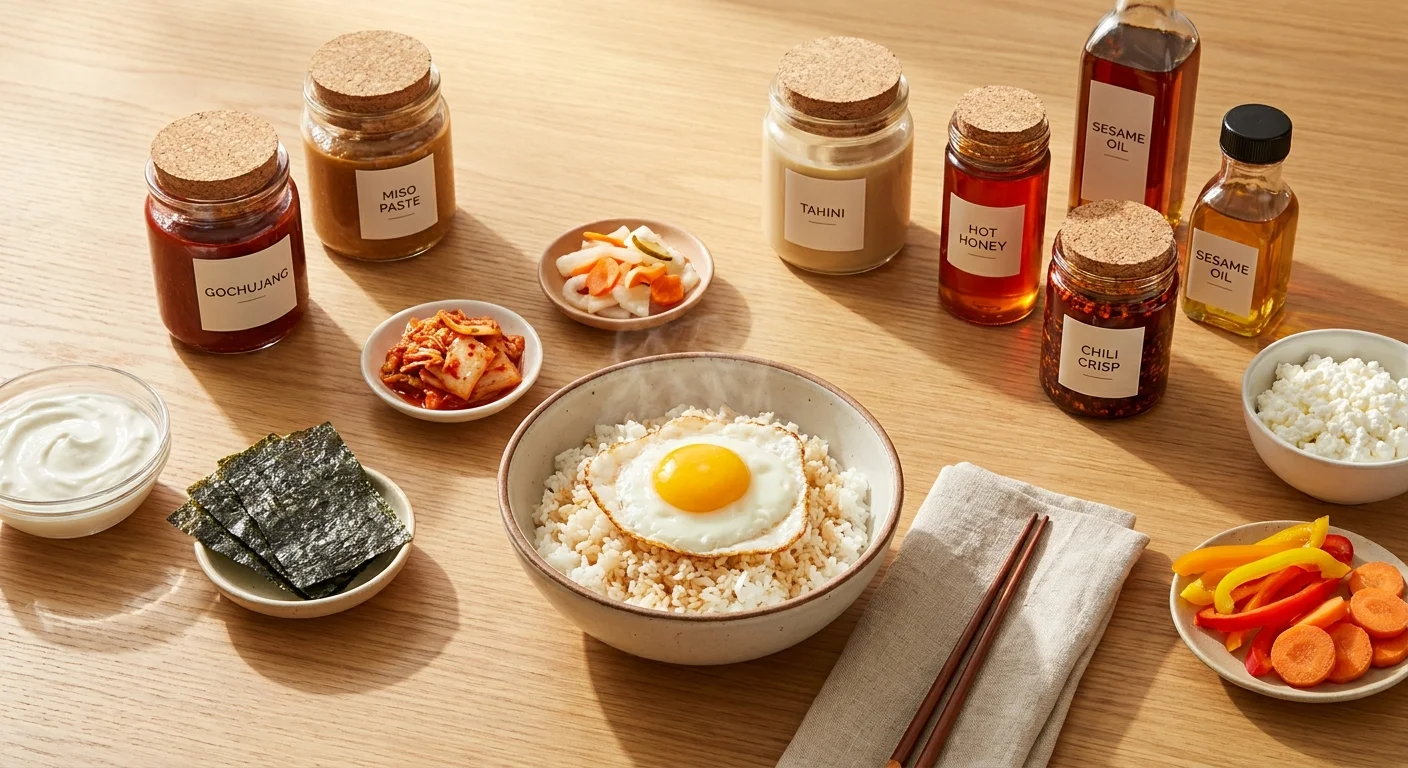
- Gochujang. A Korean fermented paste made from chili peppers, glutinous rice, and soybeans. If you're wondering what gochujang is, imagine a thick, sweet-spicy paste with a slight tang and depth of fermentation. Look for it in Asian food sections, Korean stores, and on marketplaces. Add it to chicken marinades, noodle sauces, braised vegetables, and dressings. After opening, it typically keeps in the fridge for up to 12 months, but always check the label.
- Soy sauce. A salty fermented condiment for marinades, rice, eggs, and vegetables. Look for a classic naturally brewed version without added sugar. Once opened, it's best kept in the fridge; it usually stores well for 6–12 months.
- Sesame oil. An aromatic oil made from toasted sesame seeds, added in small amounts at the end of cooking. It works well in noodles, salads, rice, and herbed cottage cheese dips. Available in Asian sections and large supermarkets; after opening, store for 6–12 months in a cool, dark place.
- Hot honey. Spicy honey infused with chili. Drizzle it over pizza, baked feta, chicken, carrots, fried halloumi, and even vanilla ice cream. You can find it among sauces or make your own from honey and chili flakes. A sealed jar keeps for about a year; a homemade version is best used within 2–3 months.
- Miso paste. A fermented paste made from soybeans, sometimes with rice or barley. It adds a salty, creamy, and deeply savory flavor to soups, sauces, butter for toast, caramel, and roasted vegetables. Look for it in Japanese sections, health food stores, and online. Once opened, it keeps in the fridge for 6–12 months.
- Tahini. A thick sesame paste with a nutty bitterness. It's not just for hummus: mix it with lemon and water for a vegetable sauce, or add it to oatmeal or cookies. Available in Middle Eastern food sections and on shelves with nut butters. After opening, store in the fridge for about 4–6 months.
- Rice vinegar. A mild, not too sharp vinegar for dressings, quick marinades, and rice. It's easier to find than you might think: look next to soy sauces. An opened bottle keeps for up to a year, often longer.
- Crispy chili oil or chili crisp. Oil with bits of chili, garlic, and spices. It instantly livens up eggs, dumplings, cottage cheese, soups, and fried rice. Look for it in Asian stores; after opening, refrigerate for 3–6 months.
- Kimchi. Fermented vegetables, most often napa cabbage with chili. It's a ready-made addition to rice, omelets, toast, and noodles. Buy it from the refrigerated section of an Asian store or supermarket. An opened jar keeps in the fridge for 2–4 weeks, and the flavor becomes more sour over time.
- Greek yogurt. A thick, protein-rich base for sauces, dips, marinades, and desserts. Look for a plain, unsweetened version. Once opened, use within 3–5 days.
- Cottage cheese (5–9% fat). A versatile base for casseroles, flatbreads, protein sauces, and creams. Blended, it becomes smooth, especially with yogurt. Store according to the package date; an opened pack is usually best within 2–3 days.
- Nori or crispy seaweed. A salty snack and a convenient addition to rice, salads, and eggs. Look for nori sheets near sushi supplies, and ready-made snacks in the snack section. After opening, store airtight and eat within 1–2 weeks, or they'll lose their crunch.
Rather than buying rare products impulsively, it's convenient to keep them on a separate list. For example, in Pickt, you can maintain a shared shopping list in Telegram: add miso, gochujang, and chili crisp there, and buy them when you're near a good Asian store.
Which of these are worth buying, and which will just sit and get thrown out?
The most worthwhile jars for a beginner are gochujang, miso, tahini, soy sauce, and rice vinegar. They last a long time and work in dozens of dishes right away. Sesame oil also pays off quickly because you only need a few drops.
Be cautious with highly specialized sauces with bold flavors, especially if a recipe calls for them only once. For example, an exotic fruity hot sauce might be great on chicken but not fit into everyday meals. Don't buy a huge jar of kimchi if you're not sure yet whether you like fermented tanginess: start with a small package.
Hot honey is a nice but not essential purchase. If you already have honey and dried chili at home, you can make a similar version in five minutes. Miso and gochujang, however, are harder to replicate: their flavor relies on fermentation, so for viral recipes, it's better to buy the original product.
What to substitute for rare ingredients?
A substitute won't always give an identical result, but it will help you figure out whether you like the flavor direction. This is especially useful if you don't want to hunt across the city for one ingredient just for a single video.
| Ingredient | Simple dish to start with | Substitute if you can't find it |
|---|---|---|
| Gochujang | Spicy marinated chicken with rice | Tomato paste + sriracha or adjika + a pinch of sugar |
| Miso paste | Miso butter for roasted carrots | Soy sauce + a bit of tahini or butter |
| Tahini | Lemon sauce for vegetables and chicken | Sesame seed butter; in a pinch, peanut butter |
| Hot honey | Toast with ricotta and spicy honey | Honey + chili flakes |
| Chili crisp | Fried eggs with crispy chili | Vegetable oil + chili + fried garlic |
| Rice vinegar | Quick pickled cucumbers | Apple cider vinegar diluted with water |
| Kimchi | Fried rice with egg | Sauerkraut with chili and garlic |
| Greek yogurt | Protein sauce for potatoes | Soft cottage cheese blended with a little milk |
How to build a home base for Asian cuisine without overspending
If your main question is what to buy for Asian cooking at home, start with four things: soy sauce, gochujang, rice vinegar, and sesame oil. With these, you can already make a spicy noodle sauce, a chicken marinade, a cucumber dressing, and fried rice. Then add miso and chili crisp once you realize you enjoy rich fermented flavors.
Plan your purchases around dishes, not pretty jars. Choose three recipes for the week: for example, gochujang chicken, sesame noodle sauce, and a yogurt dip with chili. That way, the same purchase gets used multiple times. A shared list in Pickt is especially handy for a family or couple: one person adds ingredients from a recipe, the other sees what's already needed and doesn't bring home a second bottle of soy sauce.
Three quick ideas to keep trendy products from sitting idle
Spicy miso noodles in 15 minutes
Mix a spoonful of miso, a teaspoon of gochujang, soy sauce, and a little hot water. Add to cooked noodles, top with an egg, cucumber, and sesame seeds. This is a simple way to see if you like the combination of fermentation and heat.
Yogurt dip with hot honey
Spread thick yogurt on a plate, add salt, lemon juice, cucumber or herbs, and drizzle with a little hot honey. Serve with baked potatoes, chicken, or flatbread. Here, the sweet-spicy accent works better than in complex dishes.
Warm rice with kimchi and egg
Sauté kimchi, add leftover rice and a spoonful of soy sauce. Top with an egg and a few drops of sesame oil. This is honest homemade comfort food where trendy flavors don't require perfect presentation.
Viral recipes are useful not because you need to replicate them literally. They help you discover new combinations and find products that fit into your everyday cooking. Start with a few versatile jars, don't buy everything at once, and keep only what you want to use again.