November is the month when you especially crave something hot, hearty, and homemade: soup with the aroma of vegetables, a casserole from the oven, porridge in the mornings, and tea with berries. But after autumn expenses, the budget is often already tight, and coming up with what to cook every evening is the last thing you want to do. The solution is not to look for perfect recipes for one dinner, but to create a meal plan for the whole week.
This approach helps you buy groceries once, use them without leftovers, and avoid ordering food just because there is "nothing ready" at home. This inexpensive weekly menu is built on overlapping ingredients: the same vegetables, grains, chicken, and legumes work across several dishes. The family gets varied meals, and the fridge doesn't fill up with random packages.
How to create a menu so that products don't go to waste?
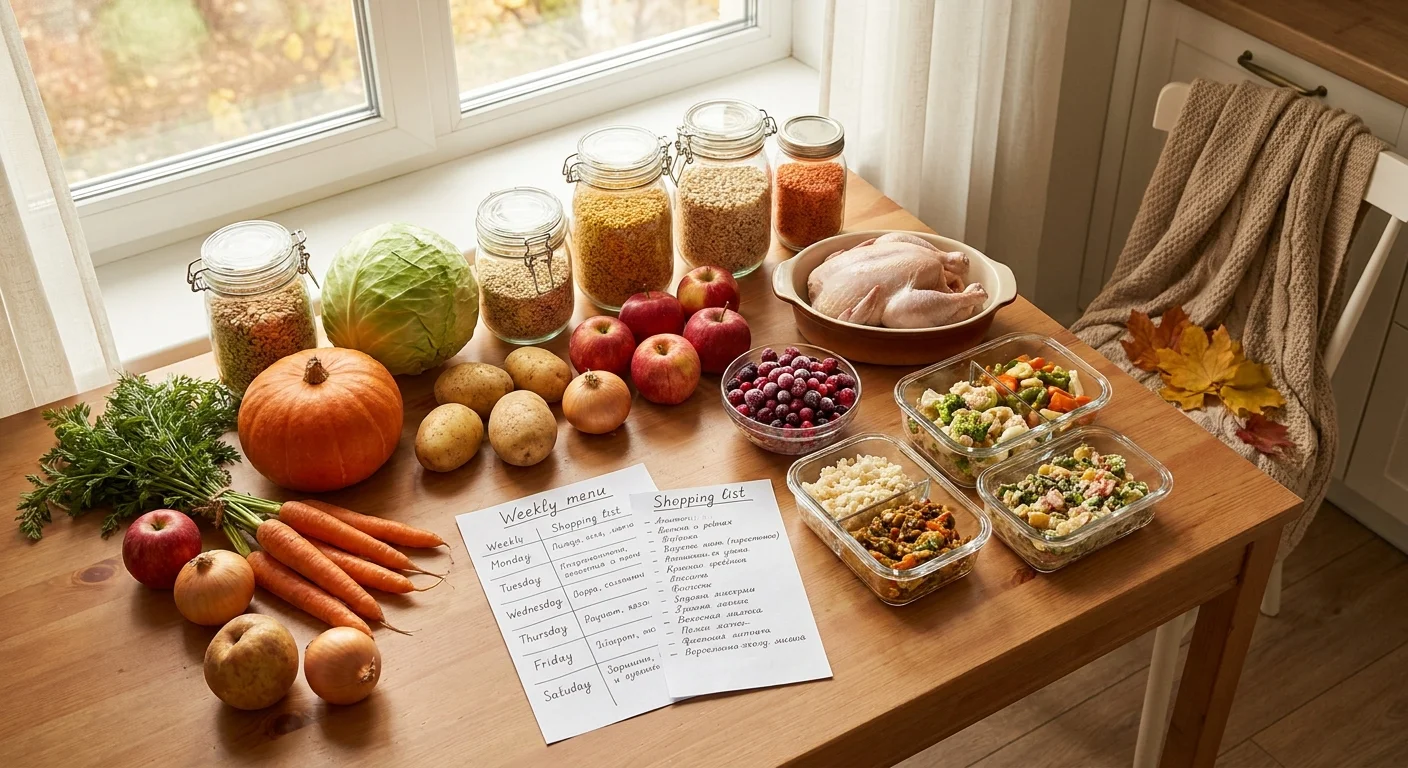
The main principle is to first choose staple products, and then distribute them across dishes. In November, it's convenient to build your basket around root vegetables, cabbage, pumpkin, grains, legumes, chicken, frozen vegetables, and berries. They store well and are suitable for soups, side dishes, casseroles, and quick snacks.
For a family of four, it's enough to plan two evenings with full batch cooking. On the first, prepare a large pot of chicken soup with lentils, bake chicken thighs and a tray of vegetables. On the second, make a thick stew of beans, pumpkin, and cabbage, as well as a casserole or cutlets from the remaining ground chicken. On other days, you'll only need to reheat, add a side dish, or assemble a meal from the prepared components.
- Buy cabbage, carrots, onions, and potatoes in bulk: they will come in handy almost every day.
- Use one grain in two formats: for example, buckwheat as a side dish and as a base for a warm salad or cutlets.
- Immediately portion out meat and poultry for specific dishes.
- Keep frozen vegetables as a backup for omelets, soup, or a quick side dish.
- Turn dinner leftovers into the next day's lunch rather than leaving them "for later" without a plan.
It's convenient to transfer the ready weekly menu for November to a shared Pickt list in Telegram: one adult adds products, another checks off what's already been bought. After a month, this weekly grocery list for the family can simply be copied and adjusted based on what you have in stock.
What can you save on in November without losing quality?
Savings in the November basket usually come not from strict restrictions, but from proper structure. The base should consist of affordable seasonal products and hearty dishes, while more expensive items should be an addition rather than the center of every meal.
Root vegetables, white cabbage, pumpkin, and onions provide volume, flavor, and fiber. Lentils, beans, and chickpeas add protein and allow you to use less meat. Chicken thighs, drumsticks, or a whole chicken are often more practical than fillets: you can make both a hot dish and broth from them. Frozen vegetables and berries are useful in November when the fresh assortment becomes less predictable in quality.
- Choose large packages of grains and legumes if your family eats them regularly.
- Take seasonal vegetables for the base of dishes, and fresh tomatoes, herbs, and expensive fruits in small quantities for flavor.
- Use canned beans for quick evenings, and dry beans for soups and stews if you have time for soaking.
- Don't buy separate ingredients for just one recipe: sour cream, cheese, eggs, and herbs should repeat throughout the menu.
It's important not to try to make every dinner restaurant-quality. Homemade food becomes varied thanks to sauces, spices, and different presentations: yesterday's chicken with buckwheat can today become a filling for lavash, and baked pumpkin can be part of a cream soup or porridge.
What to cook when you come home in the dark and exhausted?
On such evenings, build-your-own meals work best. There's already a ready base in the fridge: baked chicken, vegetables, a pot of soup, cooked grains, chopped cabbage. All that's left is to spend 10–15 minutes assembling.
For example, reheat a portion of stew and add a spoonful of sour cream; mix ready buckwheat with chicken and frozen vegetables in a skillet; make an omelet with leftover baked pumpkin; serve soup with bread and cheese. If you have no energy at all, cottage cheese with berries, yogurt, and homemade sandwiches with egg or chicken will save the day.
A useful habit is to label containers in advance: "lunch Mon–Tue," "chicken for dinner," "vegetables for omelet." Then ready food doesn't get lost in the fridge, and the weekly meal plan truly takes the load off your evenings.
7-Day Menu: Breakfast, Lunch, and Dinner
Below is an example for a family of four. Portions can be adjusted: if children eat less, part of the lunch will remain for the next day or go into the freezer.
| Day | Breakfast | Lunch | Dinner | What to take out in advance |
|---|---|---|---|---|
| Monday | Oatmeal with frozen berries and apple | Chicken soup with lentils | Chicken thighs, baked vegetables, buckwheat | In the morning, move chicken to the fridge if frozen |
| Tuesday | Omelet with cheese and cabbage salad | Leftover chicken with buckwheat | Pumpkin and bean stew with bread | In the evening, soak dry beans or take out canned ones |
| Wednesday | Cottage cheese with berries and honey | Lentil soup with bread | Pasta with ground chicken, vegetables, and tomato sauce | Take out ground meat if stored in the freezer |
| Thursday | Buckwheat porridge with milk and banana | Pasta with sauce from Wednesday | Omelet with frozen vegetables, country-style potatoes | Move potatoes and vegetables to the lower shelf of the fridge |
| Friday | Oat pancakes with yogurt and berries | Pumpkin, bean, and cabbage stew | Warm lavash with chicken, cabbage, cheese, and sour cream sauce | Take out a portion of baked chicken |
| Saturday | Eggs, toast, vegetables | Cream soup of pumpkin and potatoes | Buckwheat cutlets with ground chicken and salad | Cook buckwheat in the evening if there's none left |
| Sunday | Baked oatmeal with apples and berries | Leftover soup or cutlets with a side dish | Baked vegetables with beans and cheese | Check leftovers and use perishable products |
Two Batch Cooking Sessions and Snacks for the Whole Week
Evening #1: Base for the first three days
Cook soup: chicken, lentils, potatoes, carrots, onions, and a little cabbage. At the same time, bake chicken thighs, potatoes, carrots, pumpkin, and onions on two baking sheets. While the oven is working, boil buckwheat. Set aside some chicken for lavash and pasta.
Evening #2: Base for the second half of the week
Prepare a stew of pumpkin, cabbage, carrots, onions, beans, and a tomato base. Separately, make a sauce with ground chicken and vegetables for pasta, or form cutlets. This way, you cover the most exhausting weekday evenings in advance.
For snacks, keep apples, bananas, yogurt, cottage cheese, cheese, boiled eggs, carrot sticks, and small portions of nuts in a visible place. Frozen berries can be added to porridge, cottage cheese, and yogurt without extra preparation.
Final Weekly Grocery List for the Family
Vegetables and fruits
- Potatoes — 4 kg
- Carrots — 2 kg
- Onions — 2 kg
- White cabbage — 2 large heads, about 3 kg
- Pumpkin — 2.5–3 kg
- Garlic — 2 heads
- Apples — 2 kg
- Bananas — 1.5 kg
- Lemons — 2 pieces
- Fresh herbs — 2 bunches
Meat, eggs, and dairy products
- Chicken thighs or drumsticks — 2.5 kg
- Ground chicken — 1 kg
- Eggs — 30 pieces
- Cottage cheese — 1.2 kg
- Natural yogurt — 1.5 kg
- Milk — 4 L
- Sour cream — 500 g
- Hard cheese — 500 g
- Butter — 200 g
Grains, legumes, and pantry items
- Oat flakes — 1.2 kg
- Buckwheat — 1 kg
- Pasta — 1 kg
- Red lentils — 500 g
- Dry beans — 700 g or canned — 4 cans
- Whole grain bread — 2 loaves
- Lavash — 2 packages
- Tomato passata or crushed tomatoes — 3 cans or packages
- Vegetable oil — 500 ml
- Honey or jam — 1 small jar
- Nuts or seeds — 300 g
- Salt, pepper, paprika, dried garlic, Italian herbs — as needed
Frozen products
- Vegetable mix — 1.5 kg
- Frozen berries — 1 kg
Save this list in Pickt as a template: next month, you can quickly repeat a successful basket, swapping a couple of dishes based on your mood. Such a plan doesn't require strict discipline — it simply creates a calm reserve of warm food when it's dark and cold outside.