
The first year together is rarely "like in the movies." Even with strong feelings, living together quickly reveals everyday details: who takes out the trash, what to buy for the home, and why "I thought you would do it" sounds so hurtful.
The good news: you can simplify the start of cohabitation by agreeing on basic rules in advance and checking in regularly. It's not about "who's right," but about what works better for both of you.
Below is a checklist for the first 12 months: from task distribution to shared purchases. Save it, check off items, and come back to it when you feel overwhelmed or it seems like you're speaking different languages.
1) Agree on House Rules: The Minimum That Reduces Tension
At the start of living together, it seems "obvious." But everyone has their own standards of cleanliness, quiet, and personal space. It's better to discuss this beforehand than to figure it out in the heat of an argument.
Have a short 20–30 minute conversation and establish 5–7 rules. This isn't a "charter," but a reference point you can return to.
- Quiet and Rest: What time you usually go to bed, when quiet is needed at home, how you handle loud music/calls.
- Guests: How much notice to give (hours/days), whether they can come unannounced, how often is comfortable for both of you.
- Personal Space: Does each person have their "own zone" (desk, shelf, alone time), how you feel about closed doors.
- Cleanliness: What "normally clean" means for the kitchen and bathroom, what's definitely not okay (e.g., a dirty sink overnight).
- Food and Groceries: Who plans the shopping and how, how to handle "I don't eat that," what should always be at home.
Important: Agreements should be revisited. In your first year together, you're evolving as a team — and that's normal.
2) Household Tasks: Distribute, Don't Just "Help" Each Other
A common trap is when one person "manages the household" and the other "helps." This leads to unequal workload and responsibility, and resentment builds up.
A practical approach: divide areas of responsibility and agree on a minimum standard. Not "sometime," but "how often and who is responsible."
Mini-Checklist for Dividing Household Chores
- Kitchen: Cooking, dishes, taking out trash, wiping surfaces (who/on which days).
- Bathroom: Cleaning sink/toilet/shower, restocking supplies (toilet paper, soap).
- Floors and Dust: Who vacuums/mops, how often, what you do during a "lazy week."
- Laundry: Who starts it, who hangs it, where you store dirty and clean clothes.
- Bills and Documents: Who pays the bills, tracks subscriptions, keeps receipts.
- Shopping: Who plans, who orders/goes, how you split heavy bags and deliveries.
If someone has a busy week, don't stay silent. In cohabitation, "let's redistribute for 7 days" works better than "I'll just endure it."
3) Money in the First Year Together: Transparency is More Important Than a Perfect System
Financial conflicts often masquerade as household ones: "you ordered delivery again" might actually mean "I'm worried we're not controlling our spending."
In the first year together, a simple system you both understand is enough. The key is transparency and regular discussions.
What to Agree on in Advance
- Shared Expenses: Rent/mortgage, utilities, internet, household supplies, groceries.
- How to Split: 50/50, proportional to income, or by zones (e.g., one pays utilities, the other pays for groceries).
- "Want" Spending Limit: An amount you can spend without consulting each other, to avoid a feeling of control.
- Emergency Fund: At least a small reserve for the unexpected (repairs, doctor, breakdowns).
- Monthly Check-in: 15 minutes — what worked, what was stressful, what to change.
You don't have to merge all your money right away. For the start of cohabitation, a "shared household budget" and personal funds for everything else is often sufficient.
4) Communication in Daily Life: How to Avoid Arguing Over Trivial Things
In the first year together, you face a lot of micro-decisions: what to buy, who picks up the delivery, when to clean. If you keep everything in your head, irritation builds up and it feels like you're not being heard.
Focus on short, regular conversations, not rare "big discussions." And separate fact from judgment: "the trash wasn't taken out" instead of "you don't care."
Daily Practice
- Daily 5-minute "Check-in": What's important today, who's home when, if you have energy for chores.
- Request Formula: Specifics + deadline + why it's important. For example: "Can you order water by 8 PM today? Otherwise, there's nothing to take to the gym tomorrow."
- Stop-Words for a Pause: Agree on how you take a time-out if an argument escalates.
- One Conflict — One Topic: Don't bring up old grievances, solve the current issue.
Living together becomes easier when you "guess" less and clarify more.
5) Household Purchases and Supplies: So There's No "We're Out of Everything Again"
The start of cohabitation often stumbles on simple things: running out of toilet paper, forgetting to buy coffee, buying milk twice but not cereal once. These are small things, but they quickly become draining.
The solution is a shared approach to shopping: a basic list, clear priorities, and a single place to record everything. Then the "first year together" passes without constant trips to the store and mutual complaints.
"Home Always Ready" Checklist
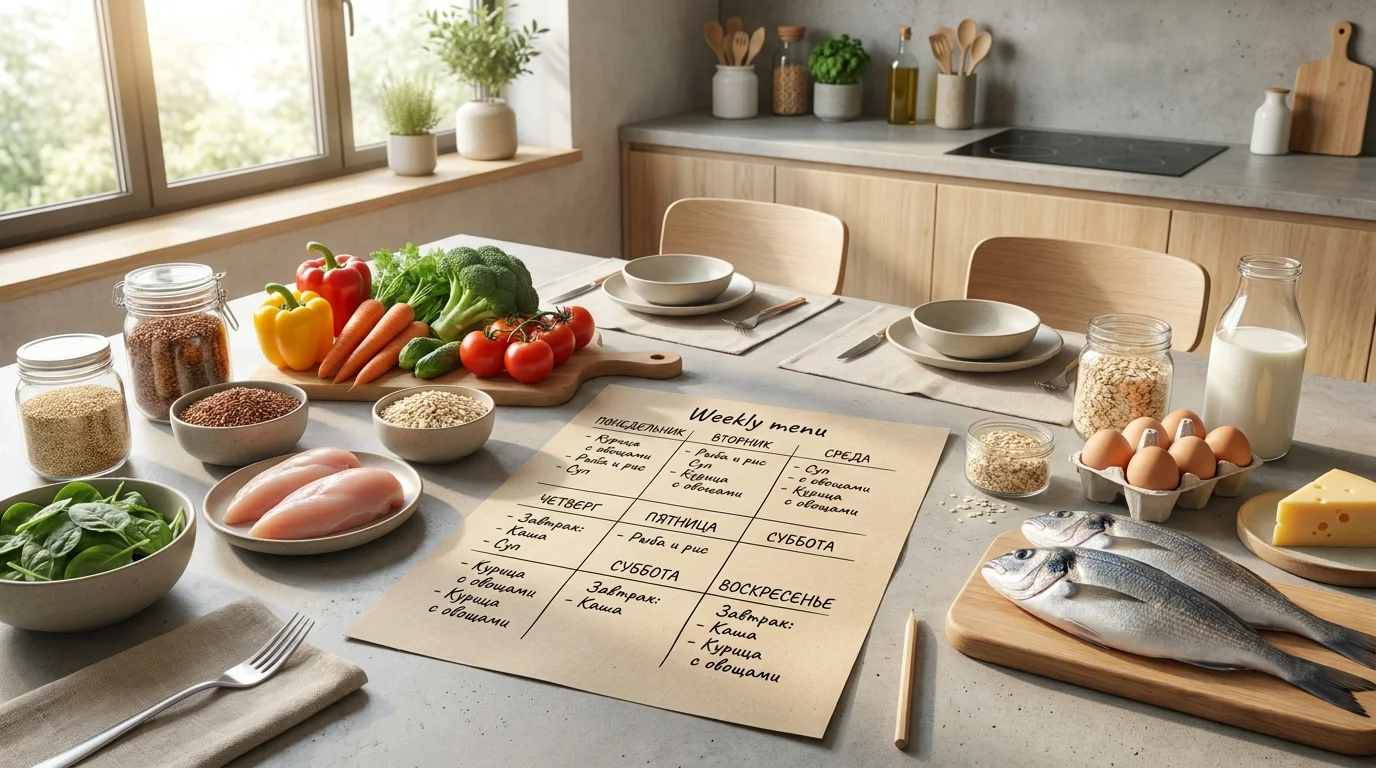
- Weekly Grocery Basics: Grains/pasta, eggs, vegetables, fruit, protein (chicken/fish/legumes), bread/pita.
- Quick Options: Frozen food, canned goods, yogurt/cottage cheese, snacks.
- Household and Hygiene: Toilet paper, napkins, trash bags, dish soap, laundry detergent, soap, shampoo.
- First Aid Kit: Band-aids, antiseptic, fever reducer, absorbent, thermometer (by agreement and without self-medication).
- Restocking Rule: If something is running out — add it to the list immediately, not "later."
Another life hack: divide purchases into "urgent," "this week," and "when there's a sale." This reduces impulse spending and saves time.
Conclusion. The first year together is not a test of perfection, but a setup of your system: house rules, chore distribution, money, and communication. The more clarity you have in the small things, the more energy you have left for closeness, rest, and shared plans.
For household agreements to work, it's convenient to keep shared purchases in one place and update them on the go. Pickt helps with this — a free mini-app in Telegram for shared shopping lists with real-time sync: t.me/PicktBot/app.