Seasonal Vegetables and Fruits of June 2026: What to Buy Now
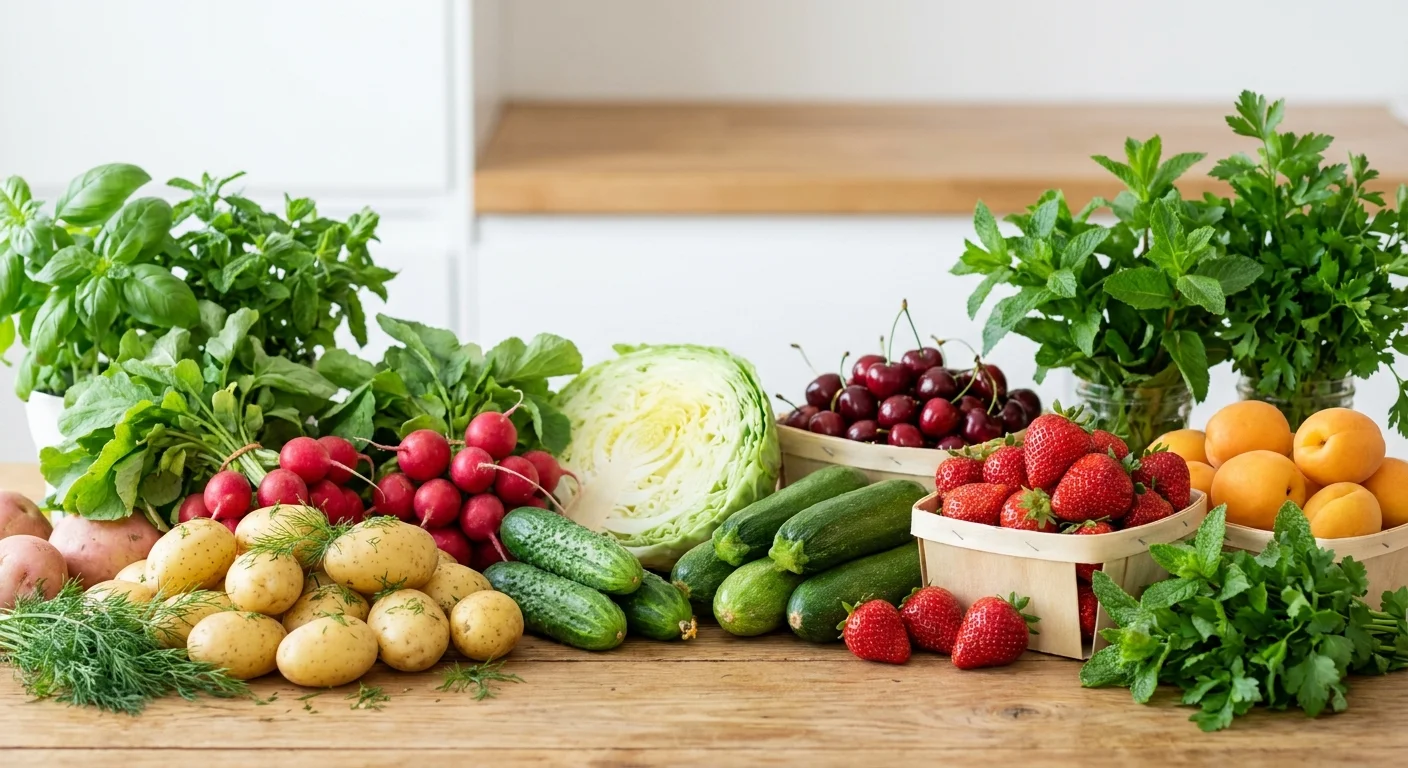
Seasonal vegetables and fruits of June are primarily young vegetables (potatoes, cabbage, beets, carrots), the first ground cucumbers and greens, as well as the peak of early berries (strawberries, cherries) and the start of apricots. In June 2026, it is more profitable to buy local products: they are more aromatic, usually cheaper, and keep better. Below is a list by category, plus tips on selection, storage, and ideas for what to add to your shopping list.
Inside: which vegetables and greens to buy in early summer, which berries and fruits are the best, what to look for when purchasing, and how to extend freshness. It is convenient to compile the list and share it with your family in Pickt — a free mini-app in Telegram with real-time synchronization: t.me/PicktBot/app.
June Vegetables: Young, Juicy, for Salads and Side Dishes
June vegetables are great because many are already "young": with thin skin and a more delicate flavor. This is the perfect time to prepare simple dishes without complex sauces — the season itself makes the taste.
- New Potatoes — choose medium-sized tubers without green spots or damp "eyes." They are tastiest when baked or boiled in their skins; store in a paper bag in a cool place, but not in the refrigerator.
- New Carrots — look for fresh tops and firm roots. Young carrots should not be kept in an airtight bag: they quickly "sweat."
- Early Beets — great for roasting and cold soups. Choose small roots: they are usually sweeter and not woody.
- Early Cabbage — light, juicy, for salads and stewing. The head should be firm for its size, without cracks or dark spots.
- Zucchini and Courgettes — local ones often appear in June. Small ones are ideal: they have thin skin and almost no large seeds.
- Radishes — choose firm ones without hollow spots, with fresh tops. If the tops are wilted, the root itself is likely also "tired."
- Cucumbers — the first ground cucumbers appear in June: they are more aromatic than greenhouse ones and often have denser flesh. A good cucumber is firm and has no soft ends.
Shopping list idea: new potatoes + dill + garlic + radishes + early cabbage — and you have a set for 2–3 quick dishes.
June Greens and Herbs: Maximum Flavor for Minimum Money
Greens are the easiest way to make summer food "like at a café": the aroma appears instantly, and there are almost no calories. In June, greens are usually the most affordable and freshest.
- Dill — for new potatoes, okroshka, salads. Check freshness by color: it should be bright green, without yellowing.
- Green Onions — choose firm stalks without sliminess at the base. Store at home in a container with a paper towel.
- Parsley — versatile for soups and sauces. If the stems are too thick, the taste may be coarser.
- Cilantro — for salads and marinades, especially if you plan to make shashlik or baked fish. Good cilantro smells strong even from a distance.
- Sorrel — a seasonal hit for sorrel soup and pies. Leaves should be dense, without black spots.
- Spinach and Salad Greens — choose leaves without wet spots and with a crisp texture. Wet leaves spoil faster.
How to extend the freshness of greens: wash, dry thoroughly, wrap in a paper towel, and place in a container. This way, greens often last 4–7 days instead of 1–2.
June 2026 Berries: Strawberries, Cherries, and the First "Sweet Baskets"
If you were looking for what to buy now that is "most June-like," the answer is berries. In June 2026, they offer the best value for taste and price, especially at the peak of the season.
- Strawberries — choose dry ones without mold or wet spots. The most aromatic are bright, with a fresh green calyx; overly glossy and uniformly sized ones are often less flavorful.
- Cherries — the fruit should be firm, without cracks, with a green stem. If the stems are mostly brown and dry, the berries have been sitting for a while.
- Early Raspberries (depending on the region) — choose dry and not crushed. Raspberries do not travel well: it is better to buy small portions.
- Honeysuckle (where it is popular) — good for quick desserts and freezing. Berries should be uniformly dark, without wrinkling.
Storing berries without waste: do not wash them in advance. Sort through, remove damaged ones, and store in a single layer on a paper towel in the refrigerator. Wash only before eating.
Quick preservation plan: eat some berries fresh, freeze some scattered on a board, and then transfer to a bag. This saves space and preserves their shape.
June Fruits: What Is Already Tasty and What Is Better to Wait For
June fruits are a transitional season: some items are still imported, while others are starting to delight with local flavor. To avoid overpaying, focus on aroma and ripeness rather than "perfect" appearance.
- Apricots — the first good batches often appear in June. A ripe apricot has a fragrance, yields slightly to pressure, and has no green "shoulders" near the stem.
- Peaches and Nectarines — quality can be inconsistent in early summer. Choose aromatic ones without hard, "stone-like" flesh; if there is no smell, the taste is often watery.
- Last Year's Apples — may be fine for baking and compotes, but not always for fresh snacking. If the skin is wrinkled and the flesh is mealy, it is better to choose berries or apricots.
- Pears — often not yet in season locally, so choose based on use: firm ones for baking, softer ones for fresh eating.
Ripening hack: apricots/peaches ripen at room temperature in a paper bag in 1–2 days. Refrigerate only when already ripe, otherwise the aroma fades.
How to Choose Seasonal Products at the Market and in the Store: A 2-Minute Checklist
When the goal is specifically seasonal vegetables and fruits of June, what matters is not the "prettiest" but the freshest and recently harvested. Below is a short checklist that works both at the market and in the supermarket.
- Check for moisture: wet trays and condensation are a risk of mold, especially for berries and greens.
- Check the aroma: seasonal fruits and berries have a smell. If there is no scent, the taste is often weak.
- Assess firmness: cucumbers, cherries, radishes should be "crunchy." Softness is a sign of spoilage starting.
- Avoid cracks and bruises: bacteria and mold quickly enter through damage.
- Buy less but more often: in June, the assortment changes quickly, and freshness is the main bonus of the season.
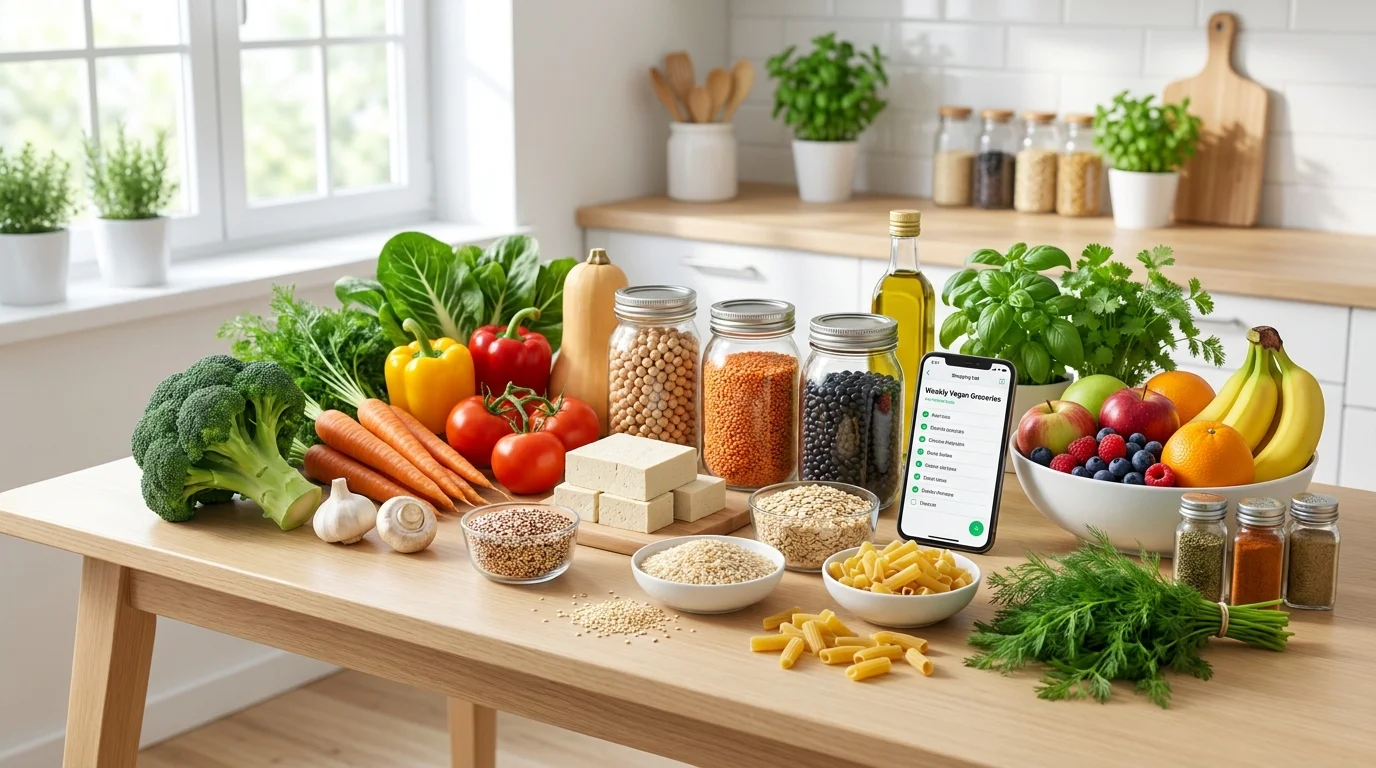
To avoid ending up with three identical bags of strawberries and no cucumbers at home, it is convenient to keep a shared list. In Pickt, you can quickly jot down categories like "vegetables/berries/greens" and share the list with loved ones in Telegram so purchases are synchronized in real time.
Ready Weekly Shopping List: Seasonal Vegetables and Fruits of June
If you do not want to think, here is a basic set for 5–7 days that can be easily adapted to your region and budget. It covers salads, side dishes, snacks, and a couple of quick desserts.
- Vegetables: new potatoes, early cabbage, cucumbers, zucchini/courgettes, radishes, carrots.
- Greens: dill, green onions, parsley, salad/spinach, sorrel (optional).
- Berries: strawberries, cherries (or raspberries/honeysuckle if available).
- Fruits: apricots, peaches/nectarines (if aromatic), apples — for baking.
Related queries often searched together: "what berries in June," "what to buy at the market in June," "seasonal products in summer," "vegetables and fruits by season."
Conclusion. June 2026 is one of the most rewarding months for shopping: plenty of fresh greens, young vegetables are already truly tasty, and berries provide maximum enjoyment without overpaying. Put together a seasonal set, cook simpler and more often, and keep the list handy — for example, in Pickt (@PicktBot), so everyone at home sees the current purchases and does not duplicate each other.
Frequently Asked Questions
Which seasonal vegetables and fruits of June are the most cost-effective?
Usually, these are local greens, radishes, early cabbage, new potatoes, and from the sweet category — strawberries at the peak of the season. The shorter the distance from field to counter, the lower the price and the higher the taste.
Can I wash berries and greens in advance for convenience?
It is better not to. Washing adds moisture and accelerates spoilage. The optimal approach: sort and store dry, and wash just before eating.
How to tell if cherries are fresh?
Look at the stem: it should be green and firm. The berries should be dry, without cracks or stickiness, with uniform color.
What should I freeze in June to save money later?
It is profitable to freeze strawberries, raspberries, and honeysuckle scattered when the price is at its lowest. You can also freeze dill and parsley in portions — this saves time in winter.