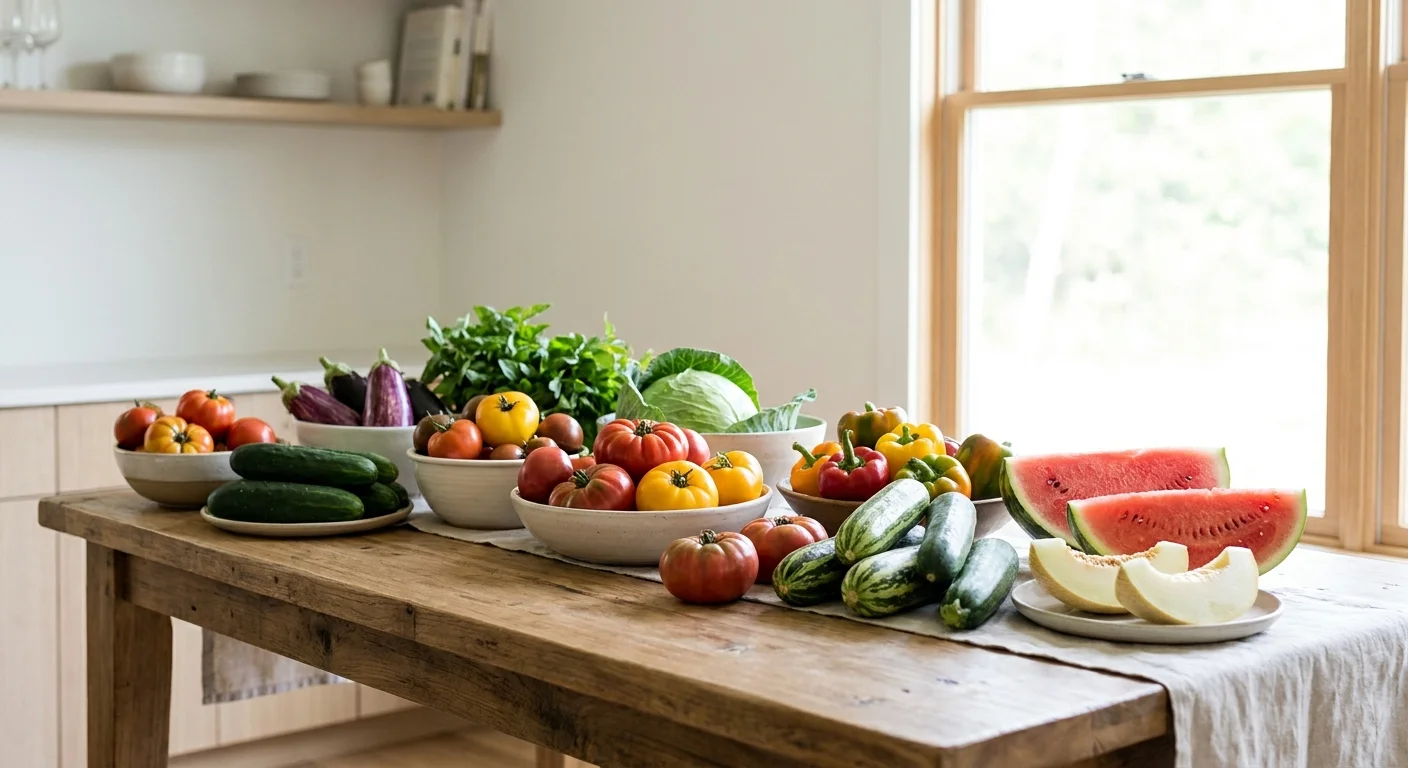
Seasonal produce in August is the peak of affordable vegetables and herbs, and the 'last window' of low prices before the autumn price hike. In August 2026, it's most advantageous to buy tomatoes, cucumbers, zucchini, eggplants, peppers, cabbage, beets, and carrots, as well as watermelons, melons, and early apples. Below is a list by category, tips on selection and storage, and what you should freeze or preserve.
Inside: 1) vegetables that are usually cheapest in August; 2) seasonal fruits and berries; 3) herbs and 'quick' additions to your diet; 4) mushrooms and how to buy them safely; 5) preservation ideas and a weekly shopping plan.
1) August 2026 Vegetables: Maximum Flavor and Minimum Price
The main reason to hunt for vegetables in August is the mass harvest. This is when 'seasonal vegetables in August' are often noticeably cheaper and of better quality: less greenhouse wateriness, more aroma and sugars.
- Tomatoes — choose meaty ones for salads and plum-shaped ones for sauces. For preserves, it's better to buy slightly underripe ones: they are denser and less juicy.
- Cucumbers — for salads, choose firm ones without soft tips; for pickling, small ones with pronounced bumps. If cucumbers are bitter, cut off the ends and soak for 30–60 minutes.
- Zucchini and Courgettes — the most versatile: fritters, stews, casseroles, cream soup. Young ones (up to 20–25 cm) are usually more tender and don't need peeling.
- Eggplants — choose shiny, heavy for their size, with a green stem. To reduce bitterness, slice, salt for 15–20 minutes, and pat dry.
- Sweet Peppers — in August, 'meaty' ground peppers often appear. Red is sweeter, green is more herbaceous; both are good for lecho and freezing.
- Cabbage — early white cabbage for salads and stewing, cauliflower and broccoli for freezing. Fresh cabbage should be dense and heavy.
- Carrots, Beets, Onions — a basic set for soups and roasting. In August, it's convenient to buy for a week, but don't store them in warmth: root vegetables wilt faster.
Practical tip: to avoid buying too much, keep a shared list for your family or neighbors. In Pickt (a mini-app in Telegram), it's easy to mark what you've already bought and what you need to add, and the list syncs in real time: t.me/PicktBot/app.
2) Fruits and Berries: What to Buy in August While It's Tasty and Affordable
If your query is 'which fruits are seasonal in August', focus on local origin: it's usually cheaper and more aromatic. August 2026 is the time for watermelons, melons, and an active transition from berries to apples and pears.
- Watermelons — look for a dry stem, contrasting stripes, and a 'yellow field' (spot) on the side. Too shiny skin can sometimes be a sign of underripeness.
- Melons — a ripe one smells at the 'nose', springs back slightly, but doesn't give way. Don't buy ones with cracks or wet spots.
- Early Apples — good for charlotte and puree, but store worse than late varieties. Plan for 3–5 days, not a 'bag for a month'.
- Plums — choose without dents, with a natural waxy bloom. Soft plums for jam or sauce, firm ones for compotes.
- Peaches/Nectarines (depending on the region) — aroma at the stem is more important than color. Too hard ones will ripen at home in 1–2 days at room temperature.
- Blackberries, Late Raspberries — buy in small trays and sort immediately: berries quickly release juice.
Storage: keep whole watermelon and melon in a cool place, and cut ones in the fridge in a container. Don't wash berries in advance: rinse in portions before eating, so they last longer.
3) Herbs, Garlic, Spices: A Cheap Way to Make Food 'Like in a Restaurant'
Seasonal produce in August isn't just 'big' vegetables, but also herbs that transform the taste of dishes for pennies. August 2026 is usually generous with dill, parsley, basil, and green onions.
- Dill and Parsley — add to salads, soups, potatoes. To keep herbs fresh longer, wrap in a slightly damp towel and put in a bag.
- Basil — ideal for tomatoes, pasta, sauces. The fridge 'blackens' basil; it's better to store like a bouquet in a glass of water for 1–2 days.
- Cilantro — pairs well with eggplants, beans, meat. If you don't like the 'soapy' taste, start with a small amount and add to warm dishes.
- Young Garlic — aroma is milder than winter garlic. Use in marinades, sauces, for roasting vegetables.
- Hot Peppers — it's profitable to buy and freeze whole. Only cut with gloves and don't touch your face.
Quick 10-minute preserve: make 'green butter'. Mix soft butter, dill/parsley, garlic, and salt, form a roll, and freeze. Then cut off slices for potatoes, fish, vegetables.
4) Late Summer Mushrooms: How to Buy Safely and Cook Without Surprises
In some regions, August marks the start of the active mushroom season. But safety is more important than savings: buy mushrooms only from trusted sellers or in stores, and forage only if you are confident in identifying species.
- Button Mushrooms and Oyster Mushrooms — a stable option without seasonal risks. In August, they are convenient to combine with zucchini and sour cream or add to stews.
- Wild Mushrooms — only buy fresh ones, without sliminess or strong odor. Old mushrooms often accumulate more contaminants and are harder to digest.
Kitchen rule: don't store fresh mushrooms for long. It's better to cook them on the day of purchase or the next day, keeping them in a paper bag in the fridge (not in a sealed bag to prevent condensation).
5) August Preserves: What's Profitable to Freeze, Pickle, and Turn into Sauces
August 2026 is the perfect month to 'carry over' seasonal prices into autumn and winter. Even 1–2 hours a week yields noticeable savings: vegetable semi-finished products reduce delivery costs and impulse purchases.
What's Best to Freeze
- Peppers — in strips or cubes, immediately in portions for soup/stew.
- Broccoli/Cauliflower — break into florets, blanch for 2–3 minutes, cool, and freeze.
- Herbs — chopped in ice cube trays with water or oil.
- Berries — spread on a tray, then in a bag: this way they won't stick together.
What's Convenient to Can and Prepare 'in a Jar'
- Tomato Sauce — from plum tomatoes: simmer with salt and herbs, pour into sterile jars.
- Lecho — peppers + tomatoes + onions. An excellent base for pasta, buckwheat, meat.
- Cucumbers — quick pickles or classic pickling if you have storage space.
- Zucchini Caviar — a good way to 'use up' large zucchini.
Mini one-evening plan: buy 3–4 kg of tomatoes and 1–2 kg of peppers. Use part for sauce, part for freezing. This covers several future dinners at once.
6) How to Plan Your Weekly Shopping and Not Overpay at the End of August
The end of August often brings price 'swings': some places have harvest sales, while others already see price increases due to logistics and weather. A simple strategy works: use seasonal August produce as a base, and buy the rest selectively.
- Build a base for 5–7 days: tomatoes, cucumbers, cabbage, carrots, onions, herbs, 1–2 seasonal fruits.
- Add 2 'rescue dishes': stew (zucchini + eggplant + pepper) and pasta/buckwheat with tomato sauce.
- Plan perishables: berries and herbs for the first 2–3 days, root vegetables for the end of the week.
- Check the shared list: to avoid buying oil/onions/salt a second time. In Pickt, it's easy to share a list among household members: someone marks 'taken', and everyone sees the update immediately.
Savings tip: if you see very cheap vegetables 'for sauce' (tomatoes, peppers), buy a bit more and process them immediately. Raw 'stock' often spoils and turns a discount into waste.
Conclusion: seasonal produce of August 2026 is your chance to fill your diet with fresh vegetables and fruits at the best price and prepare preserves for the cold season. Prioritize tomatoes, cucumbers, zucchini, eggplants, peppers, cabbage, and watermelons/melons, and use herbs and sauces as cheap flavor enhancers. Plan your shopping in short cycles of 3–7 days — this way you save money and eat as fresh as possible.
Frequently Asked Questions
Which seasonal August produce is the most budget-friendly?
Usually, it's ground tomatoes, cucumbers, zucchini, eggplants, sweet peppers, cabbage, and herbs. They arrive in mass quantities at the market, so prices are often lower than in July and noticeably lower than in September.
What should I buy in August to avoid overpaying in autumn?
Freeze peppers, broccoli/cauliflower, and herbs, and make tomato sauce or soup base from tomatoes. These preserves most often replace expensive 'winter' vegetables and ready-made sauces.
How to tell if a watermelon or melon is ripe?
For watermelon, look for a dry stem, contrasting stripes, and a yellow spot on the side. For melon, a strong aroma at the 'nose' and firmness without soft spots or cracks are important.
How to store herbs so they don't wilt in a day?
Wrap dill and parsley in a slightly damp towel and put in a bag in the fridge. Basil is better stored at room temperature like a bouquet in water and used within 1–2 days.