Pickles and marinades are a set of simple preserves where the right product list, clean jars, and basic brine/marinade proportions matter most. Below is a practical checklist for the 2026 season: what to buy for pickling cucumbers, tomatoes, cabbage, and mushrooms, which spices to keep on hand, and 4 basic recipes (cold pickling, hot brine, vinegar marinade, and quick marinades). The list is designed for a family, a couple, or neighbors who share shopping and cook together.
Seasonality matters: in summer and early autumn, vegetables are at their firmest and most flavorful, and prices are lower—it's the perfect time to put up a couple of "standby" jars and stock the pantry.
1) Universal Product List for Pickles and Marinades
This section is a basic set that covers most homemade preserves: from sauerkraut to pickled cucumbers. It's convenient to keep as a checklist and mark off purchases as you gather them.
Vegetables and Base
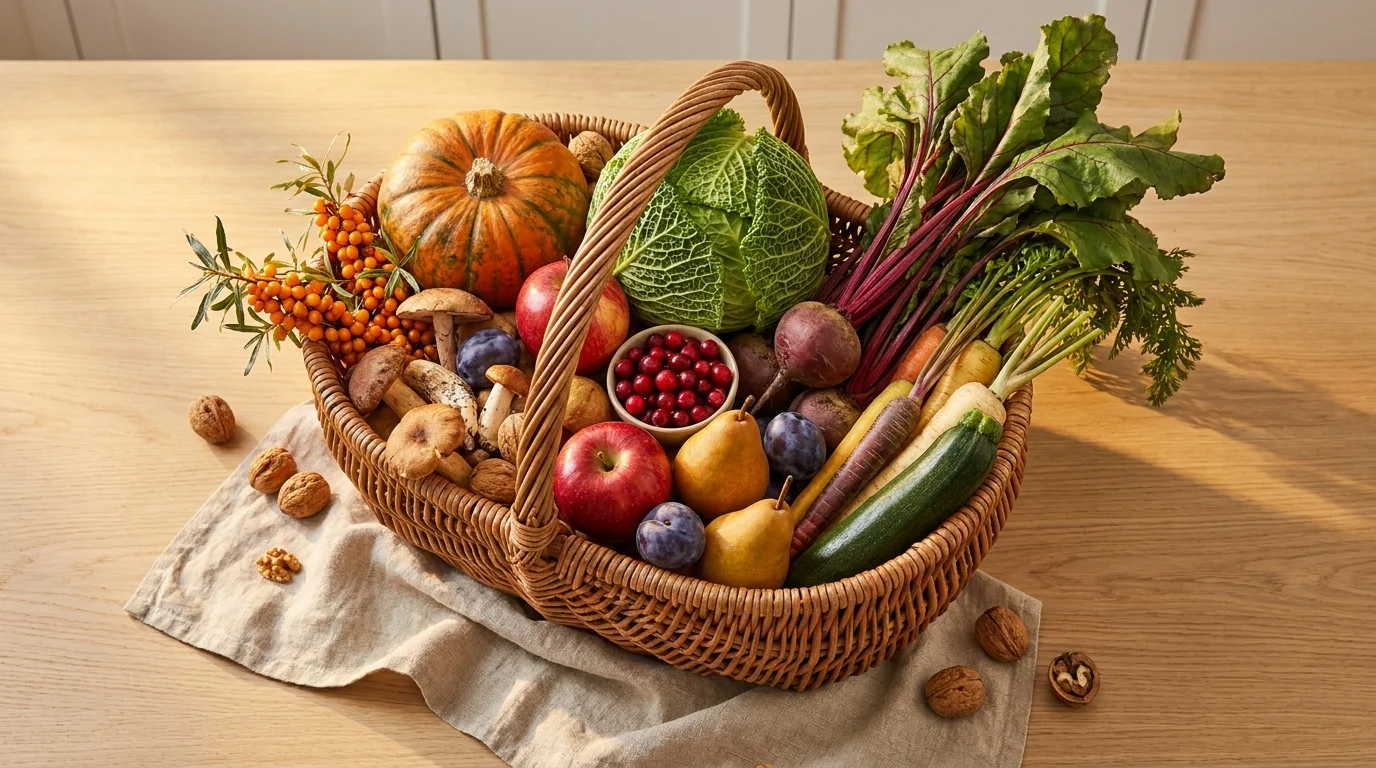
- Cucumbers (preferably pickling variety, small, firm)
- Tomatoes (plum or firm small ones)
- White cabbage (for sauerkraut)
- Carrots (for cabbage and mixed pickles)
- Onions, yellow or red (for marinades)
- Garlic
- Sweet bell peppers (optional, for mixed pickles)
- Beets (for "pink" cabbage)
- Mushrooms (only confidently identified and fresh)
Salt, Sugar, Acid
- Rock/table salt without additives (not iodized) — for pickling and fermenting
- Sugar — for balancing flavor in marinades
- Vinegar 9% (or 6%) — for classic marinades
- Citric acid — an alternative to vinegar in some preserves
Spices and Herbs (minimal "stock")
- Black peppercorns
- Allspice
- Bay leaves
- Mustard seeds (optional)
- Dill umbels/dill seeds
- Currant, cherry, oak, or horseradish leaves (for cucumber crunch)
- Horseradish root/leaves
- Cloves, coriander (to taste, for marinades)
Containers and Consumables
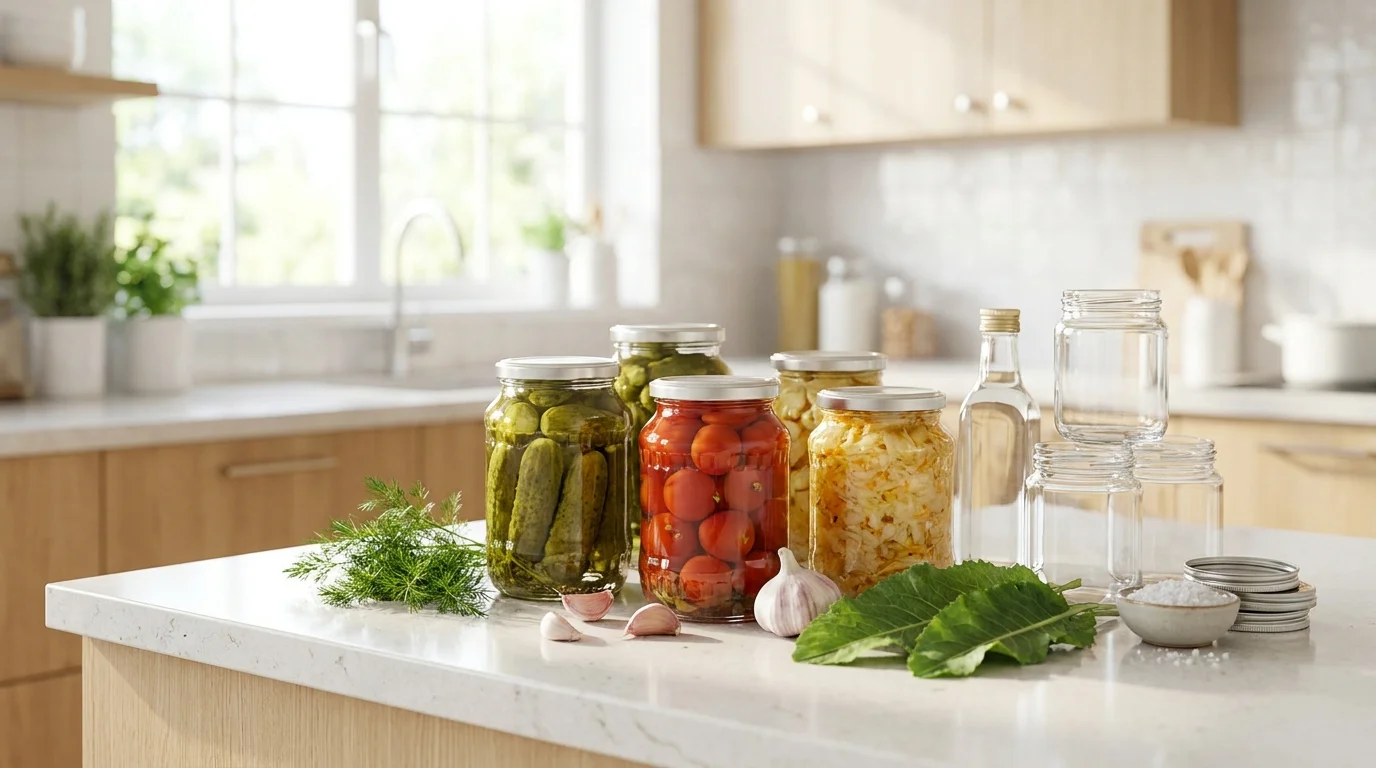
- Jars 0.5–1 L (convenient for mixed pickles and small portions)
- Screw lids or lids for sealing (new/undamaged)
- Canning key (if needed)
- Funnel, tongs/oven mitts
- Large pot for sterilization or pasteurization
If you're shopping together, create a shared list in Pickt (Telegram Mini App): it's easy to divide "vegetables/spices/containers" and mark who has bought what. Open: t.me/PicktBot/app.
2) Preparation: Jars, Water, Salt — A Short Safety Protocol
This section ensures consistent results: so pickles don't sour prematurely and marinades don't "explode." Follow this checklist—and 80% of problems will disappear.
- Inspect jars: no chips on the rim or cracks.
- Wash jars and lids with baking soda or a neutral detergent, rinse thoroughly.
- Sterilization (for marinades): 10–15 minutes over steam or 10 minutes in the oven at 120–130°C (place jars in a cold oven and heat together). Lids are usually boiled for 5 minutes.
- For cold pickling, sterility is also important, but very clean jars and boiling water for lids are often sufficient.
- Water: filtered or boiled/cooled — especially for pickling cucumbers (hard water can affect flavor and crunch).
- Salt: only without iodine or anti-caking agents. Iodized salt often causes softness and cloudiness.
- Temperature regime: the first 1–3 days of fermentation occur at room temperature, then in the cold (refrigerator/cellar).
Important: mushrooms and low-acid preserves require extra attention to technique. If in doubt, choose proven recipes with vinegar and pasteurization.
3) Basic Proportions: Brine and Marinade "By Heart"
This section is a cheat sheet for proportions. Save it, and you'll be able to make pickles and marinades without constantly searching for recipes.
Brine for Pickling (Classic)
- Cold brine: 50–60 g salt per 1 L water (5–6%).
- Hot brine: 40–50 g salt per 1 L water (4–5%).
- For sauerkraut: 18–22 g salt per 1 kg cabbage (about 1 level tbsp per 1 kg).
Vinegar Marinade (Universal)
- Per 1 L water: 1 tbsp salt (20–25 g) + 2–4 tbsp sugar (to taste).
- Vinegar 9%: usually 70–100 ml per 1 L water (more means more acidic and stable).
- Spices: bay leaf, peppercorns, allspice, cloves/coriander — 2–6 pieces each depending on volume and taste.
Quick Marinade for Onions/Vegetables (15–30 minutes)
- 200 ml water + 50 ml vinegar 9% + 1 tbsp sugar + 1 tsp salt.
- Optional: black pepper, bay leaf, dill.
Related queries this block covers: "brine for cucumbers," "marinade for vegetables," "how to pickle cucumbers," "pickled cucumbers for winter".
4) Cucumbers: 2 Reliable Options — Salted and Pickled
This section covers the most popular seasonal product. Cucumbers love freshness, cold, and the right salt, and for crunch, leaves and a quick start are key.
Option A: Salted Cucumbers (Cold Pickling)
- Preparation: Soak cucumbers in cold water for 2–4 hours (especially if not straight from the garden).
- Per 1 L jar: 1–2 dill umbels, 2–4 garlic cloves, 3–6 peppercorns, horseradish/currant/cherry leaf.
- Brine: 50–60 g salt per 1 L cold water.
- Assembly: Layer spices, then cucumbers, pour brine to the rim.
- Fermentation: 1–3 days at 18–22°C (place on a plate), then move to cold storage.
Option B: Pickled Cucumbers (with Vinegar, for Winter)
- Fill clean/sterile jars with cucumbers and spices (dill, garlic, pepper, bay leaf to taste).
- Pour boiling water over them for 10 minutes, drain (can repeat 2 times for heating).
- Prepare marinade: per 1 L water, 1 tbsp salt + 3 tbsp sugar, bring to a boil.
- Remove from heat, add 80–100 ml vinegar 9% per 1 L marinade.
- Pour into jars, seal, turn upside down, wrap for 8–12 hours.
Flavor tip: If you like a "barrel" profile, add a bit of mustard seeds and an oak/horseradish leaf.
5) Tomatoes, Cabbage, and Mixed Pickles: Simple Preserves Without Complex Math
This section helps diversify the 2026 season: tomatoes bring sweetness, cabbage offers the benefits of fermentation, and mixed pickles save jars and time.
Pickled Tomatoes (Universal)
- Per 1 L marinade: 1 tbsp salt + 3–4 tbsp sugar + 70–90 ml vinegar 9%.
- Aromatics: garlic, peppercorns, bay leaf; basil or celery work well.
- Technique: Heat with boiling water 1–2 times, then pour marinade and seal.
Sauerkraut (Classic Fermentation)
- Shred cabbage, grate carrots (about 1 carrot per 1–1.5 kg cabbage).
- Add salt: 18–22 g per 1 kg cabbage. Knead until juice releases.
- Pack tightly into a container; juice should cover the cabbage.
- Leave at room temperature for 2–4 days, pierce to the bottom daily to release gases.
- When the taste is right, move to cold storage.
Mixed Vegetable Pickles (Cucumbers + Tomatoes + Peppers)
- Layer the jar, adding onion rings and garlic.
- Use the universal vinegar marinade from section 3.
- For color and flavor, add 1–2 carrot slices and a couple of dill sprigs.
If you're making mixed pickles "as a group," it's convenient in Pickt to split the purchase: one takes vegetables, another spices and lids, a third vinegar/sugar/salt. That way, nothing is forgotten or bought twice.
6) Quick Marinades and Mushrooms: When You Need It "Right Now"
This section is for those times when you want the taste of pickles without waiting a week. Quick marinades are great for barbecue, potatoes, and salads, while mushrooms require care.
Quick Pickled Onions (15 minutes)
- Slice 2 onions into thin half-rings.
- Pour over marinade: 200 ml water + 50 ml vinegar 9% + 1 tbsp sugar + 1 tsp salt.
- Leave for 15–30 minutes, drain excess liquid.
Quick Lightly Salted Cucumbers (in a bag, 2–6 hours)
- For 500 g cucumbers: 1 tsp salt, 2 garlic cloves, dill, pepper to taste.
- Place in a bag/container, shake, refrigerate.
Pickled Mushrooms (Basic Guideline)
- Use only edible mushrooms you are sure of; clean and wash thoroughly.
- Pre-boil (time depends on type), then cook in marinade.
- Marinade per 1 L water: 1 tbsp salt + 1–2 tbsp sugar + 70–100 ml vinegar 9% + bay leaf and pepper.
- Store in cold conditions and maintain container cleanliness.
In summary: Pickles and marinades in 2026 are easiest to make using the principle of "one list — several basic formulas." Keep the right salt, spices, and clean containers on hand, then choose: fermentation (sauerkraut/pickling) for a live flavor or vinegar marinade for a stable winter shelf. Create a seasonal shopping checklist and prepare in batches—it's faster and more economical.
Frequently Asked Questions
1) Can I use iodized salt for pickling?
Not recommended. For fermentation and pickling, it's better to use salt without iodine or additives: it ensures more stable fermentation and reduces the risk of softness and cloudy brine.
2) Why do cucumbers turn out soft and not crunchy?
Common reasons: warm fermentation for too long, old cucumbers, iodized salt, soft/hard water, and lack of "crunch leaves" (horseradish, oak, currant). Soaking for 2–4 hours and quickly moving to cold storage after active fermentation helps.
3) How much vinegar should I add if it's 6% instead of 9%?
A simple guideline: you need about 1.5 times more 6% vinegar than 9% to achieve similar acidity. For example, instead of 80 ml of 9%, use about 120 ml of 6% per 1 L of marinade.
4) Do I need to sterilize jars for sauerkraut?
Strict sterilization is not necessary, but cleanliness is critical: wash the container thoroughly, scald lids with boiling water, and use quality salt. For winter marinades, sterilization of jars and lids is highly recommended.