How to Manage Household Chores Without Stress: A Simple Daily System
Household chores often turn into an endless stream of small tasks: buy, wash, sort, pay, fix. When everything is kept in your head, your brain works like a reminder app, not a helper — hence the fatigue and irritation.
The good news: a stress-free domestic life isn't about perfect order or "getting up an hour earlier." It's about simple home organization where decisions are made once, and then the system works almost by itself.
Below are practical principles and specific steps that will help you manage household chores calmly, even when time is short and tasks are many.
1) Clear the "noise" from your head: Record tasks and agreements
The main source of stress in domestic life isn't the number of tasks, but the uncertainty. "Need to buy," "someday wash the windows," "seems like the detergent is running out" — all this hangs in the background and consumes resources.
The first step to organizing your home is to get everything out of your head and into clear lists. It's important to separate them by type so the list doesn't turn into a dumping ground.
Minimum set: shopping, regular chores, one-time tasks. Shopping — a short, living list that is constantly updated. Regular chores — things that repeat (laundry, cleaning the bathroom, changing bed sheets). One-time tasks — everything that can be done once (fix a door, take clothes to the dry cleaner).
The second point — family agreements. If "someone" is supposed to take out the trash or buy milk, then no one is. Assign a responsible person or make the task shared, but with a clear trigger: "whoever notices — adds it to the list."
2) Build the "skeleton" of your routine: 10–20 minutes a day solves half the problems
A stress-free household rests on short, regular actions. They don't require heroics, but they prevent small things from accumulating to the level of a "weekend deep clean."
Instead of big plans, try the principle: a little, but every day. 10–20 minutes is a realistic amount that's easier to fit into life than "clean everything completely."
Example of a light daily routine:
- 2 minutes: Collect trash and stray items from visible surfaces.
- 5 minutes: Kitchen — wipe down the countertop and sink.
- 5 minutes: Start a load of laundry or put away clean laundry (alternate).
- 3 minutes: Quick pass with a broom/vacuum on the floor in the hallway/kitchen.
- 2 minutes: Check the shopping list and add items that are running low.
The point isn't to do everything daily, but to maintain a basic level of order daily. Then cleaning stops being an event and becomes the background.
If there are several people at home, split the routine into "micro-responsibilities." One is responsible for dishes in the evening, another for taking out the trash, a third for restocking household supplies. This reduces conflicts and makes expectations transparent.
3) Home organization by zones: Order where it's really needed
Trying to achieve perfect order everywhere is a direct path to burnout. A different approach works: identify key zones and make them convenient for your specific life.
Start with three places that most strongly affect the feeling of chaos: the hallway, kitchen, bathroom. If it's clear where things belong there, the domestic burden noticeably decreases.
Zone rules that simplify household management:
- One category — one place. Keys always in one bowl/hook, batteries in one container.
- The closer to the action, the better. Trash bags — next to the bin, cleaning supplies — where you use them.
- Eliminate "temporary" piles. If items don't have a home, they'll live on a chair. Assign a place or get rid of them.
- Reduce the excess. Duplicates and "just in case" items create visual noise and complicate cleaning.
Good home organization is when you don't need to decide each time where to put something. The decision is already made, and your hand acts automatically.
4) Shopping without chaos: Plan meals and keep supplies under control
A frequent cause of stress is last-minute shopping. As a result, you spend more time, money, and energy: you have to go to the store again, come up with dinner on the fly, and argue because "no one bought it."
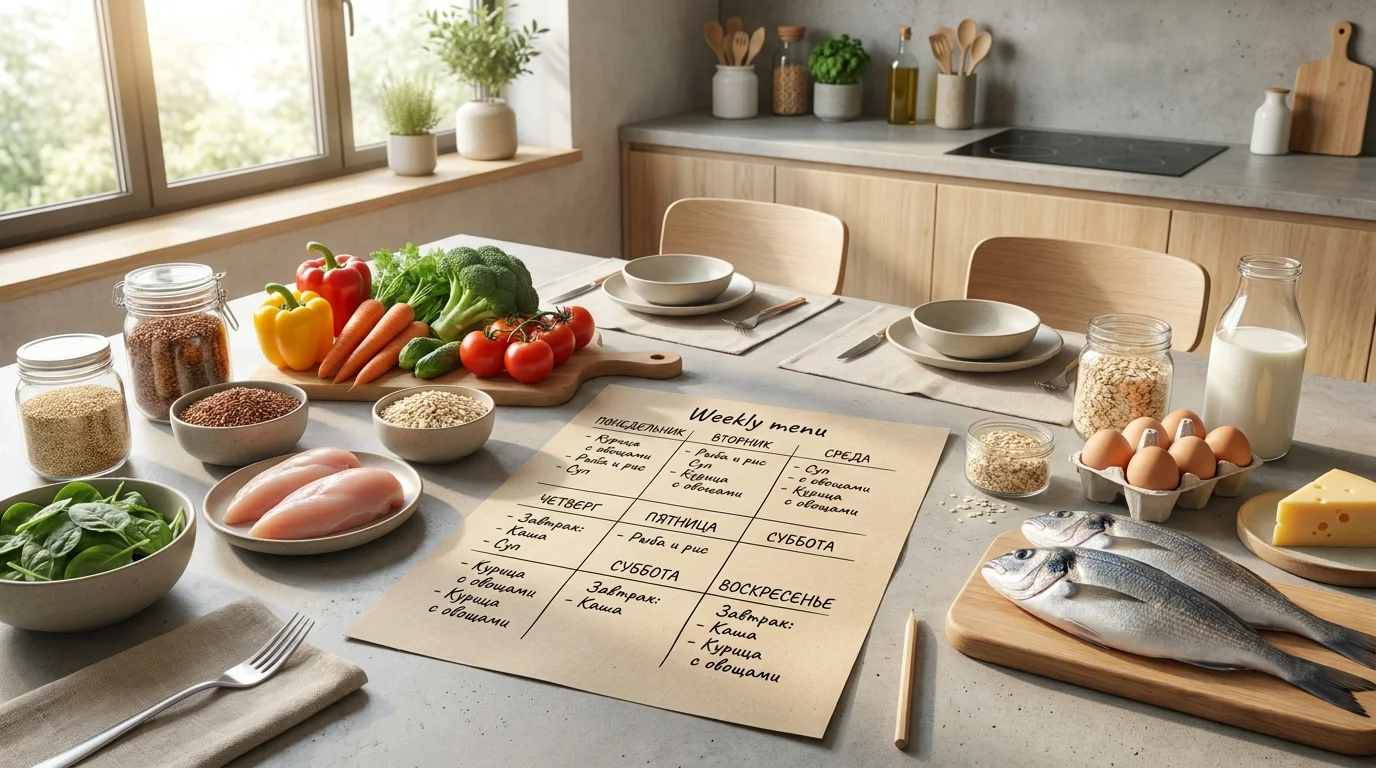
For a stress-free domestic life to become reality, two habits are enough: a plan for 3–4 days and a clear shopping list. You don't have to plan a weekly menu — start small.
The "menu skeleton" practice: Choose 6–8 simple dishes your family eats without argument. Then combine them, changing sides and proteins. This reduces the number of decisions and speeds up filling your cart.
Checklist: How to make shopping faster and calmer
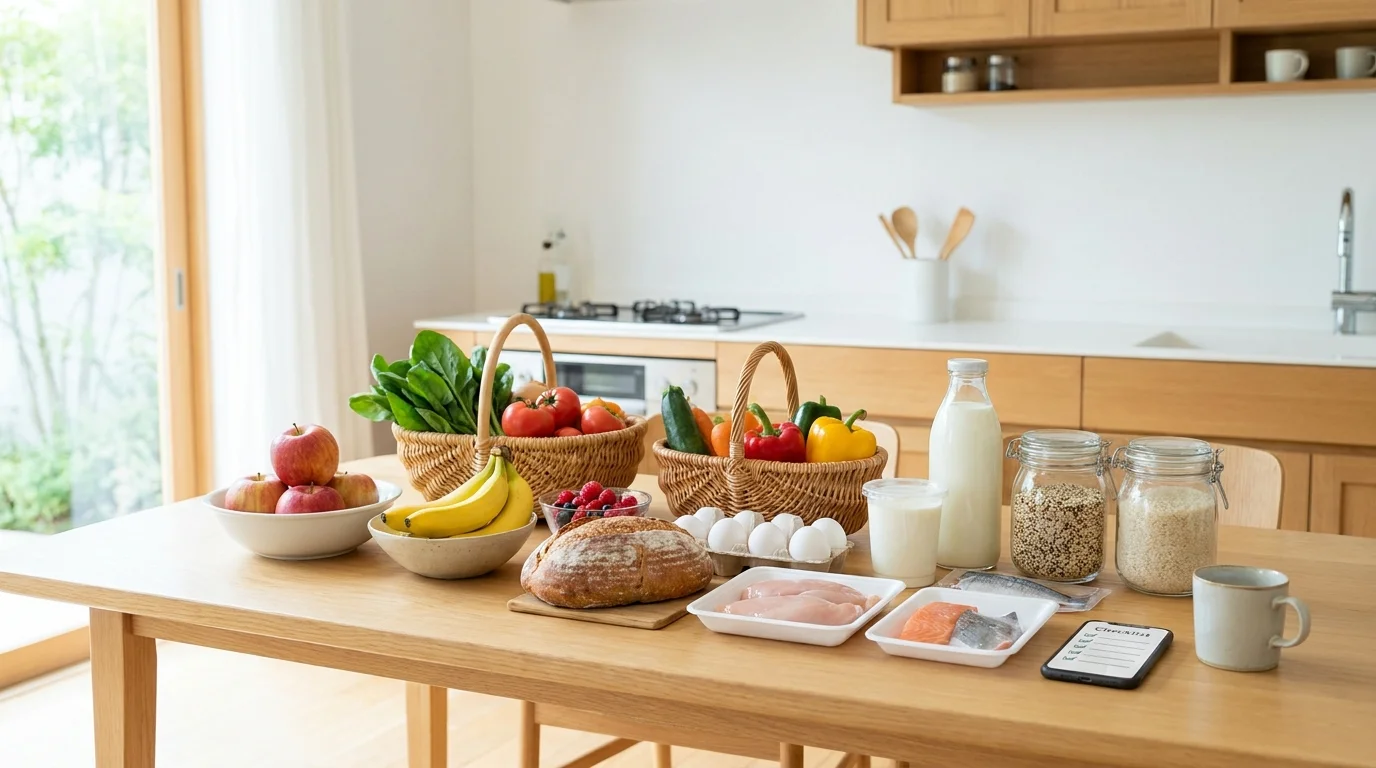
- Before going to the store, spend 2 minutes checking the fridge and pantry.
- Organize your list by categories: dairy, vegetables, meat/fish, groceries, household items.
- Maintain a "minimum stock" for 5–7 items (tea, cereal, eggs, oil, toilet paper).
- Add to the list immediately when something runs low, not "later."
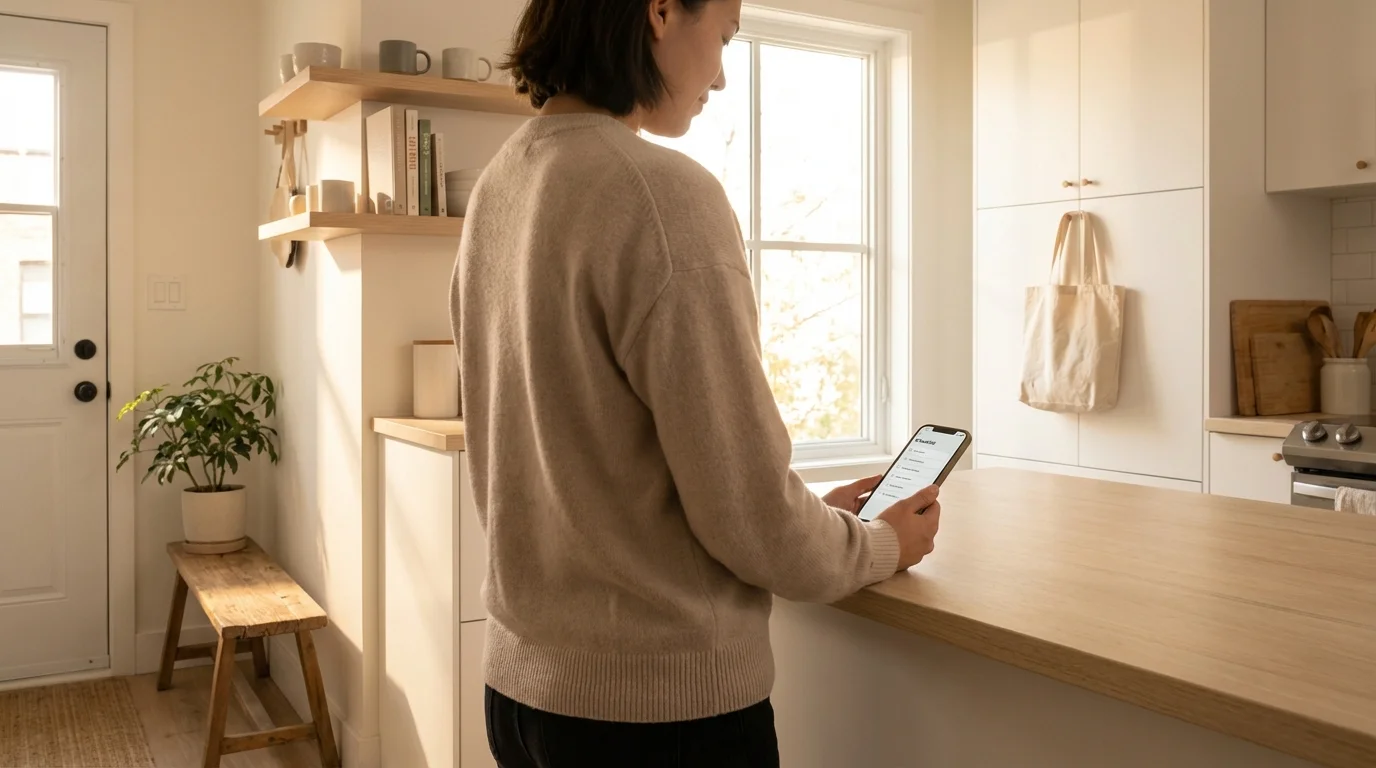
If several people are involved in shopping, synchronization is important. When there's one shared list, duplicates, omissions, and vague messages like "buy something for tea" without specifics disappear.
5) Delegation and family rules: Fewer complaints, more clarity
Even a perfect system breaks if it rests on one person. Household management is a shared process, and the clearer the rules, the less tension.
Start the conversation not about "who's to blame," but about "what's more convenient for us." Formulate 3–5 simple agreements that are realistic to follow. For example: "dishes don't sleep in the sink," "take out the trash when the bag is 2/3 full," "whoever used the last of something adds it to the shopping list."
A useful technique — task rotation. If one person always cleans the bathroom and another always buys groceries, over time a feeling of unfairness appears. Switch every month or every quarter — this evens out the load.
And one more thing: don't strive for perfection. In domestic life, sustainability is more important than perfectionism. "Good enough" every day is better than "perfect" once every six months.
Conclusion
A stress-free domestic life starts with simple things: getting tasks out of your head, building a short routine, organizing key zones, and streamlining shopping. When decisions are made in advance, household management stops requiring constant control and frees up time for life.
To keep a shared shopping list from scattering across chats and notes, it's convenient to manage it where you already communicate. In the free mini-app Pickt for Telegram, you can create shared lists with real-time synchronization — link: t.me/PicktBot/app.