
How to Save on Groceries for a Family of 4: A Practical Plan Without Unnecessary Restrictions
When there are four people in a family, the grocery cart grows imperceptibly: milk runs out every day, fruit 'disappears' by evening, and spontaneous purchases at the checkout turn into a noticeable sum by the end of the month. Yet, saving for a family doesn't have to mean giving up normal nutrition.
The main idea is simple: less chaos means less overspending. If you know in advance what you'll be cooking and what you already have at home, the family budget becomes predictable, and groceries are bought for a purpose, not 'just in case'.
Below is a practical plan that can be implemented in 1–2 weeks. It's suitable for an ordinary family with work, school/kindergarten, and minimal time for complex calculations.
1) Start with a Clear Limit and Tracking: Without Numbers, You Can't See Savings
Saving starts not at the store, but at home—with understanding how much you spend and how much you want to spend. If you don't track expenses, your brain relies on feelings, and they often deceive: 'it seems like we didn't buy anything extra.'
Choose a simple format: a weekly or monthly limit. For a family of 4, a weekly limit is usually more convenient: it's easier to adjust purchases and not 'eat up' the budget in the first two weeks.
Next—minimal tracking. You don't need to enter every bun into a spreadsheet. It's enough to note receipt totals and split them into 2 categories: 'staple foods' and 'treats/snacks'. After 2–3 weeks, it will become clear where the family budget is 'leaking'.
- Step 1: set a weekly limit (e.g., X rubles) and stick to it for 4 weeks.
- Step 2: save receipts or photos of receipts and record the total amount.
- Step 3: once a week, review what most often pushes you over the limit.
2) A 3–4 Day Meal Plan: Fewer Wastages and 'Emergency Deliveries'
Planning a menu for a month is difficult and quickly becomes tedious. A 3–4 day plan is much simpler: it's flexible and doesn't tie you to a strict schedule, yet it already reduces spontaneous spending.
The point is to buy ingredients for specific dishes, not a 'set of family groceries', half of which later spoils. This is especially noticeable with greens, vegetables, dairy, and ready-made meals 'in case I don't have time to cook'.
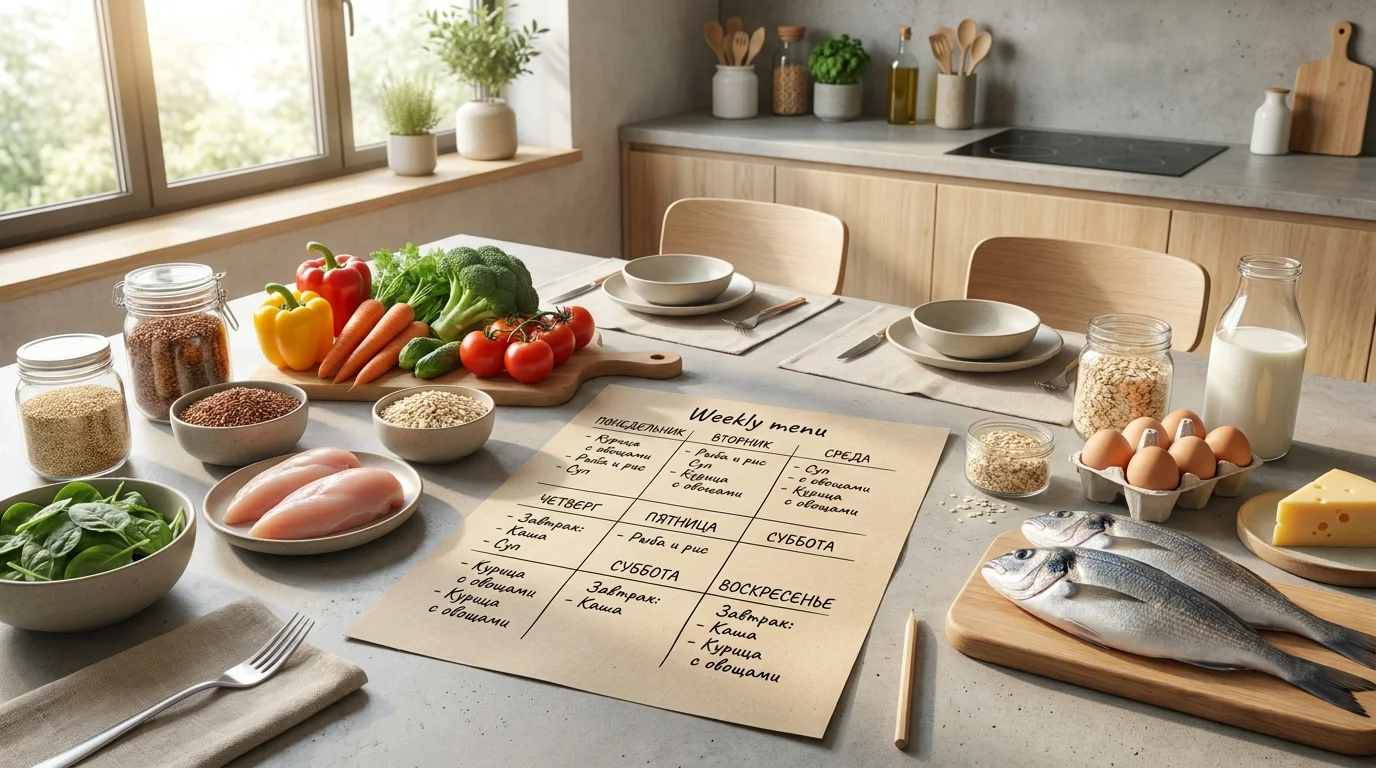
Create a basic matrix: 2–3 dinners, 1–2 quick breakfasts, snacks for the kids, and one 'backup' option (e.g., freezer meals or pasta). Repetition is normal: saving for a family often relies on simple, familiar dishes.
Mini-plan for 4 days (example):
- Dinner 1: chicken + grain + seasonal vegetable salad.
- Dinner 2: soup/stew for 2 days (part can be frozen).
- Dinner 3: fish/patties + side dish + vegetables.
- Backup: pasta/scrambled eggs/dumplings from the freezer (to avoid ordering delivery).
A couple of rules that actually save money: cook one 'large' soup or stew for 2 days, use leftover side dishes in salads/casseroles, and keep a clear set of 'quick' foods at home to avoid buying ready-made meals.
3) Shopping List and Store Rules: How to Avoid Overspending on Autopilot
The fastest way to reduce the receipt is to stop buying 'from memory'. When there are four people in a family, everyone is sure that 'the milk is definitely out', but in the end, there are three cartons at home.
The shopping list doesn't need to be perfect, just convenient. If all adults (and sometimes teenagers) use it, it works 2–3 times better: fewer duplicates, fewer forgotten items, fewer sudden trips to the store.
Store rules that provide tangible savings for a family:
- Don't go to the store hungry: it's cliché, but it's the most expensive 'life hack'.
- First, get the basics (grains, protein, vegetables), then—add-ons.
- Limit impulse purchases: decide in advance on a limit for 'treats' (e.g., 1–2 items).
- Compare the price per 100 g/1 kg, not per package.
- If there's a sale—only buy what you'll definitely eat or freeze.
A separate note about large packages. They are cost-effective if the product is consistently used (grains, pasta, oil, frozen goods). But if you buy a 'bargain' kilogram of cheese and half of it dries out, the family budget isn't saving—it's losing.
4) Bet on Seasonality, Freezing, and 'Smart' Meal Prep
Seasonal products are almost always cheaper and tastier. This is especially noticeable with vegetables, fruits, and herbs. If you build your menu around seasonality, family groceries cost less without a feeling of deprivation.
Freezing is an underrated tool. It helps you buy on sale and not waste. You can freeze not only berries and dumplings, but also bread in portions, grated cheese, broth, ready-made patties, chopped vegetables for soup.
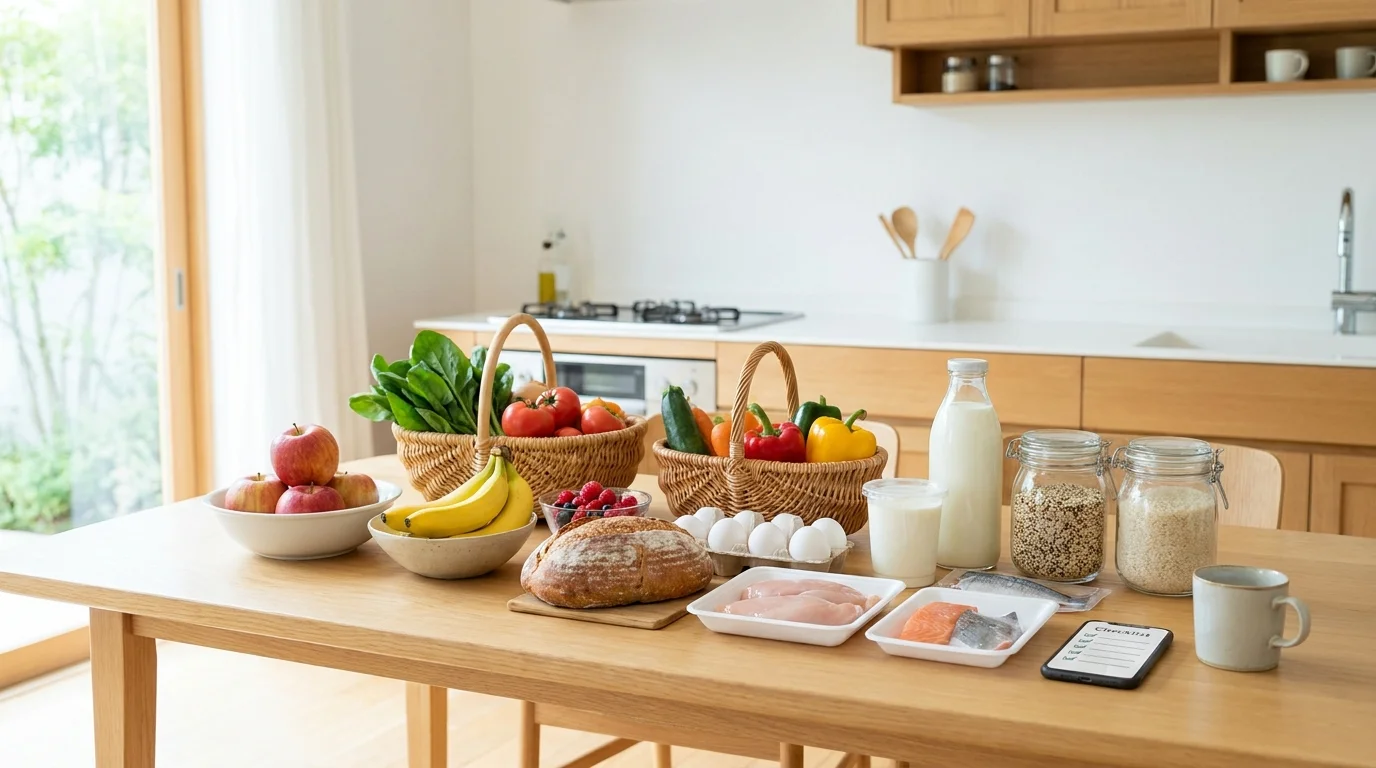
Checklist 'what to prepare for the week' to spend less:
- Cook grains/pasta for 1–2 days ahead (put part in a container).
- Make a base: broth or sauce (tomato/cream) and freeze in portions.
- Portion meat/chicken into bags for quick dinners.
- Wash and dry herbs, store in a container with a paper towel.
- Cut vegetables for snacks (carrots, cucumbers)—less craving for snacks.
Such preparations save not only money but also time. And when there's less time, there's less temptation to order delivery, which is almost always more expensive than home-cooked food.
5) Reduce 'Expensive Habits': Snacks, Drinks, and Wastage
Often, the family budget is 'eaten up' not by main dishes, but by little things: juices, sweets, yogurts, snacks, ready-made salads, takeout coffee. Individually, it seems insignificant, but it adds up considerably over a month.
You don't have to ban everything. The 'replacement and limit' approach works: replace some snacks with more filling and cheaper options (fruit, portioned nuts, homemade sandwiches), and allocate a fixed budget for the rest.
Another big item—wastage. If you regularly throw away food, it means you're buying the wrong things, in the wrong quantities, or not cooking in time. The rule helps: first, plan dishes from what you already have, and only then buy what's missing.
Mini-rule for every day: before going to the store, look in the fridge and take 3 photos: the dairy shelf, vegetables, the freezer. It's quick but sharply reduces duplicates and 'forgotten' products.
Conclusion
Saving on groceries for a family is built not on strict restrictions, but on a system: a clear limit, short-term meal planning, a shopping list, and a few habits against impulse spending. In a month, you'll see that the family budget has become more stable, and family groceries are bought consciously—without overflowing bags and an empty fridge.
To keep the list always up-to-date and avoid duplicates, it's convenient to manage it together. In the free mini-app Pickt on Telegram, you can create a shared shopping list with real-time synchronization—so everyone adds what's needed, and at the store, you buy exactly according to plan: t.me/PicktBot/app.