Planning meals for the week seems like a boring chore — until you try doing it with a clear system. Then 'what to cook today?' stops being a daily puzzle, and shopping becomes faster and cheaper.
In this article, we'll break down a practical way to create a weekly menu for the family: from quick prep to the shopping list. The approach suits both those who cook every day and those who prefer to cook for 2-3 days ahead.
The main goal is not perfect meal planning, but a convenient family menu that's realistic to follow. Let's start with the basics.
Where to Start with Meal Planning: Rules That Save Time
To prevent your weekly menu from falling apart by Wednesday, it's important to set boundaries in advance. These aren't 'strict restrictions,' but guidelines that simplify choices.
First, answer three questions: how many dinners you cook at home, how many times you eat out, and which days you have the least time. For example, Monday and Thursday are for quick meals only, while Sunday you can cook something for 2 days.
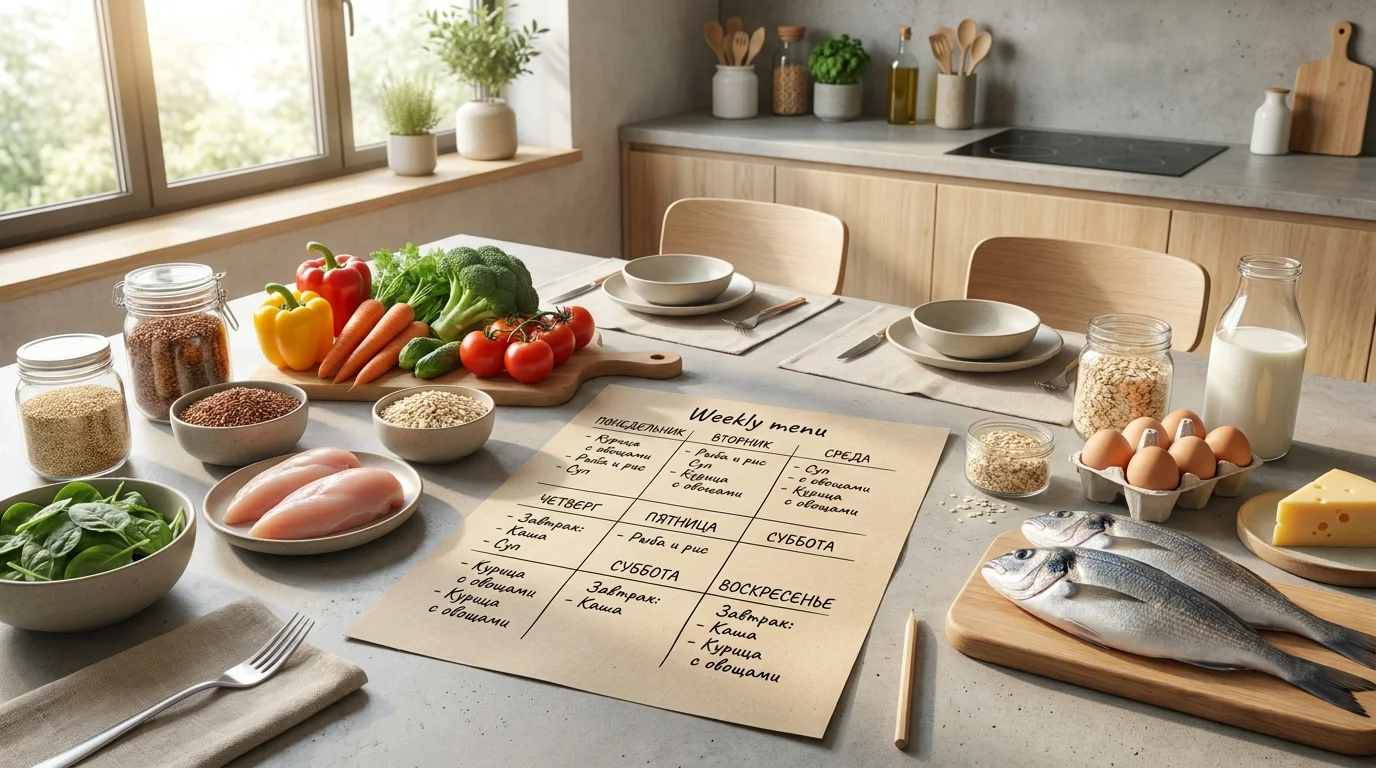
Next, establish the 'skeleton' of the week: 1-2 oven-baked dishes, 1 soup, 1 fish dish, 1-2 chicken/turkey dishes, 1 vegetarian dinner. This way, the family menu will be varied without long deliberation.
And one more principle: don't plan 21 meals (breakfast-lunch-dinner), but focus on the main meals. Most often, it's enough to plan dinners and 2-3 breakfast options, while lunches can be assembled from leftovers and prepped items.
How to Assemble a Weekly Family Menu: Steps in 30 Minutes
Creating a weekly menu can be done in half an hour if you follow the steps. It's best to do it on the same day each week — for example, Friday evening or Sunday morning.
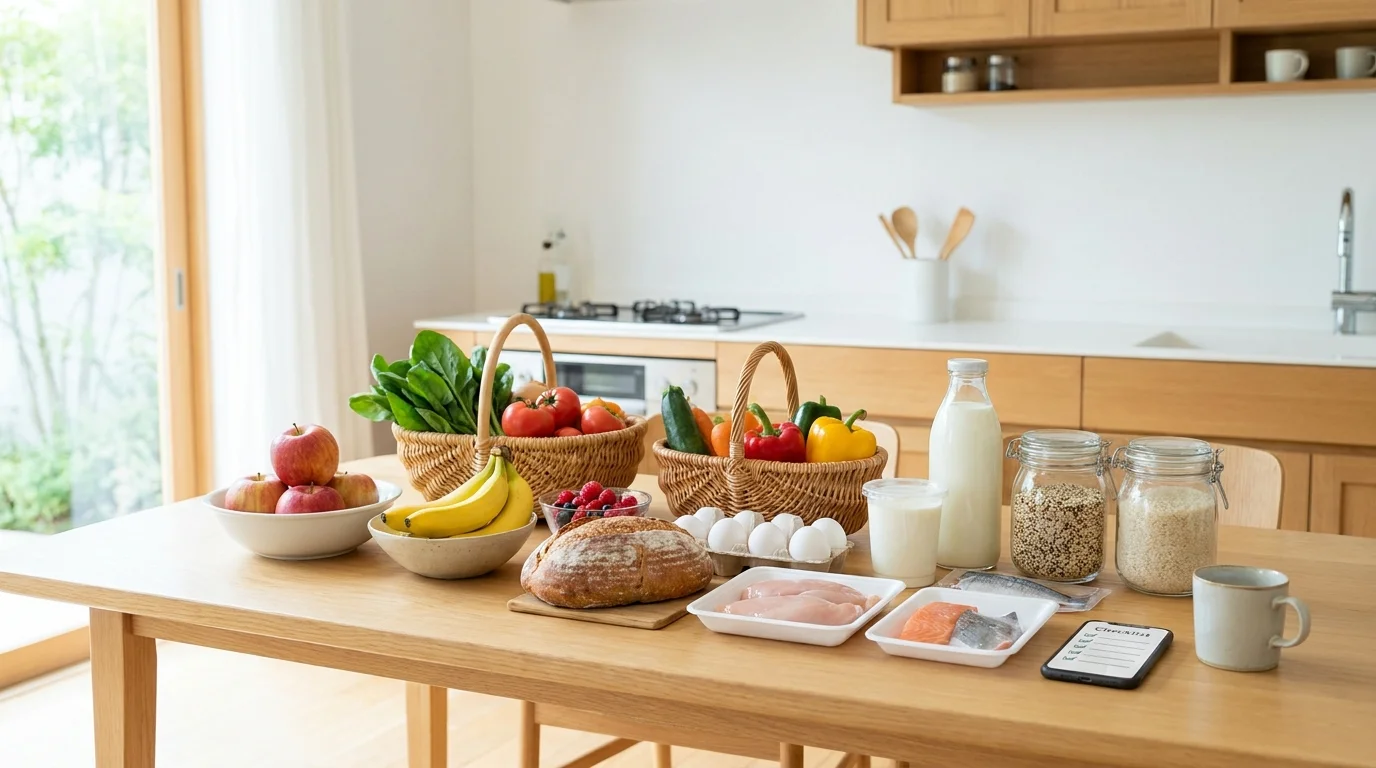
Step 1. Check your supplies. Look in the fridge and freezer: meat, fish, vegetables, grains, dairy products. Note what needs to be used first to avoid waste.
Step 2. Choose 5-7 dinners. Consider the family's schedule. On 'busy' days, plan meals that take 15-25 minutes: pasta, omelet, salad with protein, buckwheat with frozen patties.
Step 3. Add repetitions. Repetitions are normal. For example, baked chicken one day, and a salad/wrap/sandwich with the same chicken the next. Meal planning becomes easier, and ingredients are used up completely.
Step 4. Plan 1 'fridge clean-out' day. Leave one dinner without a specific recipe: use leftovers, make lavash pizza, vegetable stew, pureed soup, or a bowl.
Step 5. Assign sides and vegetables. Add a simple side and vegetables to each dinner: rice/bulgur/potatoes + salad/cucumbers/tomatoes/frozen vegetables. This makes the family menu more balanced without calculations.
- Mini-checklist: The ideal weekly menu
- 5-7 dinners (considering daily busyness)
- 1 soup or '2-day' dish
- 1-2 oven/slow cooker dishes
- 1 fish day
- 1 vegetarian dinner
- 1 'leftovers/free dinner' day
How to Make a Weekly Menu Varied Without Breaking the Bank
Variety in a family menu isn't about a hundred new recipes, but combinations of familiar ingredients. The principle of '1 base — 3 variations' works.
For example, ground meat: one day meatballs, another day Bolognese sauce, a third day patties for the freezer. Or chicken: bake a tray — part goes for dinner, part for salads and lunchboxes.
For the budget, a simple rule helps: schedule expensive ingredients for 1-2 meals per week, and the rest based on seasonal vegetables, grains, legumes, and chicken. Meal planning becomes predictable in terms of costs.
Another life hack: choose recipes with overlapping ingredients. If one dish needs sour cream, another needs cottage cheese, and a third needs cream, some products might not get used up in time. It's better to assemble the weekly menu so that one set of ingredients covers several dishes.
Prep and 'Smart Convenience Foods': How to Cook Less
The biggest time saver isn't in quick recipes, but in prep work. Spend 60-90 minutes once, and then cook easier all week.
Choose 2-3 prep tasks that suit your family. Don't do everything at once: start with one item and add more as you get used to it.
- Weekly prep (choose 3-5)
- Roast a tray of vegetables (zucchini, bell pepper, carrot, broccoli) for sides and salads
- Cook grains for 2-3 days (rice/buckwheat/bulgur)
- Make a base sauce (tomato sauce, pesto, yogurt dressing)
- Marinate meat/chicken for 1-2 dinners
- Shape and freeze meatballs/patties
- Chop vegetables for soup and freeze in portions
Separately, it's worth mentioning 'smart convenience foods.' This isn't about unhealthy food, but products that save you on busy days: frozen vegetables, canned beans, ready chickpeas, whole-grain pasta, lavash, canned tuna.
With these, the weekly menu becomes resilient: even if plans change, dinner can still be assembled in 15 minutes.
How to Turn a Weekly Menu into a Clear Shopping List
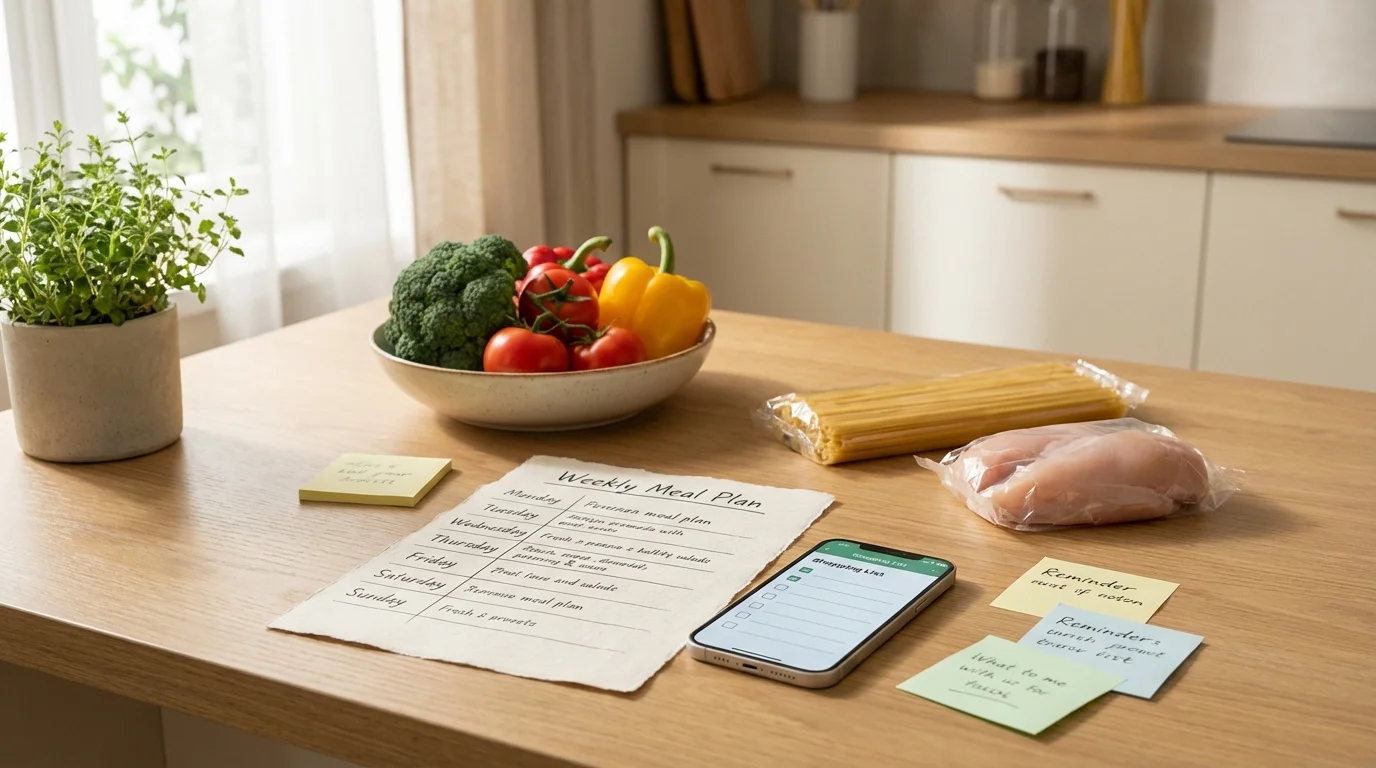
Meal planning only works when the shopping list matches the menu. Otherwise, you either buy small items daily or purchase extras.
Assemble the list in two steps. First, write down ingredients for all dinners, then add basic categories: breakfasts, snacks, drinks, household items.
It's more convenient to group purchases by store departments — this way you walk around less and grab fewer extras. Example structure: vegetables/fruits, dairy, meat/fish, groceries, frozen foods, bread, 'other'.
If you shop for the family, it's important to agree on rules: who is responsible for vegetables, who for dairy, who keeps track of what's running out. Then the family menu won't depend on one person.
Conclusion
A weekly menu isn't a strict plan, but a tool that removes daily decisions and helps you eat more calmly. Start simple: plan dinners, add a day for leftovers, and prepare 2-3 prep items.
Over time, you'll assemble your own set of favorite dishes and templates, and meal planning will take less and less time. And the family menu will become more varied and budget-predictable.
To keep the shopping list always at hand for everyone, it's convenient to manage it together. In Pickt — a free mini-app in Telegram — you can collect weekly purchases and see changes in real time: t.me/PicktBot/app.