How to Stop Throwing Away Food: 7 Working Habits
To understand how to stop throwing away food, it's enough to adopt 7 habits: plan 3–4 dinners, shop with a list, organize your fridge, store food correctly, cook 'from what you have,' freeze in time, and do regular check-ups. These steps reduce food waste and save money without strict diets or complicated rules.
Below is a numbered list of 7 items. Each item is self-contained: you can implement them one by one and already see results.
-
Plan not a whole week, but 3–4 key dishes—and leave 'windows'
If you want to reduce food waste, don't try to plan every minute of your menu: an overloaded plan is most often what breaks. Choose 3–4 dinners for the next few days and leave 1–2 'windows' for leftovers, delivery, or unexpected plans. This way, products get used up instead of sitting until their expiration date.
Practice: add a 'pair' for the next day to each dish (e.g., baked chicken → chicken salad/shawarma/pasta). This reduces the risk that half the ingredients will go unused.
-
Shop with a short list and check your supplies before going to the store
The most direct answer to the question 'how to stop throwing away food' is to stop buying duplicates. Before shopping, quickly check 3 areas: the fridge, freezer, and 'dry' cupboard (grains, canned goods, sauces). Then make a list of 10–20 items maximum: what you need for the chosen dishes and what will definitely run out in the next 3–4 days.
If you're not shopping alone, it's convenient to keep a shared list so you don't buy two packs of milk and forget bread. For example, in the free mini-app Pickt in Telegram, you can share a shopping list with family or neighbors and see changes in real time: t.me/PicktBot/app.
-
Set up your fridge for 'eat first': visible means eaten
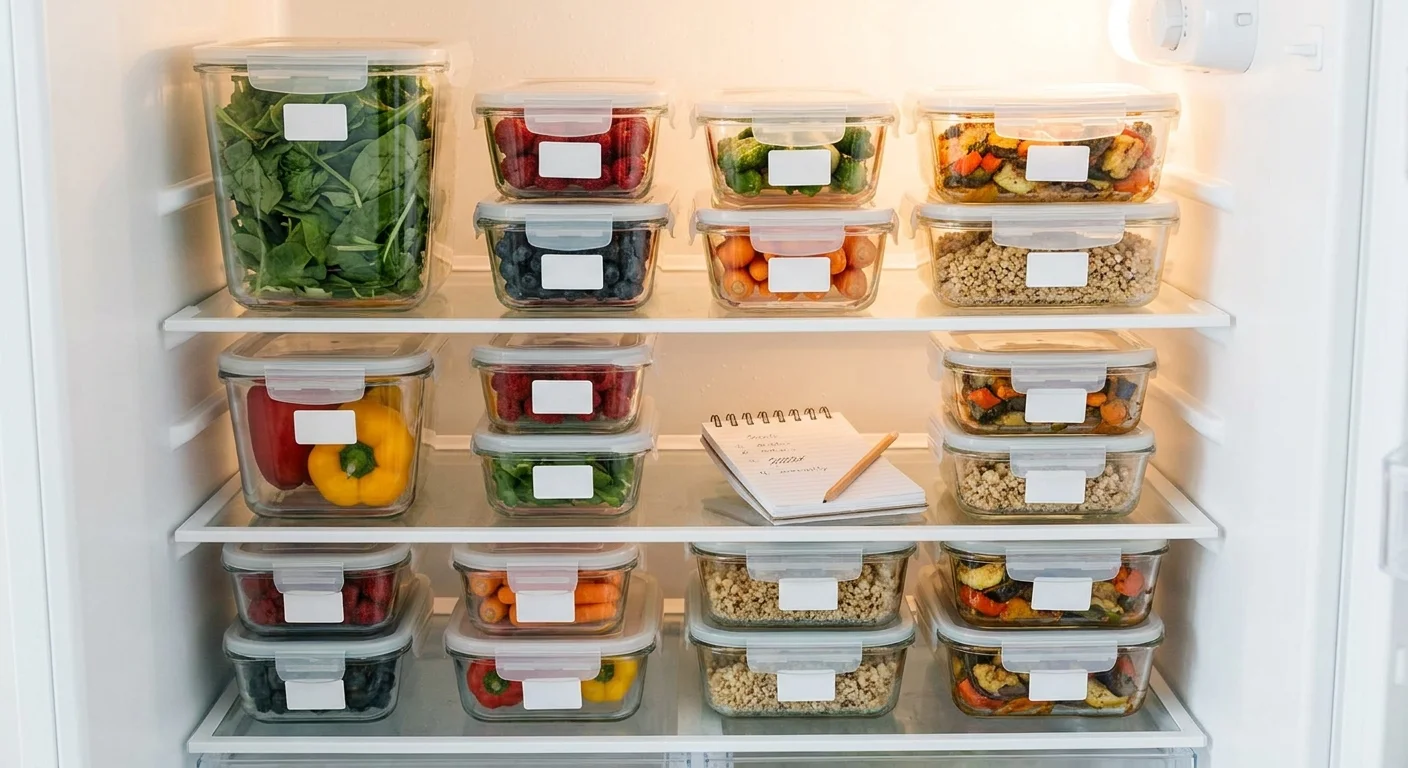
Food most often spoils not because it's not loved enough, but because it's not seen. Designate one shelf or container 'Eat First' and put there products with the nearest expiration dates: opened yogurt, deli meats, dinner leftovers, herbs. The more visible the zone, the less chance you'll buy new things while the old ones quietly 'wait.'
Mini-rule: everything opened goes at eye level; everything sealed and durable goes lower or deeper. This is a simple way to save on groceries without counting calories or using complex tables.
-
Store food correctly: 4 common mistakes that lead to spoilage
Proper food storage is half the success if you're looking for ways not to throw away food. Four typical mistakes: storing herbs wet, keeping bread in the fridge, leaving cheese/sausage uncovered, and putting hot food in a container with a lid (condensation accelerates spoilage). Fixes take minutes but save whole bags of groceries.
Herbs: pat dry, wrap in a paper towel, and put in a bag/container—they last noticeably longer.
Bread: better at room temperature for 1–2 days; for longer storage, slice and freeze.
Cheese and sausage: store in parchment or a container to prevent drying out and absorbing odors.
Cooked food: cool for 20–30 minutes, then cover and refrigerate.
-
Cook 'from what you have': one basic formula against leftovers
When the fridge has a bit of everything, the brain perceives it as 'nothing to eat,' and you reach for delivery. Use the formula: base + protein + vegetables + sauce. Base—pasta/rice/buckwheat/potatoes; protein—eggs/chicken/tuna/beans; vegetables—any; sauce—yogurt, tomatoes, soy sauce, pesto, sour cream.
This way, you quickly 'assemble' a dinner from leftovers and don't let products meet a sad end. This is one of the most effective answers to related queries like 'what to do with leftover food' and 'how to reduce food waste at home.'
-
Freeze in time and label: the freezer is not a graveyard, but insurance
Freezing saves food, but only if you do it before the food is almost spoiled. Freeze in portions: broth in 300–500 ml containers, minced meat in flat bags, bread in slices, herbs chopped with oil or water in ice cube trays. Labeling with the date solves the 'what is this and when was it' problem and helps you actually use the supplies.
If multiple people do the shopping in your household, agree on one rule: everything that goes into the freezer is immediately noted in a shared list or note. The same Pickt can be used as a shared list to avoid buying extras and remember what's already frozen.
-
Do a 10-minute check-up once a week and plan a 'rescue day'
One short weekly check-up sharply reduces the amount of thrown-away food. Go through the fridge and list 5 items that need to be eaten within the next 48 hours: dairy, cooked dishes, herbs, berries, deli meats. Then plan a 'rescue day'—a dinner from what you already have: omelet, cream soup, stew, lavash pizza, bowl salad.
This ritual simultaneously answers the query 'how to save on groceries' and helps you stop buying unnecessary things: you see the real picture of your supplies, not the assumed one.
Conclusion: to stop throwing away food, you don't need radical restrictions—you need visibility, simple storage rules, and a short planning cycle. Implement at least 2–3 of the 7 habits (list + 'eat first' zone + check-up), and the volume of food waste will start decreasing within the first week.
Frequently Asked Questions
-
How to stop throwing away food if I don't have time to cook?
Focus on 'assembly' dishes using the base+protein+vegetables+sauce formula and keep 2–3 quick backup products: eggs, frozen vegetables, canned tuna/beans. Plan not recipes, but prep: cook a grain, roast a tray of vegetables, make a broth.
-
What to do if food spoils due to chaos in the fridge?
Create one visible shelf 'Eat First' and put all opened and perishable items there. Arrange the rest by category (dairy, sauces, vegetables) so that searching takes seconds and you don't buy duplicates.
-
How to tell if a product is still edible when the expiration date is almost past?
The expiration date is a guideline, but storage conditions and signs of spoilage matter: smell, taste, mold, gas formation, stickiness, color change. For questionable products, follow the safety rule: if in doubt, don't risk it, especially with fish, meat, and cooked dishes.
-
How to stop buying unnecessary things when shopping for a family?
Agree on a single list and the rule 'first check supplies, then add to the list.' A shared list in Telegram (e.g., via the mini-app Pickt) helps synchronize: someone adds milk—the other sees it and doesn't buy another.