Home Shopping List: What Runs Out Most Often
To put together a convenient home shopping list, it's enough to have a checklist of items that run out the fastest: basic groceries, drinks, hygiene products, household chemicals, a first aid kit, and "little things" like batteries and bags. This list is suitable for a family, a couple, roommates, and anyone who shops once a week or "on the go" after work. Just go through the items and mark what needs to be restocked.
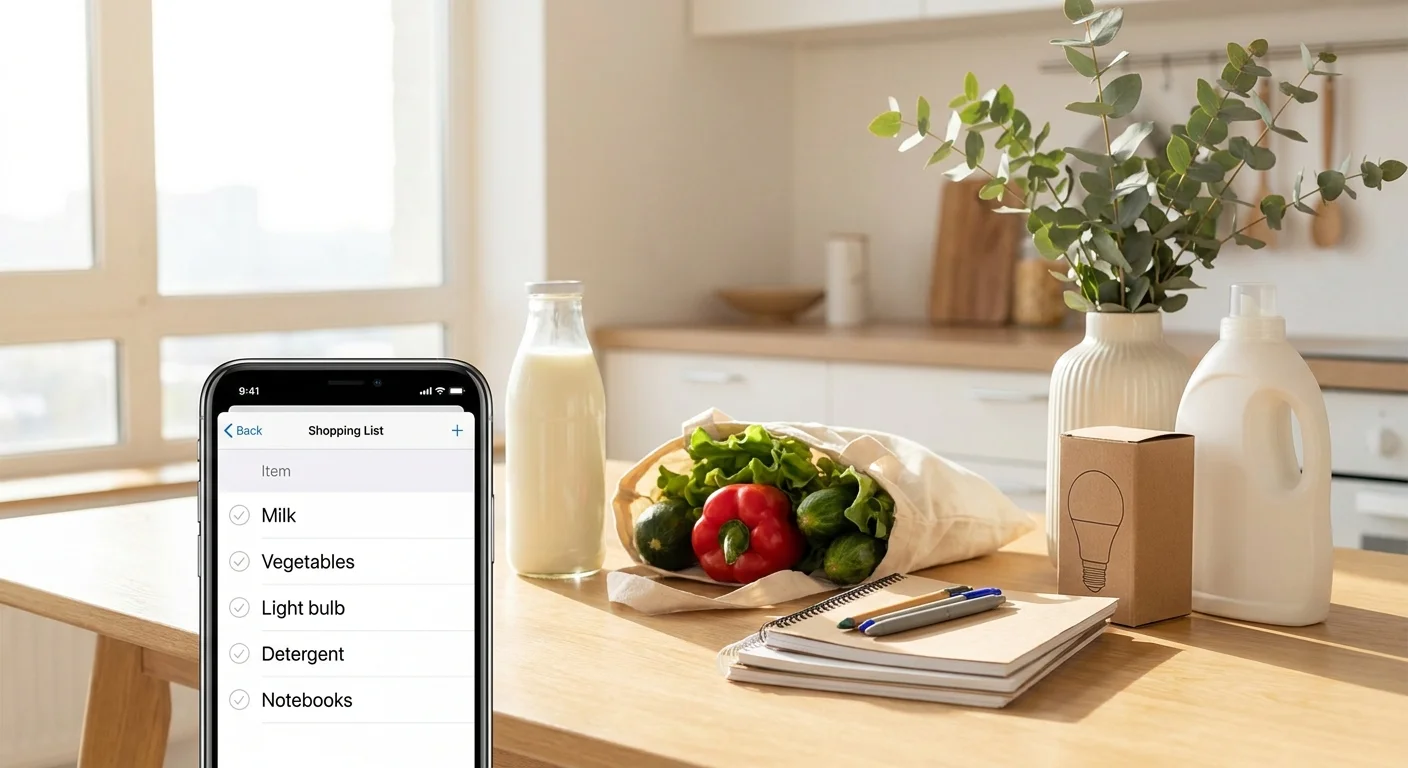
Below is a practical checklist that you can copy and adapt to your own habits. For convenient joint shopping, it's helpful to keep it in a shared, synchronized list, for example, in the Telegram Mini App Pickt (bot t.me/PicktBot/app), so everyone can see changes in real time.
Everyday Basics: Groceries That Run Out Without Notice
These items usually "disappear" first because they are used daily. If you're looking for what to include in a weekly shopping list, start with this base.
- Bread and baked goods: bread, lavash/tortillas, rusks/crispbread.
- Dairy: milk, kefir/yogurt, butter, cheese, cottage cheese.
- Eggs: it's better to keep a "backup" pack.
- Grains and side dishes: rice, buckwheat, pasta, oatmeal, bulgur/couscous.
- Basic vegetables: onions, carrots, potatoes, garlic.
- Fruits: bananas/apples (usually disappear the fastest).
- Protein: chicken/turkey, ground meat, fish, legumes (chickpeas/beans/lentils).
- Snacks: nuts, cookies/bars, dried fruit.
Practice: set a "minimum stock" (e.g., milk — 1 carton, eggs — 6 pieces). As soon as you drop below that, add it to the list.
Kitchen Consumables: Things That Run Out at the Worst Possible Moment
These items are rarely remembered in advance, but it's inconvenient to cook and store food without them. This section is especially useful if you maintain a family shopping list and buy in bulk.
- Tea/Coffee: tea, coffee, sugar/sweetener, creamer.
- Salt, spices, sauces: salt, pepper, favorite seasonings, soy sauce, ketchup/mayonnaise/mustard.
- Flour and leavening agents: flour, yeast/baking powder, vanilla sugar.
- Vegetable oil: sunflower/olive oil.
- Canned goods and "standby" products: tomatoes in their own juice, tuna/sardines, corn/peas, bouillon cubes (optional).
- Storage consumables: aluminum foil, parchment paper, plastic wrap, ziplock bags, containers (if they often get lost).
- For trash: trash bags of the appropriate size.
Tip: if several people cook in the house, establish a rule: whoever finishes the foil or coffee immediately adds the item to the shared list.
Drinks and "Quick" Foods: Items That Are Consumed Faster Than Normal
Juices, water, and "quick" foods disappear especially quickly when you're busy, working out, or have guests. This block helps you avoid ordering delivery because "there's nothing to eat at home."
- Drinking water: bottles/canister or filter cartridge (if you have a filter).
- Soda/Mineral water: according to family habits.
- Juices/Fruit drinks: especially if there are children.
- Frozen foods: vegetable mixes, dumplings/pierogies, berries, ice.
- Quick breakfasts: cereal/granola, yogurts, cottage cheese.
- "Grab-and-go": crispbread, peanut butter/jam, sliced cheese.
Mini-rule: keep 2–3 "quick" meals in stock (frozen + grain + sauce). This reduces chaos and saves time.
Hygiene and Personal Care: Things That Run Out Unnoticed but Are Critical
This category is usually remembered at the last moment: when the bottle is already empty or the paper has run out. If you are compiling a home shopping list, add these items right away.
- Toilet paper and paper towels.
- Napkins: dry and wet.
- Soap: liquid hand soap + spare bar/refill.
- Shampoo/Conditioner, shower gel.
- Toothpaste and toothbrushes (scheduled replacement).
- Deodorant, shaving supplies.
- Feminine hygiene: pads/tampons (better to keep a stock).
- Skincare: hand/face cream, cotton pads/swabs.
Life hack: set a "control mark" — for example, when 20–25% of the product remains, it already goes on the list.
Household Chemicals and Cleaning: Consumables That Fly Off During Deep Cleaning
Even if you clean "when the mood strikes," there are consumables that consistently run out. This section is convenient as a monthly apartment shopping list.
- Dish soap + sponges/brushes.
- Dishwasher tablets/salt/rinse aid (if applicable).
- Laundry detergent/gel, fabric softener, stain remover.
- Surface cleaners: all-purpose, kitchen (degreaser), bathroom (limescale remover).
- Rags and microfiber cloths, cleaning wipes.
- Gloves, trash bags, air freshener (as needed).
- Floor cleaners (if used separately).
Hint: right after cleaning, immediately note what has run out. This is the most accurate time to update the list.
First Aid Kit and "Household Odds and Ends": Things Rarely Bought in Advance
These items aren't bought every week, but their absence is acutely felt. It's better to add them to the list in advance and replenish as they are used.
- Basic first aid kit: band-aids, bandage, antiseptic, fever reducer, sorbent, thermometer (if broken/lost).
- Cold remedies: throat/nasal spray, saline solution (according to family habits).
- Contact lenses/solution (if applicable).
- Batteries: AA/AAA for remotes, toys, scales.
- Light bulbs of the correct base type.
- Stationery: tape, glue, battery for kitchen scales, freezer bags.
- For pets: food, litter, poop bags.
Important: medications and dosages are selected individually. Check expiration dates and store the first aid kit in one place so a review takes 2 minutes.
How to Quickly Adapt the Checklist to Your Home (and Not Forget to Add Items)
The same home shopping list works best when it's tailored to your rhythm. Below is a short algorithm to help keep your supplies under control.
- Create a "starter" list from the items above and remove what you don't need.
- Add 10–15 of your regular items: your favorite bread, coffee, pet food, specific vegetables.
- Set minimum stock levels for 8–12 key products (milk, eggs, paper, dish soap).
- Divide the list into categories so you can go through the store by section instead of remembering on the fly.
- Make the list shared if you're not shopping alone: this reduces duplicates and "I thought you were buying it" situations.
If you keep the list in Telegram, it's convenient to use Pickt: one shared list for the home, and changes are immediately visible to all participants. This is especially helpful when someone stops by the store "on the way" and wants to quickly check off the needed items.
Conclusion
Most often, what runs out at home are basic groceries, kitchen consumables, paper products, and cleaning supplies — these are exactly what you should keep on your checklist. Go through the sections, mark what's running low, and update the list immediately when something runs out. This makes shopping quick and your home predictably "well-stocked."
Frequently Asked Questions
What is considered a "basic" home shopping list?
A basic list covers daily needs: bread, dairy, eggs, grains, basic vegetables, tea/coffee, dish soap, toilet paper, and laundry detergent. Everything else is added based on your diet and habits.
How do I know when to add an item to the list?
The minimum stock rule works: decide in advance what "lower threshold" is comfortable (e.g., 1 roll of paper in reserve or 1 laundry capsule for tomorrow). As soon as you drop below that, the item goes straight on the list.
How do I maintain a shared shopping list without duplicates?
You need one shared list and a simple rule: when you add something, specify the quantity and brand; when you buy it, immediately mark it as done. In synchronized shared lists, this is easier because everyone sees the current status.
What should I include in a weekly shopping list if I'm short on time?
Put together a "skeleton": 2–3 breakfasts (oatmeal/eggs/yogurt), 3–4 dinners (chicken/fish/ground meat + side dish + vegetables), snacks, and drinks. A couple of frozen items and canned goods will help if plans fall through.