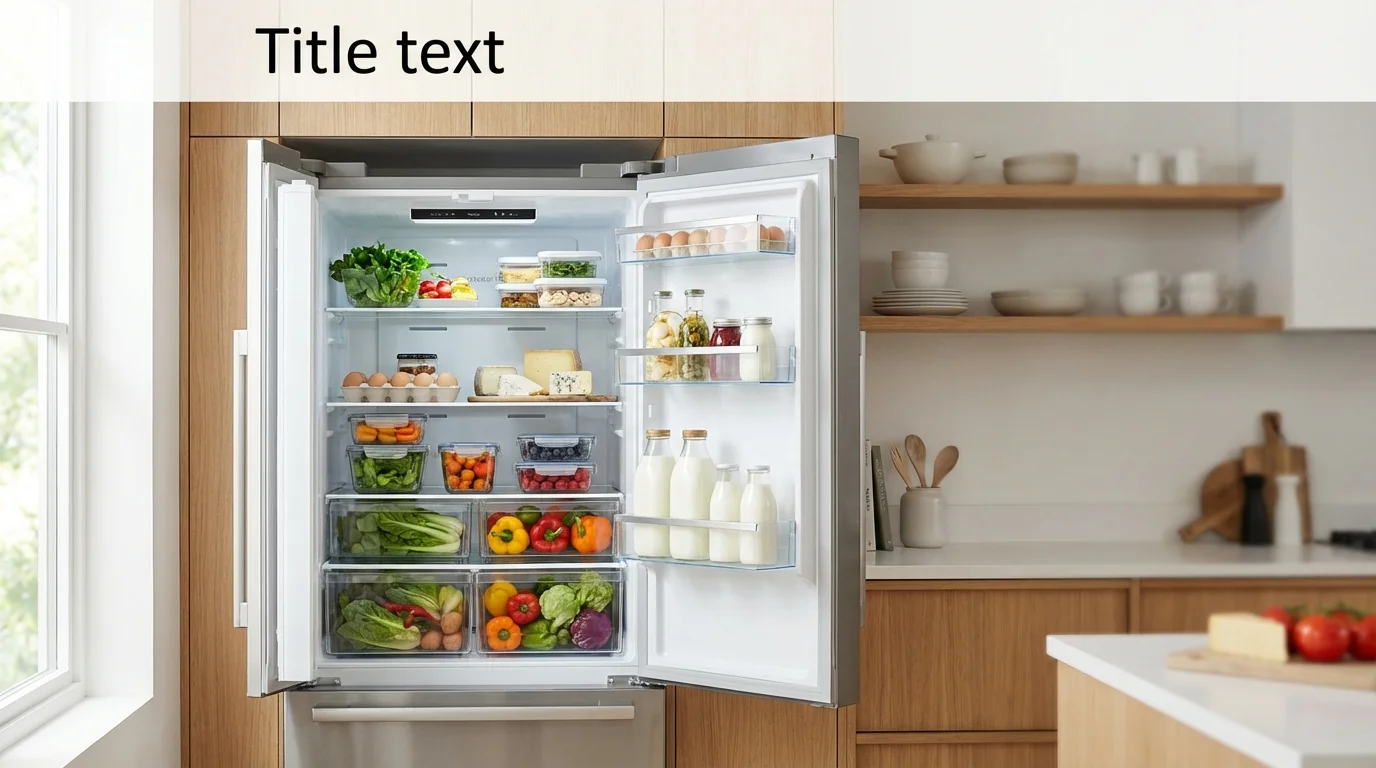
What Should Always Be in the Fridge: A Basic Grocery Checklist
When you have a clear minimum in your fridge, cooking stops being a quest. You assemble breakfast faster, easily come up with dinner ideas, and don't spend money on impulse buys.
This fridge checklist isn't about 'perfect nutrition' but about convenience. Below is a basic set of groceries that covers the main scenarios: a snack, soup/side dish, salad, quick protein, something for tea.
Keep this list handy and run through it once a week before going to the store. This way, you'll always know what to buy for home, even if you don't have time to plan.
1) Dairy and Eggs: Quick Breakfasts and Sauces
This is the base for omelets, porridge, casseroles, and simple snacks. Plus, dairy products help 'pull together' a dish when you need to make something more substantial out of vegetables and grains.
Choose what you actually eat. It's better to have 2–3 items that you consistently use up than a fridge full of jars.
- Eggs (10 pcs) — omelet, shakshuka, baking, salads.
- Milk or a plant-based alternative — coffee, porridge, pancakes.
- Yogurt/kefir — snack, sauces, marinades.
- Cottage cheese — syrniki (cheese pancakes), spreads, quick protein.
- Cheese (hard or mozzarella) — sandwiches, pasta, baking.
- Butter — flavor, baking, quick side dishes.
Tip: keep one 'long-lasting' item (e.g., UHT milk) for when everything runs out suddenly.
2) Vegetables, Herbs, and Fruit: Freshness Without Waste
Vegetables are what most often run out unexpectedly or spoil in the drawer. So the logic is simple: some are 'long-lasting,' some are 'for salad/snacks' for 2–3 days.
If you often forget about herbs, get frozen ones or store them in a container with a paper towel. This way they last longer.
- Long-lasting: carrots, onions, garlic, cabbage, beets.
- For every day: cucumbers/tomatoes, bell peppers, salad leaves.
- For quick dishes: lemon (for tea and sauces), ginger (optional).
- Herbs: dill/parsley/cilantro — in small bunches.
- Fruit: apples or bananas as a basic snack.
Mini-rule: 1–2 types of vegetables for salad + 2–3 types of 'base' for soups and stewing. This way you won't overload the fridge and everything will get eaten in time.
3) Protein in the Fridge: So Dinner is Ready in 15 Minutes
Protein is the main 'accelerator' of home cooking. When you have it, you can easily assemble a dish from what's already on the shelf: vegetables, grains, pasta.
It's better to keep 2–3 protein sources and rotate them. One should be super quick (e.g., ready-to-eat chicken or tuna), the second should be a 'main' one for cooking, and the third should be a backup in the freezer.
- Chicken/turkey (breast or thigh) — versatile and quick.
- Fish (salmon/hake/pollock) — baking, pan-frying, soup.
- Minced meat — patties, pasta sauce, meatballs.
- Sausage/ham (optional) — for sandwiches and 'urgent' snacks.
- Tofu or ready-to-eat legumes (if that's more convenient for you) — a quick meatless option.
If you often don't have time to cook, keep one 'ready-to-eat' item: roasted chicken, sliced meats, canned tuna (it can be stored outside the fridge, but the logic is the same).
4) Sauces, Dressings, and 'Little Things' That Make Food Tasty
Often the problem isn't that there's nothing to eat, but that it's 'not tasty and boring.' A couple of dressings and seasonings solve this without extra expense.
Here it's important not to collect dozens of jars. 5–7 things you use every week are enough.
- Mayonnaise or Greek yogurt for sauces.
- Mustard — dressings, marinades.
- Soy sauce — vegetables, rice, noodles.
- Ketchup/tomato sauce — pasta, pizza, stewing.
- Vinegar (apple cider/balsamic) — salads, marinades.
- Vegetable oil (olive/sunflower) — dressings and cooking.
- Salt, pepper, paprika, garlic powder — basic set.
Life hack: keep one 'universal' sauce (e.g., yogurt + mustard + lemon). It works for salad, chicken, and vegetables.
5) Weekly Fridge Checklist: What to Check Before the Store
To avoid starting from scratch every time, use a short checklist. It helps you quickly figure out what to buy for home and not forget the basics.
Run through the points in 2 minutes—and you'll already know what's missing.
- Eggs: Do you have at least 6–10?
- Dairy: Milk/kefir/yogurt — at least 1–2 items.
- Cheese/cottage cheese: Is there something for snacks and breakfast?
- Vegetables: Do you have onions + carrots + something for salad?
- Fruit: 1–2 types for quick snacks.
- Protein: 2–3 portions for the next few days (meat/fish/tofu).
- Dressings: Oil, mustard/soy sauce, tomato base.
- Herbs/lemon: Are there any 'flavor enhancers'?
If you want to make the list even more practical, add 2–3 'go-to dishes' that you cook most often. Then the basic grocery set will be tailored specifically to your kitchen.
Conclusion
The idea is simple: the fridge should help, not require constant monitoring. When you have a basic set of groceries, you order delivery less often 'because there's nothing to cook' and throw away less spoiled food.
Save this fridge checklist and refer to it once a week—this way you'll quickly figure out what to buy for home and maintain a stock without chaos.
To keep the shopping list from getting lost and to have it shared for the family or roommates, it's convenient to manage it in Pickt—a free mini-app in Telegram with shared lists and real-time sync: t.me/PicktBot/app.