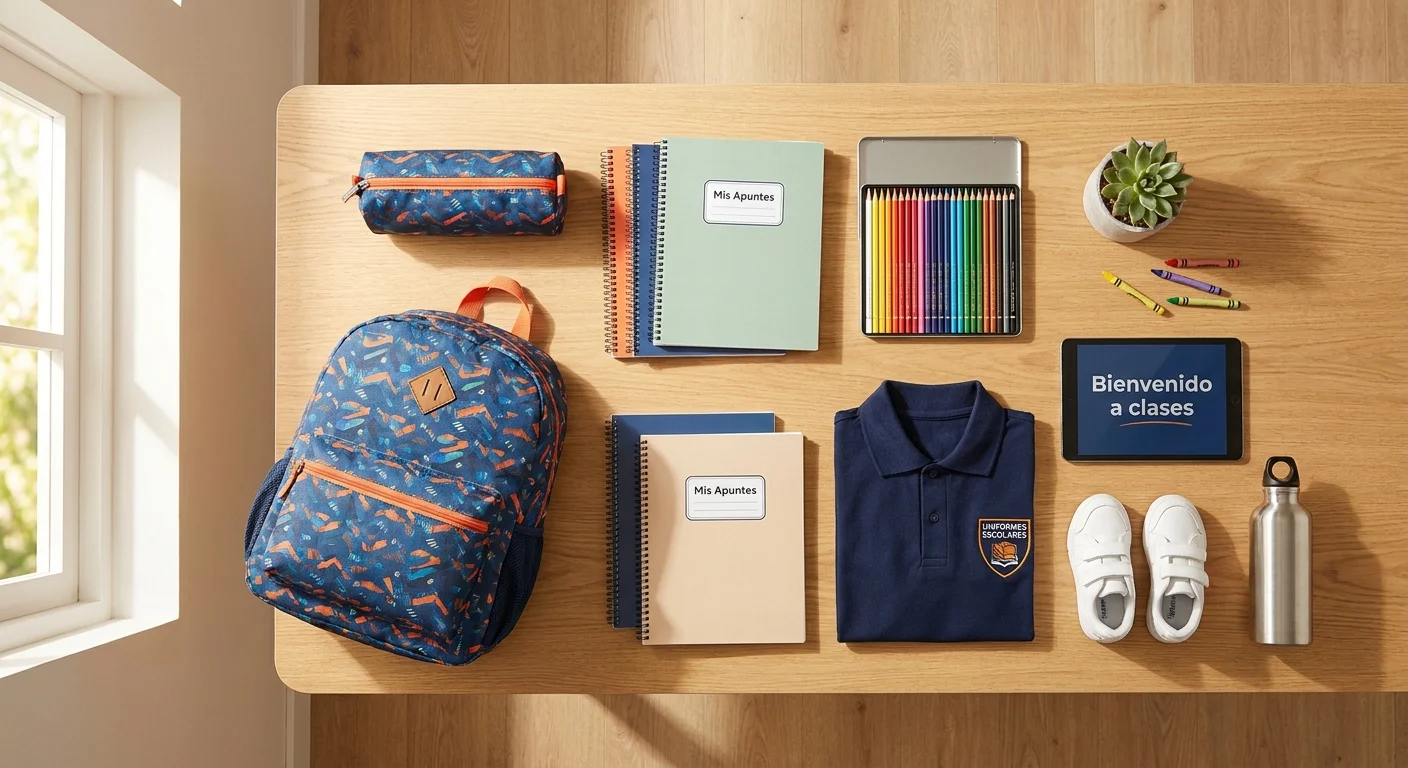
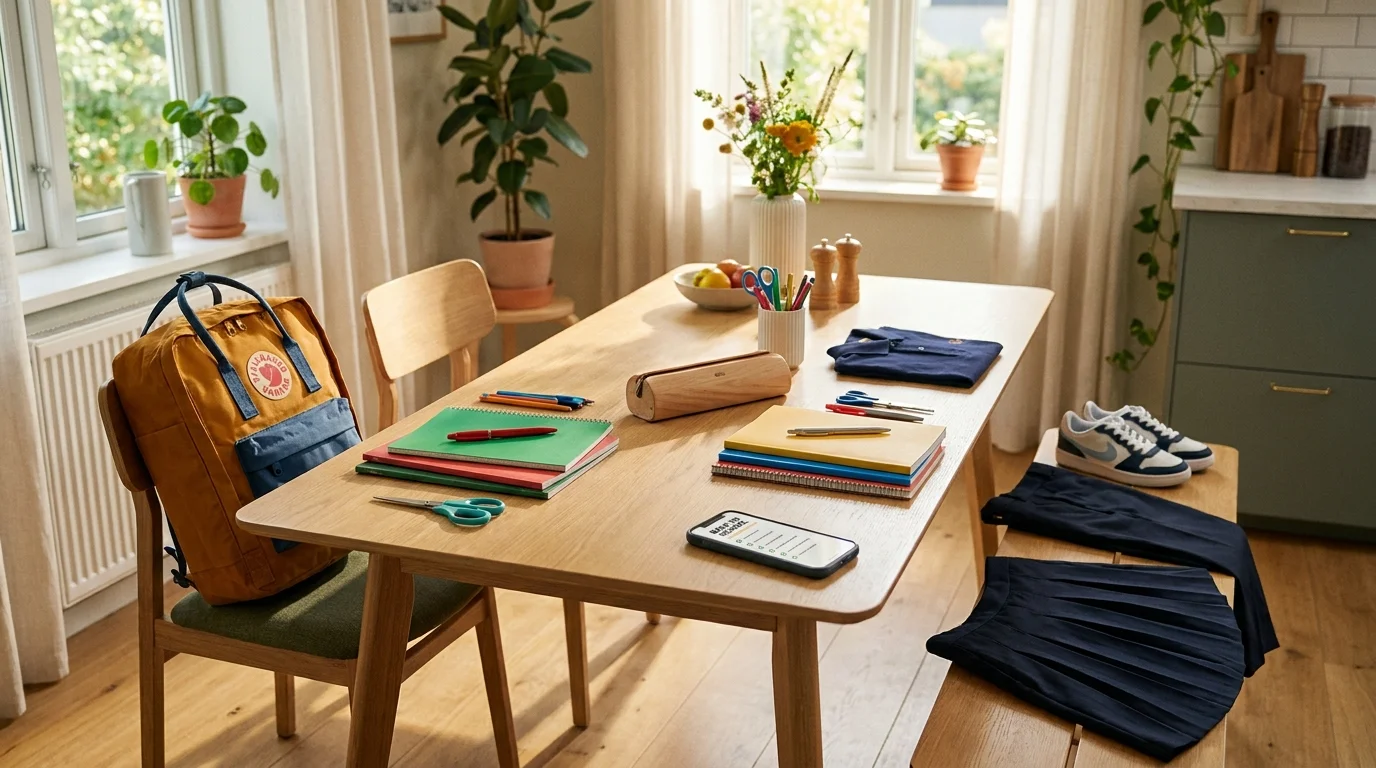
This back-to-school 2026 checklist for the whole family is a list of steps and purchases for students, parents, and home: documents, uniform and shoes, stationery, gadgets, routine, safety, and budget. It is suitable for first-graders and high school students, as well as families with multiple children. Go through the sections and mark what's done — this way, preparations will take less time and nerves.
1) Plan for 2–3 Weeks: Distributing Tasks and Deadlines
The most common cause of chaos before school is doing everything in the last week. This section helps you spread out the preparation over the calendar and assign responsibilities.
- 2–3 weeks before September 1: Clarify the school's requirements (uniform, change of shoes, notebooks, diary/platform, certificates), schedule a uniform fitting, check leftover stationery and the backpack.
- 10–14 days before: Buy basic stationery and shoes, schedule a haircut, check tech (laptop/tablet), update apps and passwords.
- 5–7 days before: Pack a "trial backpack," label items, adjust sleep schedule, do a test route to school.
- 1–2 days before: Prepare an outfit for the assembly line, charge devices, gather documents and cash/card for small expenses.
- Role distribution: One adult is responsible for documents and medical matters, the second for shopping and fittings, the child for sorting and labeling (age-appropriate).
It's convenient to keep a shared list so no one buys the same thing twice: for example, in the free Pickt mini-app in Telegram, you can share the checklist among family members and mark completed items in real-time (t.me/PicktBot/app).
2) Documents, School, and Medical: What to Check in Advance
This block is about things that are hard to "buy up" at the last moment. It's better to settle school and certificate issues before the end of August.
- School requirements: Clarify the list of subjects and notebooks, uniform/color requirements, availability of change of shoes, diary format (paper/electronic).
- Documents: Check where the birth certificate/passport, insurance policy, SNILS (if needed), and document copies are. Make 2–3 copies of key pages and put them in a separate folder.
- Medical issues: Check if certificates/vaccinations/exams are needed for clubs. Check the first aid kit and expiration dates (band-aids, antiseptic, fever reducer).
- Contacts: Save the homeroom teacher's, security/guard's, and parent committee's phone numbers. Update "Mom/Dad" contacts on the child's phone.
- Meals: Find out how to apply for benefits/payment, if a meal pass is needed, and how to report allergies.
3) Clothing, Shoes, and Uniform: Build a September Capsule
In 2026, many schools still require a business style, and September is often deceptively warm. It's easier to assemble a "capsule": items that mix and match, rather than buying them one by one.
- Uniform/business set: 2 tops (shirt/blouse/polo), 2 bottoms (trousers/skirt/jumper dress), blazer/cardigan according to school rules.
- For warm September: Light sweater, t-shirt/longsleeve without prints (if allowed), thin socks.
- Outerwear: Windbreaker/light jacket, raincoat or compact umbrella.
- Footwear: Main pair for outdoors, indoor shoes (comfortable and breathable), sports shoes for PE.
- PE: Seasonal uniform (t-shirt/shorts or trousers), bag for the uniform, water bottle.
- Small items often forgotten: Belt, tights/knee-highs, white t-shirt "just in case," spare hair ties/clips.
Practical tip: Do a "movement" fitting — squat, raise arms, walk around. If the child is uncomfortable, the item will start "lying" in the closet by mid-September.
4) Stationery and Learning Materials: Basic Set Without Overpaying
The query "what to buy for school" leads to huge lists every year. In reality, it's better to start with a basic set and buy rare items later, after the first lessons.
- Notebooks: Squared and lined (usually 12–18 sheets), 1–2 general notebooks, covers to fit.
- Writing and drawing: Pens (2–3 pieces), pencils, eraser, sharpener, ruler, glue stick, scissors with rounded tips.
- Organization: Pencil case, folder/file for papers, diary (if needed), bookmarks/sticky notes.
- Arts and crafts: Colored pencils/markers, sketchbook, paints and brushes (age-appropriate), plasticine, colored paper/cardboard.
- For older grades: Calculator (if required), protractor/compass, vocabulary notebook, USB flash drive (if allowed).
- Labels: Fabric marker/labels for notebooks, change-of-shoes bag, and uniform.
How not to overpay: First, check leftovers at home (glue, rulers, folders often remain from last year). Buy 1–2 "spare" items, not a box of pens — children lose things, but they also find them.
5) Backpack, Gadgets, and Safety: Ready for the School Routine
This section is important for both first-graders and teenagers: comfortable load, communication, and clear safety rules reduce anxiety for the whole family.
- Backpack: Check zippers, straps, reflectors. Adjust strap length so the backpack doesn't "hang" on the lower back.
- Everyday contents: Water bottle, wipes, small antiseptic, bag for spare clothes/shoes, mini comb.
- Phone/communication: Charger, power bank (if needed), configured PIN/biometrics, enabled emergency contacts.
- Digital hygiene: Update OS and apps, enable backup, set up "Family Sharing"/screen time limits, agree on chat rules.
- Route and rules: Walk the route to school 1–2 times, discuss "what to do if…" (lost, phone dead, late, approached by a stranger).
- Pocket money: Decide on the amount and format (cash/card), discuss spending and safety rules.
If several family members are involved in preparations (parents, grandma, older child), it's convenient to keep a shared shopping and task list in one place. In Pickt, you can quickly add items like "reflector" or "5 covers" and see who has already bought them.
6) Home, Meals, and Routine: Preparation That Really Eases September
Even a perfect uniform won't help if there's no routine and clear logistics at home. This block is about the "household infrastructure" of the school year.
- Sleep schedule: 7–10 days before, shift bedtime 15–20 minutes earlier every 2–3 days. Set the wake-up time immediately.
- Workspace: Check the light (preferably a desk lamp), chair height, availability of an extension cord, order in drawers (minimal clutter on the desk).
- Morning scenario: Create a short plan: "wake up → breakfast → get ready → leave." Prepare clothes and part of the backpack the evening before.
- Meals: Compile a list of quick weekday breakfasts (porridge, yogurt+fruit, omelet, cottage cheese). Think about snacks: nuts/bar, apple, cheese.
- Laundry and change: Designate a place for the uniform, change-of-shoes bag, and sports clothes, so you don't have to search the apartment in the morning.
- Family calendar: Add clubs, parent-teacher meetings, medical check-ups, payment deadlines. This makes planning September 2026 easier without overlaps.
How to Use the Checklist: A Quick 30-Minute Scheme
For the back-to-school checklist for the whole family to work, it's important not just to read it, but to turn it into an action plan.
- Open a note/list and write down items from the sections that are relevant to you (first grade, middle school, high school).
- Set deadlines: "this week," "by August 25," "2 days before."
- Assign responsible people and mark what you already have at home.
- Leave 10–15% of the budget and time for "unforeseen" things — usually rare notebooks, extra covers, or a suddenly grown foot.
Conclusion
Preparing for September 1, 2026, will be calmer if you follow a structure: first, documents and school requirements, then uniform and shoes, then stationery and tech, and finally, routine and home life. Use this back-to-school checklist for the whole family as a foundation and adapt it to your child's age and your school's rules. The earlier you spread tasks over weeks, the less stress there will be in the last days of August.
Frequently Asked Questions
When should I start preparing for school to avoid buying everything at the last moment?
Optimally, 2–3 weeks before September 1: you'll have time to clarify requirements, calmly try on the uniform, and distribute purchases. 7–10 days before, it's better to switch to routine and the "trial backpack."
What must be bought for school, and what can be bought later?
Must be bought in advance: uniform/shoes, basic stationery (notebooks, pens, pencil case), backpack, change of shoes, sports uniform. The rest (rare textbooks, specific notebooks, some craft materials) is often wiser to buy after the first lessons based on the teacher's actual requirements.
How to manage school purchases without going over budget?
First, check what's left from last year, then make a "must-have" and "nice-to-have" list, and set aside a small reserve. A good rule is: prioritize quality in shoes and backpack, and buy stationery without overpaying for extra decoration.
How to organize joint preparations if there are several adults in the family?
Create a single shared list with tasks and "bought/done" marks, assign responsible people and deadlines. This way, you'll avoid duplicates and omissions — especially if you're preparing two children for school at once.