How to Store Summer Vegetables and Berries So They Don't Spoil: A Step-by-Step Guide for Summer 2026
To understand how to store summer vegetables and berries so they don't spoil, just 5 steps are enough: sort and remove damaged items, choose the right temperature and humidity, don't wash in advance, pack in a breathable way, and regularly check your supplies. It takes 10–15 minutes after shopping, and freshness is extended by an average of 2–7 days, sometimes longer. Below is a clear plan that works for most summer produce in 2026.
Summer is the season when groceries quickly 'overripen' in the kitchen: heat, humidity, and frequent temperature fluctuations accelerate spoilage. This guide will help you organize storage so you throw away less and cook with fresh ingredients more often.
-
Step 1. Right after shopping: sorting and 'sanitary check'
Any storage begins with selection. One rotten tomato or crushed berry accelerates the spoilage of the entire batch due to mold and ethylene (the ripening gas).
What to do in 3 minutes
- Separate the products into groups: berries separately, herbs separately, tomatoes/cucumbers separately, root vegetables separately.
- Remove everything with cracks, wet spots, or signs of mold. These are best eaten today or used in cooking.
- Set aside 'for now' and 'for later': ripe ones are a priority, firmer ones can last 2–4 days.
A tip for families or housemates: it's convenient to immediately mark what needs to be 'eaten first' in a shared list. In the free mini-app Pickt in Telegram, you can keep a shared shopping list and share it with loved ones so everyone sees what's been bought and what's best to eat today.
-
Step 2. Don't wash in advance: the rule that really extends freshness
The main cause of rapid spoilage for berries and herbs is excess moisture. Washing before storage leaves water in micro-cracks and on the surface, which accelerates mold.
How to do it right
- Berries (strawberries, raspberries, blueberries) — store unwashed. Only wash the portion you're about to eat.
- Herbs — if they are very dirty, it's better to wash them, but then be sure to dry them thoroughly (salad spinner, towel) and only then pack them.
- Mushrooms — don't wash in advance, at most wipe with a brush/napkin. Water makes them slimy and accelerates browning.
Exception: if you plan to freeze berries — you can quickly rinse them, dry until the surface is dry, and freeze them in a single layer.
-
Step 3. Temperature and humidity: where to put things so they don't spoil
There are usually two mistakes: putting everything in the refrigerator or, conversely, keeping everything on the counter. Different products need different temperatures, otherwise they lose flavor and spoil faster.
Kitchen cheat sheet (most common summer purchases)
- Tomatoes — best at room temperature (in the shade), especially unripe ones. In the refrigerator, they lose aroma and become watery. Ripe ones can be put in the fridge for 1–2 days if it's hot at home.
- Cucumbers — optimal in the refrigerator, but not in the coldest spot; keep them in the vegetable drawer. On the counter, they quickly wilt.
- Zucchini, eggplants, peppers — refrigerator (vegetable drawer), in packaging that protects against drying out.
- Potatoes, onions, garlic — a dark, cool place, not the refrigerator. In the fridge, potatoes change flavor, and onions become soggy.
- Herbs (dill, parsley, cilantro, lettuce) — refrigerator, high humidity, but without water droplets on the leaves.
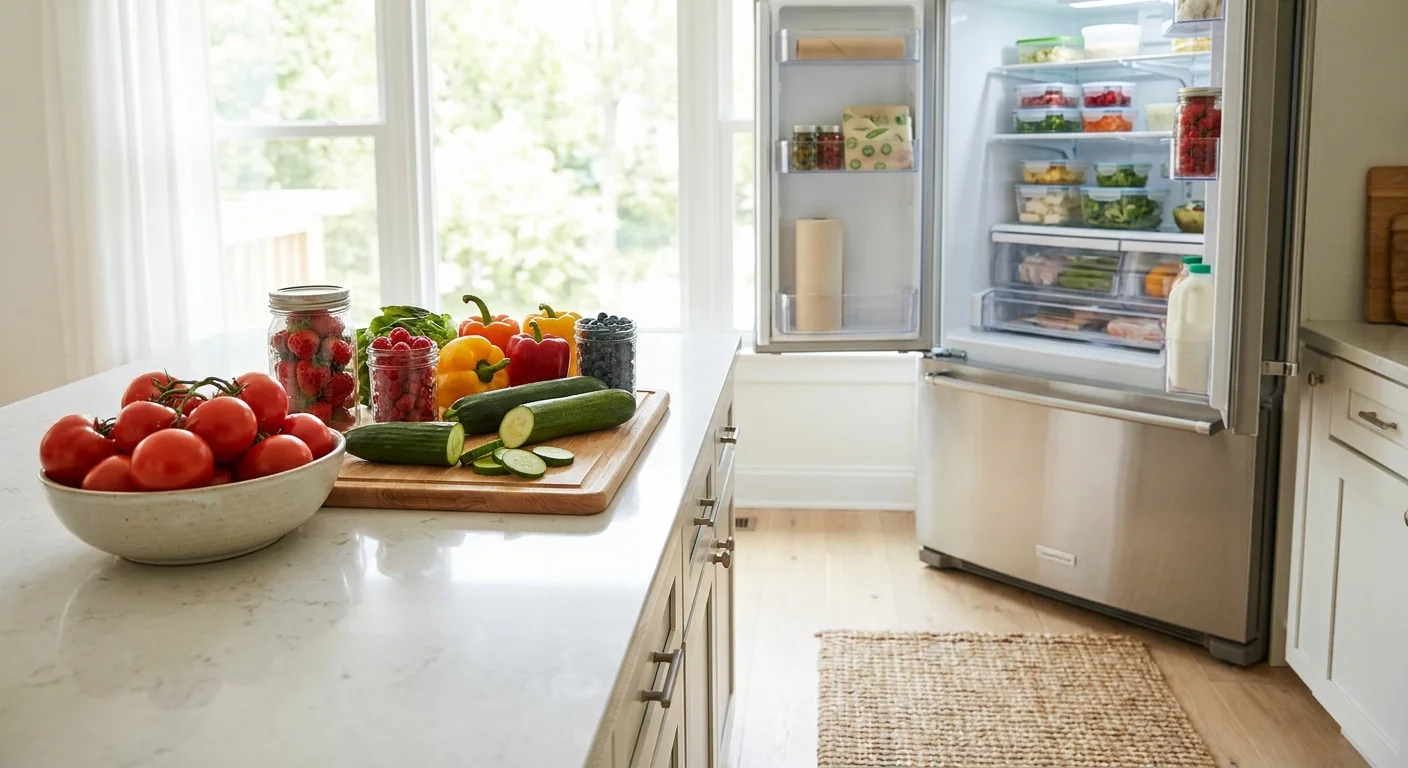
- Berries — refrigerator, dry, in a single layer or shallow layer to avoid crushing.
- Watermelons and melons — whole ones can be kept at room temperature; cut ones only in the refrigerator in a closed container.
In short: berries and herbs — cold and dry surface, tomatoes — moderate warmth, root vegetables and onions — darkness and ventilation. This is the basic answer to the question 'how to store vegetables and fruits in summer' if you need a universal scheme.
-
Step 4. Packaging and containers: 'breathing' is more important than airtightness
Improper packaging creates a greenhouse effect: condensation builds up inside, and products spoil faster. Your task is to protect against drying out, but not to trap moisture.
Working packaging options
- Berries: container with a lid + a paper towel on the bottom (absorbs excess moisture). The lid can be slightly opened or a couple of holes made.
- Herbs: wrap in a slightly damp (not wet) paper towel and place in a bag/container. For salads — a dry towel and container.
- Cucumbers: paper towel + bag with a small amount of air access, store in the vegetable drawer.
- Mushrooms: paper bag or container, but not tight plastic (they 'sweat' in it).
- Tomatoes: in a single layer, stem side down, without a bag, away from the sun.
What to avoid
- Tightly tied bags with wet products (condensation = mold).
- Deep bowls with berries piled high (the bottom ones get crushed and leak).
- Storing products with strong odors nearby (berries and herbs quickly absorb aromas).
If you're doing a weekly shop, it's convenient to add supplies to your list in advance: paper towels, containers, bags. In Pickt, you can keep this as a shared list (bot: @PicktBot, link: t.me/PicktBot/app), so no one buys too much or forgets what's needed.
-
Step 5. Extending shelf life: quick freezing, preserves, and 'first aid'
When the season is in full swing, there's a lot of produce, and some inevitably doesn't get eaten in time. The most reliable way to 'not lose' the flavor is to process the surplus in time.
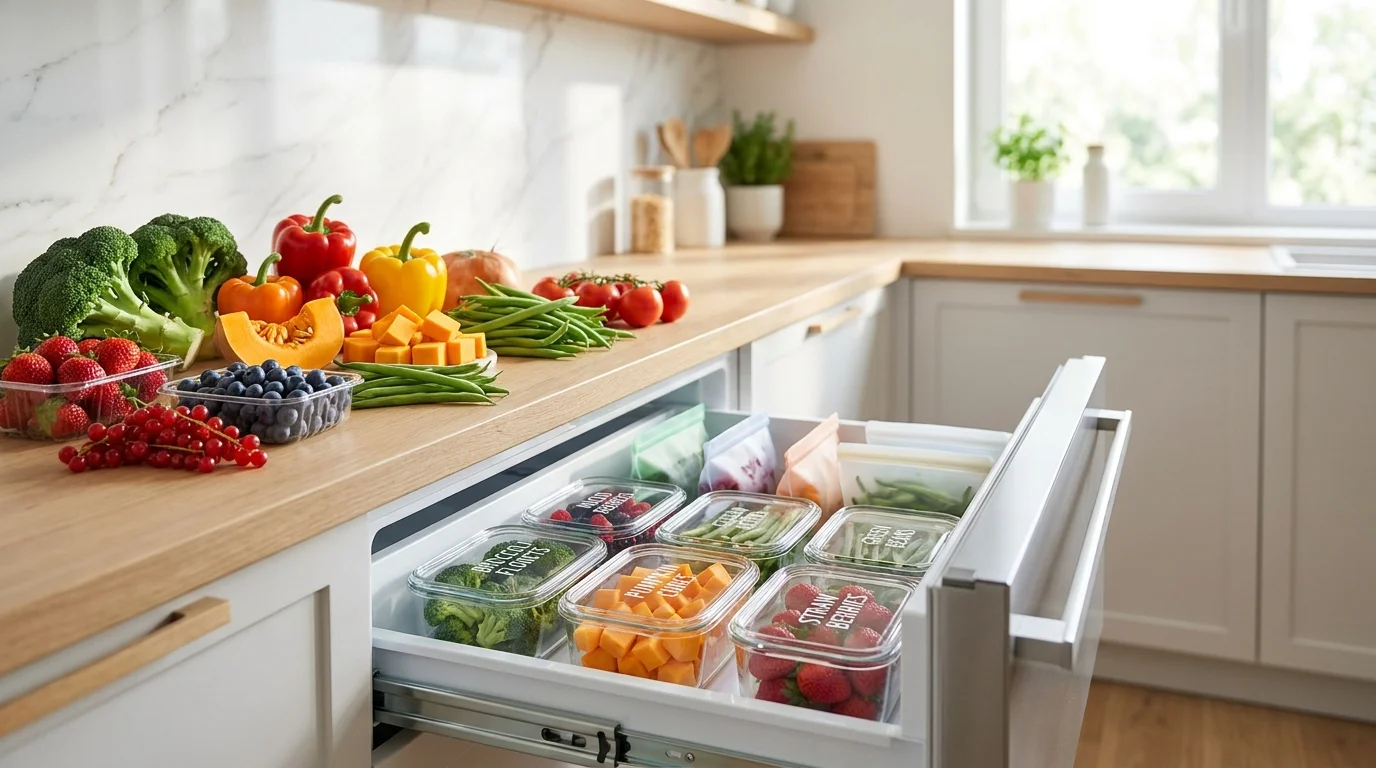
Option A: freezing berries and vegetables (15–30 minutes of active time)
- Berries: sort, quickly rinse if necessary, dry thoroughly. Freeze in a single layer on a tray for 2–3 hours, then transfer to a bag/container.
- Herbs: chop and freeze in molds with butter or water/broth — convenient for soups and sauces.
- Peppers: slice and freeze in portions. This way they don't stick together and are used faster.
Option B: 'saving' overripe produce
- Soft tomatoes — sauce, shakshuka, roasting.
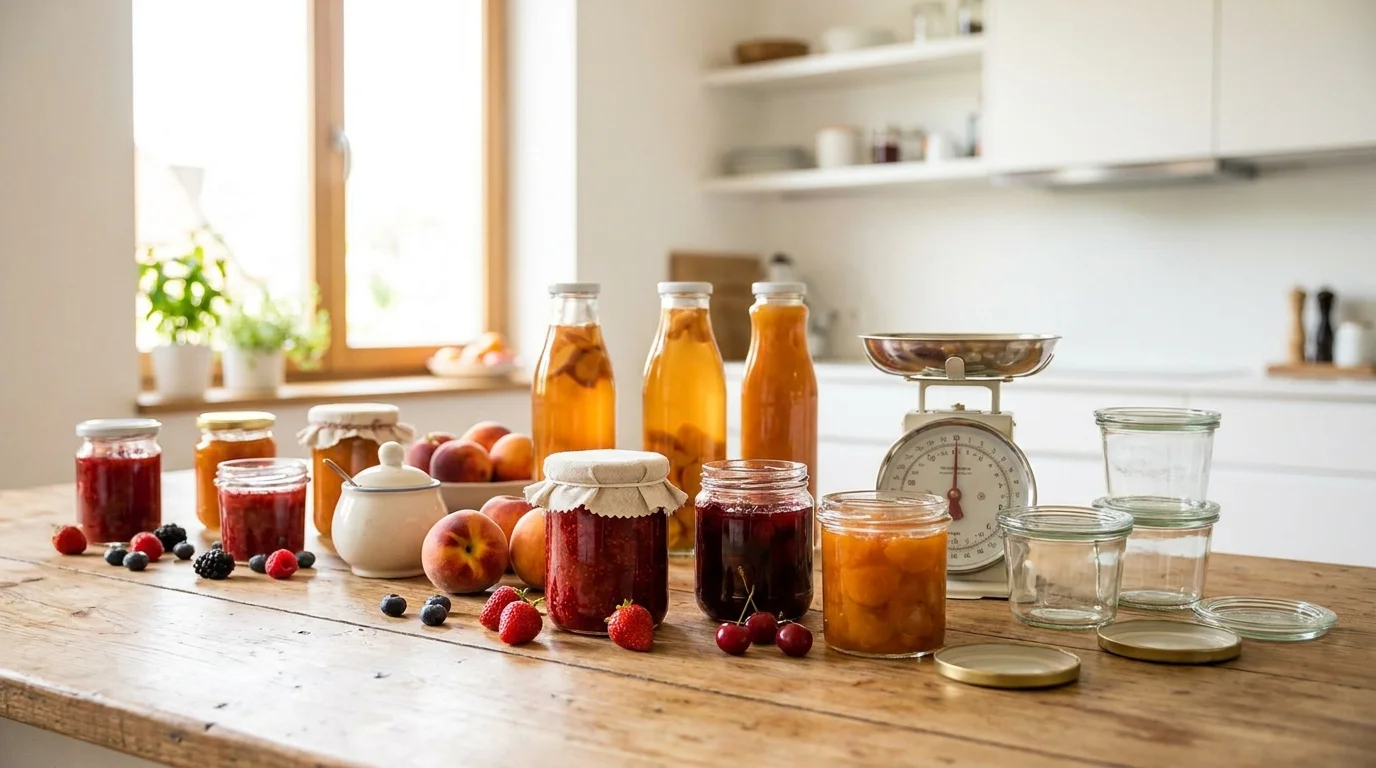
- Berries that start to leak — compote, smoothies, quick jam, filling.
- Cucumbers that are wilting — put in water for 30–60 minutes (often restores crunch), then into salad or okroshka.
A related query often searched in summer: how to store berries in the refrigerator. The answer is simple: dry, unwashed, in a shallow layer, with a napkin on the bottom, and away from strongly smelling products.
Step 6. Daily 2-minute routine: checking and rotating 'eat first'
Even perfect packaging won't help if you forget about the products for 5–7 days. In summer 2026, this is especially relevant: heat and frequent deliveries increase the risk of temperature fluctuations.
Mini-checklist
- Once a day, quickly check berries and herbs: remove soft/suspicious ones so they don't infect the rest.
- Move forward what needs to be eaten today or tomorrow (FIFO principle: first in — first out).
- Wipe damp container walls and replace the paper napkin if it has become damp.
If you don't live alone, agree on a simple rule: whoever notices a product on the verge writes in the shared list 'use today'. This reduces the chance that strawberries will 'disappear' in the far corner of the refrigerator.
Conclusion
To figure out how to store summer vegetables and berries so they don't spoil, you don't need complicated life hacks: sorting, proper temperature, dryness, suitable packaging, and a short daily check are enough. In the 2026 season, this saves money, time, and nerves, and also helps you eat fresh products more often instead of throwing them away.
Frequently Asked Questions
Can I store strawberries and raspberries in the same container?
It's better to keep them separate: raspberries are more delicate and release juice faster. If together, only in a single layer with a paper napkin on the bottom, checking regularly.
Why can't tomatoes be kept in the refrigerator?
You can, but it's not recommended for flavor: cold suppresses aroma and changes texture. If the tomatoes are very ripe and it's hot at home, the fridge for 1–2 days is acceptable, but then let them warm up before eating.
How to store herbs so they don't wilt within a day?
Dry them after washing, wrap in a paper towel, and place in a container or bag with a small amount of air access. Do not allow water droplets on the leaves — this is the main accelerator of rot.
What to do if berries start to mold?
Immediately remove all affected berries and those that touched them. Transfer the rest to a dry container with a new napkin and keep them as dry and cold as possible; it's best to use them within 24 hours or freeze them.