How Many Times a Week to Go Grocery Shopping: What's More Profitable
The optimal frequency depends on what you value most: time, money, or freshness. On average, it's more profitable to go shopping 1–2 times a week: one big shop covers the basics and reduces impulse purchases, while a short second trip adds fresh items (bread, milk, vegetables, herbs). If you live alone and often eat out, 2–3 small trips a week are easier. Daily runs are usually more expensive due to small spontaneous purchases and wasted time.
What Really Determines How Many Times a Week to Go Shopping
Shopping frequency isn't about "right or wrong" but about adjusting to your rhythm. In practice, the decision hinges on 5 factors: budget, distance to the store, car/delivery availability, eating habits, and fridge/freezer capacity.
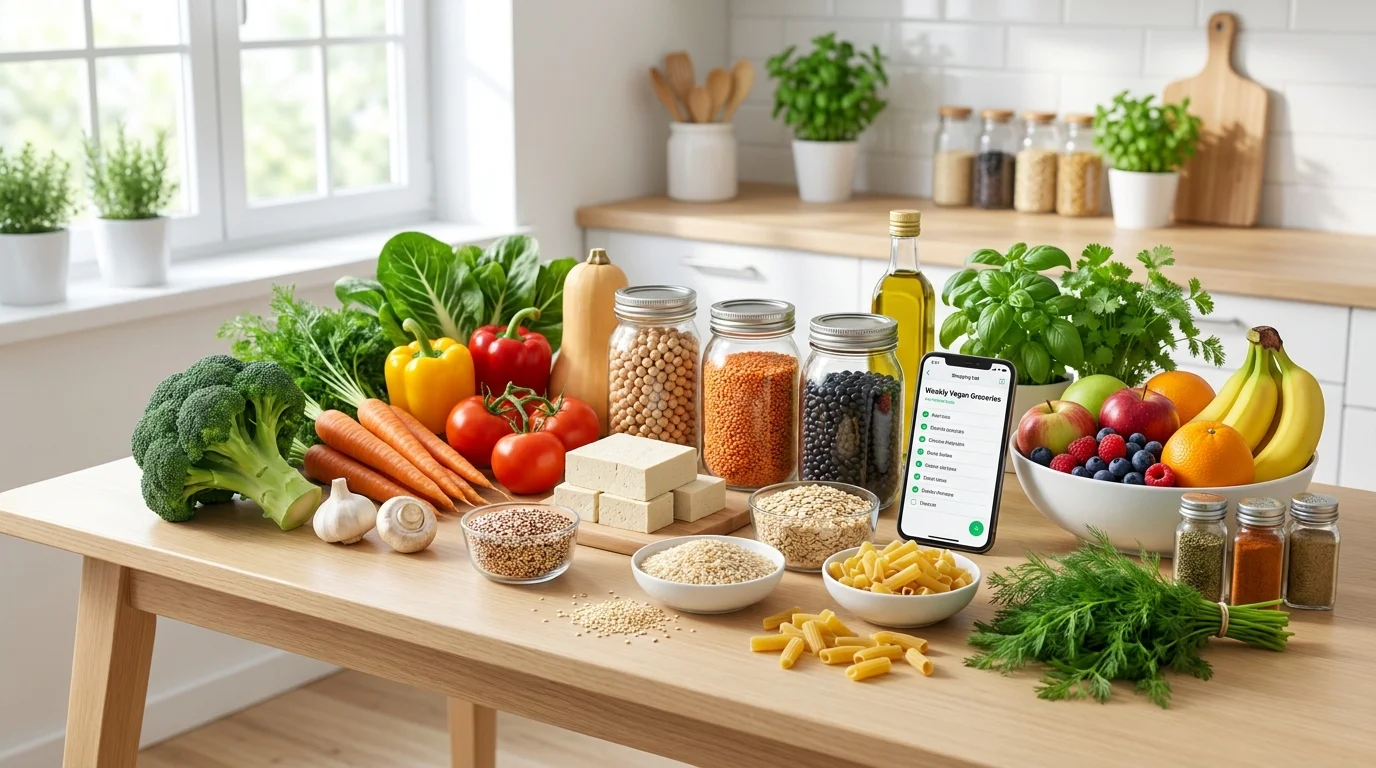
Another important factor is how many people are involved in shopping. In a family or with roommates, chaos in the list quickly leads to duplicates and forgotten items, so it's better to keep a shared list that everyone can see. For example, in the free mini-app Pickt on Telegram (t.me/PicktBot/app), the list syncs in real-time: if someone adds "eggs," others won't buy them again.
- The more impulse purchases, the more profitable it is to shop less often and stick strictly to a list.
- The higher the freshness requirements (fish, herbs, berries), the more often you'll need to restock.
- The less you plan your menu, the more often you'll "run" for missing items.
- The more discounts and bulk packages you use, the more logical one big shop becomes.
Comparison of Regimes: 1 Time, 2–3 Times, or Almost Every Day
Below is a comparison of three popular scenarios. Look not only at money but also at losses from spoiled food and time commitment.
Comparison Table
| Criterion | 1 time per week (big shop) | 2–3 times per week (mixed regime) | 5–7 times per week (frequent trips) |
|---|---|---|---|
| Total cost | Usually lower: less impulse, more planning | Often optimal: base + fresh restocks | Usually higher: "small items" add up |
| Impulse purchases | Low with a good list | Medium | High |
| Losses from spoilage | Medium/high without planning and freezer | Low/medium | Low, but you pay with time and frequent receipts |
| Freshness of products | Medium: some items need freezing | High | Maximum |
| Time spent | One long trip | 2–3 moderate trips | Constant short trips + travel time |
| Suitable for | Families, busy people, saving money | Most households | Singles near a store, those who like to cook "on a whim" |
When It's More Profitable to Go Once a Week: Maximum Savings, But Need a Plan
The "one big shop" regime usually wins on money. You encounter store triggers less often, it's easier to buy on promotions and take advantage of bulk packages.
The downside is the risk of buying too much and not eating it. For this format to be truly profitable, basic planning rules are needed.
- Build a "skeleton" for the week: 3–5 dinners you'll actually cook. Don't try to plan 14 different dishes.
- Divide purchases into categories: long-lasting (grains, canned goods), medium (cheese, eggs), quick (herbs, berries).
- Use the freezer: portion meat/fish, bread, some vegetables (e.g., broccoli, cauliflower).
- Leave a "buffer": 1–2 universal dishes from staples (pasta, rice, omelet) so you don't have to run to the store if plans change.
If you often wonder "how to save on groceries" — this regime usually gives the most noticeable effect due to discipline and fewer receipts.
When 2–3 Times a Week Is Better: Balance of Price, Freshness, and Control
The mixed regime is the most practical answer to "how many times a week to go shopping" if you want both to save money and eat fresh food. The scheme is simple: one main shop (about 70–80% of the basket) and 1–2 short restocks of fresh items.
This way, you keep the budget under control but aren't forced to buy herbs and berries "a week in advance." Plus, the risk of throwing away food is reduced.
- Main trip: grains, meat/poultry, frozen goods, household chemicals, canned goods, dairy with a few days' supply.
- Restock #1: vegetables, fruits, bread, herbs, fermented dairy.
- Restock #2 (as needed): fish, berries, items that ran out early.
This option is especially convenient for couples and families: less stress, easier to adapt to plan changes, and simpler to keep the fridge "alive" rather than stuffed.
When Frequent Trips (5–7 Times a Week) Are Justified: Freshness at the Cost of Time and Money
Daily trips are sometimes convenient: you buy exactly what you want to cook that day and hardly throw away perishables. But according to household budget statistics, frequent trips most often drive up spending — due to small impulse purchases and "I'll take this too."
Frequent trips are justified if the store is two minutes away, you live alone, cook little at home, or follow a diet where freshness is critical (e.g., lots of salads, fish, berries).
- Pros: maximum freshness, minimum stock, less spoilage.
- Cons: more time on travel and queues, higher average receipt due to spontaneous purchases.
- How to make it cheaper: go strictly with a list and a spending limit, don't go "just to look."
How to Calculate What's More Profitable for You: A Simple Formula Without Complex Tables
To understand which regime saves money, evaluate not only the amounts on the receipt but also hidden losses: time and thrown-away food. Two weeks of observation are enough.
Step 1. Measure Expenses
- Record the total amount spent on groceries in a week with your current regime.
- Separately note "unplanned" purchases (sweets, snacks, drinks) — this is the main indicator of impulse.
Step 2. Measure Losses
- How much food had to be thrown away/not eaten due to spoilage.
- How many times you had to buy something "urgently" because you forgot something important.
Step 3. Assess the Cost of Time
Multiply the number of trips by the average time "travel + store." Even if a trip takes 25 minutes, at 6 times a week that's already 2.5 hours. For many, this is the main cost of a frequent regime.
Life hack: keep one shared list and mark items as bought on the spot — this reduces urgent restocks. In Pickt, it's convenient because the list updates for all participants immediately: less chance that someone already bought something and you repeat it.
What to Choose: Recommendations for Different Cases
Below is a quick selection by situation. This will help decide how many times a week to go shopping without long experiments.
- Family with children, tight schedule: 1 big shop + 1 fresh restock. Savings on basics and time stability.
- Couple, cook at home 3–5 times a week: 2 times a week. One main trip, one for vegetables/bread/dairy.
- Living alone, often eat out: 2–3 times a week with small baskets. Less spoilage and overpaying for "stock."
- Store near home, like to cook on a whim: 4–6 times a week, but with a strict list and limit. Otherwise, expenses grow unnoticed.
- Far from store/have a car: 1 time a week (or once every 10 days) with a focus on storage and freezing.
- Want to save more on groceries: start with 1–2 trips a week and planning 3–5 dinners. This gives the fastest financial effect.
Conclusion: The universal "profitable" regime is 1–2 trips a week because it reduces impulse spending and maintains freshness through restocks. Frequent trips make sense only if you consciously control the list and budget; otherwise, they almost always cost more.
Frequently Asked Questions
How many times a week should I go shopping to save money?
Most often — 1–2 times. One main shop reduces impulse purchases, and a short restock helps avoid throwing away perishables and maintains freshness.
What's cheaper: one big shop or several small ones?
Usually, one big shop is cheaper if you go with a list and know you'll eat everything. Several small trips become more expensive due to spontaneous purchases and repeated "small items."
How not to buy too much if you shop infrequently?
Plan 3–5 dinners for the week, keep a stock of universal products, and don't buy perishables "just in case." A shared list with purchase marks helps — fewer duplicates and forgotten items.
How often should I buy vegetables and fruits so they don't spoil?
Optimally 2 times a week: some for the next 2–3 days (berries, herbs, salads), some more "long-lasting" (carrots, apples, cabbage). This reduces losses and maintains freshness.