When to Start Getting Your Child Ready for School in 2026: Checklist and Timeline
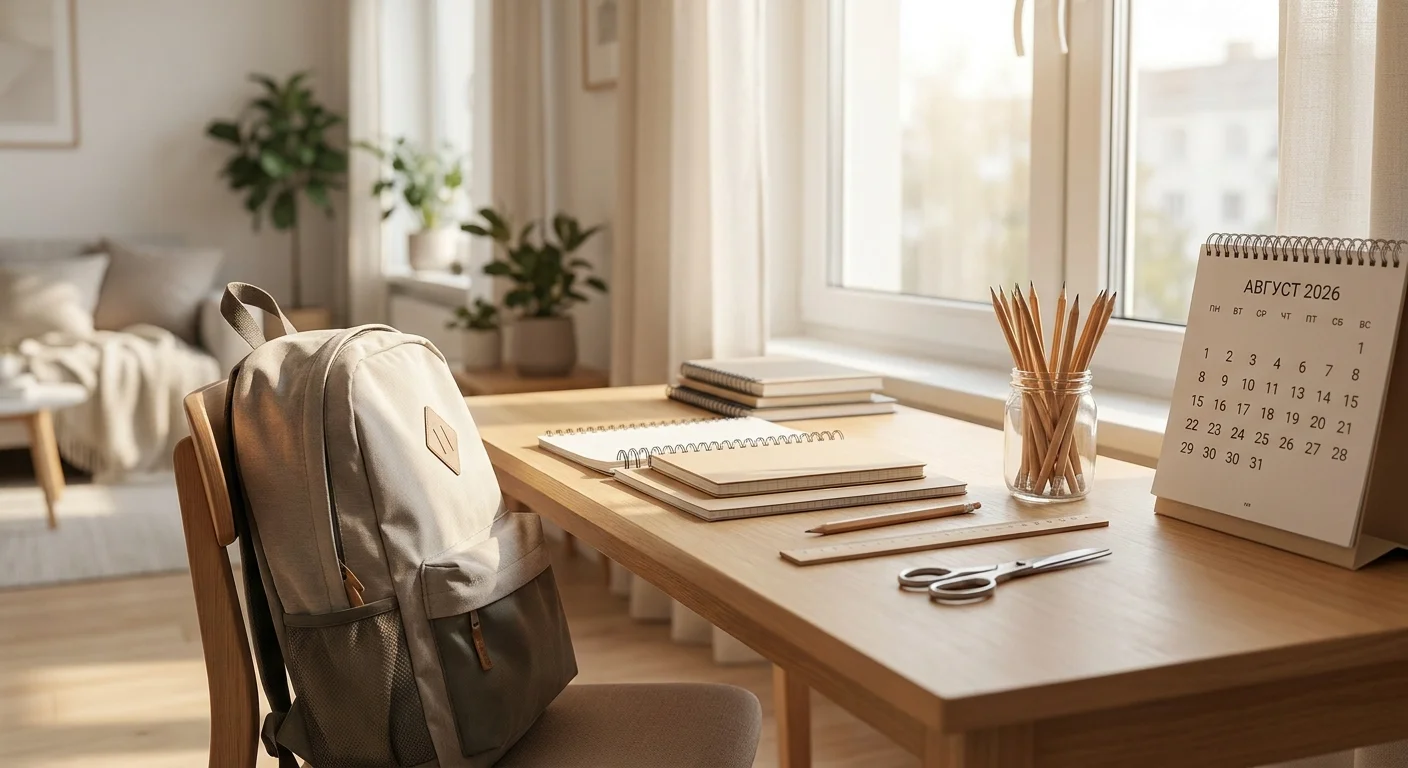
It's best to start getting your child ready for school 6–8 weeks before September 1st: this way, you can calmly buy uniforms, shoes, and a backpack with fitting, have time to handle medical issues, and buy stationery without the rush. The optimal plan for 2026 is to make major purchases in July, buy consumables in mid-August, and do a final check 3–7 days before. Below is a practical timeline checklist for a first-grader and for students in grades 2–11.
This list will help parents, grandparents, and anyone involved in the shopping (dad, mom, guardian, older children). To avoid forgetting anything or buying duplicates, it's convenient to keep a shared list: for example, in the free mini-app Pickt on Telegram (@PicktBot), you can share the list and mark purchases in real-time.
6–8 Weeks Before School (Approximately July 2026): The Basics Best Not to Put Off
This stage answers the question "when to start getting your child ready for school" for those who want to do it without rushing: now is the best time to choose items that require fitting and time for exchange/returns.
- Check your school/class requirements. Uniform (color, style), change of shoes, PE kit, list of notebooks and covers, gadget bans, diary requirements.
- Set a budget and distribute purchases. Separate categories: clothes/shoes, backpack, stationery, sports, arts & crafts, gadgets (if needed).
- Backpack/Schoolbag. Fitting is mandatory: strap width, back support, weight. For younger grades, a schoolbag with a rigid back is often chosen; for older students, a comfortable backpack with a laptop compartment.
- Shoes and Uniform. Buy in advance to have time to break them in and exchange sizes if necessary. Make sure the shoes fit properly and don't rub.
- PE Kit and Trainers. It's better to get a set for "indoor/outdoor" if that's the school's practice, plus a bag for the kit.
- Home Study Area. Desk/chair at the right height, lamp, organizer, space for textbooks. If your child is starting 1st grade, consider a book stand and a convenient timer.
- Medical Matters. Check the validity of certificates and check-ups if required. Update vaccinations according to the schedule (if necessary, after consulting a doctor).
4–5 Weeks Before (Late July – Early August 2026): Seasonal Clothes and "Long-Lead" Items
The point of this stage is to cover everything that depends on weather and supply: in August, popular sizes and models often run out, and prices go up.
- Outerwear for the transitional season. Light jacket/windbreaker, raincoat, umbrella. For regions with an early autumn, buy a warm jacket in advance.
- Warm layers. Cardigan/jumper, vest (if allowed), 2–3 basic turtlenecks/long-sleeve tops.
- Socks/tights/underwear. Buy extra: these are the most "disappearing" items during the school routine.
- Change of shoes. Check requirements: light sole, closed toe, Velcro/laces. Make sure your child can change shoes quickly on their own.
- Accessories. Belt, tie/bow tie (if needed), hair clips/elastic bands, card/transit pass holder.
- For a first-grader. Practice independence: buttoning up, tying shoelaces, folding the uniform into the bag.
2–3 Weeks Before (Mid-August 2026): Stationery and Consumables from the Class List
This is the best time to buy school stationery without queues and extras: you already have the teacher's requirements, and there's still time before September 1st for exchanges and additional purchases.
- Notebooks and Paper. Squared/ruled, general notebooks for older students, notepad/draft pad. Check the paper thickness if your child uses a gel pen.
- Writing Supplies. 2–3 comfortable pens, pencils, eraser, sharpener with container, ruler, protractor/compass (as per the curriculum).
- Pencil Case. Preferably compact and straightforward: the child can find what they need faster and lose less.
- Covers and Folders. For textbooks and notebooks (sizes often vary), folder for notebooks, plastic sleeves, dividers (for older students).
- Arts & Crafts and Technology. Colored pencils, markers, paints, brushes, sketchbook, colored paper/cardboard, glue stick, safety scissors, plasticine and board.
- Organization. Stickers/marker for labeling, backpack tag, bag for change of shoes, lunch container (if applicable).
Tip: to avoid buying unnecessary items, create one shared checklist and mark "bought/needed/get from grandma." In Pickt (t.me/PicktBot/app), it's easy to share the list between adults: one buys stationery, another buys the uniform, and the marks sync instantly.
7–10 Days Before (Late August 2026): Fit Check, Labeling, and "Test Drive"
This section helps avoid typical mistakes like "we bought everything, but it's not comfortable": a week before, you can still calmly exchange sizes or buy small items.
- Full outfit fitting. Uniform + shoes + backpack with textbooks/folders (or with simulated weight). Check that it doesn't pull on the back and the shoes don't rub.
- Labeling items. Label the pencil case, bag, change of shoes, PE kit, container. For younger children, label even pencils and rulers.
- Pack a "daily essentials kit" in the backpack. Tissues, handkerchiefs, band-aid, small hand sanitizer, hair tie/clip, bag for dirty clothes.
- Check gadgets (if needed). Headphones, charger, power bank, parental controls, silent mode for lessons.
- Sleep schedule. Shift wake-up time by 10–15 minutes each day so that by September 1st, your child wakes up without stress.
1–3 Days Before September 1st, 2026: Final "Don't Forget Anything" Checklist
This is a short but critical stage. Its goal is to make the morning of September 1st calm, not a frantic search for a white shirt or a second pair of shoes.
- Wash and prepare the uniform. Check buttons, length, shoe cleanliness, have spare socks/tights ready.
- Pack the backpack according to the schedule. Textbooks/notebooks, pencil case, folders, diary (if used). For a first-grader, don't overload it.
- Prepare the PE kit. Uniform, trainers, water bottle, bag.
- Pack a "just-in-case" bag. Wet wipes, spare hair tie/lace, mini comb, bag for wet items.
- Documents and organizational details. Pass/card, transit pass, keys (if the child walks alone), money for the cafeteria (according to family rules).
- Plan the route and time. Walk the route to school, identify safe crossing points.
Separate Mini-Checklist: First-Grader vs. Student in Grades 5–11
The purchases and timelines are similar, but the priorities differ. This section can be read separately to quickly understand what to focus on.
If Your Child is Starting 1st Grade
- A schoolbag with proper fit and minimal own weight.
- A "no-surprises" pencil case: 1–2 pens, 2 pencils, eraser, sharpener, ruler.
- Practice independence: opening a container, zipping up, changing shoes.
- Mini first-aid kit in coordination with the school and common sense (no "just-in-case" medications).
If Your Child is in Grades 5–11
- Comfortable backpack and internal organization: folders, dividers, pencil case, space for a water bottle.
- Notebooks and stationery by subject, preferably with a 1–2 month supply.
- Tech (if necessary): calculator, USB drive, headphones, charger; set usage rules.
- A "capsule" wardrobe: 2–3 tops + 2 bottoms + one "dressy" outfit, to avoid panicked laundry.
In summary: in 2026, the most sensible approach is to start getting your child ready for school 6–8 weeks in advance: major purchases in July, stationery and consumables in mid-August, and a final check a week before. This approach saves money, time, and nerves, and gives your child a sense of calm readiness.
Frequently Asked Questions
When should I start getting my child ready for school if they are growing quickly?
Buy large items that aren't critical for length (backpack, pencil case, some stationery) 6–8 weeks in advance. Buy the uniform and shoes closer to mid-August, but leave 7–10 days for size exchanges.
When should I buy the school uniform for 2026 to get the best deal?
Usually, the best prices and selection are in July and early August. By the end of August, the assortment narrows, and popular sizes sell out.
What should I definitely not buy in advance?
Perishable "consumables" and items that depend on the teacher's requirements: some art kits, specific notebooks, certain study aids. First, check the class list, then buy.
How can I quickly organize the list if several adults are doing the shopping?
Create one shared checklist and divide roles: who is responsible for the uniform, who for stationery, who for sports. It's convenient to keep such a list in Pickt on Telegram (t.me/PicktBot/app): everyone sees the current marks and doesn't duplicate purchases.