To prepare in advance for the school week, you only need 5 steps and one 'kitchen sprint' of 60–90 minutes on the weekend: choose 6–8 basic dishes, make a shopping list, create versatile prep components, quickly assemble dinners/lunches using templates, and pack everything into containers. This saves you time on weekdays, reduces snack chaos, and ensures you know exactly what the kids will eat.
Below is a practical meal prep guide for parents: no complicated recipes, clear logic, and options for different tastes. It works for those planning a weekly family menu and those looking for weekly prep ideas without extra spending.
Step 1. Plan 6–8 Dishes Using the 'Building Block' Principle
This step answers the key question: what exactly to cook so it doesn't get boring and you don't live in the kitchen. 'Building blocks' means you prepare basic components and assemble meals in 10–15 minutes.
1) Choose 2 Proteins, 2 Sides, 2 Vegetable Bases
- Protein: chicken/turkey, fish, eggs, cottage cheese, beans/chickpeas, beef.
- Side: rice/buckwheat/bulgur, pasta, potatoes, couscous.
- Vegetables: roasted vegetables, salad mix, veggie sticks, braised cabbage.
From these bases, you can easily assemble dinners and lunches: bowls, pasta, salads, soups, quesadillas, casseroles, sandwiches.
2) Add 2 'Lifesavers' for Busy Evenings
- High-quality dumplings/pierogies or frozen homemade ones.
- Omelet/scrambled eggs + salad.
- Cottage cheese casserole or syrniki (can be made from prep).
This way, you won't resort to takeout when homework, extracurriculars, and deadlines all coincide.
3) Consider School Lunches and Snacks
For school and activities, simple formats work best: rolls/wraps, mini sandwiches, cheese + fruit, yogurt, nuts (if allowed), veggie sticks, homemade sugar-free muffins.
Step 2. Make a Shopping List and Share It with the Family
To prevent meal prep from becoming 'I do everything alone,' the shopping list should be transparent and shared. That way, one person buys dairy, another vegetables, another grains, and no one forgets containers or foil.
1) Group Purchases by Department
- Vegetables/Fruits: 2–3 kg per week (guideline), herbs, lemons.
- Protein: 1.5–2.5 kg total for the family (depends on family size).
- Dairy: yogurt, cottage cheese, cheese, milk.
- Grains/Pasta: 2–3 items, plus bread/wraps.
- Sauces and 'Boosters': canned tomatoes, soy sauce, mustard, tahini, spices.
2) Establish a 'Minimum Stock'
The secret to calm weekdays is having a pantry staple: grains, pasta, canned legumes, frozen vegetables, eggs. This reduces costs and helps when plans change.
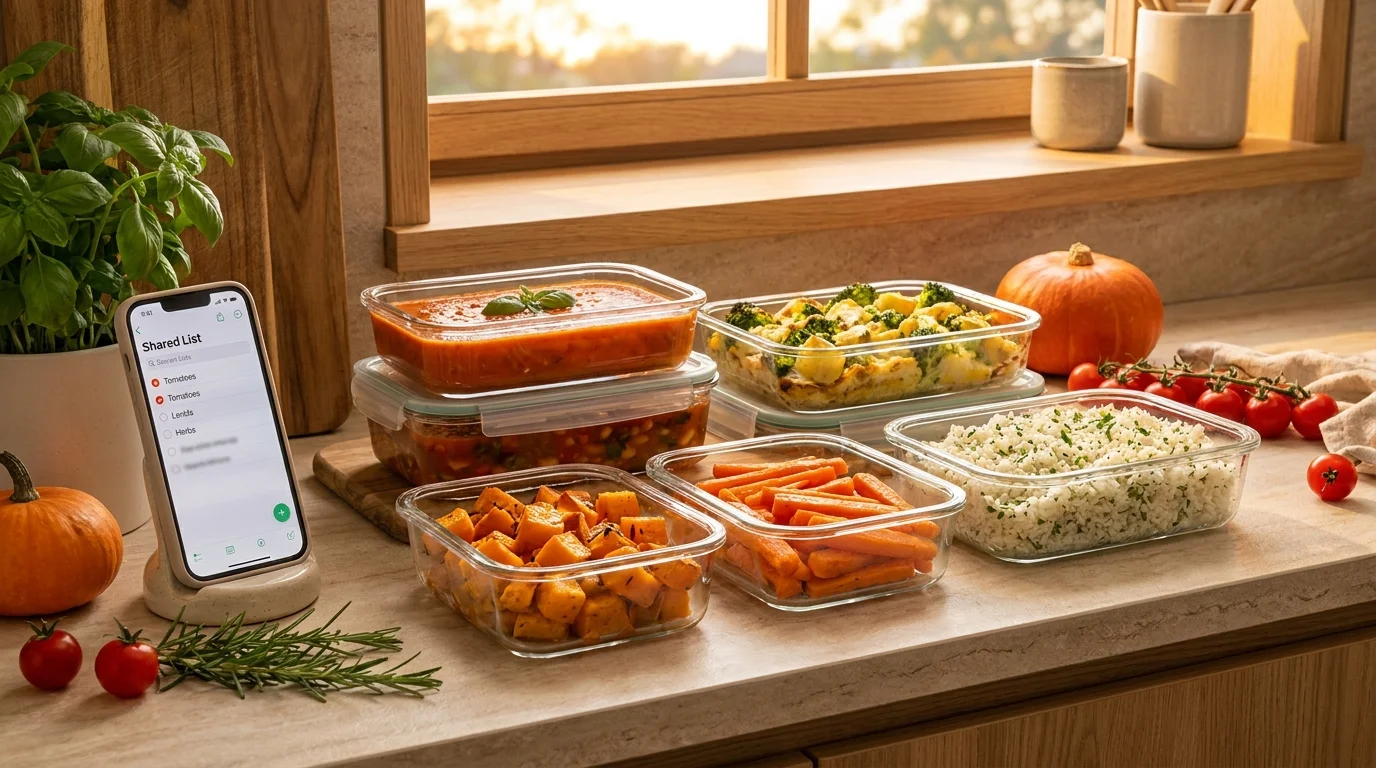
3) Keep a Shared List in One Place
If you do joint shopping, it's convenient to keep a list in Telegram so it updates in real-time for everyone. For example, in the free mini-app Pickt (bot t.me/PicktBot/app), you can quickly add items, assign who buys what, and avoid duplicate purchases.
Step 3. Conduct a 60–90 Minute 'Kitchen Sprint': Prepare Components
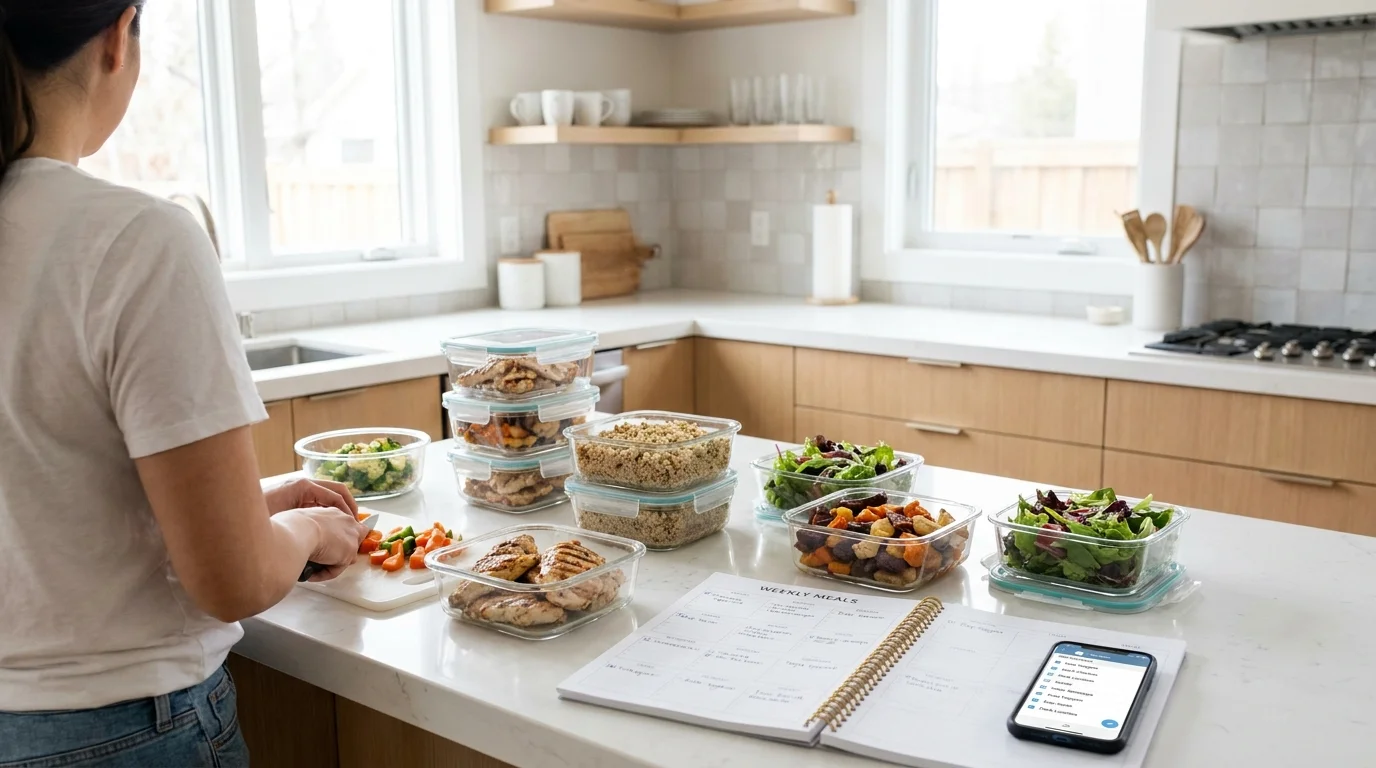
The point of meal prep isn't to cook 20 identical containers, but to make components that can be combined. This is the most effective way to prepare in advance for the school week.
1) Run Processes in Parallel
- Preheat the oven to 200°C (400°F).
- Start cooking grains (rice/buckwheat) and eggs (if needed).
- Chop vegetables for a baking sheet (carrots, zucchini, bell peppers, broccoli, onions) and roast for 25–35 minutes.
- Meanwhile, marinate protein (chicken/turkey) and bake/sauté for 15–25 minutes.
2) Make 2 Sauces — They Create 'Different Dishes' from the Same Base
- Yogurt sauce: Greek yogurt + garlic + lemon + salt + dill.
- Tomato sauce: canned tomatoes + onion + spices (paprika/oregano) + a little sugar if desired.
With sauces, the same chicken can become pasta, a bowl, or a wrap.
3) Prepare 'Quick Vegetables'
- Cucumbers/carrots cut into sticks (store in a container with a paper towel).
- Wash and dry salad mix (store in a container with a napkin).
This saves 10 minutes every evening and helps kids choose vegetables more often.
Step 4. Assemble a 5-Day Menu Using Templates (Dinners and Lunches)
This step ensures the prep actually works and doesn't just sit in the fridge until the weekend. Use templates: base + vegetables + sauce + 'crunch' (seeds/nuts/croutons) — and you're done.
Example School Week Menu (Adapt to Your Family)
- Monday: Bowl — grains + chicken + roasted vegetables + yogurt sauce.
- Tuesday: Pasta with tomato sauce + vegetable salad.
- Wednesday: Omelet/frittata with vegetables (use leftover roasted ones).
- Thursday: Wrap rolls — chicken/egg + salad mix + sauce.
- Friday: 'Quick' soup — broth/water + tomatoes + beans + vegetables (15–20 minutes).
Templates for School Lunches
- Roll: wrap + protein + cheese + lettuce + sauce on the side.
- Lunchbox: eggs/chicken + veggie sticks + fruit + yogurt.
- Light sweet snack: cottage cheese + berries/banana + a little honey.
If there are multiple adults in the family, assign 'shifts' for assembling lunches. It's convenient to track tasks in the same place as the shopping list — for example, in Pickt, so everyone sees updates and nothing gets lost.
Step 5. Pack into Containers and Set Up Storage to Keep Food Fresh
Proper storage is half the battle. Otherwise, prep loses flavor, and you end up back to spontaneous eating.
1) The Rule: 'Cool First, Then Seal'
Don't seal hot food immediately: condensation will form, and dishes will become watery faster. Let it cool for 20–30 minutes, then refrigerate.
2) Label Containers and Use Clear Ones
- Labels: 'chicken,' 'vegetables,' 'grains,' date.
- Clear containers reduce the risk of 'forgot, didn't find, threw away.'
3) Storage Times (Guidelines)
- Cooked chicken/turkey: 3–4 days in the fridge.
- Grains: 3–5 days.
- Roasted vegetables: 3–4 days.
- Chopped vegetables: 2–3 days (best to refresh mid-week).
If prepping for the whole week at once, freeze some protein and sauces in portions and take them out on Wednesday/Thursday.
Step 6. Integrate Meal Prep into the Family Schedule and Maintain the Habit
Even the best plan won't survive a real school week if it's too complicated. The goal here is to make the system sustainable: minimal decisions on weekdays, maximum flexibility.
1) Set a Regular 'Window'
For example: Sunday 5:00–6:30 PM. If the window varies, your brain will resist and procrastinate each time.
2) Keep a 'Plan B' for Emergencies
- Frozen vegetables + eggs.
- Canned goods (chickpeas/beans) + tomatoes.
- Ready-to-eat grains in pouches as a last resort.
3) Simplify Choices for Kids
Make 2–3 'default' snack options and keep them visible. The fewer negotiations in the evening, the calmer the morning.
Conclusion. Meal prep for parents isn't about perfect containers; it's about calm weekdays: you plan once, shop once, and prep once, then simply assemble meals. Start with 5–6 basic items and one 60–90 minute kitchen sprint — and within a week, you'll feel that preparing in advance for the school week has become a reality, not 'another chore.'
Frequently Asked Questions
How much time does meal prep for the school week actually take?
On average, 60–90 minutes if you cook in parallel: oven + grains + protein + chopping. The first 1–2 weeks may take up to 2 hours as you figure out your templates.
Can I prep in advance if my kids are picky eaters?
Yes: make neutral bases (chicken without strong spices, grains, vegetables) and 2 sauces to choose from. This way, the same set can be assembled into different dishes, giving the child a sense of control.
What's better: ready-made meals or prep components?
For the school week, prep components usually win: they retain flavor longer, offer variety, and reduce the risk of 'getting bored by day three.' Ready-made meals are convenient to make 1–2 times a week as needed.
How do I avoid forgetting what to buy and what's running out?
A shared shopping list accessible to all adults in the family helps. It's convenient to keep it in Telegram, for example in the Pickt mini-app, where changes sync instantly for everyone — fewer duplicates and 'Oops, I thought you were buying it.'